Pregledaj u prostoru
 Pošalji
 Podeli
 Detalji o delu

 Преузми
 Slični predmeti
 Rendgenski snimak
 Slajdovi
The Man-Tree

 Pročitaj više
Giclee štampa / Umetnički otisak
Giclée štampa ili print na platnu muzejskog kvaliteta uz brzu proizvodnju i fleksibilne opcije završne obrade. ( Pređite na ručno oslikano umetničko delo Prebacite na sliku)




P118B $10

P118H $10

P118W $10

P438Z $10

P508JH $12

P508YH $12

P805H $10

P805Z $10

P919BZ $10

P919G $10

P919XJ $10

P959ZH $10

P968JZ $12

W106C $8

W218G $10

W218JH $8

W218Y $10

W307PJ $10

W316G $10

W316PJ $8

W316Y $10

W398PJ $8

W4111J $10

W500HY $15

W500JH $15

W692G $12

W849H $8

W940BG $15

W953PJ $8




Izaberite jednu od naših unapred definisanih veličina koje odgovaraju originalnim proporcijama umetničkog dela.

Možete uneti sopstvene dimenzije kako biste umetničko delo prilagodili specifičnom okviru ili prostoru. Ako odabrani format ne odgovara proporcijama originalne slike, mi ćemo ili iscrtati deo dela ili proširiti sliku pomoću ogledane ivice ili jednobojnog popunjavanja. Digitalni prikaz će vam biti poslat na odobrenje pre početka proizvodnje.
Imajte na umu da pregled na ekranu ne odražava stvarno iscrtavanje ili proširivanje. Samo će prikaz (mockup) precizno pokazati finalnu kompoziciju.
Iako su prilagođene dimenzije dostupne, preporučujemo da odaberete dimenziju sa unapred definisane liste kako biste očuvali originalne proporcije.
Dostava širom sveta () za 2 nedelje umesto uobičajenih 4/5 nedelja. (11 август)

Besplatna ekspresna dostava širom sveta

Visokokvalitetno laneno platno

Kompletno osiguranje transporta

Garancija povraćaja carine i uvoznih dažbina

Garancija vernosti boja

Politika povrata u roku od 60 dana (samo u slučaju nedostataka)

Garancija povrata novca od 100%

Popust pri grupnoj kupovini
 Opcija sa staklom dostupna je samo za dimenzije manje od 110 cm

The Man-Tree
Giclee štampa / Umetnički otisak
Dimenzije reprodukcije
-


Konačna cena
$ 80
Opis predmeta
A Vision of Harmony: Exploring Hieronymus Bosch’s “The Man-Tree”
Hieronymus Bosch's "The Man-Tree," a captivating and profoundly unsettling image, stands as one of the Netherlandish master’s most enigmatic works. Painted during his prolific career between 1490 and 1510, this piece embodies the artist’s signature blend of religious allegory, fantastical imagery, and meticulous detail – qualities that continue to fascinate and challenge viewers centuries later. The painting depicts a solitary figure, often interpreted as humanity itself, seated within the gnarled embrace of an enormous tree, a scene brimming with symbolic weight and unsettling beauty.
- Subject Matter: At its core, “The Man-Tree” presents a striking juxtaposition of human form and natural world. The central figure, a man seemingly absorbed in contemplation, is inextricably linked to the tree, suggesting a profound connection between humanity and nature – a theme prevalent in medieval thought but rendered with Bosch’s characteristic surrealism.
- Composition & Technique: Bosch's masterful technique is immediately apparent. He employs a meticulous oil-based paint application, layering colors and textures to create an incredibly rich and detailed surface. The use of sfumato – the subtle blurring of lines and edges – adds to the painting’s dreamlike quality, further immersing the viewer in its strange and captivating world.
Symbolism Rooted in Late Medieval Thought
Bosch's work is saturated with symbolism drawn from late medieval religious texts, folklore, and contemporary anxieties. The tree itself is a potent symbol – representing both life and death, fertility and corruption, the divine and the demonic. Its twisted branches and grotesque forms evoke images of the Tree of Knowledge in Genesis, hinting at humanity’s fall from grace and its inherent vulnerability. The numerous birds scattered throughout the scene are often interpreted as messengers or symbols of temptation, while the clock hanging from a branch speaks to the fleeting nature of time and human mortality. The presence of the boat in the background adds another layer of complexity, potentially representing a journey through life or a connection to the earthly realm.
Historical Context: Painted during a period of intense religious upheaval and societal anxieties, “The Man-Tree” reflects the concerns of its time. The rise of Protestantism challenged the authority of the Catholic Church, while widespread social unrest fueled fears of corruption and moral decay. Bosch’s art served as a visual commentary on these issues, offering a critical perspective on human behavior and spiritual values.Emotional Impact & Artistic Legacy
"The Man-Tree" is not merely a beautiful painting; it's an emotionally charged experience. The scene evokes a sense of unease, wonder, and perhaps even dread – feelings that are central to Bosch’s artistic vision. His ability to capture such powerful emotions through seemingly simple imagery has ensured his enduring legacy as one of the most original and influential artists in Western art history. The painting's unsettling beauty continues to provoke questions about humanity's place in the world, making it a timeless masterpiece that resonates with viewers across generations.
Replicating a Masterpiece: OriginalUniqueArt’s Hand-Painted Reproduction
OriginalUniqueArt offers meticulously crafted, hand-painted reproductions of Hieronymus Bosch’s “The Man-Tree,” ensuring the preservation of this iconic artwork for discerning collectors and interior designers. Our skilled artisans employ traditional techniques and archival materials to faithfully recreate Bosch's intricate details and evocative atmosphere. Each reproduction is a testament to our commitment to artistic excellence, providing you with a stunning addition to your collection or a captivating focal point in your space.
Biografija umetnika
A Netherlandish Enigma: The Life and Art of Hieronymus Bosch
Born around 1450 in the vibrant, bustling town of ’s-Hertogenbosch in the Netherlands—then part of Brabant—Hieronymus Bosch, originally Jheronimus van Aken, remains one of art history’s most compelling and mysterious figures. His world was steeped in late medieval religious fervor, folklore, and a growing sense of societal unease, all of which would profoundly shape his uniquely unsettling artistic vision. Coming from a family with a long tradition of painting—his grandfather, Jan van Aken, and father, Anthonius van Aken, were both artists—Bosch likely received his earliest training within the family workshop, absorbing the techniques and conventions of Netherlandish painting. However, even in his formative years, he began to diverge from established norms, hinting at the extraordinary imagination that would define his career. Biographical details are frustratingly scarce; records are fragmented, leaving much open to speculation and interpretation, adding to the aura of mystique surrounding both the man and his work. He married Aleyt Goyaerts van den Meerveen sometime before 1481, a union that provided him with some financial security through her family’s holdings, but little else is known about their personal life. Fantastical Visions and Symbolic Depths Bosch's artistic style is instantly recognizable—a captivating blend of meticulous detail and wildly imaginative imagery. He primarily worked with oil on oak panels, demonstrating a masterful command of the medium, achieving luminous colors and intricate textures. While his early works show influences from traditional Netherlandish painting, particularly in their realism and attention to detail, he quickly moved beyond mere imitation, developing a profoundly original vision. His paintings are not simply representations of reality; they are allegorical landscapes populated by bizarre creatures, hybrid beings, and unsettling scenes that seem plucked from dreams—or nightmares. Religious themes form the core of much of his work, but these are rarely straightforward depictions of biblical stories. Instead, Bosch uses symbolism to explore complex moral and theological concepts, often focusing on the dangers of sin, the fragility of earthly pleasures, and the inevitability of divine judgment. His creatures—grotesque demons, fantastical animals, and strangely human figures—are not merely decorative elements; they are embodiments of vice, temptation, and spiritual corruption. The blending of the sacred and the profane, the beautiful and the grotesque, creates a uniquely unsettling effect that continues to captivate viewers centuries later.Masterpieces of Moral Allegory
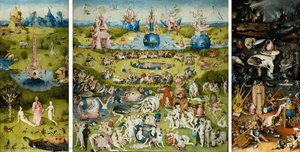
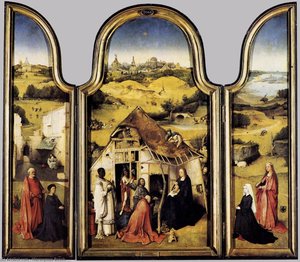
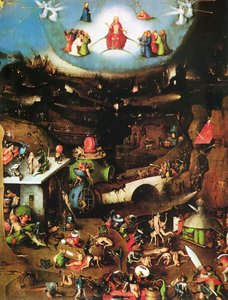
Among Bosch’s most celebrated achievements is The Garden of Earthly Delights (c. 1490-1510), a triptych that remains one of the most enigmatic and debated works in art history. When opened, it presents a panoramic vision of paradise, earthly life, and hell—a complex allegorical representation of humanity’s fall from grace. The left panel depicts the Garden of Eden, teeming with fantastical creatures and lush vegetation; the central panel portrays a world consumed by sensual pleasure and unrestrained desire; and the right panel offers a terrifying glimpse into the torments of hell. The Triptych of the Last Judgement (c. 1480-1490) is another powerful example of his skill in portraying both heavenly bliss and infernal torment, while The Ascent of the Blessed (c. 1480-1490) demonstrates his ability to create ethereal and dreamlike scenes. Even smaller works like Epiphany (c. 1495) showcase his innovative use of oil on wood and complex symbolism, revealing a mind constantly grappling with profound questions about faith, morality, and the human condition.Influences and Artistic Development
Bosch’s artistic trajectory reveals a gradual shift from conventional Netherlandish painting to an increasingly personal and expressive style. Early works demonstrate considerable skill in depicting realistic figures and landscapes—traits inherited from his family tradition—but he quickly abandoned these techniques in favor of bolder colors, more dramatic compositions, and a preoccupation with unsettling imagery. Scholars suggest possible connections to medieval folklore, religious texts—particularly those emphasizing apocalyptic themes—and the prevailing anxieties of the time, including fears of heresy and social upheaval. However, it’s clear that Bosch synthesized these elements into something entirely new and uniquely his own. His artistic vision was profoundly shaped by humanist ideas circulating in Europe during his lifetime, prompting him to question established dogma and explore psychological dimensions previously ignored by artists. He absorbed influences from artists like Pieter Bruegel the Elder, whose landscapes conveyed moral lessons with a similar blend of realism and symbolism.Legacy and Enduring Influence
Identifying Bosch’s direct influences is a challenging task, given the originality of his vision. Scholars suggest possible connections to medieval folklore, religious texts—particularly those emphasizing apocalyptic themes—and the prevailing anxieties of the time, including fears of heresy and social upheaval. However, it's clear that he revolutionized Netherlandish painting by introducing unprecedented levels of psychological complexity and symbolic depth. His impact on subsequent artists is undeniable. Pieter Bruegel the Elder directly followed in his footsteps, adopting similar themes and compositional techniques, while later movements, such as Surrealism, also drew inspiration from Bosch’s dreamlike imagery and exploration of the subconscious. Artists like Salvador Dalí and Max Ernst openly acknowledged their debt to his unsettling visions. Even today, Bosch's work continues to fascinate and provoke debate, solidifying his place as a master of Netherlandish painting and a visionary artist whose influence extends far beyond his own time. His paintings offer valuable insights into the religious, social, and psychological climate of the late 15th and early 16th centuries, challenging conventional norms and paving the way for new forms of artistic expression. He died in 1516, leaving behind a body of work that continues to haunt and inspire, ensuring his enduring legacy as one of art history’s most singular and unforgettable voices.
Јеронимијус Бош
1450 - 1516 , Holandija
Osnovne informacije
- Artistic Movement Or Style: Surrealizam i simbolizam
- Artists Or Movements Influenced By This Artist: ['Pieter Bruegel stariji']
- Date Of Birth: c. 1450
- Date Of Death: 1516
- Full Name: Hieronymus Bosch
- Nationality: Nizozemski
- Notable Artworks:
- Posljednji Sud
- Odvijanje Svete Duše
- Epifanska Križanje
- Place Of Birth: Den Bosch, Nizozemska
Povezani članci

OriginalUniqueArt.com F.A.Q.: Elevate Your Decor with Premium Textured Giclée Prints
Discover the distinction of OriginalUniqueArt.com premium textured Giclée prints. Expertly crafted with archival 12-color pigments and museum-grade substrates, our prints offer unparalleled vividness for the discerning collector seeking luxury, durability, and timeless elegance.