Contemporary Realism · 1928
Night Windows (Edvard Hoper, 1928)
Edvard Hoper (1882–1967) je napravio Night Windows. Datirano je iz 1928. Pripada pokretu Contemporary Realism. Izrađeno je u Painting. Čuva se u muzeju MoMA - Muzej moderne umetnosti u mestu New York City, Sjedinjene Američke Države. Dimenzije su 73 × 86 cm.
- 1928
- Painting
- 73 × 86 cm
- MoMA - Muzej moderne umetnosti, New York City

 Pregledaj u prostoru

 Ručno oslikano uljanim bojama
 Pošalji
 Podeli
 Vodič


 Preuzmi
 Slični predmeti
 Rendgenski snimak
 Automatska prezentacija
 Pitanja i odgovori

 Statistika
Night Windows: osnove
- Naslov
- Night Windows
- Umetnik
- Edvard Hoper (1882–1967)
- Rođen/a u
- Njaki, SAD
- Datum
- 1928
- Tehnika
- Painting
- Dimenzije
- 73 × 86 cm
- Gde se može videti
- MoMA - Muzej moderne umetnosti, New York City, Sjedinjene Američke Države
- Pokret
- Contemporary Realism
- Period
- Modern
- Tema
- urban isolation, nocturne scene, window view, domestic interior, voyeurism, light darkness contrast
Šta prikazuje Night Windows?
A Window Into Solitude: Exploring Edward Hopper’s Night Windows
Edward Hopper, a name synonymous with the quiet contemplation of modern existence, wasn't merely capturing landscapes; he was distilling the very essence of American urban life onto canvas. Born in Nyack, New York, in 1882, to parents steeped in Dutch heritage, his formative years instilled within him an unwavering dedication to observation and artistic expression—a passion evident from his earliest sketches meticulously documented and signed. Initially steered toward commercial illustration by his pragmatic family, Hopper’s artistic aspirations stubbornly clung to the realm of fine art, propelling him towards the New York School of Art where he honed his skills under William Merritt Chase and Robert Henri. These influential mentors fostered not only technical proficiency but also a profound appreciation for realism and a commitment to portraying the world as perceived through a discerning eye—a perspective that would define his oeuvre.- Subject Matter: Hopper’s ‘Night Windows,’ painted in 1928, presents a deceptively simple scene: a woman seated alone in a chair overlooking another room bathed in the muted glow of lamplight. This seemingly unremarkable tableau belies its significance as a cornerstone of Hopper's nocturne series and, crucially, embodies his masterful exploration of urban isolation.
- Style & Technique: Executed in stark black and white—a deliberate choice reflecting Hopper’s stylistic preference for tonal realism—the painting utilizes precise linework and subtle shading to create a palpable sense of atmosphere. The artist eschews dramatic lighting effects, favoring instead the diffused illumination characteristic of city nights, thereby amplifying the feeling of quiet detachment.
Historical Context & Influences
‘Night Windows’ resides firmly within the broader context of Hopper's artistic journey—a period marked by a fascination with American realism and an admiration for Impressionist masters like Degas. Hopper’s own stylistic sensibilities were profoundly shaped by these influences, mirroring Degas’s preoccupation with capturing fleeting moments of everyday life and conveying psychological nuance. The painting speaks to the anxieties and uncertainties prevalent in the Jazz Age, reflecting a societal shift toward individualism and questioning traditional social norms—themes that resonate powerfully even today.- Symbolism: Hopper’s masterful use of visual language transcends mere depiction; it communicates profound symbolic ideas. The woman's posture – slumped slightly, her gaze fixed on the distant figure – embodies a poignant stillness, mirroring the pervasive loneliness experienced by individuals navigating the complexities of urban life. Furthermore, the breeze rustling through the window serves as a subtle reminder of movement and connection—a counterpoint to the overarching sense of isolation.
- Reception & Significance: Contemporary critics recognized ‘Night Windows’ for its evocative power, describing it as “one of those glimpses into other lives which one suddenly catches from the window of a passing El,” capturing “that momentary sense of the mystery and intensity of the thousands of lives pressing close to each other.” This astute observation encapsulates Hopper's ability to distill the essence of New York City—a feat achieved through meticulous detail and understated emotional resonance.
Emotional Impact & Legacy
Ultimately, ‘Night Windows’ transcends its formal elements to deliver a deeply affecting experience for the viewer. It invites contemplation on themes of solitude, observation, and unspoken connection—questions that continue to intrigue audiences decades after its creation. Hopper's enduring legacy rests upon his unwavering commitment to portraying human experience with unflinching honesty and sensitivity—a testament to his artistic genius and his profound understanding of the human condition. Its timeless appeal ensures that ‘Night Windows’ will forever hold a place among the most celebrated images of 20th-century art.U kom muzeju se nalazi Night Windows?
MoMA - Muzej moderne umetnosti
New York City, Sjedinjene Američke Države
Poreklo i istorija MoMA - Muzej moderne umetnosti Temelji MoMA - Muzej moderne umetnosti postavljeni su 1929. godine. Institucija koju su osmislile Abby Aldrich Rockefeller, Lillie P.


Night Windows u visokoj rezoluciji

Zaštićeno autorskim pravima: slika je prikazana samo u informativne svrhe.
Više dimenzija, kadriranih prikaza i citata →Edvard Hoper, Night Windows (1928), MoMA - Muzej moderne umetnosti.
Pitanja o Night Windows
Gde se danas može videti delo „Night Windows”, autor Edvard Hoper?
Delo „Night Windows”, autor Edvard Hoper je izloženo u muzeju MoMA - Muzej moderne umetnosti, New York City, Sjedinjene Američke Države. Navod o muzeju odnosi se na originalno delo, a ne na reprodukcije.
U kojoj godini je nastalo delo „Night Windows”, autor Edvard Hoper?
„Night Windows“ potiče iz 1928. Ovaj datum smešta delo u okviru karijere umetnika Edvard Hoper i same ere.
Kojom tehnikom je urađeno „Night Windows”, autor Edvard Hoper?
Tehnika dela „Night Windows”, autor Edvard Hoper je Painting. Reprodukcije imaju za cilj da dočaraju izgled ove tehnike.
Kolikih je dimenzija originalnog dela "Night Windows"?
„Night Windows“ u svom izvornom obliku ima dimenzije 86 x 73 cm. Originalne dimenzije su koristan pokazatelj pri odabiru veličine reprodukcije.
Šta predstavlja delo "Night Windows"?
Motivi dela "Night Windows" su urban isolation, nocturne scene, window view, domestic interior, voyeurism, light darkness contrast, quiet contemplation, american realism.
Da li se prikaz „Night Windows”, autor Edvard Hoper može slobodno reprodukovati?
„Night Windows”, autor Edvard Hoper pripada i dalje je zaštićeno autorskim pravima. Ovaj status određuje način na koji se slika dela može reprodukovati.
Ko je autor dela "Night Windows"?
Delo "Night Windows" je kreirao/la Edvard Hoper. Informacije na ovoj stranici opisuju originalno delo umetnika Edvard Hoper.
Koji umetnički pravac obuhvata „Night Windows”, autor Edvard Hoper?
Umetnički pravac koji se povezuje sa delom „Night Windows”, autor Edvard Hoper je Contemporary Realism. Ova klasifikacija smešta rad među srodne umetnike i umetnička dela.
U kom periodu karijere Edvard Hoper pripada delo "Night Windows"?
„Night Windows“ pripada Mature Period u karijeri umetnika Edvard Hoper. Ova klasifikacija povezuje delo sa razvojem samog umetnika.
O umetniku, Edvard Hoper

1882–1967, SAD
Edvard Hoper
Tišina američke scene Edvard Hoper je rođen u Njaku, Sjedinjene Američke Države. Svoje rane godine proveo je posmatrajući svet istodobnim i nepokolebljivim pogledom, navikom koja je počela još u detinjstvu kroz pedantno datirane i potpisane skice. Iako su njegovi roditelji sugerisali praktičniji put kroz komercijalnu ilustraciju, njegova pažnja ostala je usmerena ka visokoj umetnosti. Studirao je u Školi umetnosti u Njujorku kod Vilijama Merita Čejsa i Roberta Henrija.
Takođe i Edvard Hoper
 Nighthawks, Ноћњаци1942
 Automat (mali)
 Kuća pored železnice1925
 Њујоршки филм1939
Eseji o delu Night Windows
 Mastering Solitude: The Top 25 Iconic Artworks by Edward HopperStep into the quiet world of American Realism with our curated guide to the top 25 Edward Hopper artworks. Explore the light, shadow, and s…
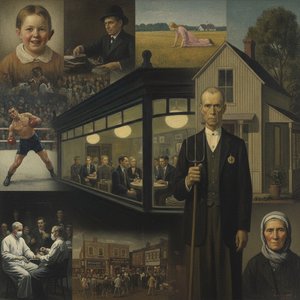 10 Iconic Masterpieces That Defined American RealismJourney through the soul of American Realism. Explore 10 iconic masterpieces, from Edward Hopper to classic landscapes, and learn the stori…
 10 Iconic Masterpieces That Defined Contemporary RealismJourney through the soul of Contemporary Realism. Explore 10 iconic masterpieces, their legendary artists, and the breathtaking techniques …