
 Pregledaj u prostoru
 Pošalji
 Podeli
 Detalji o delu
 Vodič
Vodič

 Preuzmi
 Slični predmeti
 Rendgenski snimak
 Automatska prezentacija
 Pitanja i odgovori
 Statistika
Akter

- 65.0 x 50.0 cm


 Pročitaj više
Giclee štampa / Umetnički otisak
Giclée štampa ili print na platnu muzejskog kvaliteta uz brzu izradu i raznovrsne opcije završne obrade. ( Kupite ručno oslikano delo Pređi na digitalnu sliku)




P118B дин10

P118H дин10

P118W дин10

P438Z дин10

P508JH дин12

P508YH дин12

P805H дин10

P805Z дин10

P919BZ дин10

P919G дин10

P919XJ дин10

P959ZH дин10

P968JZ дин12

W106C дин8

W218G дин10

W218JH дин8

W218Y дин10

W307PJ дин10

W316G дин10

W316PJ дин8

W316Y дин10

W398PJ дин8

W4111J дин10

W500HY дин15

W500JH дин15

W692G дин12

W849H дин8

W940BG дин15

W953PJ дин8




Izaberite jednu od naših unapred definisanih veličina koje odgovaraju originalnim proporcijama umetničkog dela.

Unesite željenu širinu i visinu kako bi se štampa uklopila u vaš ram ili zid. Štampu je moguće samo iseći, ali nikada povećati iznad dimenzija originalne slike, stoga format sa drugačijim proporcijama uzrokuje gubitak dela slike. Pre početka štampe, poslaćemo vam digitalni prikaz radi potvrde. Slika prikazana na ovoj stranici ne predstavlja stvarni isrez — to pokazuje samo digitalni prikaz.
Dostava širom sveta () za 2 nedelje umesto uobičajenih 4/5 nedelja. (10 новембар)

Besplatna ekspresna dostava širom sveta

Visokokvalitetno laneno platno

Potpuno osiguranje transporta

Garancija povraćaja carine i uvoznih dažbina

Garancija vernosti boja

Politika povraćaja u roku od 100 dana (samo u slučaju nedostataka)

Garancija povrata 100% novca

Popust na više proizvoda
 Opcija sa staklom dostupna je samo za dimenzije manje od 110 cm

Akter
Giclee štampa / Umetnički otisak
Dimenzije reprodukcije
-


Ukupna cena
дин 8485
The Weight of Silence: Edvard Munch’s “Nude”
Edvard Munch's "Nude," painted in 1896 during his formative years in Paris, isn’t merely a depiction of a woman seated on a bench; it’s a profound exploration of the human psyche grappling with anxiety, isolation, and the unsettling beauty of vulnerability. Created amidst a period of intense personal turmoil for Munch – marked by illness, loss, and a burgeoning awareness of his own mental fragility – this work stands as a cornerstone of Expressionism, capturing not just an image but a raw emotional state. The painting’s power resides in its deliberate ambiguity, inviting viewers to project their own anxieties onto the figure's enigmatic posture and the ominous backdrop.
The composition itself is strikingly simple yet deeply resonant. A woman sits on a weathered wooden bench, her back turned towards us, creating an immediate sense of distance and privacy. She wears a flowing dress, glimpsed only in the lower portion of the canvas – a deliberate choice that emphasizes her detachment from the viewer and suggests a world beyond our comprehension. Her hair is pulled back into a neat bun, a small detail that subtly contrasts with the overall feeling of unrest. Most arresting, however, is the vibrant red background, an audacious splash of color that dominates the scene. This isn’t a comforting sunset; it's a pulsating, almost violent hue, hinting at suppressed emotions and impending doom – a visual representation of the internal struggles Munch was so acutely aware of.
A Symphony of Color and Brushstroke
Munch’s technique in “Nude” is characterized by an unrestrained use of color and expressive brushstrokes, hallmarks of his Expressionist style. He eschews meticulous detail in favor of conveying feeling through the manipulation of pigment and texture. The red background isn't blended smoothly; instead, it’s applied with thick, agitated strokes, creating a sense of movement and instability. Similarly, the woman’s dress is rendered with loose, swirling brushstrokes, suggesting both vulnerability and a certain defiant grace. Munch employed oil paints on wood, allowing for rich color saturation and textural depth – qualities that amplify the painting's emotional intensity.
The use of color itself is crucial to understanding the work’s meaning. Red, often associated with passion, danger, and violence, dominates the scene, creating a palpable sense of unease. The subtle variations in tone within the red—from deep crimson to lighter shades—suggest a complex emotional landscape, hinting at both desire and dread. The limited palette – primarily red punctuated by touches of muted earth tones – contributes to the painting’s claustrophobic atmosphere, trapping the viewer within the woman's internal world.
Echoes of “The Frieze of Life” and a Personal Journey
"Nude" is inextricably linked to Munch’s broader artistic project, "The Frieze of Life," a series of paintings exploring themes of love, anxiety, jealousy, and betrayal. This series reflects Munch's own tumultuous personal life, marked by loss, illness, and the looming threat of mental instability. The woman in “Nude” can be interpreted as an embodiment of these anxieties – a figure caught between desire and despair, vulnerability and strength.
Munch’s artistic development during this period was profoundly influenced by his time in Paris, where he encountered the works of Paul Gauguin, Vincent van Gogh, and Henri de Toulouse-Lautrec. These artists encouraged him to embrace bold colors, expressive brushstrokes, and a subjective approach to depicting reality. The influence of these masters is evident in “Nude,” particularly in its vibrant color palette and emotionally charged atmosphere – though Munch ultimately forged his own unique style, rooted in his deeply personal experiences.
A Legacy of Anguish and Innovation
“Nude” stands as a pivotal work in the history of art, solidifying Edvard Munch’s position as a pioneer of Expressionism. It's a hauntingly beautiful depiction of human vulnerability, capturing the raw emotions that lie beneath the surface of everyday life. While often associated with darkness and despair, the painting also possesses a strange allure – a testament to the power of art to confront difficult truths and explore the complexities of the human condition.
Beyond its artistic significance, “Nude” continues to resonate deeply with viewers today, serving as a potent symbol of modern angst and the enduring struggle to find meaning in a chaotic world. For those seeking a deeper understanding of Munch’s work or desiring a high-quality reproduction of this iconic painting, Edvard Munch: Nude is available on OriginalUniqueArt.com, offering detailed insights and stunning visual reproductions.
To explore more of Munch’s oeuvre and the broader context of Expressionism, we encourage you to visit Edvard Munch on Wikipedia and explore related works such as Paula Modersohn-Becker and Ernst Ludwig Kirchner.
Pitanja i odgovori
Ko je autor dela "Akter"?
Autor dela "Akter" je Едвард Мунк. Delo je katalogizovano pod imenom Едвард Мунк.
Gde mogu videti originalno delo „Akter”, autor Едвард Мунк?
Delo „Akter”, autor Едвард Мунк je izloženo u muzeju Rasmus Meyer Collection, Bergen, Norveška. Navod o muzeju odnosi se na originalno delo, a ne na reprodukcije.
Kako mogu da pregledam „Akter”, autor Едвард Мунк u obliku prezentacije?
Dijaporama dela "Akter" dostupna je na stranici Galerija slika tog umetničkog dela.
Povezani članci

Edvard Munch: Anxiety, Modernity & the Dawn of Expressionism
Explore the profound world of Edvard Munch, pioneer of Expressionism. Discover the origins of 'The Scream' & his haunting depictions of anxiety, mortality, and love. Expert analysis & high-quality reproductions at OriginalUniqueArt.

Edvard Munch: 25 Remek-dela Koje Otkrivaju Dubinu Čovekove Duše | OriginalUniqueArt
Istražite 25 remek-dela Edvarda Muncha i otkrijte dubinu ekspresionizma, tugu i anksioznost u njegovim ikončnim slikama. Kvalitetne reprodukcije za dekoraciju enterijera dostupne na OriginalUniqueArt.com. Pronađite inspiraciju i kupite umetnička dela online!

Mark Rothko: 25 Remek-dela Apstraktne Ekspresije za Vaš Dom | OriginalUniqueArt
Istražite 25 remek-dela Marka Rothka – ikona apstraktne ekspresije. Otkrijte priče, tehnike i emocije iza ovih veličanstvenih slika. Reprodukcije vrhunskog kvaliteta za vaš dom na OriginalUniqueArt.com!

Crimson Threads of Narrative: Exploring Symbolism & Representation in Artworks Featuring the Red Dress
Explore the rich symbolism of the red dress in art history! From ancient power displays to iconic portraits like Cézanne’s 'Madame Cezanne', discover the cultural and artistic significance behind this captivating color. Expert analysis & insights.
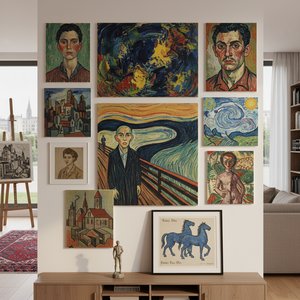
Glavna dela ekspresionizma: 10 remek-dela koja su definisala umetnički pokret
Otkrijte 10 remek-dela ekspresionizma! Uronite u svet Edvarda Muncha, Ernsta Ludwiga Kirchnera i drugih. Istaknute umetničke slike, intenzivne boje i emocionalni izraz. Pronađite inspiraciju za svoj enterijer na OriginalUniqueArt.com – vrhunski izbor reprodukcija slika!


