
 Pregledaj u prostoru
 Pošalji
 Podeli
 Detalji o delu
 Vodič
Vodič

 Preuzmi
 Slični predmeti
 Rendgenski snimak
 Automatska prezentacija
 Pitanja i odgovori
 Statistika
Akter

- 65.0 x 50.0 cm


 Pročitaj više
Nabavite datoteku spremnu za štampu koja nudi znatno veći kvalitet od onlajn pregleda. Svaka digitalna slika koju nudimo potiče iz visokorezolucičnog master fajla iz naše baze — obično širine od 5.000 do 15.000 piksela — što vam omogućava štampu u velikom formatu, precizno kadriranje ili bezbrižnu reprodukciju najfinijih detalja.
Nijedan fajl ne napušta naš studio netaknut. Digitalni stručnjak vrši proveru boja u odnosu na originalno delo i koriguje ih po potrebi, a zatim unapređuje jasnoću i detalje pomoću profesionalnih alata za retuširanje — uvek ostajući veran umetnikovim potezima četkice i stilu. Rezultat je slika koja izgleda kao pravo delo, a ne kao sken sa filterom.
Proverite i odobrite pre završetka: naš stručnjak vam šalje sliku putem e-pošte u roku od 72 sata na pregled. Niste zadovoljni? Zatražite poboljšanja ili ispravke, ili tražite povraćaj novca ukoliko kvalitet ne ispunjava vaša očekivanja.
Ovo je kvalitet kojem poverenje ukazuju izdavači, dizajnerski studiji, galerije i štamparije.
Digitalna slika
Preuzmite datoteku visoke rezolucije za ličnu upotrebu, štampanje i kreativne projekte. ( Pređi na štampu Kupite ručno oslikano delo)
Uključeno uz svaku porudžbinu digitalne slike
Profesionalna digitalna isporuka, zagarantovana
Kada odaberete OriginalUniqueArt.com, ne dobijate samo sliku – vi primate profesionalno unapređeno digitalno umetničko delo, izrađeno sa najvećom preciznošću i uz garanciju zadovoljstva. Evo svega što automatski dolazi uz vašu porudžbinu:

Brza dostava putem e-pošte
Vaša digitalna slika visoke rezolucije biće vam poslata putem e-pošte u roku od 72 sata od poručivanja – spremna za trenutnu upotrebu.

Digitalna datoteka unapređena veštačkom inteligencijom
Vaše umetničko delo je profesionalno optimizovano primenom naprednih AI alata i ručne obrade, čime se osiguravaju maksimalni detalji, oštrina i preciznost boja.

Besplatna doživotna ponovna isporuka
Slučajno ste obrisali ili izgubili svoju datoteku? Ne brinite – poslaćemo vam je ponovo u bilo kom trenutku, potpuno besplatno.

Bez troškova uvoza – zauvek
Uživajte u svojim umetničkim delima trenutno, bez carine, akciza ili troškova dostave – digitalni download je uvek bez poreza.

Garancija preciznosti boja
Uz pomoć profesionalnih alata i upravljanja bojama, osiguravamo da vaša digitalna slika što vernije odražava originalne boje.

Garancija zadovoljstva u roku od 100 dana
Ako niste zadovoljni svojom digitalnom slikom, izvršićemo reviziju ili ćemo vam vratiti 100% novca u roku od 100 dana – bez ikakvih pitanja.

100% garancija povrata novca
Niste zadovoljni? Dobijte puni povraćaj novca u roku od 100 dana od prijema digitalne datoteke – bez suvišnih pitanja.

Popusti na velike porudžbine
Kupite 3 slike, uštedite 10% - Kupite 5 slika, uštedite 15% - Kupite 10+ slika, uštedite 20%. Odlično za kreativne projekte, galerije i agencije.
The Weight of Silence: Edvard Munch’s “Nude”
Edvard Munch's "Nude," painted in 1896 during his formative years in Paris, isn’t merely a depiction of a woman seated on a bench; it’s a profound exploration of the human psyche grappling with anxiety, isolation, and the unsettling beauty of vulnerability. Created amidst a period of intense personal turmoil for Munch – marked by illness, loss, and a burgeoning awareness of his own mental fragility – this work stands as a cornerstone of Expressionism, capturing not just an image but a raw emotional state. The painting’s power resides in its deliberate ambiguity, inviting viewers to project their own anxieties onto the figure's enigmatic posture and the ominous backdrop.
The composition itself is strikingly simple yet deeply resonant. A woman sits on a weathered wooden bench, her back turned towards us, creating an immediate sense of distance and privacy. She wears a flowing dress, glimpsed only in the lower portion of the canvas – a deliberate choice that emphasizes her detachment from the viewer and suggests a world beyond our comprehension. Her hair is pulled back into a neat bun, a small detail that subtly contrasts with the overall feeling of unrest. Most arresting, however, is the vibrant red background, an audacious splash of color that dominates the scene. This isn’t a comforting sunset; it's a pulsating, almost violent hue, hinting at suppressed emotions and impending doom – a visual representation of the internal struggles Munch was so acutely aware of.
A Symphony of Color and Brushstroke
Munch’s technique in “Nude” is characterized by an unrestrained use of color and expressive brushstrokes, hallmarks of his Expressionist style. He eschews meticulous detail in favor of conveying feeling through the manipulation of pigment and texture. The red background isn't blended smoothly; instead, it’s applied with thick, agitated strokes, creating a sense of movement and instability. Similarly, the woman’s dress is rendered with loose, swirling brushstrokes, suggesting both vulnerability and a certain defiant grace. Munch employed oil paints on wood, allowing for rich color saturation and textural depth – qualities that amplify the painting's emotional intensity.
The use of color itself is crucial to understanding the work’s meaning. Red, often associated with passion, danger, and violence, dominates the scene, creating a palpable sense of unease. The subtle variations in tone within the red—from deep crimson to lighter shades—suggest a complex emotional landscape, hinting at both desire and dread. The limited palette – primarily red punctuated by touches of muted earth tones – contributes to the painting’s claustrophobic atmosphere, trapping the viewer within the woman's internal world.
Echoes of “The Frieze of Life” and a Personal Journey
"Nude" is inextricably linked to Munch’s broader artistic project, "The Frieze of Life," a series of paintings exploring themes of love, anxiety, jealousy, and betrayal. This series reflects Munch's own tumultuous personal life, marked by loss, illness, and the looming threat of mental instability. The woman in “Nude” can be interpreted as an embodiment of these anxieties – a figure caught between desire and despair, vulnerability and strength.
Munch’s artistic development during this period was profoundly influenced by his time in Paris, where he encountered the works of Paul Gauguin, Vincent van Gogh, and Henri de Toulouse-Lautrec. These artists encouraged him to embrace bold colors, expressive brushstrokes, and a subjective approach to depicting reality. The influence of these masters is evident in “Nude,” particularly in its vibrant color palette and emotionally charged atmosphere – though Munch ultimately forged his own unique style, rooted in his deeply personal experiences.
A Legacy of Anguish and Innovation
“Nude” stands as a pivotal work in the history of art, solidifying Edvard Munch’s position as a pioneer of Expressionism. It's a hauntingly beautiful depiction of human vulnerability, capturing the raw emotions that lie beneath the surface of everyday life. While often associated with darkness and despair, the painting also possesses a strange allure – a testament to the power of art to confront difficult truths and explore the complexities of the human condition.
Beyond its artistic significance, “Nude” continues to resonate deeply with viewers today, serving as a potent symbol of modern angst and the enduring struggle to find meaning in a chaotic world. For those seeking a deeper understanding of Munch’s work or desiring a high-quality reproduction of this iconic painting, Edvard Munch: Nude is available on OriginalUniqueArt.com, offering detailed insights and stunning visual reproductions.
To explore more of Munch’s oeuvre and the broader context of Expressionism, we encourage you to visit Edvard Munch on Wikipedia and explore related works such as Paula Modersohn-Becker and Ernst Ludwig Kirchner.
Pitanja i odgovori
Ko je autor dela "Akter"?
Autor dela "Akter" je Едвард Мунк. Delo je katalogizovano pod imenom Едвард Мунк.
Gde mogu videti originalno delo „Akter”, autor Едвард Мунк?
Delo „Akter”, autor Едвард Мунк je izloženo u muzeju Rasmus Meyer Collection, Bergen, Norveška. Navod o muzeju odnosi se na originalno delo, a ne na reprodukcije.
Kako mogu da pregledam „Akter”, autor Едвард Мунк u obliku prezentacije?
Dijaporama dela "Akter" dostupna je na stranici Galerija slika tog umetničkog dela.
Biografija umetnika
The Life and Identity of Edvard Munch
Edvard Munch was a Norwegian painter whose life was deeply tied to the landscapes and the heavy atmosphere of his homeland. Born on 12 December 1863, he spent much of his existence navigating the complexities of the human psyche through his brush and printmaking tools. His work often felt like a direct extension of his own internal struggles, turning private emotions into something visible and shared. He remained an active presence in the art world until his death on 23 January 1944.
His ability to capture the tremors of human existence reached a peak in 1893 with the creation of The Scream. This specific work has become one of the most acclaimed images in Western art, recognized globally for its depiction of existential dread. While many artists sought to replicate the physical world, Munch was interested in the things that cannot be seen, such as anxiety and the weight of loneliness. He used color and form to give a shape to the invisible forces that pull at the human spirit.
Throughout his long career, he produced a vast body of work that spanned many different mediums. His output included:
- The Scream
- Madonna
- The Sick Child
- The Dance of Life
Early Life, Family and Training
Edvard Munch was born in 1863 amidst the stark landscapes of Norway. His childhood was shaped by a household where the presence of sickness was a constant companion. In 1868, his mother died from tuberculosis, a loss that left a heavy mark on the young boy. This sense of fragility deepened in 1877 when his sister, Johanne Sophie, also succumbed to tuberculosis at the age of 15. These early bereavements meant that the shadows of mortality were woven into the fabric of his daily life.
His father, Christian Munch, worked as a physician and medical officer. Christian was a man of intense religious devotion, but he also struggled with a temperament that was nervous and obsessively religious. The atmosphere of the home was often heavy with this sense of dread. Growing up in such a setting, Edvard often found himself drawing to keep occupied during the long winters when illness kept him from school. These early experiences of grief and fear would eventually find their way onto his canvases.
For his formal education, he attended the Royal School of Art and Design in Kristiania. It was here that he began to develop the technical skills that would support his later explorations of the human psyche. His training provided the foundation for a career spent translating internal distress into visual form.
The Bohemian Circles of Kristiania
In the streets of Kristiania, the former name of Oslo, Munch found a community that challenged everything he had been taught. He moved within the bohemian circles of the city, a group of people who lived outside the strict rules of the era. Among them was the naturalistic painter Christian Krohg, who was a part of this progressive circle. These gatherings were not just social; they were spaces where new ways of seeing the world were debated and lived.
It was through the influence of the nihilist Hans Jæger that Munch’s own path began to shift. Jæger urged him to move away from the polite, academic traditions of the time. He encouraged the artist to look inward and paint his own emotional and psychological state. This was a radical idea. Instead of trying to capture the world as it appeared to others, Munch began to use his canvas to express the internal storms of his own mind.
Travels and Influences in Paris and Berlin
Moving through the centers of European art allowed Munch to see his own impulses reflected in the work of others. In Paris, he encountered the techniques of artists like Paul Gauguin and Vincent van Gogh. He learned much from them, absorbing how they used color and form to move beyond simple representation. His time in the city also brought him into contact with Henri de Toulouse-Lautrec. These encounters helped him refine a way of seeing that prioritized the internal over the external.
His time in Berlin shifted his focus toward the deeper, more unsettling layers of the human mind. It was there that he met the Swedish dramatist August Strindberg. These connections with figures such as Strindberg pushed his investigations into psychological themes. He began to use his art to explore the tremors of human existence, moving away from naturalistic depictions toward a style that could communicate the heavy weight of fear and anxiety.
Technique and Style of Soul Painting
Munch did not aim to replicate the physical world as it appeared to the eye. Instead, he sought to externalize his internal state, a method he called soul painting. He used distorted forms and rhythmic lines to communicate the tremors of human existence, turning psychological distress into a visible, tangible form. His brushwork often reflected the turbulence of his own mind, using color and shape to translate what he felt rather than what he saw.
This focus on the internal led him to experiment extensively with various mediums. He was a highly active printmaker, working through lithography, woodcut, and etching to expand his reach. His technical range was broad, involving intaglio processes such as aquatint, drypoint, and engraving on copper. These methods allowed him to layer textures and lines that mirrored the complexity of human emotion.
- The Scream (1893)
- Madonna (1894)
- The Sick Child (about 1926)
The Frieze of Life and Key Works
Munch sought to capture the recurring cycles of human existence through a series of works he called The Frieze of Life. This collection focused on the heavy, inescapable themes of love, fear, death, and anxiety. He did not aim for a simple depiction of life, but rather an exploration of the internal storms that define it. His paintings often functioned as a way to process the grief and the psychological tremors that stayed with him from his youth.
Many of his most recognized images emerged from these personal struggles. He conceived The Scream while in Kristiania, using swirling, fiery landscapes to represent a sense of existential dread. In other works, he turned his gaze toward the complexities of human connection and the fragility of life. Madonna explores the intersection of sexuality and mortality, while The Sick Child remains a poignant reminder of the loss of his sister, Sophie. These pieces reflect a man trying to make sense of the shadows that followed him.
- The Scream (1893)
- Madonna (1894)
- The Sick Child (about 1926)
- Puberty (1894–95)
Later Years and Death
The later years of Munch's life were marked by a significant shift in his personal habits and his creative environment. Following a mental breakdown in 1908, he made the decision to give up heavy drinking. This period of change led him away from the turbulent social scenes of his youth. Instead, he spent his remaining years working in peace and privacy, finding a quiet space to continue his practice.
His output remained steady until the end of his life. By the time he passed away in 1944, he had amassed a collection of 1006 paintings. While the world around him faced the immense upheaval of World War II, the majority of his works survived the conflict, ensuring that his visual language would remain available for future generations to study and experience.
The Lasting Legacy and Influence
Munch's ability to confront the darker aspects of the human condition helped pave the way for German Expressionism. He was a pioneer of Expressionism, moving away from the polite rules of academic art to find a way to show the internal storms of the mind. By translating psychological distress into visual form, he changed how artists approached the canvas. His work became a cornerstone of the modernism movement, shifting the focus from what the eye sees to what the soul endures.
His presence is felt deeply within the history of Norwegian art. He helped define a national identity through his exploration of universal human experiences. The way he used color and distorted lines to communicate the tremors of existence left a mark that many artists followed. His influence reached far beyond the borders of Norway, affecting how the modern world perceives anxiety and isolation.
- The Scream (1893)
- Madonna (1894)
- The Sick Child (about 1926)
Where to See the Works Today
To experience the breadth of his life's work, one must travel to Oslo, Norway. The Munch Museum is the primary guardian of his legacy, housing a vast collection that spans the full range of his artistic output. It is a place where the sheer scale of his production becomes clear, offering a deep look into the themes he explored throughout his years of painting and printmaking.
Other significant pieces are held in the city's other major institutions. The National Gallery in Oslo holds the 1893 tempera and crayon on cardboard version of The Scream. This specific piece offers a different texture and feeling compared to other versions. Additionally, the National Museum of Norway is home to a version of Madonna, allowing visitors to see how he approached the same subject through different lenses.
- The Scream (1893) - National Gallery, Oslo
- Madonna - National Museum of Norway
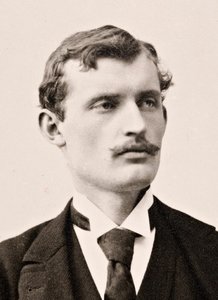
Едвард Мунк
1863 - 1944 , Шведска
Kratke informacije
- Artistic Movement Or Style:
- Ekspresionizam
- Simbolizam
- Artists Or Movements Influenced By This Artist: ['Nemački ekspresionizam']
- Artists Who Influenced This Artist:
- Pol Гоген
- Vinsent van Gog
- Date Of Birth: 1863
- Date Of Death: 1944
- Full Name: Едвард Мунк
- Nationality: Norveški
- Notable Artworks:
- Vrisak
- Madonna
- Bolesno dete
- Pubertet
- Place Of Birth: Adelsbruk, Švedska