Portret Карл Брјулов

100 najpoznatijih slika umetnika Карл Брјулов, izbor iz galerije

Ažurirano: новембар 2026 · rangirano prema našem koeficijentu popularnosti (pretrage, posete i porudžbine za svako delo) · 407 dela Карл Брјулов u našem katalogu

Ukratko

Od svih originala koje je Карл Брјулов ostavio, najpoznatiji je Последњи дан Помпеја (1833), koji se nalazi u kolekciji Државни руски музеј, St. Petersburg. Odmah za njima slede Jahač (1832) i Bathsheba (1832). Naš katalog sadrži 407 dela umetnika Карл Брјулов; galerija je čuvala 100 dela koja svet najviše admira, od kojih je svako prikazano sa svojim datumom, muzejom i pričom.

1799 – 1852, Санкт Петербург Romantizam Najviše dela: Tretyakovljeva galerija

Top 10 slika umetnika Карл Брјулов: izbor galerije

2
Jahač (1832) čiji je Карл Брјулов

Jahač

1832 · Akril na platnu · Tretyakovljeva galerija, Moskva

Karl Pavlovich Bryullov's "The Rider," painted in 1832, is more than just a portrait; it’s a carefully constructed tableau of aristocratic leisure and burgeoning Romantic sentiment. This captivating work, now available as a stunning hand-painted reproduction from WahooArt.com, transports the viewer to a sun-drenched Italian estate, capturing an intimate scene of a young woman – Giovanina and Amacilia Pacini, the adopted children of Countess Yuliya Pavlovna Samoil – enjoying a…

3
Bathsheba (1832) čiji je Карл Брјулов

Bathsheba

1832 · Oil On Canvas · Tretyakovljeva galerija, Moskva

In the quiet, luminous depths of Karl Pavlovich Bryullov’s 1832 masterpiece, Bathsheba, we find ourselves transported to a moment where time itself seems to hold its breath. This monumental canvas is far more than a mere biblical illustration; it is a profound psychological study wrapped in the velvet textures of the Romantic era. The scene captures the biblical Bathsheba in a state of private contemplation, seated as she tends to…

4
Pilgrims at the Entrance of the Lateran Basilica (1825) čiji je Карл Брјулов

Pilgrims at the Entrance of the Lateran Basilica

1825 · Oil On Canvas · Tretyakovljeva galerija, Moskva

To stand before Karl Pavlovich Brulloff's depiction of Pilgrims at the Entrance of the Lateran Basilica is to step across the threshold of time itself. This oil on canvas, executed in 1825, is far more than a mere historical scene; it is a profound meditation on faith, community, and the enduring human journey toward something sacred. Brulloff captures that exquisite moment when the weight of worldly experience meets the promise…

5
Portrait of F.A. Bruni (1828) čiji je Карл Брјулов

Portrait of F.A. Bruni

1828 · Graphite Pencil

The artwork is titled Portrait of F.A. Bruni and was executed by the artist Karl Bryullov. This specific work is a monochromatic portrait sketch that focuses on the head and upper torso of a man. The subject is presented in a three-quarter view, with his gaze directed toward the viewer. Based on the title, the man depicted is likely F.A. Bruni.

6
Princess Yuliya Pavlovna Samoilova Leaving a Ball with Adopted Daughter Amacilia Pacini čiji je Карл Брјулов

Princess Yuliya Pavlovna Samoilova Leaving a Ball with Adopted Daughter Amacilia Pacini

Oil On Canvas · Државни руски музеј, Sankt Peterburg

The canvas bears the title Princess Yuliya Pavlovna Samoilova Leaving a Ball with Adopted Daughter Amacilia Pacini. It is a work by the artist Karl Bryullov. Within the frame, the Countess Yuliya Pavlovna Samoilova and her adopted daughter Amacilia Pacini are captured in a moment of quiet transition. The portrait reflects the artist's specific skill in rendering the likeness and presence of his subjects.

7
Portrait of V. A. Perovsky (1837) čiji je Карл Брјулов

Portrait of V. A. Perovsky

1837 · Oil On Canvas · Tretyakovljeva galerija, Moskva

The Portrait of V. A. Perovsky is an oil on canvas painting from 1837. The subject is a man positioned in a military uniform, standing upon a dirt road. He holds a flag, a detail that establishes a sense of authority within the scene. A horse is situated near the center of the composition, providing a sense of depth to the landscape. In the background, two additional figures are visible,…

8
Child in a Swimming Pool (Portrait of Prince A.G. Gagarin in Childhood) (1829) čiji je Карл Брјулов

Child in a Swimming Pool (Portrait of Prince A.G. Gagarin in Childhood)

1829 · Acrylic On Canvas · Tretyakovljeva galerija, Moskva

Karl Pavlovich Bryullov's "Child in a Swimming Pool," painted in 1829, is more than just a charming pastoral scene; it’s a poignant meditation on innocence, fleeting beauty, and the ephemeral nature of childhood. This watercolor masterpiece, currently residing within the hallowed halls of the Tretyakov Gallery in Moscow, captures a young boy – widely believed to be Prince Alexander Gagarin, a future figure in Russian history – immersed in a…

9
Vespers (1825) čiji je Карл Брјулов

Vespers

1825 · Oil On Canvas

The evening air settles heavily around the figures in Vespers, a genre painting by Karl Bryullov. Created in 1825, the work captures a quiet, communal moment of devotion. Here, the artist turns his gaze toward the simple, profound acts of faith that define a community. The scene unfolds as a gathering of souls, each caught in a private moment of prayer or reflection during an evening service.

10
Portrait of Countess Samoilova (1834) čiji je Карл Брјулов

Portrait of Countess Samoilova

1834 · Oil On Canvas

In this portrait of Countess Samoilova by Karl Bryullov, the composition is anchored by the central figure of the woman. She is positioned prominently in the middle of the frame, wearing a blue dress and a crown upon her head. This central placement establishes her as the primary focus of the work. To her sides, two other figures complete the grouping. On one side, a person is dressed in a…

Izbor umetnika Карл Брјулов se nastavlja, od 11 do 100

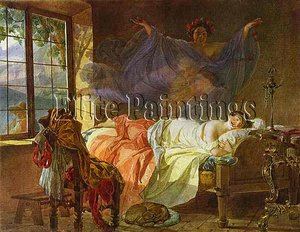
11Portrait of the Shishmariov Sisters (1839) čiji je Карл БрјуловPortrait of the Shishmariov Sisters1839 12Girl riding a horse čiji je Карл БрјуловGirl riding a horse 13Daphnis and Chloe (1850) čiji je Карл БрјуловDaphnis and Chloe1850 · Ermitaž 14Portrait of Baroness Reinthal with her daughter. (1825) čiji je Карл БрјуловPortrait of Baroness Reinthal with her daughter.1825 · Nacionalni muzej u Varšavi 15Italian Morning (1823) čiji je Карл БрјуловItalian Morning1823 16Portrait of N. A. Okhotnikov (1827) čiji je Карл БрјуловPortrait of N. A. Okhotnikov1827 · Ermitaž 17Portrait of U. M. Smirnova (1840) čiji je Карл БрјуловPortrait of U. M. Smirnova1840 18Portrait of Countess Yu. P. Samoilova and Her Ward Amacilia Pacini Leaving a Ball (1842) čiji je Карл БрјуловPortrait of Countess Yu. P. Samoilova and Her Ward Amacilia Pacini Leaving a Ball1842 19The head of Bacchus (1811) čiji je Карл БрјуловThe head of Bacchus1811 20Self-portrait (1816) čiji je Карл БрјуловSelf-portrait1816 21Portrait of the Actor A. N. Ramazanov (1821) čiji je Карл БрјуловPortrait of the Actor A. N. Ramazanov1821 22Kleobis and Biton (1827) čiji je Карл БрјуловKleobis and Biton1827 23Hylas, Carried Along by the Nymphs in Water (1827) čiji je Карл БрјуловHylas, Carried Along by the Nymphs in Water1827 24Portrait of F. D. Gverazzi (1830) čiji je Карл БрјуловPortrait of F. D. Gverazzi1830 25Portrait of Alexander Bruloff (1826) čiji je Карл БрјуловPortrait of Alexander Bruloff1826 26The Last Day of Pompeii (1830) čiji je Карл БрјуловThe Last Day of Pompeii1830 27Hylas and the Nymphs (1827) čiji je Карл БрјуловHylas and the Nymphs1827 28Alexander Ribeaupierre (1829) čiji je Карл БрјуловAlexander Ribeaupierre1829 29Portrait of V. A. Perovsky (1824) čiji je Карл БрјуловPortrait of V. A. Perovsky1824 30Portrait of A. N. Lvov (1824) čiji je Карл БрјуловPortrait of A. N. Lvov1824 31Portrait of the Poet and Playwrigh Nestor Kukolnic (1836) čiji je Карл БрјуловPortrait of the Poet and Playwrigh Nestor Kukolnic1836 · Tretyakovljeva galerija 32Portrait of the Artist Prince G. G. Gagarin (1829) čiji je Карл БрјуловPortrait of the Artist Prince G. G. Gagarin1829 33Aleksandr Turgenev (1833) čiji je Карл БрјуловAleksandr Turgenev1833 34Portrait of a Young Woman Embroidering (1832) čiji je Карл БрјуловPortrait of a Young Woman Embroidering1832 35Innocence, leaving the Earth (1839) čiji je Карл БрјуловInnocence, leaving the Earth1839 36Portrait of V. A. Zhukovsky (1837) čiji je Карл БрјуловPortrait of V. A. Zhukovsky1837 · Taras Shevchenko National Museum 37Portrait of I. A. Krylov (1839) čiji je Карл БрјуловPortrait of I. A. Krylov1839 38Sketch on the Subject of the Trinity Beneath the Oak of Mambre (1821) čiji je Карл БрјуловSketch on the Subject of the Trinity Beneath the Oak of Mambre1821 · Ermitaž 39Portrait of a woman (1841) čiji je Карл БрјуловPortrait of a woman1841 · Finnish National Gallery 40M.P. Volkonskaia (1840) čiji je Карл БрјуловM.P. Volkonskaia1840 41Portrait of the architect A. Bolotov (1843) čiji je Карл БрјуловPortrait of the architect A. Bolotov1843 42The Return of Pope Pius IX to Rome from Basillica Santa Maria Maggiore (1850) čiji je Карл БрјуловThe Return of Pope Pius IX to Rome from Basillica Santa Maria Maggiore1850 43Flying Angel Mourning Victims of the Inquisition (1850) čiji je Карл БрјуловFlying Angel Mourning Victims of the Inquisition1850 44Portrait of Countess O.I.Orlova-Davydova and Her Daughter (1834) čiji je Карл БрјуловPortrait of Countess O.I.Orlova-Davydova and Her Daughter1834 · Tretyakovljeva galerija 45Portrait of Sculptor I. P. Vitaly (1836) čiji je Карл БрјуловPortrait of Sculptor I. P. Vitaly1836 · Tretyakovljeva galerija 46Portrait of Georg Kleberg (1833) čiji je Карл БрјуловPortrait of Georg Kleberg1833 · The Art Museum RIGA BOURSE 47Portrait of the Poet and Playwright Alexey Tolstoy as a Youth (1836) čiji je Карл БрјуловPortrait of the Poet and Playwright Alexey Tolstoy as a Youth1836 48Portrait of Children of Volkonsky (1843) čiji je Карл БрјуловPortrait of Children of Volkonsky1843 · Tretyakovljeva galerija 49Girl in a Forest (1851) čiji je Карл БрјуловGirl in a Forest1851 50Greek lying on a rock (1835) čiji je Карл БрјуловGreek lying on a rock1835 51Greek Morning in Myraca (1835) čiji je Карл БрјуловGreek Morning in Myraca1835 · Pushkin State Museum 52Erminia and the Shepherds. (Unfinished) (1824) čiji je Карл БрјуловErminia and the Shepherds. (Unfinished)1824 · Tretyakovljeva galerija 53Genserich's Invasion of Rome. Study (1833) čiji je Карл БрјуловGenserich's Invasion of Rome. Study1833 · Tretyakovljeva galerija 54Siege of Pskov (1843) čiji je Карл БрјуловSiege of Pskov1843 · Tretyakovljeva galerija 55Portrait of Ye. I. Durnova (1836) čiji je Карл БрјуловPortrait of Ye. I. Durnova1836 · Tretyakovljeva galerija 56Portrait of Ye. Mussart and E. Mussart. (Riders) (1849) čiji je Карл БрјуловPortrait of Ye. Mussart and E. Mussart. (Riders)1849 57Grape Harvest Celebration (1827) čiji je Карл БрјуловGrape Harvest Celebration1827 · Tretyakovljeva galerija 58Portrait of Grand Duchess Elena Pavlovna (1829) čiji je Карл БрјуловPortrait of Grand Duchess Elena Pavlovna1829 · Tretyakovljeva galerija 59Temple of Apollo in Phigalia (1835) čiji je Карл БрјуловTemple of Apollo in Phigalia1835 · Pushkin State Museum 60Genserich's Invasion of Rome (1835) čiji je Карл БрјуловGenserich's Invasion of Rome1835 61A Dream of a Girl Before a Sunrise (1833) čiji je Карл БрјуловA Dream of a Girl Before a Sunrise1833 62Nuns of the Nunnery of Saint Heart in Rome (1849) čiji je Карл БрјуловNuns of the Nunnery of Saint Heart in Rome1849 · Tretyakovljeva galerija 63Girl Gathering Grapes in a Suburb of Naples (1827) čiji je Карл БрјуловGirl Gathering Grapes in a Suburb of Naples1827 64Forced to Swim (1852) čiji je Карл БрјуловForced to Swim1852 65Portrait of P. V. Kukolnic (1837) čiji je Карл БрјуловPortrait of P. V. Kukolnic1837 · Tretyakovljeva galerija 66Self Portrait (1813) čiji je Карл БрјуловSelf Portrait1813 · Tretyakovljeva galerija 67Male Portrait (1829) čiji je Карл БрјуловMale Portrait1829 68The Narcissus (1819) čiji je Карл БрјуловThe Narcissus1819 69Genius of Art (1820) čiji je Карл БрјуловGenius of Art1820 70Portrait of Maria Kikina as a Child (1817) čiji je Карл БрјуловPortrait of Maria Kikina as a Child1817 · Tretyakovljeva galerija 71Portrait of the Secretary of State Piotr Kikin (1822) čiji je Карл БрјуловPortrait of the Secretary of State Piotr Kikin1822 72Portrait of the Actor A.N.Ramazanov (1821) čiji je Карл БрјуловPortrait of the Actor A.N.Ramazanov1821 · Tretyakovljeva galerija 73Portrait of Maria Kikina as a Child (1821) čiji je Карл БрјуловPortrait of Maria Kikina as a Child1821 74Portrait of Maria Kikina as a Child (1820) čiji je Карл БрјуловPortrait of Maria Kikina as a Child1820 75Portrait of M. A. Kikina (1821) čiji je Карл БрјуловPortrait of M. A. Kikina1821 · Tretyakovljeva galerija 76The Model (1822) čiji je Карл БрјуловThe Model1822 77The Nymph (1828) čiji je Карл БрјуловThe Nymph1828 78Ascension Baron Shieling (1824) čiji je Карл БрјуловAscension Baron Shieling1824 79Bivouac on a Crater, Vesuvius (1824) čiji je Карл БрјуловBivouac on a Crater, Vesuvius1824 80Participants of the expedition to Mount Vesuvius (1824) čiji je Карл БрјуловParticipants of the expedition to Mount Vesuvius1824 81Italian morning (1823) čiji je Карл БрјуловItalian morning1823 82Voltigeur (1830) čiji je Карл БрјуловVoltigeur1830 83Italian Midday (1827) čiji je Карл БрјуловItalian Midday1827 · Tretyakovljeva galerija 84Italian Midday (1825) čiji je Карл БрјуловItalian Midday1825 85Portrait of V. A. Perovsky on column capitals (1824) čiji je Карл БрјуловPortrait of V. A. Perovsky on column capitals1824 86The Last Day of Pompeii (1830) čiji je Карл БрјуловThe Last Day of Pompeii1830 87The Last Day of Pompeii (detail 2) (1830) čiji je Карл БрјуловThe Last Day of Pompeii (detail 2)1830 88Portrait of the Architect K. A. Ton (1827) čiji je Карл БрјуловPortrait of the Architect K. A. Ton1827 89Satyr and Bacchante (Bacchanalia) (1824) čiji je Карл БрјуловSatyr and Bacchante (Bacchanalia)1824 90Portrait of Alexander Bruloff (1827) čiji je Карл БрјуловPortrait of Alexander Bruloff1827 91Scene at the Entrance of a Cathedral (1827) čiji je Карл БрјуловScene at the Entrance of a Cathedral1827 92Mother Awoken by Her Crying Child (1831) čiji je Карл БрјуловMother Awoken by Her Crying Child1831 93The Last Day of Pompeii (1828) čiji je Карл БрјуловThe Last Day of Pompeii1828 94Nun's Dream (1831) čiji je Карл БрјуловNun's Dream1831 95Vespers (1825) čiji je Карл БрјуловVespers1825 · Tretyakovljeva galerija 96The Last Day of Pompeii (detail 4) (1830) čiji je Карл БрјуловThe Last Day of Pompeii (detail 4)1830 97Portrait of A. N. Demidov, Prince of San-Donato (1831) čiji je Карл БрјуловPortrait of A. N. Demidov, Prince of San-Donato1831 98Portrait of the Artist Sylvester Shchedrin (1824) čiji je Карл БрјуловPortrait of the Artist Sylvester Shchedrin1824 99Confession of an Italian Woman (1830) čiji je Карл БрјуловConfession of an Italian Woman1830 100A Merry Return (1830) čiji je Карл БрјуловA Merry Return1830

Čuvena dela Карл Брјулов po periodima

Motivi koji su privlačili pažnju Карл Брјулов

Četiri teme koje se najčešće ponavljaju u ovim originalima, svaka sa svojim vrhunskim primerom.

Muzeji u kojima se čuvaju originalna dela umetnika Карл Брјулов

8 muzeja u kojima se nalazi najviše slika sa ove stranice.

Muzej Grad Radovi umetnika Карл Брјулов Slike iz ovog spiska
Tretyakovljeva galerija, MoskvaTretyakovljeva galerija Moskva 32 Jahač, Bathsheba, Pilgrims at the Entrance of the Lateran Basilica
Ermitaž, Sankt PeterburgErmitaž Sankt Peterburg 5 Daphnis and Chloe, Portrait of N. A. Okhotnikov, Sketch on the Subject of the Trinity Beneath the Oak of Mambre
Pushkin State Museum, MoskvaPushkin State Museum Moskva 6 Greek Morning in Myraca, Temple of Apollo in Phigalia
Државни руски музеј, Sankt PeterburgДржавни руски музеј Sankt Peterburg 3 Princess Yuliya Pavlovna Samoilova Leaving a Ball with Adopted Daughter Amacilia Pacini
Државни руски музеј, St. PetersburgДржавни руски музеј St. Petersburg 2 Последњи дан Помпеја
Finnish National Gallery, HelsinkiFinnish National Gallery Helsinki 2 Portrait of a woman
Nacionalni muzej u Varšavi, VaršavaNacionalni muzej u Varšavi Varšava 1 Portrait of Baroness Reinthal with her daughter.
Taras Shevchenko National Museum, KievTaras Shevchenko National Museum Kiev 1 Portrait of V. A. Zhukovsky

Карл Брјулов deceniju po deceniju: original koji definiše svaku od njih

Radovi po decenijama

Izaberite deceniju da biste videli original koji je definiše.

Pitanja kolekcionara o slikama umetnika Карл Брјулов

Po kojem delu je Карл Брјулов najpoznatiji/a?Otkrij odgovor

Последњи дан Помпеја (1833), Државни руски музеј, St. Petersburg. Slede Jahač (1832) i Bathsheba (1832).

Koliko je godina imao/la Карл Брјулов kada je nastalo delo Последњи дан Помпеја?Otkrij odgovor

34 godina: Последњи дан Помпеја datira iz 1833, a Карл Брјулов je rođen/a 1799.

Koja su deset najpoznatijih slika umetnika Карл Брјулов?Otkrij odgovor

Последњи дан Помпеја, Jahač, Bathsheba, Pilgrims at the Entrance of the Lateran Basilica, Portrait of F.A. Bruni, Princess Yuliya Pavlovna Samoilova Leaving a Ball with Adopted Daughter Amacilia Pacini, Portrait of V. A. Perovsky, Child in a Swimming Pool (Portrait of Prince A.G. Gagarin in Childhood), Vespers i Portrait of Countess Samoilova. Gornji rang pokazuje godinu i muzej za svako od njih.

Koliko je slika ostavio Карл Брјулов?Otkrij odgovor

Naš katalog sadrži 407 dela umetnika Карл Брјулов, datiranih od 1811 do 1852.

U kojim muzejima se nalaze remek-dela umetnika Карл Брјулов?Otkrij odgovor

Većinom u Tretyakovljeva galerija (Moskva), Ermitaž (Sankt Peterburg) i Pushkin State Museum (Moskva). Tabela muzeja iznad sadrži njih sve.

U kojim godinama je Карл Брјулов naslikao svoja najpoznatija dela?Otkrij odgovor

U 1820s: 44 od 100 dela na ovoj stranici nastalo je tada, od čega je Pilgrims at the Entrance of the Lateran Basilica.

Koja su prva i poslednja čuvena originalna dela umetnika Карл Брјулов?Otkrij odgovor

Na ovoj stranici, najstarije delo je iz The head of Bacchus (1811), a najnovije iz Forced to Swim (1852).

Koje je motive Карл Брјулов najčešće birao/la?Otkrij odgovor

Portrait (23), Man (17) i Woman (15), kroz svih 100 dela na ovoj stranici.

Koju je tehniku najčešće koristio/la Карл Брјулов?Otkrij odgovor

Oil On Canvas, za 33 od 100 dela na ovoj stranici.

Kojem umetničkom pravcu pripada Карл Брјулов?Otkrij odgovor

Romantizam i Neo-classicism, sudeći po originalima na ovoj stranici.

Čija se dela umetnika Карл Брјулов nalaze u Tretyakovljeva galerija?Otkrij odgovor

Jahač, Bathsheba i Pilgrims at the Entrance of the Lateran Basilica: Tretyakovljeva galerija, Moskva čuva 23 dela sa ove stranice.

Карл Брјулов: život i delo

Карл Павлович Брулов: Живот у духу романтизма

Карл Павлович Брулов (рођен као Карл Бриуло) рођен је 23. децембра 1799. године у Санкт Петербургу, Русија. Његов отац, Павел Иванович Бриуло, био је академик, дрворезбар и гравер пореклом из Хугенота, који је у младог Карла усадио љубав према уметности. Бруловљев уметнички пут започео је под очинском вођством, пре него што се званично уписао на Царску школу за уметност у Санкт Петербургу 1809. године.

Рани развој и утицаји

Иако је школовао у класичном оквиру, Брулов никада није прихватио његове строге границе. Осећао је снажну привлачност ка Италији од раног узраста, а његов уметнички развој значајно су обликовали италијански ренесансни мајстори. Његово дело показује утицаје сликара као што су Рафаел, Микеланђело и Каравађо, посебно у њиховој драматичној употреби светлости и сенке и мајсторству анатомије.

  • Истакао се као надарени студент, показујући маштовитост током школовања.
  • Након завршених студија, преселио се у Рим 1821. године, где је провео више од деценије усавршавајући своје вештине.

Пробој и значајна дела

Бруловљев пробој дошао је са сликом “Последњи дан Помпеја” (1830-1833), монументалним историјским платном које га је катапултирало у међународну славу. Дело, које приказује хаотичну ерупцију планине Везув, било је хваљено за своју драматичну композицију, емоционални интензитет и техничку бриљијантност. Изазвало је огромно дивљење савременика као што су Пушкин и Гогољ.

  • “Убиство цара” (1827) – рани рад који демонстрира његову вештину у историјској нарацији.
  • “Одбрана светог гроба” (1846) - показује Бруловљеву способност да балансира емоције и историјску прецизност.
  • "Принцеза Јулија Павловна Самойлова напушта бал са усвојеном ћерком Амачилијом Пачини" (1832) – запањујући пример његових портретских вештина.
  • “Упада Гизериха у Рим” (1835) - још једна драматична историјска сцена која показује барокни утицај.

Каријера и каснији живот

Након успеха "Последњег дана Помпеја", Брулов се тријумфално вратио у Русију, обезбедивши престижну позицију на Царској академији за уметност 1836. године. Служио је као професор тамо до 1848. године, утичући на генерације руских уметника.

  • Развио је карактеристичан портретни стил који спаја неокласичну једноставност са романтичном осетљивошћу.
  • Његово здравље се погоршало док је радио на плафону Саборне цркве Светог Исака.
  • 1849. године, тражећи побољшање здравља, напустио је Русију за Мадеиру и коначно се настанио у близини Рима, Италије.

Историјски значај и наслеђе

Карл Павлович Брулов се сматра кључном фигуром руског романтизма. Његов рад је означио прелаз ка већем емоционалном изразу и драматичном приповедању унутар руске уметности. Везао је јаз између неокласичне формалности и растајућег романтичног покрета, утичући на наредне генерације уметника, укључујући Гаврила Горелова.

Бруловљево наслеђе се протеже даље од његових слика; био је цењени учитељ и заговорник уметничке иновације. Његови доприноси су учврстили његово место као једног од највећих визуелних уметника у руској историји, остављајући трајан белег на националном културном наслеђу. Преминуо је 23. јуна 1852. године у близини Рима и сахрањен је на Cimitero Acattolico.