Preverite v realnem okolju
 Pošlji kot čestitko
 Deli
Deli
 Podrobnosti
 Priročnik

 Prenesi
 Podobni artefakti
 Rentgenski posnetek
 Predvajaj diaporama
 Statistika
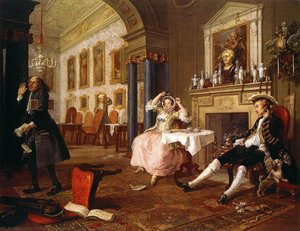
Soliciting Votes
 Acrylic On Canvas
- WallArt
- Neoclassical Style
 1754
1754 101.0 x 127.0 cm
 Sir John Soane's Museum
 Preberi več
Ročno izdelana oljna reprodukcija
Ročno slikano olje na platnu v vaši izbiri velikosti in okvirja, izdelano po naročilu naših umetnikov. ( Preklop na tiskanine Preklop na digitalno sliko)




P118B €10

P118H €10

P118W €10

P438Z €10

P508JH €12

P508YH €12

P805H €10

P805Z €10

P919BZ €10

P919G €10

P919XJ €10

P959ZH €10

P968JZ €12

W106C €8

W218G €10

W218JH €8

W218Y €10

W307PJ €10

W316G €10

W316PJ €8

W316Y €10

W398PJ €8

W4111J €10

W500HY €15

W500JH €15

W692G €12

W849H €8

W940BG €15

W953PJ €8




Izberite eno od naših vnaprej določenih velikosti, ki ustrezajo prvotnim proporcijam umetničkega dela.

Vnesite širino in višino, ki jih potrebujete, da se slika prilega vašemu okviru ali steni. Ker je delo ročno slikano, lahko umetnik pri različnih oblikih slik pri robovih doda malo več barve ali pa jih malo odreže — izberite sami. Pred začetkom slikanja vam pošljemo digitalni predogled za potrditev. Slika, prikazana na tej strani, ni končni rezultat — le predogled prikazuje dejansko podobo.
Po oddaji naročila bo ekipa OriginalUniqueArt.com stranki po e-pošti poslala navodila in predogled digitalnega predogleda.
Mednarodna dostava () v 3/4 tednih namesto običajnih 5 tednov. (22 oktober). Brez kompromisov pri kakovosti.

Brezplačna ekspresna dostava po vsem svetu

Visokokakovostno laneno platno

Popolno zavarovanje pošiljke

Garancija povračila carine in uvoznih davkov

Garancija popolnega barvnega ujemanja

Politika vračila v 100 dneh (le v primeru okvar)

Garancija 100% povračila denarja

Popust pri večjem naročilu
 Možnost stekla je na voljo le za velikosti pod 110 cm

Soliciting Votes
Tehnika reprodukcije
Velikost reprodukcije
-


Skupna cena
€ 262
A Snapshot of Political Discourse: Examining Hogarth’s “Soliciting Votes”
William Hogarth's "Soliciting Votes," completed in 1754, stands as a masterful distillation of Enlightenment satire and a poignant reflection on the burgeoning political landscape of London. More than just a depiction of an outdoor gathering—a clock subtly anchoring the scene against the backdrop of a bustling city—the painting is a meticulously crafted commentary on the manipulative tactics employed during electoral campaigns.
- Subject Matter: The artwork portrays a group of men engaged in fervent discussion around a table adorned with a banner bearing the words “Soliciting Votes.” This deliberate choice underscores Hogarth’s focus on the process of political persuasion and the anxieties surrounding democratic participation.
- Style & Technique: Executed in Hogarth's signature Rococo style, albeit infused with Neoclassical influences—evident in the careful composition and restrained palette—the painting utilizes chiaroscuro to heighten dramatic tension. Light and shadow sculpt the figures, emphasizing their expressions and gestures, conveying a palpable sense of urgency and conviction.
- Historical Context: “Soliciting Votes” emerged during a period marked by intense political debate concerning parliamentary reform. Hogarth skillfully captures the atmosphere of deliberation and ambition that characterized these elections, exposing the vanity and moral compromises inherent in seeking public office. The inclusion of the clock serves as a reminder of time’s relentless march and the importance of accountability.
Decoding Symbolism: Layers of Meaning Beyond Appearances
Hogarth doesn't merely record what he sees; he imbues his canvas with symbolic representations that amplify its critique. The banner proclaiming “Soliciting Votes” itself symbolizes the allure of power and the deceptive promises made by politicians. Each participant in the tableau embodies a particular type of character—some are earnest, others cynical—reflecting Hogarth’s broader exploration of human psychology.
- Character Types: Observe the figures clustered around the table; they represent diverse personalities – from those driven by ambition and self-interest to those attempting to persuade others with sincerity.
- Gesture & Expression: Hogarth’s masterful use of gesture and facial expression conveys emotion and intention, revealing the inner turmoil beneath the veneer of polite conversation.
Emotional Resonance: Capturing the Spirit of an Era
"Soliciting Votes" transcends its immediate subject matter to evoke a profound sense of unease about the moral compromises demanded by political ambition. Hogarth’s depiction captures the anxieties and uncertainties that gripped London society during this transformative period, prompting viewers to confront uncomfortable truths about human nature.
- Atmosphere: The painting's lively atmosphere—characterized by animated discussion and palpable tension—reflects the dynamism of the political arena.
- Impact on Viewers: Hogarth’s intention was not merely to entertain but to provoke contemplation, urging audiences to scrutinize the motivations behind political actions and consider their consequences.
This remarkable artwork exemplifies Hogarth's unparalleled ability to blend artistic skill with social critique—a legacy that continues to resonate with art historians and collectors alike.
Vprašanja in odgovori
Kakšno čustvo izraža del Neoclassical Style z naslovom "Soliciting Votes"?
"Soliciting Votes" nosi Somber čustveni ton znotraj gibanja Neoclassical Style.
O čem govori "Soliciting Votes" in kakšno vzdušje prikliče?
"Soliciting Votes" avtorja Vilijam Hogart združuje political satire, 18th century painting, london scene, social commentary, election campaign, human behavior, public discourse z Dramatic vzdušjem.
Kje lahko vidim originalno delo "Soliciting Votes" avtorja Vilijam Hogart?
Originalno delo "Soliciting Votes" avtorja Vilijam Hogart se nahaja v muzeju Sir John Soane's Museum, London, Združeno kraljestvo. Reprodukcija omogoča, da ta sklad je prikazan tudi v vašem doma.
Biografija umetnika
A London Life in Ink and Paint: The World of William Hogarth
William Hogarth, born into the bustling heart of 18th-century London in 1697, was more than just an artist; he was a visual historian, a keen observer of human nature, and a satirical commentator on the societal currents of his age. His life story is inextricably linked to the very fabric of England during a period of significant transformation – its burgeoning ambitions, underlying anxieties, and pervasive hypocrisies all finding potent expression in his remarkably detailed and often biting works. The son of a struggling Latin schoolmaster, Hogarth’s early experiences instilled within him both a love for learning and a sharp awareness of social inequalities, a foundation that would prove crucial to shaping his artistic vision. Initially apprenticed to an engraver, he quickly demonstrated a talent extending beyond mere technical skill; he possessed an innate ability to observe the nuances of human behavior and translate them into compelling visual narratives. However, he chafed against the constraints of traditional engraving, seeking a more expressive outlet for his burgeoning creativity. This led him to studies at both St Martin’s Lane Academy and under Sir James Thornhill, where he honed his skills in painting and composition, absorbing influences that would later inform his unique style.The Birth of Modern Moral Subjects
Hogarth's true innovation lay not simply *what* he painted, but *how*. He pioneered what he termed “modern moral subjects” – series of pictures designed to tell a story, often imbued with a strong satirical edge. These weren’t isolated portraits or landscapes; they were visual novels unfolding before the viewer’s eyes, offering pointed commentary on contemporary society. A Harlot's Progress, created in 1742, stands as perhaps his most famous example. This series of six paintings meticulously follows the tragic downfall of Mary, a young woman arriving in London full of hope but quickly succumbing to the temptations and dangers of city life. Each scene is rendered with painstaking detail, filled with symbolic elements that reveal the moral decay surrounding her. The meticulous depiction of every step of Mary’s descent into prostitution served as an unflinching indictment of societal attitudes towards women and morality. Similarly, A Rake's Progress, begun in 1733, charts the reckless decline of Tom Rakewell, a man who squanders his inheritance on gambling, debauchery, and ultimately, madness. These weren’t merely cautionary tales; they were unflinching portraits of a society grappling with issues of class, morality, and social mobility. Hogarth's genius resided in his ability to elevate everyday scenes – the bustling streets of London, the opulent interiors of the wealthy, the squalid lives of the poor – into works of art that resonated deeply with his audience. He didn’t shy away from depicting the harsh realities of life, presenting them with a blend of humor and pathos that forced viewers to confront uncomfortable truths about themselves and their society.Technique and Influences: A Synthesis of Styles
Hogarth's artistic style was a unique amalgamation of diverse influences. He greatly admired the realism and narrative detail found in the works of Dutch genre painters like Pieter de Hooch, evident in his meticulous depictions of interiors and everyday life. The influence of Rembrandt’s masterful use of chiaroscuro – dramatic contrasts between light and shadow – can also be discerned in Hogarth's paintings. Furthermore, Hogarth was profoundly affected by the satirical prints produced in France during the Enlightenment, particularly those of Jean-Baptiste Simeon Chardin and François Boucher. He absorbed stylistic elements from these artists, adapting them to his own distinctive vision. However, Hogarth wasn’t simply imitating these sources; he was synthesizing them into something entirely new and distinctly his own. His technique was characterized by a masterful use of line and shading, particularly evident in his engravings. He employed a distinctive cross-hatching technique that created depth and texture, bringing his scenes to life with remarkable clarity. This painstaking process ensured that every detail—from the folds of fabric to the expressions on faces—was rendered with precision and conviction. He also possessed an exceptional eye for composition, arranging figures and objects within the frame to create dynamic and engaging narratives. Like many artists of his time, Hogarth studied under Sir James Thornhill, honing his skills in painting and mastering the conventions of theatrical illusionism – a technique that would later contribute to the grandeur of his monumental canvases.Major Achievements: Shaping English Art History
William Hogarth’s contribution to English art history is undeniable. He established a distinctly British artistic identity, rejecting continental stylistic trends in favor of a style rooted in observation and moral reflection. His series of paintings—including *A Harlot's Progress*, *Marriage A-la-Mode*, and *Gin Lane*—became iconic representations of the social landscape of his era, capturing both its beauty and its ugliness with uncompromising honesty. These works challenged viewers to confront uncomfortable truths about themselves and their society, sparking debate and inspiring artists for generations to come. Moreover, Hogarth’s engravings achieved unprecedented popularity, disseminating his satirical commentary throughout England and beyond. His prints served as a powerful tool for social critique, exposing corruption and hypocrisy while simultaneously celebrating virtue and compassion. He is considered one of the fathers of political cartooning and comic strips, paving the way for visual storytelling in popular culture—a legacy that continues to endure today.Historical Significance: A Voice for Change
Hogarth’s artistic vision was driven by a deep concern for social justice and moral responsibility. He believed that art should not merely be aesthetically pleasing but should also serve a purpose beyond mere decoration—namely, to provoke thought and inspire action. His unflinching depictions of poverty, prostitution, and gambling served as a catalyst for reform movements, prompting discussions about societal ills and advocating for compassionate solutions. By confronting viewers with uncomfortable realities, Hogarth compelled them to examine their own values and behaviors, urging them to strive for a more humane and equitable world. He remains a pivotal figure in the history of English art, celebrated not only for his artistic brilliance but also for his unwavering commitment to social reform—a testament to the enduring power of art as a force for change.
Vilijam Hogart
1697 - 1764 , Združeno kraljestvo Velike Britanije in Irsko
Ključne informacije
- Artistic Movement Or Style: Satira, Realizem
- Artists Who Influenced This Artist:
- Pieter de Hooch
- Jonathan Swift
- Date Of Birth: 1697
- Date Of Death: 1764
- Full Name: William Hogarth
- Nationality: Britanska
- Notable Artworks:
- A Harlot's Progress
- A Rake's Progress
- Marriage A-la-Mode
- Place Of Birth: London, UK
Sorodni članki
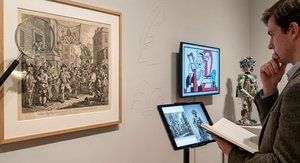
The Sharpest Wit: A Critical Exploration of Satire in Art History – From Hogarth to Contemporary Critique
Explore the history of satire in art! From Hogarth's London to contemporary critique, discover how artists use wit & visual power to reflect and challenge society. Expert insights at OriginalUniqueArt.

William Hogarth: Satire, Social Commentary & the Birth of Modern British Art
Explore the satirical world of William Hogarth, pioneering British painter & engraver. Discover his iconic works like *A Rake's Progress* and insightful social commentary on 18th-century London life.
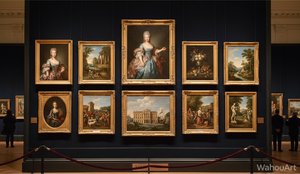
18th Century Masters: 10 Artworks That Define an Era | OriginalUniqueArt
Journey through 18th century art! Explore 10 iconic paintings – from Rococo elegance to Neoclassical grandeur. Discover Fragonard, David & more. Find museum-quality reproductions and elevate your home decor on OriginalUniqueArt.com.
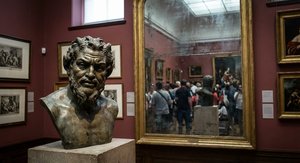
The Sharpest Wit: A Historical Exploration of Satire in Visual Culture
Explore the history of satire in art! From ancient masters like Aristophanes to Goya & Grosz, discover how artists use wit and critique to reflect—and challenge—society. Expert insights at OriginalUniqueArt.
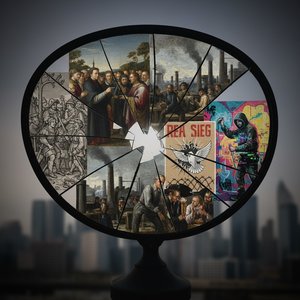
Reflecting Society's Shadows: Social Commentary in Art Through the Ages
Explore the powerful history of social commentary in art! Discover key artists like Hogarth & Daumier, movements from Realism to American Social Realism, and how art reflects—and challenges—society. Expert insights at OriginalUniqueArt.