Surrealist Movement
Bodegón (Frida Kahlo)
Frida Kahlo (1907–1954) je izdelal Bodegón. Spada v umetniško smer Surrealist Movement. Izdelano je iz Akril na platnu.
- Akril na platnu

 Predogled v realnem okolju

 Ročno izdelano oljno slikarstvo
 Pošlji
 Deli
 Informacijski list za tjači


 Prenesi sliko
 Podobni izdelki
 Rentgenski posnetek
 Predvajaj diaporama
 Vprašanja in odgovori

 Statistika
Bodegón, na kratek
- Naslov
- Bodegón
- Umetnik
- Frida Kahlo (1907–1954)
- Umetnik, rojen v
- Coyoacán, Mehika
- Tehniko
- Akril na platnu
- Gibanje
- Surrealist Movement
- Obdobje
- Moderna doba
- Tema
- fruit arrangement, pumpkin symbolism, circular composition, surrealist style, mexican heritage, vase imagery
Kaj prikazuje Bodegón?
A Stillness Charged with Life: Exploring Frida Kahlo’s *Bodegón*
Frida Kahlo, an artist synonymous with unflinching self-portraiture and the vibrant tapestry of Mexican identity, surprises many with her ventures into still life painting. *Bodegón*, a work often overshadowed by her more famous biographical pieces, reveals a different facet of Kahlo’s artistic sensibility – one deeply rooted in tradition yet subtly infused with her signature surrealist leanings. The composition centers around a robust pumpkin, dominating the visual field and acting as an anchor for the surrounding arrangement of fruits: apples, oranges, and bananas are carefully positioned, creating a circular flow that draws the eye inward. A vase graces the upper left corner, adding a delicate counterpoint to the earthy weight of the produce. This isn’t merely a depiction of objects; it's a meticulously constructed world brimming with symbolic potential.The Language of Objects: Symbolism in Kahlo’s Still Life
To understand *Bodegón*, one must consider the cultural context and Kahlo’s personal iconography. While seemingly straightforward, the choice of fruits and vegetables is far from arbitrary. The pumpkin itself, a pre-Columbian symbol of fertility and abundance, takes on added resonance when viewed through the lens of Kahlo's own struggles with physical pain and her inability to carry a child to term. The oranges and apples, often associated with temptation and knowledge in Western art history, are juxtaposed against the bananas – a fruit less traditionally laden with symbolism but perhaps representing exoticism or fleeting pleasure. The vase, a vessel for life-giving water, hints at themes of nourishment and sustenance. Kahlo’s deliberate arrangement isn't accidental; it speaks to a complex interplay between life, death, desire, and loss—themes that permeate her entire oeuvre. The slightly unsettling quality of the composition, the way objects seem both present and strangely detached, suggests a dreamlike state, a hallmark of her unique artistic vision.Technique and Tradition: A Mexican Vision
Kahlo’s technique in *Bodegón* demonstrates a mastery of traditional still life painting while simultaneously imbuing it with a distinctly Mexican aesthetic. The rich, earthy tones and the meticulous attention to detail recall the works of earlier Spanish masters, yet Kahlo's brushwork possesses a directness and emotional intensity that sets her apart. She doesn’t shy away from depicting imperfections – blemishes on the fruit, subtle variations in color – lending an authenticity and immediacy to the scene. This commitment to realism is balanced by a flattening of perspective and a deliberate simplification of forms, characteristics often found in Mexican folk art. It's a style that reflects her deep connection to her heritage and her desire to create an authentically Mexican visual language. The painting’s compact composition and vibrant color palette further emphasize its roots in the artistic traditions of Mexico.A Window into Kahlo’s World: Emotional Resonance
*Bodegón* offers a quiet, contemplative space within the often-turbulent landscape of Frida Kahlo's life and art. While lacking the explicit autobiographical elements of her self-portraits, it nonetheless reveals a profound emotional depth. The stillness of the scene is not one of emptiness but rather of charged anticipation—a sense that something significant is about to unfold. The painting invites viewers to pause, to observe, and to reflect on their own relationship with life’s fleeting pleasures and inevitable sorrows. It's a testament to Kahlo’s ability to imbue even the simplest subjects with profound meaning, making *Bodegón* not just a beautiful still life but a poignant meditation on existence itself. For collectors and interior designers alike, a reproduction of this work offers a subtle yet powerful statement—a touch of artistic brilliance that speaks volumes without demanding attention.Visokoresolucijske slike dela Bodegón
Javna lastnina: umetnik je umrl leta 1954.
Frida Kahlo, Bodegón.
Frida Kahlo (1907–1954), Bodegón, akril na platnu. Domen javne lastnine Slika: OriginalUniqueArt.com.
Odgovori na vprašanja o Bodegón
Z kakšno tehniko je izdelano "Bodegón"?
Frida Kahlo je za delo "Bodegón" uporabil/a tehniko Akril na platnu. Ta tehnika opredeljuje materialno naravo izvirnega dela.
Katere teme se pojavljajo v delu "Bodegón" avtorja Frida Kahlo?
Tematika v delu "Bodegón" avtorja Frida Kahlo vključuje fruit arrangement, pumpkin symbolism, circular composition, surrealist style, mexican heritage, vase imagery, earthy palette, ki skupaj predstavljajo vsebino umetninškega dela.
Ali se lahko slika "Bodegón" avtorja Frida Kahlo prosto reproducira?
Status avtorskih pravic za "Bodegón" avtorja Frida Kahlo: del je v javni domeni – avtorska pravica je zastarela. To določa, ali se lahko reprodukcije slike izdelujejo prosto.
Kateremu umetniku je "Bodegón" pripisano?
Delo "Bodegón" je ustvaril Frida Kahlo. Informacije na tej strani opisujejo izvirno delo umetnika Frida Kahlo.
V kateri umetniški smer pripadajo "Bodegón" avtorja Frida Kahlo?
Umetnostni smer, ki jo zastopa "Bodegón" avtorja Frida Kahlo, je Surrealist Movement. Ta klasifikacija delo uvršča med sorodne umetnike in umetniška dela.
V katero obdobje umetnostnega razvoja Frida Kahlo pripada delo "Bodegón"?
"Bodegón" pripada Mature Period v karieri umetnika Frida Kahlo. Ta razvrstitev povezuje delo z umetnikovim razvojnim obdobjem.
Ali je delo "Bodegón" avtorja Frida Kahlo v javni lastini in zakaj?
Del "Bodegón" avtorja Frida Kahlo je v javni domeni – avtorska pravica je zastarela. Avtorske pravice se izračunajo od smrti umetnika, pri čemer je Frida Kahlo umrl leta 1954.
Kako se delo "Bodegón" vklapa v tematiko in slog umetnika Frida Kahlo?
V celotnem delu umetnika Frida Kahlo se delo "Bodegón" prikloni slogu Surrealist Movement, ki vključuje tematiko mexican folk art tradition, surrealist expressionism, autobiographical reflection, symbolism & emotion, artistic legacy.
Ali je "Bodegón" tipično za dela, ki jih je Frida Kahlo običajno ustvarjal?
Med zastavljenimi temami umetnika Frida Kahlo – ki jih zastopajo mexican folk art tradition, surrealist expressionism, autobiographical reflection, symbolism & emotion, artistic legacy – prinaša "Bodegón" lastno pozornost na fruit arrangement, pumpkin symbolism, circular composition, surrealist style, mexican heritage, vase imagery, earthy palette.
O umetniku, Frida Kahlo
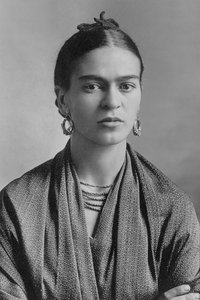
1907–1954, Mehika
Frida Kahlo
Mladost in družinsko poreklo Coyoacán v Mehiki postavlja kuliso za roj Magdalene Carmen Friede Kahlo y Calderón, ki je prišla na svet 6. julija 1907. Njena domača okolja je bila zbirka različnih krvnih linij; njen oče, Guillermo Kahlo, je bil nemško-meški fotograf, medtem ko je njena mati, Matilde, v sebi nosila mešanico ameriških in španskih koren. Ta domača dinamika je oblikovala zgodnje leta Fride Kahlo, otroka, čija se je fizična realnost že kmalu začela spreminjati pod težo bolesti.
Tudi dela avtorja Frida Kahlo
 Frida Kahlo - Dve Fride1939
 Samoportret z trnovim ovsinkom in kolibrijem
 Zlomljena kolona1944
 Ranjeni srnjak1946
Eseji o delu Bodegón
 Mexican contemporary realist paintersGraciela Iturbide and Octavio Medellín define this era. Examine 10 artists, including works from 1938 and the life of Jorge Chávez Carrillo.
 Pain and Passion: The 25 Most Iconic Masterpieces by Frida Kahlo1939 saw the creation of The Two Fridas during her divorce from Diego Rivera. Compare the symbolism in this work against her 1944 self-port…
 The Bountiful Still Life: Symbolism & Artistic Representation of Fruit Across Art HistoryExplore the rich history of still life painting & the symbolism of fruit across art movements. Discover masterpieces from Caravaggio to Céz…