
 Náhľad v interiéri
 Odoslať ako digitálnu kartu
 Zdieľať
 Podrobnosti o dielo
 Príručka

 Stiahnuť obraz
 Podobné položky
 RTG skúška
 Prehliadanie diapozoje
 Otázky a odpovede
 Štatistiky
Christus before Pilate (detail)


 Zobraziť viac
Giclée / Umenotlač
Giclée tlač alebo plátno múzeálnej kvality s rýchlou výrobou a rôznymi možnosťami povrchovej úpravy. ( Kúpiť ručne maľovaný obraz Prepnúť na digitálny obraz)




P118B €10

P118H €10

P118W €10

P438Z €10

P508JH €12

P508YH €12

P805H €10

P805Z €10

P919BZ €10

P919G €10

P919XJ €10

P959ZH €10

P968JZ €12

W106C €8

W218G €10

W218JH €8

W218Y €10

W307PJ €10

W316G €10

W316PJ €8

W316Y €10

W398PJ €8

W4111J €10

W500HY €15

W500JH €15

W692G €12

W849H €8

W940BG €15

W953PJ €8




Vyberte si z našich preddefinovaných rozmerov, ktoré zodpovedajú pôvodným pomeroḿ diela.

Zadajte šírku a výšku, ktoré potrebujete, aby sa reprodukcia hodila k vášmu rámu alebo stene. Print možno len orezávať, nikdy však nemennú veľkosť zvětšiť oproti pôvodnému obrázku, preto pri inom formáte stráca časť obrazu. Pred samotným vytlačiacím procesom vám pošleme digitálny náhľad na schválenie. Obrázok zobrazený na tejto stránke nezobrazuje reálny rez — len digitálny náhľad ukazuje presný výsledok.
Celosvetová doprava () do 2 týždňov namiesto štandardných 4 až 5 týždňov. (5 november)

Bezplatná expresná doprava po celom svete

Vysokokvalitné lnianske plátno

Kompletné poistenie prepravy

Záruka vrátenia colného poplatku

Záruka presného farebného zhodnutia

100-dená politika vrátenia tovaru (iba pri vadách)

100% záruka vrátenia peňazí

Zľava pri väčšom množstve
 Možnosť skla je dostupná len pri rozmeroch pod 110 cm

Christus before Pilate (detail)
Giclée / Umenotlač
Veľkosť reprodukcie
-


Celková cena
€ 72
A Divine Encounter in the Northern Renaissance
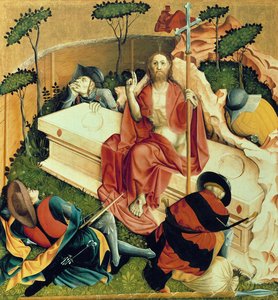
In the quiet intensity of Hans Multscher’s 1437 masterpiece, Christus before Pilate (detail), we are invited to witness one of the most profound confrontations in human history. This exquisite detail from the Wurzach Altar does not merely depict a biblical event; it captures the very breath held between two worlds: the eternal and the temporal. As Jesus Christ stands before the Roman governor, the canvas vibrates with the tension of a trial that would alter the course of civilization. Multscher, a pioneer of German realism, moves beyond the flat, symbolic gestures of the Gothic era to present a scene where every furrowed brow and heavy fold of fabric tells a story of spiritual weight and earthly consequence.
The artistry of this piece lies in its breathtaking commitment to Northern Renaissance Realism. Utilizing the delicate medium of oil paint on fir wood, Multscher achieved a level of textural nuance that was revolutionary for his time. One can almost feel the heavy, tactile quality of the garments worn by the gathered crowd—the rougher textures of commoners contrasted against the more refined attire of those in positions of authority. This meticulous attention to detail serves a higher purpose than mere decoration; it grounds the divine narrative in a palpable, physical reality, making the miraculous feel disturbingly present and human.
Symbolism and the Language of Light
Every element within this composition is imbued with deep theological significance, designed to guide the viewer toward spiritual contemplation. The central figure of Christ is marked by a subtle yet unmistakable halo, a luminous emblem of his divine nature that pierces through the surrounding earthly chaos. Around him, the faces of the onlookers form a mosaic of human emotion—fear, doubt, skepticism, and apprehension. These expressions serve as a mirror for the viewer's own soul, reflecting the universal struggle to recognize truth amidst the noise of worldly judgment.
The interplay of light and shadow, or chiaroscuro, plays a vital role in directing the narrative flow. Light falls upon Christ with a clarity that suggests an inner radiance, while the deeper shadows enveloping the periphery represent the uncertainty and moral ambiguity of Pilate’s court. For the collector or the interior designer, this painting offers more than just visual beauty; it provides a focal point of profound intellectual and emotional depth. It is a piece that commands attention, inviting long periods of study and reflection, making it an ideal centerpiece for spaces dedicated to thought, heritage, and the appreciation of fine classical art.
A Legacy of Faith and Humanism
To look upon this work is to step into the cultural heart of 15th-century Ulm. Created during a period of intense religious fervor and the burgeoning movement of Northern Humanism, Multscher’s work embodies the era's desire to find the sacred within the natural world. His travels through France and the Netherlands clearly left an indelible mark on his technique, allowing him to bring a sophisticated, international realism to the German landscape. This painting is not just a relic of the past; it is a living testament to the moment when art began to look more closely at the human condition.
Whether displayed in a private gallery or as a sophisticated element of a curated interior, a high-quality reproduction of this detail allows the timeless drama of Multscher’s vision to inhabit modern spaces. It brings with it an atmosphere of historical gravity and artistic excellence, offering anyone who appreciates the masters a window into a period where every brushstroke was an act of devotion.
Otázky a odpovede
Ako je vybudovaná farebná kompozícia diela „Christus before Pilate (detail)“ od Hans Multscher?
Farebná kompozícia diela „Christus before Pilate (detail)“ od Hans Multscher spája Statement kontrast s Softly Mixed Palette harmóniou.
Akú atmosféru vyžaruje dielo „Christus before Pilate (detail)“?
„Christus before Pilate (detail)“ má Dramatic atmosféru.
Čo zobrazuje dielo "Christus before Pilate (detail)"?
„Christus before Pilate (detail)“ od Hans Multscher zobrazuje: religious art, medieval painting, christian iconography, pilate trial, crucifixion scene, renaissance style, german sculpture.
Biografia umelca
Hans Multscher (1400-1467): A Bridge Between Worlds
Hans Multscher, a name perhaps less familiar than those of his contemporaries like Dürer or Holbein, nevertheless stands as a pivotal figure in the transition from late Gothic to early Renaissance art within Germany. Born around 1400 in the small Bavarian town of Reichenhofen – now part of Leutkirch im Allgäu – Multscher’s life and work represent a fascinating confluence of influences, a testament to his inquisitive spirit and his willingness to embrace new artistic horizons. He wasn't merely a follower of trends; he actively sought out knowledge and inspiration, embarking on journeys that fundamentally shaped his distinctive style and cemented his place as a bridge between two distinct artistic eras.
His early years remain somewhat shrouded in mystery, but it’s clear that Multscher possessed an innate talent for both sculpture and painting. He didn't emerge from a traditional guild setting; instead, he seems to have cultivated his skills through independent study and observation, absorbing the lessons of masters like Gislebertus and Master of Cabestany. Crucially, he spent considerable time in northern France and the Netherlands – regions then at the forefront of artistic innovation – immersing himself in the burgeoning realism and meticulous detail characteristic of Early Netherlandish painting. This exposure proved transformative, profoundly influencing his approach to composition, perspective, and the rendering of human form.
The Workshop: A Crucible of Innovation
In 1427, Multscher established himself as a free citizen of Ulm – a thriving commercial hub on the Danube River. It was here that he married Adelheid Kitzin and, alongside his brother Heinrich, founded a workshop that quickly gained renown for its diverse range of artistic output. This wasn’t simply a production facility; it was a vibrant environment where traditional Gothic forms were gradually infused with the naturalism and observational techniques he had absorbed during his travels. The workshop employed as many as sixteen assistants at times, fostering an atmosphere of experimentation and collaboration.
The influence of this workshop extended far beyond Multscher’s own creations. His brother Heinrich specialized in wood carving, creating intricate architectural elements for churches and civic buildings throughout Swabia. Together, they established a reputation for quality and innovation that attracted commissions from wealthy patrons across the region. The workshop's output included not only sculptures and paintings but also illuminated manuscripts, stained glass windows, and decorative furnishings – demonstrating Multscher’s versatility and his ability to adapt his style to different media and contexts.
The Wurzach Altar: A Masterpiece of Transition
Perhaps the most enduring testament to Multscher's artistic vision is the *Wurzacher Altar*, begun in 1437. This ambitious project, originally intended for the church of St. James in Wurzach, exemplifies the artist’s masterful synthesis of Gothic and Renaissance elements. The altar consisted of a central shrine flanked by two wings, each adorned with panels depicting scenes from the life of Christ and the Virgin Mary. These panels showcase Multscher's remarkable skill in oil painting – a relatively new medium at the time – and his ability to render textures, light, and shadow with astonishing realism.
The *Wurzacher Altar* is particularly noteworthy for its emotional depth and psychological insight. Unlike the stylized figures of earlier devotional art, Multscher’s depictions of Christ and Mary are imbued with a palpable humanity – their faces expressing sorrow, compassion, and profound spiritual awareness. The altar's innovative use of perspective and color further enhanced its dramatic impact, creating a truly immersive experience for the viewer. Sadly, the altar was dismantled in the 18th century and its panels dispersed to various museums, but they remain invaluable examples of Multscher’s artistic genius.
Beyond Wurzach: Sculpture and Secular Works
While the *Wurzacher Altar* is undoubtedly Multscher's most famous work, he also produced a significant body of sculpture and secular art. His sculptures, ranging from monumental figures to intimate devotional panels, demonstrate his mastery of form and his ability to convey complex emotions through sculpted stone. The sculpture of *Holy Mary Magdalen*, now housed in Frankfurt’s Liebieghaus, is a particularly poignant example of his expressive style.
Furthermore, Multscher's commissions extended beyond the realm of religious art. In 1456-58, he created a group of emperors adorning the eastern window of Ulm’s city hall – a testament to his versatility and his appeal to a broad clientele. These works showcase his ability to adapt his style to different subjects and contexts, reflecting the diverse demands of his patrons.
A Lasting Legacy
Hans Multscher died in Ulm in 1467, leaving behind a legacy that continues to resonate today. He wasn’t merely a skilled craftsman; he was a visionary artist who played a crucial role in shaping the course of German art. His willingness to embrace new influences and his commitment to realism paved the way for subsequent generations of Renaissance masters. The workshop he established continued to thrive after his death, disseminating his artistic principles throughout Swabia and beyond. Multscher’s work serves as a powerful reminder that artistic innovation often arises from the synthesis of tradition and experimentation – a testament to the enduring power of human creativity.
Hans Multscher
1400 - 1467 , Nemecko
Základné informácie
- Artistic Movement Or Style: Pozdní gotický/Renesančný
- Artists Or Movements Influenced By This Artist: ['Renesančný umenie']
- Artists Who Influenced This Artist:
- Severofrancúzske štýly
- Nízkych holandských štýlov
- Date Of Birth: c. 1400
- Date Of Death: 1467
- Full Name: Hans Multscher
- Nationality: Nemecký
- Notable Artworks:
- Altár sv. Marie Magdaleny
- Muž utrpenia
- Skupina cisárov
- Wurzacher Altár
- Place Of Birth: Reichenbach, Nemecko
Súvisiace články

Oil on Canvas: A Historical & Technical Exploration of a Timeless Artistic Medium
Explore the rich history & enduring techniques of oil painting on canvas. Discover the science behind its longevity, conservation practices, and contemporary relevance. Expert insights for art enthusiasts.

The Enduring Power of Painting: A Historical & Contemporary Exploration of Form and Emotion
Explore the rich history & enduring techniques of oil painting with OriginalUniqueArt. Discover masterpieces, learn about art collecting, and find authentic handmade reproductions crafted by skilled artists.
The Northern Awakening: Artistic Innovation & Cultural Transformation in the German Renaissance
Explore the artistic innovation of the German Renaissance! Discover Dürer, the Danube School & Reformation art. Learn about techniques, materials & lasting influence. Find museum-quality reproductions at OriginalUniqueArt.
The Northern Renaissance: A Masterclass in Hyper-Realism, Oil Innovation, and Symbolic Depth
Explore the profound mastery of Northern Renaissance art. Discover the technical brilliance of Flemish oil painting, the intricate symbolism of Bosch and Bruegel, and the revolutionary realism that redefined European art history through an expert historical lens.

The Enduring Legacy of Oil on Canvas: Technique, History & Aesthetic Impact
Explore the rich history & techniques of oil painting – from Renaissance masters to Impressionism. Discover pigments, layering methods, and why this timeless medium endures. Expert insights for artists & art enthusiasts.
