Gothic, one artist at a time

34 Famous Gothic Artistas Who Shaped the Movement

Duccio (1255–1319) is the most famous Gothic artista, whose singular vision gave us Madona Rucellai e Maestà (Madonna com Anjos e Santos). Next stand Simone Martini, Gentile Da Fabriano, Antonio Pisanello e Stefan Lochner. These 34 artistas, from Mestre Mateo (born 1161) to Jan Baegert (born 1465), came from 8 countries.

Our selection. Artists whose works our catalogue attaches to Gothic, in the order of our fame ranking. Artists born after 1955 with no Wikidata identifier stay out until verified. The Wikipedia figure counts our 32 languages with an article on the artist.

  1. Madona Rucellai, de Duccio1Duccio
  2. Cristo Encontrado no Templo, de Simone Martini2Simone Martini
  3. A Seated Scribe, de Gentile Da Fabriano3Gentile Da Fabriano

In brief

Gothic in brief

  • 34Artistas
  • 1161–1465Anos de nascimento
  • 8Países de origem
  • 0Mulheres
  • 1.535Obras em nosso catálogo
Cidades com mais nascimentos
Florença (5), Siena (3), Fabriano (1), Pisa (1)
Museus que detêm as principais obras
Metropolitan Museum of Art (7), Galleria degli Uffizi (4), National Gallery (4), National Gallery of Art (3)

One artist at a time

34 Gothic Artistas and their signature works

1of 34

Duccio

Italiano Born in Siena Escola Sienesa, Gótico do Trecento Wikipedia in 31/32 languages

Duccio

Nascido em Siena, na Itália, por volta de 1255, Duccio Di Buoninsegna viveu uma existência profundamente entrelaçada com o pulsar religioso e cívico da Toscana. The Virgin and Child with Saints Dominic and Aurea (1312). Nascido em Siena, na Itália, por volta de 1255 ou 1256, Duccio Di Buoninsegna emergiu de uma linhagem que moldou sua própria identidade.

Signature works · The 100 signature works

2of 34

Simone Martini

Italiano Born in Siena Gótico Internacional Wikipedia in 28/32 languages

Simone Martini

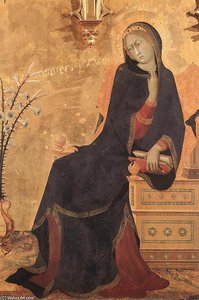
Saint Louis of Toulouse Crowning His Brother Robert of Anjou, 1317. Em 1333, ele pintou a Anunciação com Santa Margarida e Santo Ansanus, uma obra que reside atualmente na Galleria degli Uffizi, em Florença. Em 1342, ele concluiu o Cristo Encontrado no Templo, uma pintura que pode ser encontrada na Walker Art Gallery, em Liverpool.

Teacher of Lippo Memmi #9

Signature works · The 100 signature works

3of 34

Gentile Da Fabriano

Italiano Born in Fabriano Gótico Internacional Wikipedia in 23/32 languages

Gentile Da Fabriano

Gentile da Fabriano, um nome sinônimo da graça opulenta do estilo Gótico Internacional, emergiu do cenário artístico da Itália do final do século XIV. Sabemos que sua mãe faleceu antes de 1380 e que seu pai, Niccolò di Giovanni Massi, buscou refúgio em um monastério por volta de 1385 – eventos que provavelmente moldaram os anos formativos do jovem Gentile.

Signature works · The 100 signature works

4of 34

Antonio Pisanello

Italiano Born in Pisa Gótico Italiano e Renascimento Inicial Wikipedia in 28/32 languages

Antonio Pisanello

Nascido como Antonio di Puccio Pisano em Pisa, por volta de 1395, Pisanello emergiu como uma figura fundamental na transição do estilo Gótico Internacional para a florescente Renascença. Por volta de 1415-1420, iniciou-se um aprendizado crucial com Gentile da Fabriano, consolidando a trajetória artística de Pisanello.

Signature works · The 100 signature works

5of 34

Stefan Lochner

Alemã Born in Meersburg Gótico Tardio, Gótico Internacional Wikipedia in 19/32 languages

Stefan Lochner

Nascido por volta de 1410 na pitoresca cidade de Meersburg, na Alemanha – um local imerso em lendas e aninhado entre as deslumbrantes águas do Lago de Constança – a vida de Stephan Lochner foi tragicamente interrompida em Colônia, por volta de 1451.

Signature works · The 100 signature works

6of 34

Agnolo Gaddi

Italian Born in Florença Gothic, Early Renaissance Wikipedia in 20/32 languages

Agnolo Gaddi

Agnolo’s formative years were steeped in the legacy of Giotto, whose monumental frescoes at Assisi and Padua had irrevocably altered the course of Florentine art. This familial connection immediately positioned Agnolo within the epicenter of artistic experimentation that Florence experienced during Giotto’s lifetime. The influence is palpable in Agnolo’s earliest works: the monumental figures, the emotionally resonant compositions, and the narrative clarity—hallmarks of Giotto’s frescoes—are faithfully reproduced in paintings like The Resurrection of Lazarus, executed around 1375 for San Jacopo tra i Fossi.

Signature works · The 100 signature works

7of 34

irmãos Limbourg

Born in Nijmegen Wikipedia in 21/32 languages

irmãos Limbourg

No crepúsculo da Idade Média, um trio de irmãos da cidade holandesa de Nijmegen emergiu para redefinir as fronteiras da narrativa visual. Herman, Paul e Jean de Limbourg, conhecidos coletivamente como os Irmãos Limbourg, não eram meramente pintores, mas arquitetos de mundos em miniatura.

Signature works · The 100 signature works

8of 34

Paolo Veneziano

Italiano Born in Veneza Influência bizantina e arte gótica Wikipedia in 15/32 languages

Paolo Veneziano

Paolo Veneziano (c. 1333 – 1358) ergue-se como uma figura monumental na história da arte veneziana, reconhecido universalmente como o pintor veneziano mais importante do século XIV. Nascido em uma linhagem artística no coração de Veneza — sendo seu pai um artista renomado — a breve, porém brilhante carreira de Veneziano coincidiu com um período transformador na pintura europeia.

Signature works · The 100 signature works

9of 34

Lippo Memmi

Born in Siena Wikipedia in 17/32 languages

Lippo Memmi

Lippo Memmi, nascido por volta de 1291 no coração de Siena, Itália, destaca-se como uma figura crucial na transição das tradições bizantinas da pintura medieval para a elegância florescente do estilo Gótico Internacional. Talvez a mais celebrada delas seja a Anunciação com Santa Margarida e Santo Ansanus (1333), criada em colaboração com Simone Martini para a Galeria Uffizi.

Pupil of Simone Martini #2

Signature works · The 100 signature works

10of 34

Spinello Aretino

Italiano Born in Arezzo Elo entre a Escola de Giotto e a Escola de Siena Wikipedia in 16/32 languages

Spinello Aretino

Nascido no seio de uma família de ourives florentinos, o seu verdadeiro nome era Spinello Di Luca Spinelli, mas tornou-se conhecido pela história pelo apelido "Aretino", significando a sua ligação a Arezzo. Nos seus primeiros anos, trabalhou nas movimentadas oficinas de Florença, contribuindo para obras monumentais, como os frescos na igreja de Carmine e Santa Maria Novella.

Signature works · The 100 signature works

11of 34

Bernardo Daddi

Born in Florença Wikipedia in 17/32 languages

Bernardo Daddi

Bernardo Daddi, nascido em Florença por volta de 1290 e falecido em 1348, ergue-se como uma figura fundamental na transição do final do período Gótico para o florescente Renascimento Italiano. Suas obras primordiais demonstram uma conexão clara com os seguidores de Giotto — mestres como o “Mestre de Santa Cecília” e outros pintores florentinos do primeiro quarto do século XIV — refletindo uma linhagem direta de influência artística.

Signature works · The 100 signature works

13of 34

Mestre Mateo

Espanhola Escultura Românica

Mestre Mateo

Mestre Mateo, um escultor cujo nome permanece envolto em mistério apesar de sua contribuição monumental para a Catedral de Santiago de Compostela, destaca-se como uma das figuras mais reverenciadas da arte românica na Espanha. Nascido por volta de 1161 na Galiza, embora os detalhes precisos sobre sua vida sejam escassos, o legado de Mateo repousa principalmente em sua conquista inigualável: o Pórtico da Glória.

Signature works · The 100 signature works

14of 34

Jean Malouel

Born in Nimega Wikipedia in 16/32 languages

Jean Malouel

Jean Malouel, ou Jan Maelwael, como era conhecido em sua nativa Holanda, ocupa uma posição fascinante e crucial na transição da arte Gótica para o Renascimento. A carreira de Malouel deu sua primeira reviravolta significativa em 1396-97, quando se viu trabalhando em Paris, encarregado de pintar decorações armoriais para Isabel de Baviera, a Rainha da França.

Signature works · The 100 signature works

15of 34

Tilman Riemenschneider

Alemão Born in Heiligenstadt Gótico tardio/Renascimento

Tilman Riemenschneider

His major achievements include: The Gravestone of Eberhard von Grumbach (1485) – A foundational work demonstrating his early talent. The Holy Blood Altar in Creglingen (circa 1503-1505) – His most celebrated work, a monumental achievement of limewood carving that exemplifies his artistic vision. For centuries after his death in 1531, Riemenschneider’s contributions were largely forgotten, overshadowed by the artistic achievements of the Italian Renaissance.

Signature works · The 100 signature works

16of 34

Frade Francke

Dutch Born in Lower Rhine Gothic Renaissance Wikipedia in 14/32 languages

Frade Francke

Johannes Francke, known as Frater Francke, stands as a pivotal figure in the burgeoning artistic landscape of 15th-century Germany – specifically within the vibrant Gothic tradition of Hamburg.

Signature works · The 100 signature works

17of 34

Claus Sluter

Holandês Born in Haarlem Realismo Norte

Claus Sluter

Claus Sluter (c. 1350-1406) posiciona-se como um dos escultores mais influentes de sua era, marcando uma conjuntura crucial entre as tradições artísticas góticas e renascentistas no norte da Europa. Primeiros Anos e Formação: Detalhes biográficos precisos permanecem esquivos, mas as evidências sugerem que Sluter recebeu treinamento nas oficinas das guildas de Haarlem, absorvendo as convenções estilísticas da escultura gótica prevalecente na época.

Signature works · The 100 signature works

18of 34

Jacopo di Cione

Italian Born in Florence Gothic Wikipedia in 7/32 languages

Jacopo di Cione

Jacopo's dedication extended beyond commissions; he actively participated in shaping Florence’s cultural landscape through his involvement with the cathedral workshop and his role as consul of the Arte dei Medici e Speziali (1384, 1387, 1392). His commitment to procuring marble for the cathedral underscored his understanding of artistic grandeur and civic responsibility. The dispersed predella depicting scenes from Saint Peter’s life – a collaborative effort with Niccolò di Pietro Gerini – remains a poignant reminder of Jacopo's artistic legacy and the enduring power of Florentine Gothic art.

Signature works · The 100 signature works

19of 34

Jaime Huguet

Catalan Born in Valls Late Gothic, Flemish influence Wikipedia in 10/32 languages

Jaime Huguet

His workshop became a cornerstone of Catalan production, with works like the Saint Augustine Altarpiece involving collaborations with skilled artists such as Pau Vergós to meet the immense demands of religious guilds and monasteries.

Signature works · The 100 signature works

20of 34

Lucas Moser

German Born in Weil der Stadt Late Gothic Art Wikipedia in 10/32 languages

Lucas Moser

Where International Gothic often favored elegant elongation, stylized drapery, and symbolic ornamentation, Moser embraced a more naturalistic approach. The landscape backgrounds, though still somewhat conventional, demonstrate an increasing attention to spatial depth and atmospheric perspective – qualities that foreshadow the developments of Early Netherlandish painting. However, scholars generally agree that he was exposed to both the late Gothic traditions prevalent in Southern Germany and the emerging artistic trends emanating from Flanders.

Signature works · The 100 signature works

21of 34

Master Bertram

German Born in Minden International Gothic Wikipedia in 13/32 languages

Master Bertram

It is believed that Bertram was influenced by both French and Netherlandish artistic trends prevalent during his time. The influence of courtly art from France can be observed in the refined elegance of his figures and decorative elements, while the meticulous detail and realism characteristic of Early Netherlandish painting are evident in his depictions of architectural settings and objects.

Signature works · The 100 signature works

22of 34

Pere Serra

Spanish Gothic-Italian

Pere Serra

Pere Serra, also known as Jaume Serra, stands as a compelling figure in the transition from the International Gothic style to the burgeoning Renaissance aesthetic within Catalonia. While biographical details remain scarce – a common fate for artists working before widespread documentation – Serra’s surviving works speak volumes about his skill, refinement, and the patronage that supported his endeavors. The city was a vibrant hub for trade and artistic exchange, exposed to influences from Italy, France, and Flanders.

Signature works · The 100 signature works

23of 34

Paolo Di Giovanni Fei

Italiano Born in San Quirico d'Orcia Naturalismo, Proto-Renascimento Wikipedia in 10/32 languages

Paolo Di Giovanni Fei

Pietro Lorenzetti, nascido por volta de 1280 e tragicamente falecido em 1348 durante a devastadora pandemia da Peste Negra, permanece uma figura fundamental na evolução da pintura italiana.

Signature works · The 100 signature works

25of 34

Lluís Borrassà

Catalan Born in Girona International Gothic Wikipedia in 8/32 languages

Lluís Borrassà

By successfully introducing and refining the International Gothic style in the Principality, he provided a bridge between the medieval past and the approaching Renaissance.

Signature works · The 100 signature works

26of 34

Michele Giambono

Italian Born in Venice International Gothic Wikipedia in 10/32 languages

Michele Giambono

While the broader Renaissance would eventually move toward the anatomical realism and linear perspective of masters like Bellini, Giambono’s dedication to the International Gothic aesthetic provided the essential foundation of splendor upon which later Venetian art was built.

Signature works · The 100 signature works

27of 34

Giovanni dal Ponte

Italiano Born in Florença Gótico tardio/Renascença Wikipedia in 7/32 languages

Giovanni dal Ponte

Seu trabalho para Illarione dei Bardi em 1422 lhe rendeu reconhecimento precoce, levando a comissões prestigiosas de famílias como os Biliotti e Bardo di Francesco de’ Bardi. O estilo artístico de Giovanni dal Ponte é caracterizado por uma síntese única de influências góticas tardias e inovações renascentistas nascentes.

Signature works · The 100 signature works

28of 34

Teodórico De Praga

Tcheco Born in Itália Gótico Wikipedia in 16/32 languages

Teodórico De Praga

Ativo aproximadamente entre 1360 e 1380, ele viveu um período em que a sua presença na corte da Boêmia era amplamente documentada. Serviu como o pintor favorito da corte de Carlos IV, o Imperador do Sacro Império Romano-Germânico. A mão do artista estava intimamente ligada à corte de Carlos IV, o Imperador do Sacro Império Romano-Germânico.

Signature works · The 100 signature works

29of 34

Niccolò Di Pietro Gerini

Italiano Born in Florença Gótico Tardio Wikipedia in 6/32 languages

Niccolò Di Pietro Gerini

Nascido por volta de 1368 em Florença e falecido por volta de 1415, a carreira de Gerini desenrolou-se num cenário de fermento artístico, onde a tradição e a experimentação dançavam um equilíbrio delicado. Seu pai, Pietro Geri, era ele próprio membro da Guilda de São Lucas, sugerindo uma criação imersa na prática artística — um legado familiar que continuaria com o filho de Niccolò, Bindo, que também se tornou pintor.

Signature works · The 100 signature works

30of 34

Pacino Di Bonaguida

Born in Florença Wikipedia in 4/32 languages

Pacino Di Bonaguida

Pacino di Bonaguida, um nome que ressoa suavemente pelos anais da arte italiana do século XIV, representa uma figura fundamental na transição das tradições de raízes bizantinas para a estética emergente do Renascimento.

Signature works · The 100 signature works

31of 34

Master Of The Life Of The Virgin

German Late Gothic Wikipedia in 11/32 languages

Master Of The Life Of The Virgin

The Master’s style is a compelling synthesis of Northern European Gothic and Early Renaissance influences. The influence of Netherlandish masters is readily apparent in his draftsmanship and compositional structure.

Signature works · The 100 signature works

32of 34

Jan Baegert

Born in Wesel Late Gothic Wikipedia in 3/32 languages

Jan Baegert

He received his formal training under his father, Derick Baegert, a painter who provided the essential technical groundwork for Jan's later career. By 1492, Jan Baegert was recognized as a master in Kalkar, a significant milestone that confirmed his ability to manage large-scale commissions independently.

Where to see Tracing the physical remains of Jan Baegert’s output requires looking toward the Westphalian and Lower Rhine regions.

Signature works · The 100 signature works

33of 34

Master Of The Osservanza

Italian Late Gothic Wikipedia in 8/32 languages

Master Of The Osservanza

While definitively named only recently thanks to meticulous research by Maria Falcone, this artist—now recognized as Sano di Pietro —left behind a remarkable cycle of eight panels depicting scenes from the life of Saint Anthony Abbot, works that continue to captivate viewers with their haunting beauty and psychological depth. Despite his anonymity for centuries, the Master of the Osservanza's work has exerted a significant influence on subsequent generations of Italian painters.

Signature works · The 100 signature works

34of 34

Master of Heiligenkreuz Abbey

Austrian International Gothic Wikipedia in 5/32 languages

Master of Heiligenkreuz Abbey

The Master’s style is a complex synthesis of influences. However, he also incorporated elements of the International Gothic style, characterized by elongated figures, delicate hands, and an expressive use of color.

Signature works · The 100 signature works

Signature works

Signature Gothic works

  1. Madona Rucellai, de Duccio

    Madona Rucellai

    Duccio

    1285 · Galleria degli Uffizi, Florença

  2. Cristo Encontrado no Templo, de Simone Martini

    Cristo Encontrado no Templo

    Simone Martini

    1342 · Walker Art Gallery, Liverpool

  3. A Seated Scribe, de Gentile Da Fabriano

    A Seated Scribe

    Gentile Da Fabriano

    1480 · Isabella Stewart Gardner Museum, Boston

  4. Sigismondo Pandolfo Malatesta, Lord of Rimini, de Antonio Pisanello

    Sigismondo Pandolfo Malatesta, Lord of Rimini

    Antonio Pisanello

    1445 · Fundação Calouste Gulbenkian, Lisboa

  5. Madonna of the Rose Bush, de Stefan Lochner

    Madonna of the Rose Bush

    Stefan Lochner

    1440 · Wallraf-Richartz-Museum, Colônia

  6. The Last Supper, de Agnolo Gaddi

    The Last Supper

    Agnolo Gaddi

    1395 · Lindenau-Museum, Altengau

  7. The Belles Heures of Jean, Duke of Berry, de irmãos Limbourg

    The Belles Heures of Jean, Duke of Berry

    irmãos Limbourg

    1410 · Metropolitan Museum of Art, Nova York

  8. Rediscovery of the Relics of St Mark, de Paolo Veneziano

    Rediscovery of the Relics of St Mark

    Paolo Veneziano

    1345 · Basílica de São Marcos, Veneza

A timeline

Gothic through its signature works

  1. 1188
  2. 1285
  3. 1333
  4. 1336
  5. 1339
  6. 1340
  7. 1342
  8. 1375
  9. 1383
  10. 1384
  11. 1394
  12. 1395
  13. 1395
  14. 1395

Figures

The figures

Every name

List of 34 famous Gothic artistas, every name

  1. 1DuccioDuccioItaliano · 1255–1319
  2. 2Simone MartiniSimone MartiniItaliano · 1284–1344
  3. 3Gentile Da FabrianoGentile Da FabrianoItaliano · 1370–1427
  4. 4Antonio PisanelloAntonio PisanelloItaliano · 1395–1455
  5. 5Stefan LochnerStefan LochnerAlemã · 1410–1451
  6. 6Agnolo GaddiAgnolo GaddiItalian · 1350–1396
  7. 7irmãos Limbourgirmãos Limbourg1385–1416
  8. 8Paolo VenezianoPaolo VenezianoItaliano · 1333–1358
  9. 9Lippo MemmiLippo Memmi1291–1356
  10. 10Spinello AretinoSpinello AretinoItaliano · 1350–1410
  11. 11Bernardo DaddiBernardo Daddi1290–1348
  12. 12Andrea PisanoAndrea PisanoItaliano · 1290–1348
  13. 13Mestre MateoMestre MateoEspanhola · 1161–1217
  14. 14Jean MalouelJean Malouel1370–1415
  15. 15Tilman RiemenschneiderTilman RiemenschneiderAlemão · 1460–1531
  16. 16Frade FranckeFrade FranckeDutch · 1380–1435
  17. 17Claus SluterClaus SluterHolandês · 1355–1406
  18. 18Jacopo di CioneJacopo di CioneItalian · 1325–1399
  19. 19Jaime HuguetJaime HuguetCatalan · 1445–1492
  20. 20Lucas MoserLucas MoserGerman · 1390–1443
  21. 21Master BertramMaster BertramGerman · 1345–1415
  22. 22Pere SerraPere SerraSpanish · 1357–1406
  23. 23Paolo Di Giovanni FeiPaolo Di Giovanni FeiItaliano · 1345–1411
  24. 24Giovannino De' GrassiGiovannino De' GrassiItalian · 1350–1398
  25. 25Lluís BorrassàLluís BorrassàCatalan · 1360–1425
  26. 26Michele GiambonoMichele GiambonoItalian · 1400–1462
  27. 27Giovanni dal PonteGiovanni dal PonteItaliano · 1385–1438
  28. 28Teodórico De PragaTeodórico De PragaTcheco ·
  29. 29Niccolò Di Pietro GeriniNiccolò Di Pietro GeriniItaliano · 1368–1415
  30. 30Pacino Di BonaguidaPacino Di Bonaguida1280–1340
  31. 31Master Of The Life Of The VirginMaster Of The Life Of The VirginGerman ·
  32. 32Jan BaegertJan Baegert1465–1535
  33. 33Master Of The OsservanzaMaster Of The OsservanzaItalian ·
  34. 34Master of Heiligenkreuz AbbeyMaster of Heiligenkreuz AbbeyAustrian ·

Questions

Your questions

  • Which Gothic artista is the most famous?

    First place goes to Duccio (#1); Simone Martini (#2) and Gentile Da Fabriano (#3) complete the podium.

  • Who are the 5 most famous Gothic artistas?

  • Who was the first Gothic artista?

    The earliest-born artista in this list is Mestre Mateo (#13), born in 1161.

  • Which techniques define Gothic art?

    “Naquele ano, pintou o fresco da Maestà para o Palazzo Pubblico, a sede do governo da cidade.” — from our biography of Simone Martini (#2).

  • Which city was home to the most Gothic artistas?

    Florença: 5 of the artistas in this list were born there.

  • Where are the great works of Gothic art today?

    The museums holding the most key works of this list are Metropolitan Museum of Art (7), Galleria degli Uffizi (4) e National Gallery (4).

  • Who taught the famous Gothic artistas?

    Simone Martini (#2) taught Lippo Memmi (#9).

  • In which period did Gothic art flourish?

    Most artistas in this list were born in the 14th século (18 of 34), between 1161 and 1465 overall.

  • Where were most Gothic artistas born?

    Itália: 15 of the 34 artistas in this list were born there, then Germany (4) e Alemanha (3).

  • Who are the most famous Gothic artistas from Itália?

    The highest-ranked artistas born in Itália are Duccio (#1), Simone Martini (#2), Gentile Da Fabriano (#3), Antonio Pisanello (#4) e Agnolo Gaddi (#6).

  • Where can I see more works by these artistas?

    Our catalogue holds 1,535 works by these artistas.

Read

Stories on OriginalUniqueArt.com

Other movements

Famous artists of other movements

Other periods

Famous artists across the periods

Discover more

More artists to discover