Text size

() ·

A painting made for you, by hand

Cristo Encontrado no Templo

Reprodução em Óleo Feita à Mão

Óleo sobre tela pintado à mão no tamanho e moldura de sua escolha, feito sob encomenda pelos nossos artistas. ( Alternar para Impressão Alternar para Imagem Digital)

Descrição do Item

Descubra 'Cristo Encontrado no Templo' (1342) de Simone Martini. Uma obra-prima do Gótico Internacional! Explore seus detalhes, contexto histórico e brilho artístico na Walker Art Gallery.

Biografia do Artista

Descubra Simone Martini, mestre da elegância e graça! Suas pinturas góticas internacionais – como 'Maestà' – unem temas religiosos à sofisticação e detalhes deslumbrantes.

from ·

Chapter 1

How large should it be?

Slide to change the size; the picture on the left shows the frame at its real width. The proportions of the original are kept.

Tamanho padrão
personalizado
CM
INCH

Escolha entre os nossos tamanhos pré-definidos que respeitam as proporções originais da obra de arte.

largura
altura

Insira a largura e a altura desejadas para se ajustarem à sua moldura ou parede. Como esta obra é pintada à mão, para um tamanho com proporções diferentes, o artista poderá pintar um pouco mais ao redor da imagem ou reduzir ligeiramente a composição — você escolhe. Enviamos uma maquete digital para sua aprovação antes de iniciar a pintura. A imagem exibida nesta página não representa o resultado real — apenas a maquete mostra o resultado final.

Chapter 2

How should it arrive?

Choose the edges of the stretched canvas

Choose your frame

Corner sample of the WhiteWrap canvas edge finish, stretched on madeira maciça bars
White €1
Corner sample of the BlurSideWrap canvas edge finish, stretched on madeira maciça bars
Blurside €1
Corner sample of the ExtendedWrap canvas edge finish, stretched on madeira maciça bars
Extended €1
Corner sample of the P118B picture frame: poliestireno moldado, 5 cm wide and 3 cm thick
P118B €10
Corner sample of the P118H picture frame: poliestireno moldado, 5 cm wide and 3 cm thick
P118H €10
Corner sample of the P118W picture frame: poliestireno moldado, 5 cm wide and 3 cm thick
P118W €10
Corner sample of the P438Z picture frame: poliestireno moldado, 5.5 cm wide and 3.5 cm thick
P438Z €10
Corner sample of the P508JH picture frame: poliestireno moldado, 7 cm wide and 3.5 cm thick
P508JH €12
Corner sample of the P508YH picture frame: poliestireno moldado, 7 cm wide and 3.5 cm thick
P508YH €12
Corner sample of the P805H picture frame: poliestireno moldado, 5 cm wide and 3.5 cm thick
P805H €10
Corner sample of the P805Z picture frame: poliestireno moldado, 5 cm wide and 3.5 cm thick
P805Z €10
Corner sample of the P919BZ picture frame: poliestireno moldado, 7 cm wide and 3.5 cm thick
P919BZ €10
Corner sample of the P919G picture frame: poliestireno moldado, 7 cm wide and 3.5 cm thick
P919G €10
Corner sample of the P919XJ picture frame: poliestireno moldado, 7 cm wide and 3.5 cm thick
P919XJ €10
Corner sample of the P959ZH picture frame: poliestireno moldado, 5 cm wide and 3 cm thick
P959ZH €10
Corner sample of the P968JZ picture frame: poliestireno moldado, 6 cm wide and 4 cm thick
P968JZ €12
Corner sample of the W106C picture frame: madeira maciça, 5 cm wide and 3 cm thick
W106C €8
Corner sample of the W218G picture frame: madeira maciça, 5 cm wide and 3 cm thick
W218G €10
Corner sample of the W218JH picture frame: madeira maciça, 5 cm wide and 3 cm thick
W218JH €8
Corner sample of the W218Y picture frame: madeira maciça, 5 cm wide and 3 cm thick
W218Y €10
Corner sample of the W307PJ picture frame: madeira maciça, 6 cm wide and 3 cm thick
W307PJ €10
Corner sample of the W316G picture frame: madeira maciça, 6 cm wide and 3 cm thick
W316G €10
Corner sample of the W316PJ picture frame: madeira maciça, 6 cm wide and 3 cm thick
W316PJ €8
Corner sample of the W316Y picture frame: madeira maciça, 6 cm wide and 3 cm thick
W316Y €10
Corner sample of the W398PJ picture frame: madeira maciça, 5 cm wide and 3 cm thick
W398PJ €8
Corner sample of the W4111J picture frame: madeira maciça, 6.5 cm wide and 3.5 cm thick
W4111J €10
Corner sample of the W500HY picture frame: madeira maciça, 7 cm wide and 5 cm thick
W500HY €15
Corner sample of the W500JH picture frame: madeira maciça, 7 cm wide and 5 cm thick
W500JH €15
Corner sample of the W692G picture frame: madeira maciça, 8 cm wide and 4 cm thick
W692G €12
Corner sample of the W849H picture frame: madeira maciça, 5 cm wide and 3 cm thick
W849H €8
Corner sample of the W940BG picture frame: madeira maciça, 7.5 cm wide and 4.5 cm thick
W940BG €15
Corner sample of the W953PJ picture frame: madeira maciça, 6 cm wide and 3.5 cm thick
W953PJ €8
Corner sample of the H24-GOLD picture frame: madeira entalhada com gesso, 10 cm wide and 6 cm thick
H24-GOLD €30
Corner sample of the H24-SILVER picture frame: madeira entalhada com gesso, 10 cm wide and 6 cm thick
H24-SILVER €30
Corner sample of the H36-GOLD picture frame: madeira entalhada com gesso, 15 cm wide and 6.5 cm thick
H36-GOLD €45
Corner sample of the H36-SILVER picture frame: madeira entalhada com gesso, 15 cm wide and 6.5 cm thick
H36-SILVER €45
Prévia da moldura
Com moldura

Moulding: . Overall size with the frame: .

Chapter 3

Who paints it, and should anything change?

Examples of what can be changed: Replace face with customer photo; Add pet (e.g., replace cat with dog); Include hidden message in background; Change background landscape or elements.
After order, OriginalUniqueArt.com team will email client for instructions and provide a mockup preview

Entrega mundial () em 3 a 4 semanas, em vez das 5 semanas padrão. (1 Novembro). Sem comprometer a qualidade.

Chapter 4

The finishing touches

A nameplate, as in a museum?

Detalhes da Placa de Bronze Gravada

This elegant plaque features the artist's name and the title of the artwork, finely engraved for a timeless presentation.

It is made from bronze with a refined, elegant finish. The text is precisely laser-engraved for a sharp and permanent result. Measuring 9x2 cm, the plaque is compact yet easy to read. It's built to be durable and scratch-resistant, offering a professional, museum-quality look. Mounting is simple thanks to the included adhesive backing.

Detalhes da Placa de Acrílico Transparente

The plaque includes essential engraved details such as the artist's name, the title of the artwork, the date it was created, the type of media used-like oil on canvas or watercolor-a brief description of the piece, and a QR code that links to the complete artwork information.

It is crafted from clear acrylic, offering a sleek, modern appearance. The text is UV-engraved in black to ensure strong visual contrast. With a size of 10x15 cm, it ensures optimal readability. It comes equipped with two metal hooks for secure wall mounting. The plaque is designed to be weather-resistant, making it suitable for various environments, and it includes interactive features that work seamlessly with smartphone scanning.

Detalhes da Placa de Acrílico Preto

This elegant plaque includes engraved information such as the artist's name, the title of the artwork, the date it was created, the type of media used (like oil on canvas or watercolor), a short description of the artwork, and a QR code for quick access to more information.

The plaque itself is made from refined black acrylic with a premium finish. The text is laser-engraved in white for high contrast and readability. Its size is 10x15 cm, designed to be easy to read. It comes with two metal hooks for professional mounting. The design is sleek and fits any interior style. It is also weather-resistant and durable, with built-in digital integration for mobile compatibility.

A protective varnish?

When do you need it?

Chapter 5

Your painting, as you ordered it

Cristo Encontrado no Templo

Técnica de Reprodução

Tamanho da Reprodução

-

Artista Sênior de Elite

Mais detalhes, refinamento e tempo de produção adicional

-

Moldura para Reprodução

-

-

Para obras de arte ou reproduções com mais de 105 cm (aproximadamente 41 polegadas) em qualquer um dos lados, a moldura será enviada como um kit desmontado. Este método garante uma entrega segura e evita danos durante o transporte.

Montagem profissional necessária — este não é um produto DIY (faça você mesmo).
O kit deve ser montado e a tela esticada por um profissional de molduraria experiente, utilizando cola de madeira (não inclusa), um alicate de esticar tela e grampos para manter as travessas alinhadas enquanto a cola seca. A montagem incorreta ou a tensão desigual da tela podem danificar permanentemente a obra de arte e não estão cobertas pela nossa garantia.

  • Todas as barras de madeira maciça estão incluídas, precisamente cortadas ao tamanho certo.

  • Montado com os parafusos fornecidos, além de cola para madeira para as junções dos cantos, que não está inclusa e deve ser providenciada pelo seu moldurista.

  • São necessárias ferramentas profissionais não incluídas: um alicate de estiramento de tela (esticador) e grampos para manter as ripas alinhadas enquanto a cola seca.

Importante:
As junções dos cantos requerem cola para madeira, as ripas devem ser mantidas com grampos até que a cola esteja completamente seca, e o estiramento da tela na moldura montada requer um alicate de esticar tela. Nenhum destes itens está incluído no kit. Por favor, certifique-se de contar com um profissional de molduraria experiente antes de encomendar este tamanho.

Etiqueta de identificação

-

-

Verniz de Proteção

Verniz brilhante (realça as cores e protege contra a luz e a umidade)

-

Personalizar minha obra

Exemplos de alterações possíveis: Substituir o rosto por uma foto do cliente; Adicionar um animal de estimação (ex.: substituir gato por cachorro); Incluir uma mensagem oculta no fundo; Alterar a paisagem ou os elementos do fundo.

-

Urgente

Entrega mundial () em 3 a 4 semanas, em vez das 5 semanas padrão. (1 Novembro). Sem comprometer a qualidade.

-

Envio Expresso

Entrega mundial para em 5 semanas. (8 Novembro).

Com envio incluído

Preço Total

€ 311

Preço Total € 311

A opção de vidro está disponível apenas para tamanhos inferiores a 110 cm

Included with every order

  • Envio expresso gratuito para todo o mundo
  • Tela de Linho de Alta Qualidade
  • Seguro de transporte completo
  • Garantia de Reembolso de Impostos Alfandegários
  • Garantia de Fidelidade Cromática
  • Política de Devolução em 100 Dias (Apenas para Defeitos)
  • Garantia de reembolso de 100%
  • Oferta de desconto por quantidade

Um Momento de Descoberta Divina: Revelando a Obra-Prima de Simone Martini

A obra Cristo Encontrado no Templo (1342), de Simone Martini, é um exemplo arrebatador da maestria artística do século XIV, que atualmente cativa os visitantes na Walker Art Gallery, em Liverpool. Com dimensões impressionantes de 351 x 495 cm, esta pintura em têmpera sobre painel não é meramente uma representação de uma cena bíblica; é uma janela para a paisagem artística em evolução da Europa medieval e um testemunho da habilidade excepcional de Martini.

A Narrativa se Revela: Uma Cena dos Evangelhos

A obra retrata o momento pungente em que o jovem Jesus, aos doze anos, é encontrado no Templo de Jerusalém, envolvendo-se em debates teológicos com estudiosos. Após uma busca angustiante, Maria e José confrontam seu filho. A inscrição no livro segurado pela aflita Maria – “Filho, por que nos trataste assim?” (Lucas 2:48) – encapsula o cerne emocional da cena: a preocupação de uma mãe misturada ao espanto diante da sabedoria precoce de seu filho. Martini captura sutilmente essa complexa interação de emoções através de gestos e expressões. O artista chegou a assinar e datar a obra na borda inferior, afirmando sua autoria e marcando um momento significativo em sua carreira.

Uma Fusão de Estilos: A Tradição Sienense Encontra a Elegância Francesa

Nascido em Siena, na Itália, Martini trabalhava sob a influência da corte papal em Avignon, na França, quando criou esta obra-prima. Essa posição única resultou em uma fusão estilística fascinante. Embora enraizada nas tradições elegantes e refinadas da pintura sienense – caracterizada por linhas fluidas, traços delicados e paletas de cores ricas – Cristo Encontrado no Templo também reflete a sensibilidade aristocrática prevalente na arte francesa do período. A composição ecoa a graça encontrada em iluminuras e marfins esculpidos, exibindo um refinamento cortesão raramente visto em obras italianas anteriores.

Técnica e Materiais: Um Vislumbre do Artesanato Medieval

Martini utilizou a têmpera sobre painel, uma técnica que exige precisão meticulosa. Camadas de pigmento foram aplicadas sobre a superfície de madeira preparada, criando cores luminosas e detalhes intrincados. O uso extensivo de folha de ouro – não apenas no fundo, mas também realçando sutilmente elementos da cena – eleva o significado espiritual da obra e adiciona uma opulência visual rica. Essa aplicação luxuosa do ouro era típica do estilo Gótico Internacional, enfatizando a natureza divina do tema abordado.

Simbolismo e Iconografia: Camadas de Significado

Além de seu conteúdo narrativo, a pintura é rica em simbolismo. As auréolas que envolvem Jesus, Maria e José significam sua santidade. O cenário arquitetônico, embora estilizado, sugere a grandeza e a importância do Templo como um centro de aprendizado religioso. A disposição das figuras – formando uma composição triangular estável – reforça o sentido de ordem e harmonia divina. Até mesmo os estilos de vestimenta refletem a moda da época, ancorando a história bíblica em seu contexto histórico.

Contexto Histórico e Mecenato: Um Reflexo do Poder Papal

Criada durante um período em que o papado estava estabelecido em Avignon, e não em Roma, Cristo Encontrado no Templo provavelmente beneficiou-se de um mecenato significativo. Especula-se que a encomenda tenha vindo de uma figura de alto escalão na corte papal – talvez até do próprio Papa Bento XII. Isso sugere que a pintura serviu não apenas como objeto de devoção religiosa, mas também como um símbolo da autoridade papal e da sofisticação artística.

Ressonância Emocional e Legado Duradouro

Cristo Encontrado no Templo evoca uma sensação de contemplação silenciosa e maravilhamento espiritual. A beleza delicada das figuras, combinada com a riqueza dos materiais e a narrativa envolvente, cria uma experiência emocionalmente ressonante para o espectador. O trabalho de Martini influenciou profundamente as gerações subsequentes de artistas, consolidando seu lugar como uma figura fundamental no desenvolvimento da pintura Gótica Internacional. Permanece como um poderoso testemunho do poder duradouro da fé e do potencial transformador da arte.

Exploração Adicional

  • <Obras Relacionadas: Explore o detalhe de O Salvador Abençoando, de Simone Martini, no Palácio dos Papas em Avignon, França, para um exemplo adicional de seu estilo refinado.
  • <Artistas Complementares: Descubra as obras de Elisabetta Sirani, cujas pinturas também estão na Walker Art Gallery, oferecendo uma perspectiva contrastante sobre a expressão artística.
  • <Museus para Visitar: O Museu Notre-Dame-des-Doms em Avignon oferece mais informações sobre a arte e a cultura da França do século XIV.

Perguntas e Respostas

Qual é a técnica utilizada em "Cristo Encontrado no Templo", de Simone Martini?

"Cristo Encontrado no Templo" é executada em Acrílico sobre tela.

Qual é a recomendação de impressão para "Cristo Encontrado no Templo" — qual tamanho e qual orientação?

Tamanho Grande formato, orientação Orientação vertical: esta é a configuração de impressão sugerida para "Cristo Encontrado no Templo", de Simone Martini.

"Cristo Encontrado no Templo", de Simone Martini é uma composição em formato retrato, paisagem ou quadrada?

"Cristo Encontrado no Templo", de Simone Martini é uma composição em Orientação vertical. Vale a pena conferir as proporções antes de escolher o tamanho da impressão.

More about this painting

Visualizar na parede Visualizar em RA Alternar para Impressão Alternar para Imagem Digital Compartilhar
Detalhes Guia Adicionar aos favoritos Baixar imagem Semelhantes Raio X Ver diaporama Q&A Estatísticas

In numbers

  • 1342the year it was painted
  • 29frames to choose from
  • standard sizes, in its own proportions
  • 5weeks to paint and deliver it
Simone Martini

Simone Martini

1284 - 1344, Itália

Quick facts about Simone Martini

  • Artistic Movement Or Style: Gótico Internacional
  • Artists Or Movements Influenced By This Artist: ['Escola Sienesa']
  • Artists Who Influenced This Artist:
    • Duccio di Buoninsegna
    • Giotto
  • Date Of Birth: c. 1284
  • Date Of Death: 1344
  • Full Name: Simone Martini
  • Nationality: Italiano
  • Notable Artworks:
    • Maestà
    • Anunciação
    • Saint Louis
  • Place Of Birth: Siena, Itália

Biografia do Artista

A Sienese Master of Elegance and Grace

Simone Martini, born around 1284 in the heart of Siena, Italy, stands as a pivotal figure in the transition from medieval to Renaissance art. He wasn’t merely a painter; he was an architect of elegance, a master of line and color who infused his works with a courtly refinement that distinguished him from contemporaries like Giotto. While historical accounts vary regarding his early training—some suggest apprenticeship under Duccio di Buoninsegna, the leading Sienese artist of the time, while others point to Florence and the influence of Giotto—Martini undeniably forged a unique artistic path. His brother-in-law, Lippo Memmi, was also an artist with whom he frequently collaborated, further enriching the vibrant artistic landscape of Siena. The city itself played a crucial role in shaping Martini’s aesthetic; Siena, a thriving center of commerce and culture, fostered an environment where art flourished, blending religious devotion with worldly sophistication.

The Flourishing of International Gothic

Martini's style is immediately recognizable for its departure from the more monumental forms favored in Florence. He embraced a delicate sensibility, characterized by flowing lines, soft decorative details, and an overall sense of grace. This aesthetic wasn’t born in isolation; it was profoundly influenced by external forces. The Via Francigena, a major pilgrimage route traversing Europe, brought with it artistic currents from France—particularly the refined elegance of French manuscript illumination and ivory carving. These influences are readily apparent in Martini's work, manifesting as intricate patterns, elongated figures, and a heightened attention to surface ornamentation. He didn’t simply copy these styles; he synthesized them with existing Sienese traditions, creating something entirely new. His paintings weren’t merely representations of religious scenes but rather elegant narratives imbued with emotional depth and visual poetry.

From Siena to Avignon: A Courtly Appointment

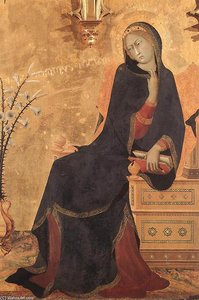
Martini's reputation extended beyond the borders of Italy, leading to a significant turning point in his career. In 1336, he accepted a commission from Pope Benedict XII to create frescoes for the Papal Palace in Avignon, France—a move that placed him at the heart of European power and patronage. This appointment wasn’t merely about artistic skill; it was a testament to Martini's ability to cater to the tastes of a sophisticated courtly audience. While in Avignon, he entered into a remarkable intellectual circle, befriending Francesco Petrarca—better known as Petrarch, the renowned humanist poet. The connection with Petrarch is particularly poignant, as Vasari and other sources suggest that Martini painted a portrait of Laura de Noves, Petrarch’s lifelong muse. Though the portrait itself is lost to time, its very existence speaks volumes about Martini's status as a celebrated artist capable of capturing not only physical likeness but also the essence of beauty and inspiration. The Annunciation with St. Margaret and St. Ansanus, created during his time in Florence before moving to Avignon, is a testament to this period, showcasing delicate beauty and refined aesthetic.

Major Works and Artistic Techniques

Martini’s most celebrated works exemplify the culmination of his artistic development. The *Maestà*, painted between 1312 and 1315 for the Palazzo Pubblico in Siena, remains a cornerstone of his legacy. This monumental fresco depicts the Virgin Mary enthroned with angels and saints, showcasing Martini's mastery of perspective, color, and composition. It’s a prime example of the International Gothic style—characterized by its elegance, refined details, and graceful figures. His *Saint Louis of Toulouse Crowning His Brother Robert of Anjou*, painted in 1317 during his time in Naples, demonstrates his ability to depict complex scenes with clarity and grace, while simultaneously imbuing them with a sense of courtly splendor. The *Annunciation* triptych, created for the Siena Cathedral (now housed in the Uffizi Gallery), is another significant work—a testament to Martini’s skill in creating emotionally resonant religious narratives. His equestrian portrait representing Guidoriccio da Fogliano, general of the Sienese republic, painted around 1328, stands as a pioneering example of this genre in Italy.

Legacy and Enduring Influence

Simone Martini’s impact on the development of European art cannot be overstated. He played a crucial role in disseminating the International Gothic style—a movement characterized by its elegance, refinement, and emphasis on decorative detail—across the continent. His influence extended to generations of artists who followed, shaping the course of late medieval and early Renaissance painting. Martini’s work wasn’t simply about technical skill; it was about creating a visual language that resonated with the sensibilities of his time—a language of beauty, grace, and spiritual devotion. Even today, his paintings continue to captivate viewers with their exquisite detail, harmonious compositions, and enduring sense of elegance. His frescoes in San Francesco d’Assisi demonstrate his mastery of large-scale decorative painting, while works like the Saint Catherine of Alexandria Polyptych showcase his unparalleled command of color and form. Simone Martini died in Avignon in 1344, leaving behind a legacy that continues to inspire awe and admiration centuries later—a testament to the enduring power of art to transcend time and touch the human spirit.

Informações Rápidas

  • movimento: Gótico Internacional
  • meio: têmpera sobre painel
  • assunto: Cena bíblica de Jesus criança encontrado no Templo
  • localização: Walker Art Gallery, Liverpool, Reino Unido
  • artista: Simone Martini

Quiz de Arte

Cada pergunta possui apenas uma resposta correta.

Pergunta 1:
Em que cidade está localizada a Walker Art Gallery, onde se encontra 'Cristo Encontrado no Templo?
Pergunta 2:
Simone Martini foi fortemente influenciado por formas de arte de qual país durante seu tempo trabalhando em Avignon?
Pergunta 3:
Qual é o tema principal retratado em 'Cristo Encontrado no Templo'?
Pergunta 4:
Que técnica Simone Martini utilizou para criar 'Cristo Encontrado no Templo'?
Pergunta 5:
A inscrição no livro segurado por Maria traduz-se como qual pergunta?