Fauvist: original voices

Famous Fauvist Malarze: 14 Original Voices

Henri Matisse (1869–1954) is the most famous Fauvist malarz, whose singular vision gave us Radość życia (Le bonheur de vivre) i Taniec (II), Eremitaget. Next stand André Derain, Maurice de Vlaminck, Raoul Dufy i Georges Rouault. These 14 malarze, from Robert Bevan (born 1865) to Marguerite Zorach (born 1887), came from 6 countries.

Our selection. Artists whose works our catalogue attaches to Fauvist, in the order of our fame ranking. Artists born after 1955 with no Wikidata identifier stay out until verified. The Wikipedia figure counts our 32 languages with an article on the artist.

  1. Radość życia (Le bonheur de vivre) autorstwa Henri Matisse1Henri Matisse
  2. Harlequin i Pierrot autorstwa André Derain2André Derain
  3. Houses at Chatou autorstwa Maurice de Vlaminck3Maurice de Vlaminck

In brief

Fauvist in brief

  • 14Artyści
  • 1865–1887Rok urodzenia
  • 6Kraje pochodzenia
  • 2Kobiety
  • 3 799Dzieła w naszym katalogu
Miasta z największą liczbą urodzeń
Le Cateau-Cambrésis (1), Chatou (1), Paryż (1), Hawr (1)
Muzea posiadające najważniejsze dzieła
Ermitaż (2), Musée de l'Orangerie (1), MoMA - Museum of Modern Art (1), Art Institute of Chicago (1)
Kobiety na tej liście
Georgette Agutte, Marguerite Zorach

One artist at a time

14 Fauvist Malarze and their signature works

1of 14

Henri Matisse

Francuski Born in Le Cateau-Cambrésis Fowizm, Postimpresjonizm, Kubizm Wikipedia in 32/32 languages
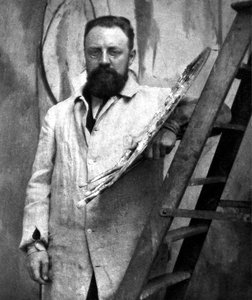
Henri Matisse

Henri Matisse przyszedł na świat 31 grudnia 1869 roku w tkackiej chatce przy rue du Chêne Arnaud. Ten niewielki dom w Le Cateau-Cambrésis we Francji stał się punktem wyjścia dla życia, które ostatecznie oddaliło się daleko od spokoju departamentu Nord. Aby rozpocząć ten proces, Henri Matisse zapisał się do Académie Julian, a wkrótce potem przeniósł się do École Nationale des Beaux-Arts.

Signature works · The 100 signature works

2of 14

André Derain

Francuski Born in Chatou ['Fowizm', 'Nowy Klasycyzm'] Wikipedia in 28/32 languages

André Derain

W 1880 roku André Derain przyszedł na świat w Chatou, urokliwej wiosce położonej w departamencie Yvelines we Francji. Od września 1901 do 1904 roku André Derain odbywał służbę wojskową w Commercy, co było okresem rozłąki z pasją, który tymczasowo wstrzymał jego rozkwitający talent. Lato 1905 roku przyniosło nagłą, świetlistą zmianę w życiu André Derain oraz Henri Matisse'a.

Signature works · The 100 signature works

3of 14

Maurice de Vlaminck

Francuz Born in Paryż Fowizm Wikipedia in 26/32 languages

Maurice de Vlaminck

Maurice de Vlaminck przyszedł na świat w Paryżu; jego ojciec był Flamandem uczącym gry na skrzypcach, a matka pochodziła z Lotaryngii i była nauczycielką gry na pianinie. Vlaminck jest uznawany za kluczową postać nurtu fowizmu (1904–1908), który charakteryzował się intensywnym wykorzystaniem koloru oraz uproszczeniem form. Wraz z André Derainem i Henrim Matisse'em tworzył tę rewolucyjną grupę, która rzuciła wyzwanie tradycyjnym konwencjom artystycznym.

Signature works · The 100 signature works

4of 14

Raoul Dufy

Francuz Born in Hawr Fauvizm Wikipedia in 27/32 languages

Raoul Dufy

By the 1920s, Dufy had fully blossomed into a master of what became known as his “stenographic” style. He painted orchestras, racecourses, and seascapes with an effervescent quality that captured the spirit of the Jazz Age. Petersburg, The Museum of Modern Art in New York, and the Art Institute of Chicago – a testament to his enduring artistic significance.

Signature works · The 100 signature works

5of 14

Georges Rouault

Francuz Born in 19. dzielnica Paryża Fauwizm, Ekspresjonizm Wikipedia in 23/32 languages

Georges Rouault

Moreau’s studio became a crucible of experimentation, exposing Rouault to a diverse range of artists and ideas, including those of Paul Gauguin and Vincent van Gogh. Early works show a symbolism in the use of color that probably reflects Moreau's influence, and when Moreau died in 1898, Rouault was appointed curator of the Moreau Museum in Paris.

Signature works · The 100 signature works

6of 14

Albert Marquet

Francuz Born in Bordeaux Fauwizm, Naturalizm Wikipedia in 20/32 languages

Albert Marquet

Fauvist Beginnings: Early works demonstrate bold color palettes characteristic of Fauvism, though with more restraint than some contemporaries. Emphasis on Light and Atmosphere: A defining feature of his mature work, focusing on capturing the ephemeral qualities of light and its effect on landscapes. His paintings are held in prestigious museums around the world—including the Musée National d'Art Moderne in Paris, the Tate Gallery in London, and numerous private collections—attesting to his enduring significance in the history of modern art.

Signature works · The 100 signature works

7of 14

Kees Van Dongen

Holender Born in Rotterdam Fowizm Wikipedia in 26/32 languages

Kees Van Dongen

Kees van Dongen, urodzony w 1877 roku jako Cornelis Theodorus Maria van Dongen, pozostaje jednym z najbardziej elektryzujących głosów wczesnego dwudziestego wieku. Wywodząc się z ponurych, tonalnych tradycji szkoły haagskiej w swoim rodzinnym Rotterdamie, przeszedł radykalną metamorfozę po przybyciu do Paryża w 1897 roku. Odchodząc od stonowanych krajobrazów, które niosły echo wpływów Rembrandta, van Dongen poczuł magnetyczne przyciąganie neonowego pulsu Montmartre.

Signature works · The 100 signature works

8of 14

Georgette Agutte

Francuzka Born in Calais Fauwizm, Malarka, Rzeźbiarka Wikipedia in 10/32 languages

Georgette Agutte

Georgette Agutte (1867-1922) stanowi przejmujący przykład tego historycznego zaniedbania. Jej pejzaże, takie jak „Le Château Antique” (1903), przesycone są oniryczną intensywnością, a formy zostają ujęte w uproszczone kształty na tle wirujących plam koloru. Co więcej, z pasją angażowała się w świat sztuki użytkowej, projektując gobeliny i wnosząc swój wkład w działalność Narodowej Szkoły Sztuki Dekoracyjnej w Aubusson, co stanowi świadectwo jej wszechstronności oraz niezłomnego dążenia do artystycznej innowacji.

Signature works · The 100 signature works

9of 14

Louis Valtat

French Born in Dieppe Fauvism Wikipedia in 8/32 languages

Louis Valtat

Under the guidance of masters such as Gustave Boulanger and Jules Lefebvre, he mastered the disciplined foundations of academic painting, yet his spirit yearned for something more liberated. Even as he experimented with the optical precision of Pointillism and the decorative flatness of the Nabis, a sense of joyful immediacy remained the hallmark of his oeuvre.

Signature works · The 100 signature works

10of 14

Charles Camoin

French Born in Marseille Fauvist Expressionism Wikipedia in 9/32 languages

Charles Camoin

While his initial artistic sensibilities were nurtured by the soft, atmospheric nuances of Impressionism —drawing inspiration from the delicate touch of Monet and Sisley—Camoin possessed an underlying restlessness that sought something far more visceral. The trajectory of his life shifted irrevocably when he moved to Paris to study at Gustave Moreau's École des Beaux-Arts. Whether capturing the tranquil harbor of Cassis or the winding village streets of Collioure, his paintings are characterized by a heavy impasto technique.

Signature works · The 100 signature works

11of 14

Marguerite Zorach

Born in Santa Rosa Wikipedia in 8/32 languages

Marguerite Zorach

Długa podróż dookoła globu, którą odbyła ze swoją ciotką w latach 1911–1912, zaprowadziła ją przez Jerozolimę, Egipt, Indie, Birmę, Chiny, aż po Japonię i Hawaje. Jej najważniejsze dzieła, takie jak „Memories of my California Childhood” (1921) czy „Nevada Falls, Yosemite Valley, California” (1920), stanowią świadectwo niezwykłej wrażliwości.

Signature works · The 100 signature works

12of 14

Robert Bevan

British Born in Hove Fauvism, Divisionism Wikipedia in 7/32 languages

Robert Bevan

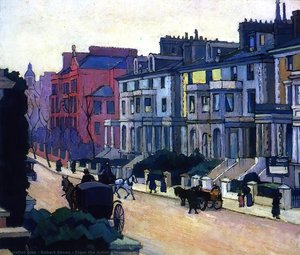
Bevan’s formative years instilled in him a deep appreciation for meticulous observation and disciplined technique—traits that would characterize his entire artistic career. Artists like Paul Sérusier, Pierre Bonnard, Édouard Vuillard, and Maurice Denis actively questioned established aesthetic standards, advocating for a bold embrace of synthetism – a technique that prioritized symbolic content over accurate depiction. The Westminster School of Art under Frederick Brown fostered these qualities, equipping him with foundational skills in draughtsmanship and composition.

Signature works · The 100 signature works

13of 14

Piotr Konchalowski

Rosyjska Born in Słowiańsk Fauwizm, Cézannizm, realizm socjalistyczny Wikipedia in 9/32 languages

Piotr Konchalowski

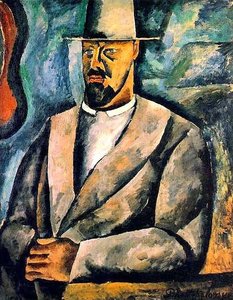
Historia, którą napisał Piotr Konchalowski, bierze swój początek w wiosce Słowianka, położonej w guberni charkowskiej Imperium Rosyjskiego. Jego formalna edukacja rozpoczęła się w salach Moskwy Szkoły Malarstwa, Rzeźby i Architektury. W latach 1896–1898 podróżował do Paryża, aby studiować w Académie Julian.

Signature works · The 100 signature works

14of 14

Auguste Chabaud

Amerykański Born in Nîmes Realizm, Modernizm Wikipedia in 5/32 languages

Auguste Chabaud

Edward Hopper (22 lipca 1882 – 15 maja 1967) pozostaje jedną z najbardziej trwałych i enigmatycznych postaci w historii sztuki amerykańskiej. Krótko uczęszczał do Correspondence School of Illustrating w Nowym Jorku, zanim podjął studia w New York School of Art pod okiem Williama Merritta Chase'a i Roberta Henri'ego.

Signature works · The 100 signature works

Signature works

Signature Fauvist works

  1. Radość życia (Le bonheur de vivre) autorstwa Henri Matisse

    Radość życia (Le bonheur de vivre)

    Henri Matisse

    1906

  2. Harlequin i Pierrot autorstwa André Derain

    Harlequin i Pierrot

    André Derain

    1924 · Musée de l'Orangerie, Paryż

  3. Houses at Chatou autorstwa Maurice de Vlaminck

    Houses at Chatou

    Maurice de Vlaminck

    Art Institute of Chicago

  4. The Red Concert autorstwa Raoul Dufy

    The Red Concert

    Raoul Dufy

    1946

  5. Head of Christ autorstwa Georges Rouault

    Head of Christ

    Georges Rouault

  6. National Holiday at Le Havre autorstwa Albert Marquet

    National Holiday at Le Havre

    Albert Marquet

    1906 · Villa Flora, Winterthur

  7. Saida autorstwa Kees Van Dongen

    Saida

    Kees Van Dongen

    1920

  8. Cactus rouges (dans trois cache pots de Metthey) Cactus rouges (dans trois vases Methey) (Titre attribué) autorstwa Georgette Agutte

    Cactus rouges (dans trois cache pots de Metthey) Cactus rouges (dans trois vases Methey) (Titre attribué)

    Georgette Agutte

A timeline

Fauvist through its signature works

  1. 1903
  2. 1906
  3. 1906
  4. 1911
  5. 1911
  6. 1917
  7. 1920
  8. 1924
  9. 1927
  10. 1946

Figures

The figures

Every name

List of 14 famous Fauvist malarze, every name

  1. 1Henri MatisseHenri MatisseFrancuski · 1869–1954
  2. 2André DerainAndré DerainFrancuski · 1880–1954
  3. 3Maurice de VlaminckMaurice de VlaminckFrancuz · 1876–1958
  4. 4Raoul DufyRaoul DufyFrancuz · 1877–1953
  5. 5Georges RouaultGeorges RouaultFrancuz · 1871–1958
  6. 6Albert MarquetAlbert MarquetFrancuz · 1875–1947
  7. 7Kees Van DongenKees Van DongenHolender · 1877–1968
  8. 8Georgette AgutteGeorgette AgutteFrancuzka · 1867–1922
  9. 9Louis ValtatLouis ValtatFrench · 1869–1952
  10. 10Charles CamoinCharles CamoinFrench · 1879–1965
  11. 11Marguerite ZorachMarguerite Zorach1887–1968
  12. 12Robert BevanRobert BevanBritish · 1865–1925
  13. 13Piotr KonchalowskiPiotr KonchalowskiRosyjska · 1876–1956
  14. 14Auguste ChabaudAuguste ChabaudAmerykański · 1882–1955

Questions

Your questions

  • Which Fauvist malarz is the most famous?

    First place goes to Henri Matisse (#1); André Derain (#2) and Maurice de Vlaminck (#3) complete the podium.

  • Who are the 5 most famous Fauvist malarze?

  • Which techniques define Fauvist art?

    “The sheer audacity of color and expressive freedom unleashed by Matisse – a declaration of vibrant hues divorced from traditional representation – resonated deeply with Dufy, propelling him towards a style characterized by bold colors and liberated brushwork.” — from our biography of Raoul Dufy (#4).

  • In which period did Fauvist art flourish?

    Most malarze in this list were born in the 1870s (7 of 14), between 1865 and 1887 overall.

  • Where are the great works of Fauvist art today?

    The museums holding the most key works of this list are Ermitaż (2), Musée de l'Orangerie (1) i MoMA - Museum of Modern Art (1).

  • Who are the most famous Fauvist malarze from Francja?

    The highest-ranked malarze born in Francja are Henri Matisse (#1), André Derain (#2), Maurice de Vlaminck (#3), Raoul Dufy (#4) i Georges Rouault (#5).

  • Where were most Fauvist malarze born?

    Francja: 8 of the 14 malarze in this list were born there, then France (2) i Holandia (1).

  • Who was the first Fauvist malarz?

    The earliest-born malarz in this list is Robert Bevan (#12), born in 1865.

  • Who are the most famous female Fauvist malarze?

    This list includes 2 women: Georgette Agutte (#8) i Marguerite Zorach (#11).

  • Where can I see more works by these malarze?

    Our catalogue holds 3,799 works by these malarze.

Read

Stories on OriginalUniqueArt.com

Other movements

Famous artists of other movements

Other periods

Famous artists across the periods

Discover more

More artists to discover