Portret Jan Weenix

100 najsłynniejszych obrazów artysty Jan Weenix – wybór z galerii

Aktualizacja: Listopad 2026 · ranking według naszego wskaźnika popularności (liczba wyszukiwań, wizyt i zamówień dla każdego dzieła) · 124 dzieł Jan Weenix w naszym katalogu

W skrócie

Spośród wszystkich dzieł oryginalnych, które pozostawił Jan Weenix, najsłynniejszym jest Game Still-Life with Statue of Diana (1703), znajdujący się w kolekcji Alte Pinakothek w Monachium. Tuż za nimi znajdują się Peacock and Hunting Trophies (1708) oraz Portrait of Abraham van Bronckhorst (1656-?) (1688). Nasz katalog zawiera 124 dzieł autorstwa Jan Weenix; galeria zachowała 100 najbardziej podziwianych na świecie prac, z których każda została przedstawiona wraz z datą powstania, informacją o muzeum oraz jej historią.

1642 – 1719, Amsterdam Baroque Najwięcej dzieł: Bawarskie Państwowe Zbiory Malarstwa

10 najlepszych obrazów artysty Jan Weenix: wybór galerii

1
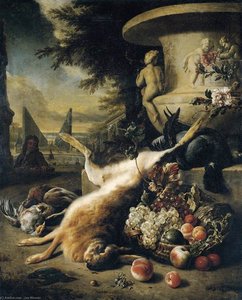
Game Still-Life with Statue of Diana (1703) autorstwa Jan Weenix

Game Still-Life with Statue of Diana

1703 · Oil On Canvas · Alte Pinakothek, Monachium

Jan Weenix's "Game Still-Life with Statue of Diana," painted in 1703, isn’t merely a depiction of hunting trophies; it’s a meticulously crafted tableau brimming with symbolism and reflecting the sophisticated tastes of the Dutch Golden Age. The painting immediately draws the eye to its central subject: a magnificent statue of Diana, goddess of the hunt, presiding over a carefully arranged display of slain game – a stag, a deer, and…

2
Peacock and Hunting Trophies (1708) autorstwa Jan Weenix

Peacock and Hunting Trophies

1708 · Acrylic On Canvas · Fundacja Calouste Gulbenkian, Lizbona

Jan Weenix’s “Peacock and Hunting Trophies,” painted in 1708, is more than just a still life; it’s a meticulously crafted window into the opulent world of the Dutch Golden Age. This large composition, measuring a substantial 200 x 195 cm, transports us to a scene of carefully curated abundance – a testament to the wealth and leisure enjoyed by the Palatine Elector Johann Wilhelm and his court at Bensberg Castle.…

3
Portrait of Abraham van Bronckhorst (1656-?) (1688) autorstwa Jan Weenix

Portrait of Abraham van Bronckhorst (1656-?)

1688 · Oil On Canvas · Amsterdam Museum, Amsterdam

The oil on canvas known as Portrait of Abraham van Bronckhorst (1656-?) brings a moment from 1688 into sharp focus. Jan Weenix captures the likeness of Abraham van Bronckhorst (1656-?) with a precision that feels immediate, as if the subject has only just paused his movements to face the viewer. This portrait functions as a window into a specific life, rendered through the skilled hand of Jan Weenix during the…

4
Dead Peacock and Game (1707) autorstwa Jan Weenix

Dead Peacock and Game

1707 · Oil On Canvas · Wallace Collection, Londyn

The oil on canvas work titled Dead Peacock and Game was executed by the artist Jan Weenix in 1707. This painting captures a stillness held within the pigments of the Dutch Golden Age. The medium of oil allows for a precise rendering of the subjects, fixing them in a permanent, silent state.

5
Dead Hare and Dog (1717) autorstwa Jan Weenix

Dead Hare and Dog

1717 · Oil On Canvas · Wallace Collection, Londyn

Step closer and observe the quiet drama unfolding within this composition. Jan Weenix has captured a moment of stillness that follows the intensity of the chase. A dead hare hangs prominently, its form creating a strong diagonal movement that pulls the eye from the center toward the upper right of the canvas. This central figure is surrounded by the spoils of the hunt—a turkey, various birds, and a magpie—all set…

6
The Dead Swan (1716) autorstwa Jan Weenix

The Dead Swan

1716 · Oil On Canvas · Museum Boijmans Van Beuningen, Rotterdam

A large white swan hangs vertically from a stone pedestal on the right side of the canvas. Its neck curves downward toward the bottom edge of the frame. Below the swan, a peacock with blue and green plumage lies alongside a smaller duck. To the left, a collection of peaches and grapes rests near the base of the arrangement. The scene is set against a landscape of dark trees and…

7
Stilleben med död svan, en påfågel och en hund vid en trädgårdsfontän (1684) autorstwa Jan Weenix

Stilleben med död svan, en påfågel och en hund vid en trädgårdsfontän

1684 · Oil On Canvas · Nationalmuseum, Stockholm

A dead swan lies in the foreground, its white feathers a stark, pale weight against the dark earth. Beside it, a peacock spreads its plumage, a sudden burst of color amidst the muted tones of the garden. A black-and-white hunting dog rests near the scene, its fur coarse and textured under the light. In the distance, a stone fountain and classical statuary rise from a hazy, atmospheric landscape. The air…

8
Dead Swan (1709) autorstwa Jan Weenix

Dead Swan

1709 · Oil On Canvas · Mauritshuis, Haga

The scene unfolds through Dead Swan, a hunting still-life painted by Jan Weenix in 1716. This work presents a quiet, heavy moment of nature morte, where the stillness of the subjects invites a contemplation of vanitas. A large swan lies at the center of the drama, its presence anchored by a stone pedestal that grounds the composition within a sprawling landscape.

9
Portrait of a Dutch Merchant (1686) autorstwa Jan Weenix

Portrait of a Dutch Merchant

1686 · Oil On Canvas · Städel Museum, Frankfurt nad Menem

A man stands in a three-quarter length pose, positioned slightly off-center against a stone ledge. He wears a blue-grey outer robe over a white lace cravat and sleeves. The fabric of the robe possesses a heavy sheen, while the lace displays intricate, fine detail. A patterned textile is draped to the right, showing a coarse weave. His dark hair is arranged in curls, and his skin is rendered with realistic…

10
Flowers on a Fountain with a Peacock (1710) autorstwa Jan Weenix

Flowers on a Fountain with a Peacock

1710 · Oil On Canvas · Wallace Collection, Londyn

The canvas presents a dense arrangement of flora, fauna, and classical stone elements set against a receding landscape. In the immediate foreground, a collection of fruit is positioned with tactile precision, including grapes, peaches, plums, and gourds. To the right, a peacock occupies a prominent position, its neck rendered in iridescent blue and its plumage displaying patterned light. On the left, an overflowing bouquet contains red poppies, white anemones, and…

Kontynuacja zestawienia Jan Weenix, od 11 do 100

11Fantasy Figures in a Boat with a Cittern Player (1656) autorstwa Jan WeenixFantasy Figures in a Boat with a Cittern Player1656 12Sleeping girl (1665) autorstwa Jan WeenixSleeping girl1665 · Bawarskie Państwowe Zbiory Malarstwa 13Landscape with Shepherd Boy (1664) autorstwa Jan WeenixLandscape with Shepherd Boy1664 · Galeria Dulwich 14Departure for the Hunt (1664) autorstwa Jan WeenixDeparture for the Hunt1664 · Musée des Beaux-Arts 15The Prodigal Son feasting with the courtesans in the midst of classical ruins, in the distance a Mediterranean harbor (1667) autorstwa Jan WeenixThe Prodigal Son feasting with the courtesans in the midst of classical ruins, in the distance a Mediterranean harbor1667 · Petit Palais 16Corpse of a Youth (1679) autorstwa Jan WeenixCorpse of a Youth1679 · Bawarskie Państwowe Zbiory Malarstwa 17Bagged Game (1679) autorstwa Jan WeenixBagged Game1679 · Bawarskie Państwowe Zbiory Malarstwa 18Apotheosis of Maria Anna Luisa de' Medici (1679) autorstwa Jan WeenixApotheosis of Maria Anna Luisa de' Medici1679 · Bawarskie Państwowe Zbiory Malarstwa 19Two Riders (1679) autorstwa Jan WeenixTwo Riders1679 · Bawarskie Państwowe Zbiory Malarstwa 20Game Birds in Front of Schloss Bassin (1679) autorstwa Jan WeenixGame Birds in Front of Schloss Bassin1679 · Bawarskie Państwowe Zbiory Malarstwa 21Double portrait of a man and of a woman on horseback (1679) autorstwa Jan WeenixDouble portrait of a man and of a woman on horseback1679 · Bawarskie Państwowe Zbiory Malarstwa 22The deer hunt (1679) autorstwa Jan WeenixThe deer hunt1679 · Bawarskie Państwowe Zbiory Malarstwa 23Still Life of Game including a Hare, Black Grouse and Partridge, a Spaniel looking on with a Pigeon in Flight (1680) autorstwa Jan WeenixStill Life of Game including a Hare, Black Grouse and Partridge, a Spaniel looking on with a Pigeon in Flight1680 · Museum of Fine Arts 24Portrait of Maria Cornelisz, wife of Silvester van Tongeren (1699) autorstwa Jan WeenixPortrait of Maria Cornelisz, wife of Silvester van Tongeren1699 · Rijksmuseum 25The Poulterer's Mishap (1683) autorstwa Jan WeenixThe Poulterer's Mishap1683 · Hallwyl Museum 26A Seated Monkey, Jan Weenix, before 1685 (1685) autorstwa Jan WeenixA Seated Monkey, Jan Weenix, before 16851685 · Rijksmuseum 27Hilly Landscape with Hunter (1690) autorstwa Jan WeenixHilly Landscape with Hunter1690 28Hares and Pheasant at a Fountain with a Dog (1699) autorstwa Jan WeenixHares and Pheasant at a Fountain with a Dog1699 · Wallace Collection 29Still Life of Dead Poultry, a Parrot and a Spaniel in a Park (1699) autorstwa Jan WeenixStill Life of Dead Poultry, a Parrot and a Spaniel in a Park1699 · Antony House 30Agneta Block (Emmerich 29-10-1629 – Amsterdam 20-4-1704), and her family at their summer home Vijverhof (later called Flora Batavia), with her cultivated pineapple (1694) autorstwa Jan WeenixAgneta Block (Emmerich 29-10-1629 – Amsterdam 20-4-1704), and her family at their summer home Vijverhof (later called Flora Batavia), with her cultivated pineapple1694 · Amsterdam Museum 31Park with country home (1694) autorstwa Jan WeenixPark with country home1694 · Rijksmuseum 32Portrait of Gilles Schey (1644-1703) (1693) autorstwa Jan WeenixPortrait of Gilles Schey (1644-1703)1693 · Het Scheepvaartmuseum 33Portrait of an elegant lady and her dog in a park landscape (1688) autorstwa Jan WeenixPortrait of an elegant lady and her dog in a park landscape1688 34Portrait of Elisabeth Charlotte of the Palatine, duchess of Orléans (1652-1722), with a servant (1691) autorstwa Jan WeenixPortrait of Elisabeth Charlotte of the Palatine, duchess of Orléans (1652-1722), with a servant1691 · Gemäldegalerie 35Still Life with Game and Peacock (1708) autorstwa Jan WeenixStill Life with Game and Peacock1708 · Bawarskie Państwowe Zbiory Malarstwa 36Poultry and fruits of the hunt (1700) autorstwa Jan WeenixPoultry and fruits of the hunt1700 · Musée Fabre 37A Gentleman receiving a Letter (1709) autorstwa Jan WeenixA Gentleman receiving a Letter1709 · Wimpole Hall 38Hunting still life with wolf (1702) autorstwa Jan WeenixHunting still life with wolf1702 · Bawarskie Państwowe Zbiory Malarstwa 39Hunting still life with swan (1702) autorstwa Jan WeenixHunting still life with swan1702 · Bawarskie Państwowe Zbiory Malarstwa 40Southern Seaport with Trinket Seller (1704) autorstwa Jan WeenixSouthern Seaport with Trinket Seller1704 41Still life (1705) autorstwa Jan WeenixStill life1705 · Muzeum Narodowe w Warszawie 42Still Life with Dead Rabbit and Birds (1681) autorstwa Jan WeenixStill Life with Dead Rabbit and Birds1681 · Städel Museum 43Hunting still life with a landscape and Bensberg Castle (1712) autorstwa Jan WeenixHunting still life with a landscape and Bensberg Castle1712 · Bawarskie Państwowe Zbiory Malarstwa 44Game on a parapet near a seaport (1714) autorstwa Jan WeenixGame on a parapet near a seaport1714 · Bawarskie Państwowe Zbiory Malarstwa 45boy with dog, dead hare and birds in landscape (1719) autorstwa Jan Weenixboy with dog, dead hare and birds in landscape1719 46The Prodigal Son (1668) autorstwa Jan WeenixThe Prodigal Son1668 · Residenzgalerie 47Dead Goose and Peacock (1718) autorstwa Jan WeenixDead Goose and Peacock1718 · Wallace Collection 48Peacock, Dead Game and Monkey (1710) autorstwa Jan WeenixPeacock, Dead Game and Monkey1710 · Wallace Collection 49Still Life with Swan and Game before a Country Estate (1685) autorstwa Jan WeenixStill Life with Swan and Game before a Country Estate1685 · National Gallery of Art 50An Italian Courtyard (1662) autorstwa Jan WeenixAn Italian Courtyard1662 · National Gallery 51A dog over a dead boar. (1705) autorstwa Jan WeenixA dog over a dead boar.1705 · Muzeum Narodowe w Warszawie 52A monkey and a dog beside dead game and fruit (1704) autorstwa Jan WeenixA monkey and a dog beside dead game and fruit1704 · Rijksmuseum 53Southern Landscape with Palace Facade and Monument (1664) autorstwa Jan WeenixSouthern Landscape with Palace Facade and Monument1664 · Staatliche Kunsthalle Karlsruhe 54Still-life with a white cock (1680) autorstwa Jan WeenixStill-life with a white cock1680 · Staatliche Kunstsammlungen Dresden 55Dead Hare, Fruit and Monkey (1704) autorstwa Jan WeenixDead Hare, Fruit and Monkey1704 · Wallace Collection 56Still-Life with a Peacock and a Dog (1696) autorstwa Jan WeenixStill-Life with a Peacock and a Dog1696 · Luwr 57Dead Hare and Still Life (1692) autorstwa Jan WeenixDead Hare and Still Life1692 · Wallace Collection 58Dead Hare and Partridges (1690) autorstwa Jan WeenixDead Hare and Partridges1690 · Wallace Collection 59A Deerhound with Dead Game and Implements of the Chase (1708) autorstwa Jan WeenixA Deerhound with Dead Game and Implements of the Chase1708 · National Gallery 60Flowers and Fruit (1676) autorstwa Jan WeenixFlowers and Fruit1676 · Wallace Collection 61South American Andean Condor (1700) autorstwa Jan WeenixSouth American Andean Condor1700 · Kunsthistorisches Museum 62After the Hunt (1665) autorstwa Jan WeenixAfter the Hunt1665 · Alte Pinakothek 63Dead Game (1696) autorstwa Jan WeenixDead Game1696 · Wallace Collection 64Hunting Still Life with Crossbow and Shot Birds (1665) autorstwa Jan WeenixHunting Still Life with Crossbow and Shot Birds1665 65Large Dog with Killed Boar and Birds (1665) autorstwa Jan WeenixLarge Dog with Killed Boar and Birds1665 66Portrait of a lady autorstwa Jan WeenixPortrait of a ladyFinnish National Gallery 67Stilife of many fold, dead birds, Landscape background (1665) autorstwa Jan WeenixStilife of many fold, dead birds, Landscape background1665 68A Southern Harbour Scene (1665) autorstwa Jan WeenixA Southern Harbour Scene1665 · Wallace Collection 69An Italian Seaport (detail) (1666) autorstwa Jan WeenixAn Italian Seaport (detail)1666 · Staatliche Museen 70Portret Szwajcarskiego Morza (1666) autorstwa Jan WeenixPortret Szwajcarskiego Morza1666 · Staatliche Museen 71Still Life with Dead Birds (1679) autorstwa Jan WeenixStill Life with Dead Birds1679 · Bawarskie Państwowe Zbiory Malarstwa 72Still Life with Game and Goose (1686) autorstwa Jan WeenixStill Life with Game and Goose1686 · Bawarskie Państwowe Zbiory Malarstwa 73Still Life with Eagle, Dog and Dead Swan (1679) autorstwa Jan WeenixStill Life with Eagle, Dog and Dead Swan1679 · Bawarskie Państwowe Zbiory Malarstwa 74Still Life with Sword and Gloves (1679) autorstwa Jan WeenixStill Life with Sword and Gloves1679 · Bawarskie Państwowe Zbiory Malarstwa 75EelectorJohann Wilhelm von der Pfalz and his wife Anna Maria Luisa de'Medici on a deer hunt on the Rhine in a caouflage boat (1679) autorstwa Jan WeenixEelectorJohann Wilhelm von der Pfalz and his wife Anna Maria Luisa de'Medici on a deer hunt on the Rhine in a caouflage boat1679 · Bawarskie Państwowe Zbiory Malarstwa 76Still Life of a Dead Hare, Partridges, and Other Birds in a Niche (1675) autorstwa Jan WeenixStill Life of a Dead Hare, Partridges, and Other Birds in a Niche1675 · Museum of Fine Arts 77A monkey and a dog beside dead game and fruits, with the estate of Rijxdorp near Wassenaar in the background (1700) autorstwa Jan WeenixA monkey and a dog beside dead game and fruits, with the estate of Rijxdorp near Wassenaar in the background1700 · Rijksmuseum 78Portrait of a Greyhound and Spaniel, Jan Weenix, 1665 - 1680 (1680) autorstwa Jan WeenixPortrait of a Greyhound and Spaniel, Jan Weenix, 1665 - 16801680 · Rijksmuseum 79Boar Hunt (1703) autorstwa Jan WeenixBoar Hunt1703 · Alte Pinakothek 80Still Life of Birds and Flowers in a Park (1689) autorstwa Jan WeenixStill Life of Birds and Flowers in a Park1689 · Calke Abbey 81Two Godwits by a Stream, with a Blue Tit on a Branch above (1690) autorstwa Jan WeenixTwo Godwits by a Stream, with a Blue Tit on a Branch above1690 · Anglesey Abbey 82Dead Hare (1689) autorstwa Jan WeenixDead Hare1689 83Game and Hunting Accessories Arranged on a Window Ledge (1691) autorstwa Jan WeenixGame and Hunting Accessories Arranged on a Window Ledge1691 84The Spoils of the Hunt (1688) autorstwa Jan WeenixThe Spoils of the Hunt1688 · Statens Museum for Kunst 85Still Life with a Hare and other Game, Jan Weenix, 1697 (1697) autorstwa Jan WeenixStill Life with a Hare and other Game, Jan Weenix, 16971697 · Rijksmuseum 86Still Life with Game and Birds (1708) autorstwa Jan WeenixStill Life with Game and Birds1708 · Bawarskie Państwowe Zbiory Malarstwa 87Still Life with Game Including Hares (1706) autorstwa Jan WeenixStill Life with Game Including Hares1706 · Bawarskie Państwowe Zbiory Malarstwa 88Dead Game in Front of a Landscape (1706) autorstwa Jan WeenixDead Game in Front of a Landscape1706 89Still Life with Poultry and an Urn (1700) autorstwa Jan WeenixStill Life with Poultry and an Urn1700 · Wimpole Hall 90A Dead Swan and Peacock (1708) autorstwa Jan WeenixA Dead Swan and Peacock1708 · Belton House 91Dead game and fruit (1706) autorstwa Jan WeenixDead game and fruit1706 · Fitzwilliam Museum 92Dead Hare (1700) autorstwa Jan WeenixDead Hare1700 · Słowacka Galeria Narodowa w Bratysławie 93Dead Hare and Partridges with Instruments of the Chase (1704) autorstwa Jan WeenixDead Hare and Partridges with Instruments of the Chase1704 · Royal Collection 94Dead Game (1701) autorstwa Jan WeenixDead Game1701 · Statens Museum for Kunst 95Peacock and peahen (1700) autorstwa Jan WeenixPeacock and peahen1700 · Städel Museum 96Dead Game and Small Birds (1700) autorstwa Jan WeenixDead Game and Small Birds1700 · Wallace Collection 97Still-Life of Game (1706) autorstwa Jan WeenixStill-Life of Game1706 98Still-Life of Game (1703) autorstwa Jan WeenixStill-Life of Game1703 99Flowers and Dead Game Before a Landscape (1719) autorstwa Jan WeenixFlowers and Dead Game Before a Landscape1719 · Petit Palais 100Exotic animals and plants at a lake (1714) autorstwa Jan WeenixExotic animals and plants at a lake1714 · Bawarskie Państwowe Zbiory Malarstwa

Słynne obrazy Jan Weenix epoka po epoce

Tematy, które przyciągnęły wzrok Jan Weenix

Cztery motywy najczęściej powracające w tych oryginałach, z których każdy doczekał się swojego najdoskonalszego przykładu.

Muzea przechowujące oryginały Jan Weenix

8 muzeów, w których znajduje się najwięcej obrazów z tej strony.

Muzea Miasto Dzieła artysty Jan Weenix Obrazy z tej listy
Bawarskie Państwowe Zbiory Malarstwa, MonachiumBawarskie Państwowe Zbiory Malarstwa Monachium 21 Sleeping girl, Corpse of a Youth, Bagged Game
Wallace Collection, LondynWallace Collection Londyn 14 Dead Peacock and Game, Dead Hare and Dog, Flowers on a Fountain with a Peacock
Rijksmuseum, AmsterdamRijksmuseum Amsterdam 9 Portrait of Maria Cornelisz, wife of Silvester van Tongeren, A Seated Monkey, Jan Weenix, before 1685, Park with country home
Alte Pinakothek, MonachiumAlte Pinakothek Monachium 3 Game Still-Life with Statue of Diana, After the Hunt, Boar Hunt
Städel Museum, Frankfurt nad MenemStädel Museum Frankfurt nad Menem 3 Portrait of a Dutch Merchant, Still Life with Dead Rabbit and Birds, Peacock and peahen
Muzeum Narodowe w Warszawie, WarszawaMuzeum Narodowe w Warszawie Warszawa 3 Still life, A dog over a dead boar.
Amsterdam Museum, AmsterdamAmsterdam Museum Amsterdam 2 Portrait of Abraham van Bronckhorst (1656-?), Agneta Block (Emmerich 29-10-1629 – Amsterdam 20-4-1704), and her family at their summer home Vijverhof (later called Flora Batavia), with her cultivated pineapple
Petit Palais, ParyżPetit Palais Paryż 2 The Prodigal Son feasting with the courtesans in the midst of classical ruins, in the distance a Mediterranean harbor, Flowers and Dead Game Before a Landscape

Jan Weenix dekada po dekadzie: oryginały definiujące każdy okres

Dzieła według dekad

Wybierz dekadę, aby zobaczyć dzieło, które ją definiuje.

Pytania kolekcjonerów o obrazy Jan Weenix

Z jakiego dzieła najbardziej znany jest Jan Weenix?Odkryj odpowiedź

Game Still-Life with Statue of Diana (1703), Alte Pinakothek, Monachium. Następne są Peacock and Hunting Trophies (1708) oraz Portrait of Abraham van Bronckhorst (1656-?) (1688).

W jakim wieku był Jan Weenix, gdy powstało Game Still-Life with Statue of Diana?Odkryj odpowiedź

61 lat: Game Still-Life with Statue of Diana pochodzi z 1703, a Jan Weenix urodził(a) się w 1642.

Jakie są dziesięć najsłynniejszych obrazów, których autorem jest Jan Weenix?Odkryj odpowiedź

Game Still-Life with Statue of Diana, Peacock and Hunting Trophies, Portrait of Abraham van Bronckhorst (1656-?), Dead Peacock and Game, Dead Hare and Dog, The Dead Swan, Stilleben med död svan, en påfågel och en hund vid en trädgårdsfontän, Dead Swan, Portrait of a Dutch Merchant i Flowers on a Fountain with a Peacock. Powyższy ranking zawiera rok powstania oraz muzeum dla każdego z nich.

Ile obrazów pozostawił po sobie Jan Weenix?Odkryj odpowiedź

Nasz katalog zawiera 124 dzieł artysty Jan Weenix, datowanych od 1656 do 1719.

W których muzeach znajdują się arcydzieła Jan Weenix?Odkryj odpowiedź

W większości znajdują się w Bawarskie Państwowe Zbiory Malarstwa (Monachium), Wallace Collection (Londyn) i Rijksmuseum (Amsterdam). Powyższa tabela muzeów zawiera ich pełną listę.

W których latach Jan Weenix namalował swoje najsłynniejsze dzieła?Odkryj odpowiedź

W 1700s: 31 z 100 dzieł na tej stronie powstało w tym czasie, w tym Game Still-Life with Statue of Diana.

Jakie są pierwsze i ostatnie słynne oryginały Jan Weenix?Odkryj odpowiedź

Na tej stronie najwcześniejszy to Fantasy Figures in a Boat with a Cittern Player (1656), a najpóźniejszy boy with dog, dead hare and birds in landscape (1719).

Jakie tematy Jan Weenix wybierał najczęściej?Odkryj odpowiedź

Landscape (49), Dog (24) i Hare (24), w ramach 100 dzieł na tej stronie.

Której techniki Jan Weenix używał najczęściej?Odkryj odpowiedź

Oil On Canvas, dla 81 z 100 dzieł na tej stronie.

Do jakiego nurtu artystycznego należy Jan Weenix?Odkryj odpowiedź

Baroque, sądząc po oryginałach na tej stronie.

Które dzieła Jan Weenix znajdują się w Bawarskie Państwowe Zbiory Malarstwa?Odkryj odpowiedź

Sleeping girl, Corpse of a Youth i Bagged Game: Bawarskie Państwowe Zbiory Malarstwa, Monachium posiada 21 dzieł widocznych na tej stronie.

Jan Weenix: życie i twórczość

Dziedzictwo holenderskiego realizmu: Życie i twórczość Jana Weenixa

Jan Weenix, urodzony w Amsterdamie w 1641 roku, wywodził się z rodu głęboko zakorzenionego w artystycznej tradycji, odziedziczywszy pasję do malarstwa po swoim ojcu, szanowanym Janie Baptiście Weenixie. Choć precyzyjne szczegóły dotyczące jego wczesnych lat pozostają nieco nieuchwansłe, jest jasne, że młody Jan przeszedł fundamentalne szkolenie w warsztacie ojca, przyswajając techniki kluczowe dla przedstawiania zarówno martwej natury, jak i tematów zwierzęcych – co stanowiło znak rozpoznawczy sztuki Złotego Wieku w Holandii. Ten rodzinny wpływ nie miał charakteru wyłącznie technicznego; zaszczepił on w nim głęboką umiejętność skrupulatnej obserwacji natury oraz oddanie, by malować jej piękno z uderzającym realizmem. Własna artystyczna podróż starszego Weenixa, obejmująca pobyty we Włoszech, które nasyciły jego dzieła włoską wrażliwością, bez wątpienia ukształtowała także rozwijającą się estetykę Jana. Choć początkowo pozostawał w cieniu reputacji ojca, Jan szybko zaznaczył swoją własną obecność, wytyczając unikalną ścieżkę w tętniącym życiem krajobrazie holenderskiego malarstwa XVII wieku.

Rozkwit stylu barokowego

Styl artystyczny Weenixa rozkwitł u szczytu epoki baroku, odzwierciedlając zamiłowanie tej ery do dramatyzmu, bogactwa detali i dynamicznej kompozycji. Nie tworzył on w izolacji; na jego podejście subtelnie wpływały dzieła współczesnych mu mistrzów, takich jak Hendrick Cornelisz Vroom, słynący z malarstwa morskiego, czy potencjalnie innych specjalistów od tematyki zwierzęcej, jak Melchior de Hondecoeter i Gillis Claesz d'Hondecoeter. Jednak Weenix dokonał syntezy tych inspiracji, tworząc styl wyraźnie własny. Jego płótna charakteryzują się niemal fotograficzną precyzją w oddawaniu tekstur – połysku piór, miękkości futra czy delikatnej przezroczystości owoców – co osiągnięto dzięki mistrzowskiemu pociągnięciu pędzla oraz głębokiemu zrozumieniu światła i cienia. Chiaroscuro, czyli dramatyczna gra świateł i mroku, jest wykorzystywane do budowania głębi i wizualnego zainteresowania, wciągając widza w scenę z przekonującym realizmem. Żywa paleta barw dodatkowo ożywia jego tematy, nadając im poczucie bezpośredniości i witalności. Artysta posiadał wyjątkową umiejętność aranżowania elementów wewnątrz ramy, tworząc zrównoważone i harmonijne kompozycje, które są jednocześnie atrakcyjne wizualnie i angażujące narracyjnie.

Arcydzieła i mecenat

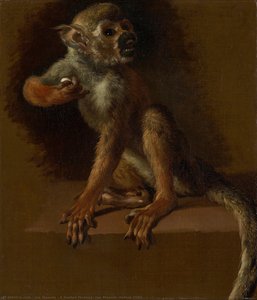
W trakcie swojej kariery Jan Weenix stworzył imponujący dorobek, ceniony za techniczną biegłość i pociągającą tematykę. Obrazy takie jak Martwa natura z polowaniem i owocami obok ogrodowej wazy (1714) stanowią przykład jego zdolności do płynnego łączenia różnorodnych elementów – ptactwa łownego, soczystych owoców i detali architektonicznych – w złożoną i wizualnie oszałamiającą aranżację. Martwa natura z zającem i innym zwierzyną (1697) ukazuje jego mistrzostwo w oddawaniu anatomii zwierząt i tekstury, uchwyconą z niezwykłą dokładnością. Nawet mniejsze dzieła, jak Siedzący małpiszon (przed 1685 r.), ujawniają jego talent do nadawania zwierzętom osobowości i ekspresyjnego charakteru. Ta umiejętność nie umknęła uwadze znamienitych patronów. W 1702 roku Weenix otrzymał zaproszenie na dwór Jana Wilhelma, Elektora Palatynatu, gdzie pracował u boku innych sławnych artystów, tworząc wielkoformatowe sceny łowieckie dla Schloss Bensberg – co stanowi świadectwo jego rosnącej sławy i kunsztu. Te zlecenia zapewniły mu zarówno bezpieczeństwo finansowe, jak i możliwości dalszego doskonalenia swoich umiejętności.

Trwały wpływ na sztukę holenderską

Jan Weenix odegrał kluczową rolę w popularyzacji martwych natur łowieckich oraz malarstwa przedstawiającego zwierzynę w okresie baroku, wynosząc te gatunki ponad zwykłą dekoracyjność. Jego prace były niezwykle pożądane przez kolekcjonerów, co znacząco przyczyniło się do rozwoju holenderskich tradycji artystycznych. Nie tylko kopiował naturę; interpretował ją przez własny, unikalny pryzmat, nasycając swoje obrazy realizmem, dramatyzmem i estetycznym pięknem, które głęboko rezonowało z ówczesną publicznością. Jego dziedzictwo wykracza poza jego własne dzieła; jego córka, Maria Weenix, kontynuowała rodzinną tradycję jako utalentowana malarka kwiatów, dbając o to, by nazwisko Weenix pozostało synonimem artystycznej doskonałości przez kolejne pokolenia. Dziś obrazy Jana Weenixa są cenione w muzeach i prywatnych kolekcjach na całym świecie, nieustannie inspirując artystów i zachwycając widzów mistrzowskim przedstawieniem świata natury – co stanowi dowód jego trwałego wkładu w bogatą tkaninę historii sztuki holenderskiej.