Portret Hans Memling

100 najsłynniejszych obrazów artysty Hans Memling – wybór z galerii

Aktualizacja: Październik 2026 · ranking według naszego wskaźnika popularności (liczba wyszukiwań, wizyt i zamówień dla każdego dzieła) · 445 dzieł Hans Memling w naszym katalogu

W skrócie

Spośród wszystkich dzieł oryginalnych, które pozostawił Hans Memling, najsłynniejszym jest Ostatnie Sądownictwo (1471), znajdujący się w kolekcji Muzeum Narodowe w Gdańsku w Gdańsk. Tuż za nimi znajdują się Sceny z Pasji Chrystusa (lewa strona) (1470) oraz Scènes de la vie de Marie (1480). Nasz katalog zawiera 445 dzieł autorstwa Hans Memling; galeria zachowała 100 najbardziej podziwianych na świecie prac, z których każda została przedstawiona wraz z datą powstania, informacją o muzeum oraz jej historią.

1435 – 1494, Seligenstadt Malarstwo wczesnoniderlandzkie Najwięcej dzieł: Muzeum Narodowe w Gdańsku

10 najlepszych obrazów artysty Hans Memling: wybór galerii

1
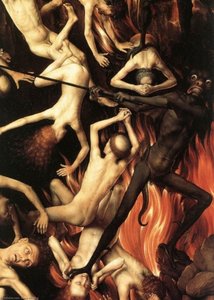
Ostatnie Sądownictwo (1471) autorstwa Hans Memling

Ostatnie Sądownictwo

1471 · Akryl na płótnie · Muzeum Narodowe w Gdańsku, Gdańsk

Hans Memling i „Ostatniego Sądu”: Arcydzieło Renesansu Północnego „Ostatni Sąd” Hansa Memlinga, stworzony w roku 1471, stanowi jedno z najważniejszych dzieł sztuki późnego okresu Renesansu Północnego – ruchu skupionego wokół niezwykłej realizmu, dokładnego obserwowania natury oraz głębokiego kontemplacji duchowej. Ten monumentalny obraz, wykonany techniką olejną na drewnianych deskach, przedstawia scenę z Księgi Apokalipsy św. Jana Apostołowskiego i stanowi doskonałe przykład wiernego odwzorowania idei religijnych epoki. Jego złożona kompozycja oraz bogate…

2
Sceny z Pasji Chrystusa (lewa strona) (1470) autorstwa Hans Memling

Sceny z Pasji Chrystusa (lewa strona)

1470 · Obraz olejny na płótnie · Galleria Sabauda, Turyn

Hans Memling, artysta z epoki renesansu północnego, pozostawił po sobie dziedzictwo niezwykłej głębi i detalu. Jego „Sceny z Pasji Chrystusa (Lewa Strona)” z 1470 roku to nie tylko obraz religijny; to fascynujące okno w przeszłość, w serce wierzenia i emocji epoki. To monumentalne dzieło, stworzone w Brukseli, jest świadectwem niezwykłej umiejętności Memlinga w łączeniu skrupulatnej techniki z głębokim przekazem duchowym. Przedstawiając kluczowe momenty Pasji Chrystusa, od triumfalnego wejścia do Jerozolimy…

3
Scènes de la vie de Marie (1480) autorstwa Hans Memling

Scènes de la vie de Marie

1480 · Obraz olejny na płycie · Alte Pinakothek, Monachium

Porywająca narracja biblijna w mistrzowskim wydaniu renesansu Przenieś się do świata bogato szczegółowego tableau, które z niezwykłą żywością przedstawia życie Maryi poprzez kunsztowne pociągnięcia pędzla Hansa Memlinga. Ta rozległa scena pozwala widzowi całkowicie zanurzyć się w świętej opowieści, uchwyconej w kluczowych momentach życia tej czczonej biblijnej postaci, z niezwykłą głębią emocjonalną i duchowym rezonansem. Złożona aranżacja kompozycji zaprasza do odkrywania każdej postaci, gestu i otoczenia, czyniąc to dzieło pociągającym punktem…

4
Passion (Greverade) Altarpiece (central panel) (1491) autorstwa Hans Memling

Passion (Greverade) Altarpiece (central panel)

1491 · Oil On Panel · Museum für Kunst und Kulturgedichte, Lübeck

To stand before this depiction of the Passion (Greverade) Altarpiece is to be enveloped in an atmosphere thick with solemnity and profound human drama. This monumental work, dating from 1491, transports the viewer directly into one of Christianity's most pivotal moments: the crucifixion of Jesus Christ. The composition itself is a masterclass in narrative intensity, utilizing a vertical format that draws the eye upward toward the ultimate sacrifice. It speaks…

5
Last Judgment Triptych (open) (1467) autorstwa Hans Memling

Last Judgment Triptych (open)

1467 · Oil On Panel · Muzeum Narodowe w Gdańsku, Gdańsk

The Last Judgment Triptych (open) is an oil on wood painting created between 1467 and 1471. The central panel features Jesus surrounded by angels and demons, serving as the focal point of this monumental scene. In the left panel, figures are depicted being judged, while the right panel contains additional people facing judgment.

6
Virgin and Child (1485) autorstwa Hans Memling

Virgin and Child

1485 · Oil · Art Institute of Chicago, Chicago

In the quietude of a Northern Renaissance interior, a profound stillness takes hold. The Virgin Mary cradles the Christ Child, her form draped in a mantle of saturated red that anchors the composition with a heavy, tactile presence. Beneath this, the deep blue of her tunic provides a cool, steady contrast to the warmth of her outer robe. Their faces, rendered with a luminous softness, lean toward one another in…

7
Scenes from the Passion of Christ (1470) autorstwa Hans Memling

Scenes from the Passion of Christ

1470 · Oil On Panel

A Detailed Depiction of a Crucial Event in History The painting "Scenes from the Passion of Christ" by Hans Memling is a remarkable work of art that captures the essence of one of the most significant events in Christian history. Created in 1470, this oil on panel masterpiece measures 57 x 92 cm and is currently housed at the The Museum Senate of Belgium (Belgium). Composition and Details The painting…

8
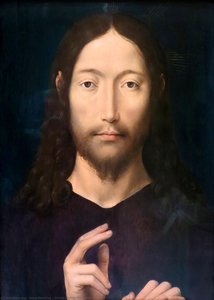
Christ Giving His Blessing (1478) autorstwa Hans Memling

Christ Giving His Blessing

1478 · Oil On Canvas

Few paintings possess the quiet power of Hans Memling's "Christ Giving His Blessing," completed in 1478. This work, a cornerstone of Early Netherlandish art, transcends mere representation to embody a profound sense of spiritual grace and serenity. Created during a period of intense religious fervor within Europe, it reflects Memling’s mastery of composition, his meticulous attention to detail, and his ability to translate complex theological concepts into a visually arresting…

9
Scenes from the Passion of Christ (detail) (8) (1470) autorstwa Hans Memling

Scenes from the Passion of Christ (detail) (8)

1470 · Akryl na płótnie · Galleria Sabauda, Turyn

Hans Memling's “Scenes from the Passion of Christ,” painted around 1470, is not merely a depiction of biblical events; it’s an immersive narrative unfolding across a meticulously rendered landscape. This monumental work, originally conceived as a devotional piece, draws the viewer into the very heart of Christ’s suffering and ultimate sacrifice. Unlike traditional single-scene depictions, Memling masterfully compresses the entirety of the Passion—from the triumphant entry into Jerusalem to the…

10
Zwiastowanie (1480) autorstwa Hans Memling

Zwiastowanie

1480 · Obraz olejny na płótnie · Metropolitan Museum of Art, Nowy Jork

In the quiet, hallowed stillness of Hans Memling’s The Annunciation, completed in 1480, time seems to suspend itself. This masterpiece, a jewel of the Early Netherlandish tradition, invites the viewer into a private, sacred moment where the earthly and the divine intersect with breathtaking intimacy. As one gazes upon this work, currently held within the prestigious Metropolitan Museum of Art, there is an immediate sense of being a silent witness…

Kontynuacja zestawienia Hans Memling, od 11 do 100

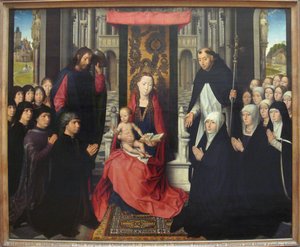
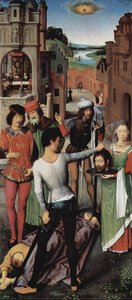
11Ostatnie Sądownictwo (lewy skrzydło) (1467) autorstwa Hans MemlingOstatnie Sądownictwo (lewy skrzydło)1467 · Muzeum Narodowe w Gdańsku 12The Virgin and Child with Saints and Donors (The Donne Triptych) (1478) autorstwa Hans MemlingThe Virgin and Child with Saints and Donors (The Donne Triptych)1478 · National Gallery 13Last Judgment Triptych (detail) (12) (1467) autorstwa Hans MemlingLast Judgment Triptych (detail) (12)1467 · Muzeum Narodowe w Gdańsku 14Last Judgment Triptych (central) (1467) autorstwa Hans MemlingLast Judgment Triptych (central)1467 · Muzeum Narodowe w Gdańsku 15Adoration of the Magi: Whole Triptych (1470) autorstwa Hans MemlingAdoration of the Magi: Whole Triptych1470 · Museo del Prado 16Last Judgment Triptych (detail) (11) (1467) autorstwa Hans MemlingLast Judgment Triptych (detail) (11)1467 · Muzeum Narodowe w Gdańsku 17The Virgin and Child with St. James and St. Dominic Presenting the Donors and their Family, known as the Virgin of Jacques Floreins (1490) autorstwa Hans MemlingThe Virgin and Child with St. James and St. Dominic Presenting the Donors and their Family, known as the Virgin of Jacques Floreins1490 · Luwr 18Angel Musicians (1480) autorstwa Hans MemlingAngel Musicians1480 · Koninklijk Museum voor Schone Kunsten 19Madonna and Child with Angels (1480) autorstwa Hans MemlingMadonna and Child with Angels1480 · National Gallery of Art 20The Donne Triptych (1475) autorstwa Hans MemlingThe Donne Triptych1475 · National Gallery 21St Ursula Shrine: Virgin and Child (1489) autorstwa Hans MemlingSt Ursula Shrine: Virgin and Child1489 · Memling Museum - Sint Jans Hospital 22Portrait of a Young Man with a Rosary (1485) autorstwa Hans MemlingPortrait of a Young Man with a Rosary1485 · Statens Museum for Kunst 23Portrait of a Man (1490) autorstwa Hans MemlingPortrait of a Man1490 · Galleria degli Uffizi 24Ecce Homo in the arms of the virgin (1479) autorstwa Hans MemlingEcce Homo in the arms of the virgin1479 25Triptych of the Family Moreel (left wing) (1484) autorstwa Hans MemlingTriptych of the Family Moreel (left wing)1484 · Groeninge Museum 26Diptych Of Martin Van Nieuwenhove (1487) autorstwa Hans MemlingDiptych Of Martin Van Nieuwenhove1487 27Adam (1485) autorstwa Hans MemlingAdam1485 · Kunsthistorisches Museum 28Two Wings of a Triptych with Portraits of the Donors (1467) autorstwa Hans MemlingTwo Wings of a Triptych with Portraits of the Donors1467 · Biblioteka i Muzeum Pierpont Morgana 29Triptych of the Mystical Marriage of St. Catherine of Alexandria, central panel: Marriage of St. Catherine (1479) autorstwa Hans MemlingTriptych of the Mystical Marriage of St. Catherine of Alexandria, central panel: Marriage of St. Catherine1479 · Muzeum Memlinga 30Portrait of a Man with an Arrow (1480) autorstwa Hans MemlingPortrait of a Man with an Arrow1480 31Portrait of Willem Moreel, husband of Barbara van Vlaendenbergh (1480) autorstwa Hans MemlingPortrait of Willem Moreel, husband of Barbara van Vlaendenbergh1480 · Królewskie Muzea Sztuk Pięknych w Belgii 32Madonna and Child with St. Anne. (1480) autorstwa Hans MemlingMadonna and Child with St. Anne.1480 · Bawarskie Państwowe Zbiory Malarstwa 33Last Judgment Triptych (detail) (10) (1467) autorstwa Hans MemlingLast Judgment Triptych (detail) (10)1467 · Muzeum Narodowe w Gdańsku 34St John Altarpiece (detail) (23) (1474) autorstwa Hans MemlingSt John Altarpiece (detail) (23)1474 · Memling Museum - Sint Jans Hospital 35View of The Last Judgement with its panels closed, depicting the donors, Angelo di Jacopo Tani and his wife, Caterina de Tanagli, below the Madonna and Child and St. Michael (1473) autorstwa Hans MemlingView of The Last Judgement with its panels closed, depicting the donors, Angelo di Jacopo Tani and his wife, Caterina de Tanagli, below the Madonna and Child and St. Michael1473 · The National Museum in Gdańsk 36St John and Veronica Diptych (reverse of the left wing) (1483) autorstwa Hans MemlingSt John and Veronica Diptych (reverse of the left wing)1483 · Alte Pinakothek 37Portrait of a man (1490) autorstwa Hans MemlingPortrait of a man1490 · Montreal Museum of Fine Arts 38St John Altarpiece (closed) (1474) autorstwa Hans MemlingSt John Altarpiece (closed)1474 · Memling Museum - Sint Jans Hospital 39Saint veronica, c. ngw (1475) autorstwa Hans MemlingSaint veronica, c. ngw1475 40Lamenting Women from a Lamentation of Christ (1487) autorstwa Hans MemlingLamenting Women from a Lamentation of Christ1487 · Bawarskie Państwowe Zbiory Malarstwa 41Scenes from the Passion of Christ (detail) (1470) autorstwa Hans MemlingScenes from the Passion of Christ (detail)1470 · Galleria Sabauda 42Inner Wing of the St. John Altarpiece: John the Evangelist (1485) autorstwa Hans MemlingInner Wing of the St. John Altarpiece: John the Evangelist1485 · Kunsthistorisches Museum 43Passion (Greverade) Altarpiece (closed) (1491) autorstwa Hans MemlingPassion (Greverade) Altarpiece (closed)1491 · Museum für Kunst und Kulturgedichte 44Triptych of the Family Moreel (central panel) (1484) autorstwa Hans MemlingTriptych of the Family Moreel (central panel)1484 · Groeninge Museum 45King David and a boy (1485) autorstwa Hans MemlingKing David and a boy1485 · Staatsgalerie Stuttgart 46Portrait of a young woman (1472) autorstwa Hans MemlingPortrait of a young woman1472 · Metropolitan Museum of Art 47St. Ursula and her companions, from the Reliquary of St. Ursula (1489) autorstwa Hans MemlingSt. Ursula and her companions, from the Reliquary of St. Ursula1489 · Muzeum Memlinga 48Last Judgment Triptych (open) (1467) autorstwa Hans MemlingLast Judgment Triptych (open)1467 · Muzeum Narodowe w Gdańsku 49Eve (1485) autorstwa Hans MemlingEve1485 · Kunsthistorisches Museum 50Portrait of a Man (1480) autorstwa Hans MemlingPortrait of a Man1480 · Kunsthaus Zürich 51Inner Wing of the St. John Altarpiece: John the Baptist (1485) autorstwa Hans MemlingInner Wing of the St. John Altarpiece: John the Baptist1485 · Kunsthistorisches Museum 52The Annunciation (1465) autorstwa Hans MemlingThe Annunciation1465 · Metropolitan Museum of Art 53Triptych of the Mystical Marriage of St. Catherine of Alexandria, left wing: The Beheading of John the Baptist (1479) autorstwa Hans MemlingTriptych of the Mystical Marriage of St. Catherine of Alexandria, left wing: The Beheading of John the Baptist1479 · Muzeum Memlinga 54Virgin and Child (1477) autorstwa Hans MemlingVirgin and Child1477 · Metropolitan Museum of Art 55Passion (Greverade) Altarpiece (detail) (1491) autorstwa Hans MemlingPassion (Greverade) Altarpiece (detail)1491 · Museum für Kunst und Kulturgedichte 56Advent and Triumph of Christ (detail 1) - (1480) autorstwa Hans MemlingAdvent and Triumph of Christ (detail 1) -1480 57Chicago diptych (1485) autorstwa Hans MemlingChicago diptych1485 · Art Institute of Chicago 58Last Judgment Triptych (detail) (13) (1467) autorstwa Hans MemlingLast Judgment Triptych (detail) (13)1467 · Muzeum Narodowe w Gdańsku 59Triptych of the Resurrection: The Martyrdom of Saint Sebastian (1450) autorstwa Hans MemlingTriptych of the Resurrection: The Martyrdom of Saint Sebastian1450 60Triptych of the Resurrection: The Ascension of Christ (1450) autorstwa Hans MemlingTriptych of the Resurrection: The Ascension of Christ1450 61Saint John the Evangelist (1478) autorstwa Hans MemlingSaint John the Evangelist1478 62Portrait of a Man (1472) autorstwa Hans MemlingPortrait of a Man1472 · Królewskie Muzea Sztuk Pięknych w Belgii 63Majestic Madonna with Child (1475) autorstwa Hans MemlingMajestic Madonna with Child1475 · Museo de la Capilla Real 64Virgin and Child (1480) autorstwa Hans MemlingVirgin and Child1480 65The Virgin and Child Enthroned (1480) autorstwa Hans MemlingThe Virgin and Child Enthroned1480 · Gemäldegalerie 66Portrait of a Man with a Pink (1475) autorstwa Hans MemlingPortrait of a Man with a Pink1475 · Biblioteka i Muzeum Pierpont Morgana 67Saint James and Saint Christopher (1470) autorstwa Hans MemlingSaint James and Saint Christopher1470 · Gallerie dell'Accademia di Venezia 68Portrait of a Man in a Black Cap (1470) autorstwa Hans MemlingPortrait of a Man in a Black Cap1470 69The Virgin and Child with an Angel (1480) autorstwa Hans MemlingThe Virgin and Child with an Angel1480 · National Gallery 70Saint Mary Magdelene (1470) autorstwa Hans MemlingSaint Mary Magdelene1470 71Saint John the Baptist (1470) autorstwa Hans MemlingSaint John the Baptist1470 72Juan de Castilla portrait (1490) autorstwa Hans MemlingJuan de Castilla portrait1490 73The Virgin (1490) autorstwa Hans MemlingThe Virgin1490 · Philadelphia Museum of Art 74Triptych of the Mystical Marriage of St. Catherine of Alexandria, right wing: Scene of St. John the Evangelist in Patmos (1479) autorstwa Hans MemlingTriptych of the Mystical Marriage of St. Catherine of Alexandria, right wing: Scene of St. John the Evangelist in Patmos1479 · Muzeum Memlinga 75Virgin and Child Enthroned (1480) autorstwa Hans MemlingVirgin and Child Enthroned1480 · Berlińskie Muzea Państwowe 76St. George with Donor. (1480) autorstwa Hans MemlingSt. George with Donor.1480 · Bawarskie Państwowe Zbiory Malarstwa 77Triptych center panel:Lamentation (1480) autorstwa Hans MemlingTriptych center panel:Lamentation1480 · Museum Boijmans Van Beuningen 78St John Altarpiece (detail) (22) (1474) autorstwa Hans MemlingSt John Altarpiece (detail) (22)1474 · Memling Museum - Sint Jans Hospital 79Diptych of Maarten Nieuwenhove (detail) (1487) autorstwa Hans MemlingDiptych of Maarten Nieuwenhove (detail)1487 · Memling Museum - Sint Jans Hospital 80Last Judgment Triptych (detail) (22) (1467) autorstwa Hans MemlingLast Judgment Triptych (detail) (22)1467 · Muzeum Narodowe w Gdańsku 81Last Judgment (1467) autorstwa Hans MemlingLast Judgment1467 · Muzeum Narodowe w Gdańsku 82Saint lawrence autorstwa Hans MemlingSaint lawrenceNational Gallery 83Mary nursing Child (1467) autorstwa Hans MemlingMary nursing Child1467 · Królewskie Muzea Sztuk Pięknych w Belgii 84Madonna of the Rose Bower (1480) autorstwa Hans MemlingMadonna of the Rose Bower1480 · Bawarskie Państwowe Zbiory Malarstwa 85Altar of Saints John the Baptist and John the Evangelist autorstwa Hans MemlingAltar of Saints John the Baptist and John the Evangelist 86Saint Anthony of Padua (1485) autorstwa Hans MemlingSaint Anthony of Padua1485 · Art Institute of Chicago 87Last Judgment Triptych (detail) (15) (1467) autorstwa Hans MemlingLast Judgment Triptych (detail) (15)1467 · Muzeum Narodowe w Gdańsku 88Triptych of the Resurrection (1490) autorstwa Hans MemlingTriptych of the Resurrection1490 · Luwr 89st john altarpiece (detail 11) - (closed) autorstwa Hans Memlingst john altarpiece (detail 11) - (closed) 90Last Judgment Triptych (detail) (17) (1467) autorstwa Hans MemlingLast Judgment Triptych (detail) (17)1467 · Muzeum Narodowe w Gdańsku 91Deposition (left wing of a diptych) (1490) autorstwa Hans MemlingDeposition (left wing of a diptych)1490 · Groeninge Museum 92St John Altarpiece (detail) (19) (1474) autorstwa Hans MemlingSt John Altarpiece (detail) (19)1474 · Memling Museum - Sint Jans Hospital 93Two Panels from a Triptych autorstwa Hans MemlingTwo Panels from a TriptychNational Gallery 94Portrait of Maria Maddalena Portinari autorstwa Hans MemlingPortrait of Maria Maddalena PortinariMetropolitan Museum of Art 95TRIPTYQUE DE LA RESURRECTION autorstwa Hans MemlingTRIPTYQUE DE LA RESURRECTIONLuwr 96Crucifixion autorstwa Hans MemlingCrucifixionSzépművészeti Múzeum 97Bathsheba (1485) autorstwa Hans MemlingBathsheba1485 · Staatsgalerie 98middle - St John Altarpiece (central panel) autorstwa Hans Memlingmiddle - St John Altarpiece (central panel) 99untitled (6791) autorstwa Hans Memlinguntitled (6791) 100Portinari Triptych (right wing) (1487) autorstwa Hans MemlingPortinari Triptych (right wing)1487 · Galleria degli Uffizi

Słynne obrazy Hans Memling epoka po epoce

Tematy, które przyciągnęły wzrok Hans Memling

Cztery motywy najczęściej powracające w tych oryginałach, z których każdy doczekał się swojego najdoskonalszego przykładu.

Muzea przechowujące oryginały Hans Memling

8 muzeów, w których znajduje się najwięcej obrazów z tej strony.

Muzea Miasto Dzieła artysty Hans Memling Obrazy z tej listy
Muzeum Narodowe w Gdańsku, GdańskMuzeum Narodowe w Gdańsku Gdańsk 14 Last Judgment Triptych (open), Ostatnie Sądownictwo (lewy skrzydło), Last Judgment Triptych (detail) (12)
Memling Museum - Sint Jans Hospital, BrugiMemling Museum - Sint Jans Hospital Brugi 25 St Ursula Shrine: Virgin and Child, St John Altarpiece (detail) (23), St John Altarpiece (closed)
Metropolitan Museum of Art, Nowy JorkMetropolitan Museum of Art Nowy Jork 17 Zwiastowanie, Portrait of a young woman, The Annunciation
National Gallery, LondynNational Gallery Londyn 14 The Virgin and Child with Saints and Donors (The Donne Triptych), The Donne Triptych, The Virgin and Child with an Angel
Muzeum Memlinga, BrugiMuzeum Memlinga Brugi 8 Triptych of the Mystical Marriage of St. Catherine of Alexandria, central panel: Marriage of St. Catherine, St. Ursula and her companions, from the Reliquary of St. Ursula, Triptych of the Mystical Marriage of St. Catherine of Alexandria, left wing: The Beheading of John the Baptist
Kunsthistorisches Museum, WiedeńKunsthistorisches Museum Wiedeń 6 Adam, Inner Wing of the St. John Altarpiece: John the Evangelist, Eve
Bawarskie Państwowe Zbiory Malarstwa, MonachiumBawarskie Państwowe Zbiory Malarstwa Monachium 4 Madonna and Child with St. Anne., Lamenting Women from a Lamentation of Christ, St. George with Donor.
Luwr, ParyżLuwr Paryż 17 The Virgin and Child with St. James and St. Dominic Presenting the Donors and their Family, known as the Virgin of Jacques Floreins, Triptych of the Resurrection, TRIPTYQUE DE LA RESURRECTION

Hans Memling dekada po dekadzie: oryginały definiujące każdy okres

Dzieła według dekad

Wybierz dekadę, aby zobaczyć dzieło, które ją definiuje.

Pytania kolekcjonerów o obrazy Hans Memling

Z jakiego dzieła najbardziej znany jest Hans Memling?Odkryj odpowiedź

Ostatnie Sądownictwo (1471), Muzeum Narodowe w Gdańsku, Gdańsk. Następne są Sceny z Pasji Chrystusa (lewa strona) (1470) oraz Scènes de la vie de Marie (1480).

W jakim wieku był Hans Memling, gdy powstało Ostatnie Sądownictwo?Odkryj odpowiedź

36 lat: Ostatnie Sądownictwo pochodzi z 1471, a Hans Memling urodził(a) się w 1435.

Jakie są dziesięć najsłynniejszych obrazów, których autorem jest Hans Memling?Odkryj odpowiedź

Ostatnie Sądownictwo, Sceny z Pasji Chrystusa (lewa strona), Scènes de la vie de Marie, Passion (Greverade) Altarpiece (central panel), Last Judgment Triptych (open), Virgin and Child, Scenes from the Passion of Christ, Christ Giving His Blessing, Scenes from the Passion of Christ (detail) (8) i Zwiastowanie. Powyższy ranking zawiera rok powstania oraz muzeum dla każdego z nich.

Ile obrazów pozostawił po sobie Hans Memling?Odkryj odpowiedź

Nasz katalog zawiera 445 dzieł artysty Hans Memling, datowanych od 1450 do 1491.

W których muzeach znajdują się arcydzieła Hans Memling?Odkryj odpowiedź

W większości znajdują się w Muzeum Narodowe w Gdańsku (Gdańsk), Memling Museum - Sint Jans Hospital (Brugi) i Metropolitan Museum of Art (Nowy Jork). Powyższa tabela muzeów zawiera ich pełną listę.

W których latach Hans Memling namalował swoje najsłynniejsze dzieła?Odkryj odpowiedź

W 1480s: 35 z 100 dzieł na tej stronie powstało w tym czasie, w tym Scènes de la vie de Marie.

Jakie są pierwsze i ostatnie słynne oryginały Hans Memling?Odkryj odpowiedź

Na tej stronie najwcześniejszy to Triptych of the Resurrection: The Martyrdom of Saint Sebastian (1450), a najpóźniejszy Passion (Greverade) Altarpiece (central panel) (1491).

Jakie tematy Hans Memling wybierał najczęściej?Odkryj odpowiedź

Landscape (26), Man (20) i Religious art (19), w ramach 100 dzieł na tej stronie.

Której techniki Hans Memling używał najczęściej?Odkryj odpowiedź

Oil On Panel, dla 58 z 100 dzieł na tej stronie.

Do jakiego nurtu artystycznego należy Hans Memling?Odkryj odpowiedź

Malarstwo wczesnoniderlandzkie, sądząc po oryginałach na tej stronie.

Które dzieła Hans Memling znajdują się w Muzeum Narodowe w Gdańsku?Odkryj odpowiedź

Last Judgment Triptych (open), Ostatnie Sądownictwo (lewy skrzydło) i Last Judgment Triptych (detail) (12): Muzeum Narodowe w Gdańsku, Gdańsk posiada 11 dzieł widocznych na tej stronie.

Hans Memling: życie i twórczość

Wczesne lata, rodzina i formacja artystyczna

Historia, którą napisał Hans Memling, bierze swój początek w regionie środkowego Renu, gdzie około 1430 roku przyszedł na świat. Jego najmłodsze lata upłynęły w Seligenstadt, niedaleko Frankfurtu – miejscu, które z czasem okaże się niezwykle odległe od flamandzkich ziem, które artysta uzna za swój prawdziwy dom. Zanim jednak zdołał wyryć swoje imię w historii wielkich miast północy, musiał zgłębić najskrytsze tajemnice rzemiosła. Pierwsze kroki w edukacji stawiał w warsztatach Moguncji lub Kolonii, gdzie poprzez lata cierpliwej pracy i uważnej obserwacji kładziono fundamenty pod jego niezwykłe umiejętności techniczne.

Wraz ze wzrostem ambicji, rozszerzał się również horyzont jego edukacji. Między około 1455 a 1460 rokiem przeniósł się w tętniącą życiem atmosferę warsztatu w Brukseli. To właśnie tam, pod okiem mistrza, jakim był Rogier van der Weyden, kształtował swój talent. Mistrzostwo van der Weydena w operowaniu farbą olejną oraz jego rzeźbiarski sposób modelowania postaci wywarły niezatarty wpływ na to, w jaki sposób Hans Memling podchodził do przedstawiania ludzkiej formy. Ten okres terminowania był kluczowy, wyposażając go w narzędzia niezbędne do tego, by ostatecznie wypracować własne, rozpoznawalne nazwisko w handlowym sercu Brugii.

Jego życie prywatne stało się równie stabilne, co kariera zawodowa. Gdzieś między 1470 a 1480 rokiem Hans poślubił Annę de Valkenaere. Wspólnie zbudowali życie w mieście, a ich związek przyniósł światu troje dzieci. Ta domowa stabilizacja stanowiła spokojne tło dla kariery, która ostatecznie wyniosła go do grona najzamożniejszych obywateli społeczności, w której przyszło mu tworzyć.

Życie i działalność w Brugii

Przybywszy do tętniącego życiem, handlowego serca Flandrii, jakim była Brugia, Memling odnalazł miasto oferujące zarówno nieograniczone możliwości, jak i idealną scenę dla jego rozwijającego się talentu. Już w 1465 roku zapewnił sobie trwałe miejsce w lokalnej społeczności jako uznany obywatel. Nie był jednak jedynie mieszkańcem; stał się centralną postacią artystycznego życia miasta, budując swoją obecność w sposób, który przyciągał uwagę lokalnych elit. Jego sukces wykraczał daleko poza mury pracowni, o czym świadczą miejskie rejestry – do 1480 roku znalazł się na liście najzamożniejszych obywateli Brugii, co stanowi namacalny dowód na spektakularny sukces jego przedsięwzięć zawodowych oraz ogromny szacunek, jakim cieszył się w społeczeństwie.

Życie Memlinga w Brugii charakteryzowało się nieustannym wzrostem statusu społecznego i ekonomicznego. W latach między 1470 a 1480 roku poślubił Annę de Valkenaere, a wspólnie wychowali troje dzieci w murach tego wspaniałego miasta. Ten okres stabilizacji domowej pozwolił mu na stworzenie rozległego warsztatu, który stał się istotnym filarem lokalnej gospodarki. Przez całe swoje życie, aż do śmierci 11 sierpnia 1494 roku, tworzył i mieszkał w tym flamandzkim centrum sztuki. Nawet w ostatnich latach jego wpływ pozostawał głęboko zakorzeniony w ulicach i instytucjach miasta, które współtworzył poprzez swoją niezwykłą, pełną pasji pracę.

Patronat, warsztat i zamówienia

W tętniących życiem ulicach Brugii Hans Memling wypracował pozycję człowieka o znacznym majątku i wielkim wpływie. Już w 1480 roku miejskie rejestry podatkowe wymieniały go wśród najzamożniejszych obywateli, co było owocem sukcesu jego rozległego warsztatu. To studio stanowiło prawdziwy ule pełen nieustannego ruchu, w którym artysta kierował licznymi asystentami, aby sprostać rosnącym wymaganiom prosperousnego społeczeństwa. Memling nie tworzył w izolacji; zarządzał on prężnie działającym przedsiębiorstwem, które sprawiło, że jego unikalny styl malarski mógł rozprzestrzenić się daleko poza mury jego własnego domu.

Bogactwo Brugii zapewniało mu stały dopływ mecenasów, pragnących poprzez sztukę zabezpieczyć swój status duchowy. Artysta cieszył się uznaniem wśród najpotężniejszych warstw społecznych, w tym wśród duchowieństwa, arystokracji oraz wschodzącej klasy mieszczaństwa. Ci patroni — bankierzy, kupcy i politycy — często pojawiali się bezpośrednio w malowanych przez niego scenach. Memling posiadał szczególny talent do włączania portretów fundatorów w kompozycje religijne, co pozwalało tym ludziom trwać w nieustającej modlitwie u boku świętych. Takie zamówienia nie były jedynie aktami pobożności, lecz stanowiły również manifestację prestiżu społecznego tych, którzy za nie płacili.

Jego zobowiązania wobec miejskich instytucji religijnych były częste i niezwykle istotne. W 1477 roku, na przykład, podpisał kontrakt na stworzenie ołtarza dla kaplicy cechowej księgarzy w Brugii. Dzieła tego typu wymagały mistrzowskiego wyważenia między świętą narracją a osobistą obecnością najbardziej wpływowych członków wspólnoty. Poprzez te kontrakty Hans Memling wplatał twarze żyjących w tkankę sacrum, zapewniając sobie nie tylko środki do życia, ale i trwałe miejsce w historii miasta.

Technika i styl artystyczny

Ręka Hansa Memlinga poruszała się z oddaniem dla świata materialnego, które definiowało tradycję malarstwa niderlandzkiego wczesnego okresu. Artysta nie ograniczał się jedynie do malowania postaci; dążył on do uchwycenia samej esencji natury poprzez skrupulatną obserwację jej najdrobniejszych szczegółów. Dzięki posługiwaniu się farbami olejnymi oraz głębokiemu zrozumieniu światła, osiągnął on rzeźbiarskie modelowanie, które nadawało jego podmiotom niemal fizyczną obecność, jak gdyby mogli oni zaraz wyjść z drewnianych desek prosto do pomieszczenia. To techniczne mistrzostwo pozwoliło mu oddać ciężkie fałdy draperii oraz subtelne tekstury skóry z klarownością, która dla ówczesnych widzów była wręcz zdumiewająca.

W swojej twórczości portretowej wypracował on wyjątkowy sposób aranżowania świata, aby osiągnąć poczucie cichej równowagi. Często umieszczał swoich modeli na tle pejzażu, tworząc starannie przemyślany kontrapunkt między pierwszym planem a tłem. Metoda ta sprawiała, że głowa modela była wyważona przez neutralną przestrzeń nieba, podczas gdy ramiona ożywione były przez misterne detale odległego krajobrazu. Takie kompozycje zapewniały poczucie głębi i stabilności, osadzając jednostkę w szerszym, naturalnym kontekście.

Dziedzictwo i ponowne odkrycie

Wpływ pędzla Hansa Memlinga wykraczał daleko poza mury jego brugeskiego warsztatu. Dzięki licznym asystentom jego unikalny sposób postrzegania świata rozprzestrzenił się po całej Europie, niosąc ze sobą styl, który wielu uznało za samą esencję malarstwa wczesnego renesansu niderlandzkiego. Artysta ten nie tylko malował; on ustanowił standard wizualnego języka, który rezonował przez kolejne dziesięciolecia, kształtując sposób, w jaki późniejsi twórcy podchodzili do płótna.

Przez długi czas prawdziwa głębia jego osiągnięć pozostawała ukryta pod całunem mijających stuleci. Dopiero w XIX wieku badacze ponownie zwrócili wzrok ku jego dziełom, wyrywając jego nazwisko z cieni historii. To ponowne odkrycie wprowadziło jego obrazy w światło nowoczesnej estetyki, a on sam szybko zyskał ogromną popularność wśród tych, którzy poszukiwali cichych, szczegółowych prawd północnego renesansu. Umiejętność chwytania subtelnych tekstur życia sprawiła, że jego imię nie zostało zapomniane przez badaczy ewolucji sztuki.