Portret Grigorij Gagarin

58 najsłynniejszych obrazów artysty Grigorij Gagarin – wybór z galerii

Aktualizacja: Listopad 2026 · ranking według naszego wskaźnika popularności (liczba wyszukiwań, wizyt i zamówień dla każdego dzieła) · 59 dzieł Grigorij Gagarin w naszym katalogu

W skrócie

Spośród wszystkich dzieł oryginalnych, które pozostawił Grigorij Gagarin, najsłynniejszym jest Żołnierz Kaukaski (1855), znajdujący się w kolekcji Art Palace of Georgia - Museum of Cultural History w Tbilisi. Tuż za nimi znajdują się Portrait of Major M.L.Dubelt (1850) oraz Georgian militia in Zaqatala (1855). Nasz katalog zawiera 59 dzieł autorstwa Grigorij Gagarin; galeria zachowała 58 najbardziej podziwianych na świecie prac, z których każda została przedstawiona wraz z datą powstania, informacją o muzeum oraz jej historią.

1810 – 1893, Petersburg Romantic realism Najwięcej dzieł: Art Palace of Georgia - Museum of Cultural History

10 najlepszych obrazów artysty Grigorij Gagarin: wybór galerii

1
Żołnierz Kaukaski (1855) autorstwa Grigorij Gagarin

Żołnierz Kaukaski

Grigory Gagarin’s “Caucasian Soldier”: A Portrait of Resilience Amidst Imperial Ambition The painting "Caucasian Soldier" by Grigory Gagarin stands as a poignant testament to the turbulent era of the Caucasian War (1846-1859), capturing not merely a depiction of military personnel but also an embodiment of cultural exchange and artistic observation. Executed in 1855, this artwork resides within the Art Palace of Georgia – Museum of Cultural History in Tbilisi, offering…

2
Portrait of Major M.L.Dubelt (1850) autorstwa Grigorij Gagarin

Portrait of Major M.L.Dubelt

1850 · Oil On Canvas · Ermitaż, Sankt Petersburg

A young officer sits against a backdrop of alpine air. The portrait captures Major M.L. Dubelt in a three-quarter view, his body angled slightly away from the viewer while his gaze remains steady. He wears a heavy military uniform of deep black and rich red. The fabric appears thick, holding the sharp, structured lines of his shoulders. Gold epaulettes catch the light from the upper left, their metallic sheen contrasting…

3
Georgian militia in Zaqatala (1855) autorstwa Grigorij Gagarin

Georgian militia in Zaqatala

In the 1855 work Georgian militia in Zaqatala, Grigory Gagarin presents a formal composition featuring six Georgian soldiers. The figures are depicted in traditional military attire, standing with a poised and dignified presence. The scene is set against a lush, natural landscape characterized by greenery and a tranquil body of water in the distance. The composition emphasizes the structural silhouettes of the soldiers, specifically through the geometric forms of their…

4
Russian Soldiers During The Caucasian Wars autorstwa Grigorij Gagarin

Russian Soldiers During The Caucasian Wars

Oil

The scene unfolds within a dense forest, where the soft illumination of early morning or late afternoon casts long, heavy shadows across the earthen floor. Three figures occupy the foreground, their presence anchored by the massive trunks of ancient trees. A soldier stands upright, his posture alert, clutching a rifle. Beside him, another soldier rests against a tree, his firearm laid across his lap in a state of weary repose.…

5
Caucasus Policeman (1855) autorstwa Grigorij Gagarin

Caucasus Policeman

1855 · Akryl na płótnie · Art Palace of Georgia - Museum of Cultural History, Tbilisi

Caucasian Policeman – A Portrait of Courage Amidst Imperial Ambition Grigory Grigorievich Gagarin’s “Caucasian Policeman” (1855) transcends mere depiction; it embodies the spirit of 19th-century Russian imperial ambition intertwined with a profound appreciation for Georgian culture and resilience. Painted during Gagarin's tenure as administrator in Tiflis, this artwork offers a captivating glimpse into a pivotal moment in Georgian history – the siege of Tiflis by Imam Shamil’s forces representing the…

6
Mingrelian Książę (1855) autorstwa Grigorij Gagarin

Mingrelian Książę

1855 · Akryl na płótnie · Art Palace of Georgia - Museum of Cultural History, Tbilisi

Mingrelian Prince - A Portrait of Caucasus Spirit Grigory Grigorievich Gagarin (1810-1893), a Russian painter, diplomat & administrator, stands as a pivotal figure in 19th-century Russian art. Born in Saint Petersburg to the noble Rurikid princely gagarin family, his artistic journey began with private lessons from Karl Briullov, shaping him into a master of capturing human emotion and regional landscapes. Gagarin’s legacy extends beyond individual canvases; he profoundly influenced the…

Kontynuacja zestawienia Grigorij Gagarin, od 11 do 58

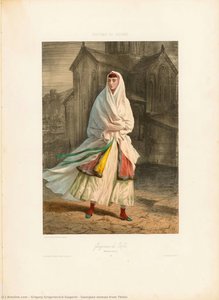
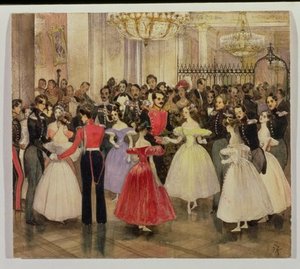
11End Of The Hunt autorstwa Grigorij GagarinEnd Of The Hunt 12The Meeting Of General Kluke Von Klugenau And Imam Shamil autorstwa Grigorij GagarinThe Meeting Of General Kluke Von Klugenau And Imam Shamil 13Circassianka Tbilisińska (1855) autorstwa Grigorij GagarinCircassianka Tbilisińska1855 · Art Palace of Georgia - Museum of Cultural History 14Rodzina z Armenii (1855) autorstwa Grigorij GagarinRodzina z Armenii1855 · Art Palace of Georgia - Museum of Cultural History 15A prist from Armenia (1855) autorstwa Grigorij GagarinA prist from Armenia1855 · Art Palace of Georgia - Museum of Cultural History 16Georgian woman from Tbilisi - Żydowski obraz Tbilisi (1855) autorstwa Grigorij GagarinGeorgian woman from Tbilisi - Żydowski obraz Tbilisi1855 · Art Palace of Georgia - Museum of Cultural History 17Wojownik Czircasski (1855) autorstwa Grigorij GagarinWojownik Czircasski1855 · Art Palace of Georgia - Museum of Cultural History 18A man from Nagorno-Karabakh (1855) autorstwa Grigorij GagarinA man from Nagorno-Karabakh1855 · Art Palace of Georgia - Museum of Cultural History 19Czaczenieński Książę (1855) autorstwa Grigorij GagarinCzaczenieński Książę1855 · Art Palace of Georgia - Museum of Cultural History 20Arriving At Tsatanyk autorstwa Grigorij GagarinArriving At Tsatanyk 21The Bazaar in Maidan Square autorstwa Grigorij GagarinThe Bazaar in Maidan Square 22Tcherkersseians On A Raid Near The Black Sea, autorstwa Grigorij GagarinTcherkersseians On A Raid Near The Black Sea, 23Frescoes From The Orthodox Church Of Nekrssi autorstwa Grigorij GagarinFrescoes From The Orthodox Church Of Nekrssi 24View Of Ghimri And Portrait Of Hadji-mourad, autorstwa Grigorij GagarinView Of Ghimri And Portrait Of Hadji-mourad, 25Sharia Lecture At Khosrakh autorstwa Grigorij GagarinSharia Lecture At Khosrakh 26Oriental Scene autorstwa Grigorij GagarinOriental Scene 27A Falcon Hunt Near Yerevan autorstwa Grigorij GagarinA Falcon Hunt Near Yerevan 28Caravan Of Armenian Merchants autorstwa Grigorij GagarinCaravan Of Armenian Merchants 29Costumes of Baku autorstwa Grigorij GagarinCostumes of Baku 30Kurdish And Tatar Warriors At Sadar Abbat autorstwa Grigorij GagarinKurdish And Tatar Warriors At Sadar Abbat 31Dancing Party At Kagha-choura autorstwa Grigorij GagarinDancing Party At Kagha-choura 32Military Meal In The Ruins At Sioukh autorstwa Grigorij GagarinMilitary Meal In The Ruins At Sioukh 33Skirmish Of Persians And Kurds In Armenia autorstwa Grigorij GagarinSkirmish Of Persians And Kurds In Armenia 34Costumes Of The 17th And 18th Centurie autorstwa Grigorij GagarinCostumes Of The 17th And 18th Centurie 35The Sevang Or Cockcha Lake autorstwa Grigorij GagarinThe Sevang Or Cockcha Lake 36Rest Room Beside The Baths At Shemakha autorstwa Grigorij GagarinRest Room Beside The Baths At Shemakha 37Reunion Of Tcherkesse Princes autorstwa Grigorij GagarinReunion Of Tcherkesse Princes 38Garden Near Tiflis autorstwa Grigorij GagarinGarden Near Tiflis 39Frescoes From The Gelati Monastery autorstwa Grigorij GagarinFrescoes From The Gelati Monastery 40Landing Of A Military Leader At Redout-kale autorstwa Grigorij GagarinLanding Of A Military Leader At Redout-kale 41King Alexander I autorstwa Grigorij GagarinKing Alexander I 42Frescoes From The Orthodox Church Of Nekrssi Near Dido autorstwa Grigorij GagarinFrescoes From The Orthodox Church Of Nekrssi Near Dido 43The Hall Of Mirrors In The Palace Of The Sardar autorstwa Grigorij GagarinThe Hall Of Mirrors In The Palace Of The Sardar 44Princess Baryatinskaya's Ball autorstwa Grigorij GagarinPrincess Baryatinskaya's Ball 45The Palace Of The Khan Of Baku autorstwa Grigorij GagarinThe Palace Of The Khan Of Baku 46Outdoor Fete In Turkey autorstwa Grigorij GagarinOutdoor Fete In Turkey 47Funeral Ceremony In The Ruins autorstwa Grigorij GagarinFuneral Ceremony In The Ruins 48Outdoor Fete In Turkey autorstwa Grigorij GagarinOutdoor Fete In Turkey 49Ateseh-gah autorstwa Grigorij GagarinAteseh-gah 50The Rest Room Near The Baths At Shemakha autorstwa Grigorij GagarinThe Rest Room Near The Baths At Shemakha 51Portrait Of Chota Rustaveli After A Miniature autorstwa Grigorij GagarinPortrait Of Chota Rustaveli After A Miniature 52Circassian Women (1855) autorstwa Grigorij GagarinCircassian Women1855 · Art Palace of Georgia - Museum of Cultural History 53Patriarch of Armenia (1855) autorstwa Grigorij GagarinPatriarch of Armenia1855 · Art Palace of Georgia - Museum of Cultural History 54Żydowscy Circassianie (1855) autorstwa Grigorij GagarinŻydowscy Circassianie1855 · Art Palace of Georgia - Museum of Cultural History 55Принц Григорий Григорьевич Гагарин (1855) autorstwa Grigorij GagarinПринц Григорий Григорьевич Гагарин1855 · Art Palace of Georgia - Museum of Cultural History 56Georgian prince w garnizonowym mundurze (1855) autorstwa Grigorij GagarinGeorgian prince w garnizonowym mundurze1855 · Art Palace of Georgia - Museum of Cultural History 57Georgianin człowiek (1855) autorstwa Grigorij GagarinGeorgianin człowiek1855 · Art Palace of Georgia - Museum of Cultural History 58Kurd z Araratu (1855) autorstwa Grigorij GagarinKurd z Araratu1855 · Art Palace of Georgia - Museum of Cultural History

Tematy, które przyciągnęły wzrok Grigorij Gagarin

Cztery motywy najczęściej powracające w tych oryginałach, z których każdy doczekał się swojego najdoskonalszego przykładu.

Muzea przechowujące oryginały Grigorij Gagarin

2 muzeów, w których znajduje się najwięcej obrazów z tej strony.

Muzea Miasto Dzieła artysty Grigorij Gagarin Obrazy z tej listy
Art Palace of Georgia - Museum of Cultural History, TbilisiArt Palace of Georgia - Museum of Cultural History Tbilisi 18 Żołnierz Kaukaski, Georgian militia in Zaqatala, Caucasus Policeman
Ermitaż, Sankt PetersburgErmitaż Sankt Petersburg 1 Portrait of Major M.L.Dubelt

Grigorij Gagarin rok po roku: oryginały, które definiują każdy z nich

Datowane dzieła Grigorij Gagarin w tym zestawieniu obejmują zaledwie 6 lat, od 1850 do 1855: krótka kariera, przedstawiona tutaj rok po roku.

Dzieła według lat

Wybierz rok, aby zobaczyć oryginały.

Pytania kolekcjonerów o obrazy Grigorij Gagarin

Z jakiego dzieła najbardziej znany jest Grigorij Gagarin?Odkryj odpowiedź

Żołnierz Kaukaski (1855), Art Palace of Georgia - Museum of Cultural History, Tbilisi. Następne są Portrait of Major M.L.Dubelt (1850) oraz Georgian militia in Zaqatala (1855).

W jakim wieku był Grigorij Gagarin, gdy powstało Żołnierz Kaukaski?Odkryj odpowiedź

45 lat: Żołnierz Kaukaski pochodzi z 1855, a Grigorij Gagarin urodził(a) się w 1810.

Jakie są dziesięć najsłynniejszych obrazów, których autorem jest Grigorij Gagarin?Odkryj odpowiedź

Żołnierz Kaukaski, Portrait of Major M.L.Dubelt, Georgian militia in Zaqatala, Russian Soldiers During The Caucasian Wars, Caucasus Policeman, Mingrelian Książę, The Terraces Of Tiflis, Winemaking In Kahetie, Grape Harvest In Kakhetie i Persian Mosque At Yerevan. Powyższy ranking zawiera rok powstania oraz muzeum dla każdego z nich.

Ile obrazów pozostawił po sobie Grigorij Gagarin?Odkryj odpowiedź

Nasz katalog zawiera 59 dzieł artysty Grigorij Gagarin, datowanych od 1850 do 1855.

W których muzeach znajdują się arcydzieła Grigorij Gagarin?Odkryj odpowiedź

W większości znajdują się w Art Palace of Georgia - Museum of Cultural History (Tbilisi) i Ermitaż (Sankt Petersburg). Powyższa tabela muzeów zawiera ich pełną listę.

W których latach Grigorij Gagarin namalował swoje najsłynniejsze dzieła?Odkryj odpowiedź

W 1855: 18 z 58 dzieł na tej stronie powstało w tym czasie, w tym Żołnierz Kaukaski.

Jakie są pierwsze i ostatnie słynne oryginały Grigorij Gagarin?Odkryj odpowiedź

Na tej stronie najwcześniejszy to Portrait of Major M.L.Dubelt (1850), a najpóźniejszy Żołnierz Kaukaski (1855).

Jakie tematy Grigorij Gagarin wybierał najczęściej?Odkryj odpowiedź

Georgian art (9), Circassian culture (5) i Russian painter (5), w ramach 58 dzieł na tej stronie.

Której techniki Grigorij Gagarin używał najczęściej?Odkryj odpowiedź

Akryl na płótnie, dla 13 z 58 dzieł na tej stronie.

Do jakiego nurtu artystycznego należy Grigorij Gagarin?Odkryj odpowiedź

Romantic realism, sądząc po oryginałach na tej stronie.

Które dzieła Grigorij Gagarin znajdują się w Art Palace of Georgia - Museum of Cultural History?Odkryj odpowiedź

Żołnierz Kaukaski, Georgian militia in Zaqatala i Caucasus Policeman: Art Palace of Georgia - Museum of Cultural History, Tbilisi posiada 18 dzieł widocznych na tej stronie.

Grigorij Gagarin: życie i twórczość

Grigory Gagarin (1810 - 1893)

Grigory Grigorievich Gagarin (Russian: Григо́рий Григо́рьевич Гага́рин, May 29 April 1810 – January 30 January 1893) was a Russian painter, Major General and administrator. He stands as one of the most prominent figures in Russian Romanticism, celebrated for his captivating depictions of Caucasian landscapes and portraits—particularly those capturing the spirit of the Circassian people. His artistic journey began under the tutelage of Karl Briullov, a titan of Russian art, shaping his style and fostering an enduring fascination with observation and expressive color. ### Early Life and Artistic Formation Born into the noble Rurikid Gagarin family – descendants of Vladimir Rus’—Grigory’s upbringing instilled in him a deep appreciation for heritage and tradition. His father, Prince Grigory Ivanovich Gagarin (Saint Petersburg, March 29 March 1782 – Tegernsee, February 12 February 1837), served as Russia's ambassador to Italy, exposing young Grigory to European culture and fostering a cosmopolitan outlook. Despite lacking formal artistic training, Gagarin’s talent blossomed thanks to invaluable lessons from Karl Briullov, whose influence would permeate his entire oeuvre. This formative period in Siena solidified his commitment to capturing the beauty of the natural world and conveying emotion through visual art. ### Artistic Career: Landscapes and Portraits Gagarin's artistic career gained momentum during his time in Saint Petersburg, where he befriended literary luminaries like Alexander Pushkin and Mikhail Lermontov—artists who profoundly impacted Russian culture. He meticulously illustrated Pushkin’s masterpieces, “The Queen of Spades” and “The Tale of Tsar Saltan,” demonstrating a masterful command of narrative storytelling through painting. Furthermore, Gagarin's artistic explorations extended beyond literature; he embarked on expeditions to the Caucasus region, documenting its dramatic vistas with breathtaking precision. His canvases—such as "Caucasian Prince" and "Circassian Woman"—became emblems of Romantic idealism, reflecting his belief in the sublime power of nature and the importance of portraying human subjects with sensitivity and nuance. He also produced portraits of Armenian clergymen and Kurds from Ararat, showcasing his dedication to documenting diverse ethnic groups and traditions. ### Military Service and Administrative Roles Beyond his artistic pursuits, Gagarin distinguished himself as a military officer and administrator—serving as a Major General in the Russian Army and holding positions within the Imperial Court. His diplomatic service spanned Paris, Rome, and Constantinople, providing him with invaluable experience in international relations and fostering an understanding of diverse cultures. Notably, he was appointed Vice President of the Fine Arts Academy since 1859, cementing his legacy as a champion of artistic excellence and furthering Russia’s cultural standing on the global stage. ### Legacy and Significance Grigory Gagarin's contribution to Russian art is undeniable—his landscapes embody Romantic ideals, while his portraits capture the essence of human character with remarkable accuracy. His work continues to inspire admiration for its beauty and emotional depth, serving as a testament to the enduring power of observation and artistic expression. He remains an important figure in Russian cultural history, symbolizing the harmonious blend of intellectual curiosity and creative talent that characterized the Romantic era. ### References: