Portret Jean-François De Troy

Obrazy: 77 najsłynniejszych dzieł artysty Jean-François De Troy – spojrzenie galerii

Aktualizacja: Listopad 2026 · ranking według naszego wskaźnika popularności (liczba wyszukiwań, wizyt i zamówień dla każdego dzieła) · 77 dzieł Jean-François De Troy w naszym katalogu

W skrócie

Według opinii kuratorów galerii, najsłynniejszym obrazem Jean-François De Troy jest The Triumph of Mordecai (1736), którego oryginał znajduje się w Metropolitan Museum of Art w Nowy Jork. Portrait of Louis XV of France and Maria Anna Victoria of Spain (1723) i Lot with his Daughters (1721) dopełniają trio, które zna każde oko. Z 77 dzieł Jean-François De Troy w naszym katalogu, galeria prezentuje poniżej 77 najsłynniejszych prac – każda z nich jest oryginałem z podaniem roku powstania, muzeum oraz cech wyróżniających ją na tle innych.

1645 – 1730, Tuluza Baroque style Najwięcej dzieł: National Gallery

10 najlepszych obrazów artysty Jean-François De Troy w galerii

1
The Triumph of Mordecai (1736) autorstwa Jean-François De Troy

The Triumph of Mordecai

1736 · Oil On Canvas · Metropolitan Museum of Art, Nowy Jork

Jean-François de Troy: A Master of Rococo Elegance Jean-François de Troy (1645–1730) stands as a pivotal figure bridging the Baroque and Rococo artistic movements in France, embodying the refined sensibilities of his era. Born into a family steeped in artistic tradition in Toulouse, he benefited from an early education fostered by his father, François de Troy – himself a celebrated portraitist – who instilled within him a meticulous technique and…

2
Portrait of Louis XV of France and Maria Anna Victoria of Spain (1723) autorstwa Jean-François De Troy

Portrait of Louis XV of France and Maria Anna Victoria of Spain

1723 · Oil On Canvas

The Portrait of Louis XV of France and Maria Anna Victoria of Spain by François de Troy captures a moment of profound royal significance. Created in 1723, the work presents a scene of high-ranking nobility through the eyes of a skilled observer. We find ourselves looking upon the young Louis XV of France as a child, his presence marked by the weight of his future station. Beside him, Mariana Victoria…

3
Lot with his Daughters (1721) autorstwa Jean-François De Troy

Lot with his Daughters

1721 · Oil On Canvas · Ermitaż, Sankt Petersburg

In the grand tapestry of eighteenth-century French painting, few works capture the tension between classical narrative and burgeoning Rococo elegance as poignantly as Jean-François de Troy’s “Lot with his Daughters.” This monumental canvas, a breathtaking display of scale and emotional depth, invites the viewer into a world where biblical gravity meets an intimate, almost voyeuristic, domesticity. As one gazes upon the composition, the eye is immediately drawn to the interplay…

4
The Declaration of Love (1724) autorstwa Jean-François De Troy

The Declaration of Love

1724 · Oil On Canvas · Metropolitan Museum of Art, Nowy Jork

A Window Into Rococo Sensuality Jean-François de Troy’s “The Declaration of Love,” completed in 1724, stands as a quintessential example of the tableau vivant, or ‘living picture,’—a genre that flourished during the Rococo period and captured the very heartbeat of aristocratic Parisian society. More than just a portrait, it is an exquisitely crafted tableau designed to convey not only visual beauty but also social status and emotional nuance. Housed in…

5
Nils Bielke, Count, Field Marshal, Ambassador (1679) autorstwa Jean-François De Troy

Nils Bielke, Count, Field Marshal, Ambassador

1679 · Oil · Nationalmuseum, Stockholm

The portrait titled Nils Bielke, Count, Field Marshal, Ambassador captures a man of high station and military weight. This work is attributed to the French artist François de Troy. The subject, Nils Bielke, lived from 1644 to 1716, a life defined by the rigid structures of the Swedish nobility and the complexities of European diplomacy. He moved through the halls of power as a soldier and a statesman, a figure…

6
Angelo Constantini in the role of Mezetin (1687) autorstwa Jean-François De Troy

Angelo Constantini in the role of Mezetin

1687 · Oil On Canvas · Musée Condé, Chantilly

In this oil on canvas, we find ourselves in the presence of Angelo Constantini, captured in the midst of a theatrical transformation. He is portrayed in the role of Mezetin, a character that demands a certain physical presence and expressive energy. The composition is vertical, drawing the eye upward through the subject's animated gesture. He leans slightly toward the right, his gaze directed upward as if responding to a cue…

7
Louis Auguste I. de Bourbon, Duke of Maine (1670-1736) (1716) autorstwa Jean-François De Troy

Louis Auguste I. de Bourbon, Duke of Maine (1670-1736)

1716 · Oil On Canvas · Staatliche Kunstsammlungen Dresden, Drezno

The young man sits with a quiet, composed stillness, his gaze meeting the viewer with an air of effortless authority. This is Louis Auguste I. de Bourbon, Duke of Maine, captured in a moment of poised elegance. He is draped in a heavy, dark mantle, the weight of the fabric suggested by deep shadows and the soft, white texture of ermine fur lining the collar. The light falls from the…

8
The Capture of the Golden Fleece (1742) autorstwa Jean-François De Troy

The Capture of the Golden Fleece

1742 · Oil On Canvas · National Gallery, Londyn

The Capture of the Golden Fleece by François de Troy captures a singular moment of mythic tension. Created about 1742, this oil on canvas serves as the third in a sequence of seven illustrations detailing the saga of Jason. The narrative finds its roots in the verses of the Roman poet Ovid, specifically within the episodes of his Metamorphoses. Here, the hero’s quest reaches a fever pitch as the prize…

10
Portrait de Marie Anne de Bourbon, princesse de Conti autorstwa Jean-François De Troy

Portrait de Marie Anne de Bourbon, princesse de Conti

Oil On Canvas · Musée des Augustins, Tuluza

Portrait de Marie Anne de Bourbon, princesse de Conti, is an oil on canvas painted by François de Troy in 1690. The sitter is Marie Anne de Bourbon, Princess of Conti, who lived from 2 October 1666 to 3 May 1739. As the daughter of Louis XIV and Louise de La Vallière, her lineage places her at the center of the French courtly circle during the late seventeenth century.

Obrazy artysty Jean-François De Troy, uszeregowane od 11 do 77 miejsca

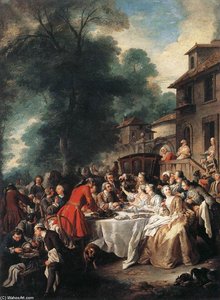
11PORTRAIT D'HOMME autorstwa Jean-François De TroyPORTRAIT D'HOMMELuwr 12Mercury and Sleeping Argus (1670) autorstwa Jean-François De TroyMercury and Sleeping Argus1670 13Marie-Anne de Bourbon, Princess of Conti (1666-1739) (1680) autorstwa Jean-François De TroyMarie-Anne de Bourbon, Princess of Conti (1666-1739)1680 · Opera w Wersalu 14Portrait of Teresa Kunegunda Sobieska as a bride (1695) autorstwa Jean-François De TroyPortrait of Teresa Kunegunda Sobieska as a bride1695 15Portrait of Anne-Louise-Bénédicte de Bourbon-Condé, duchesse du Maine (1694) autorstwa Jean-François De TroyPortrait of Anne-Louise-Bénédicte de Bourbon-Condé, duchesse du Maine1694 · Musée des Beaux-Arts 16Lady Mary Herbert (1659–1744 1745), Viscountess Montagu (1696) autorstwa Jean-François De TroyLady Mary Herbert (1659–1744 1745), Viscountess Montagu1696 · Powys Castle Museum 17Miniature of Jakub Ludwik Sobieski. (1700) autorstwa Jean-François De TroyMiniature of Jakub Ludwik Sobieski.1700 · Muzeum Narodowe w Warszawie 18Self-Portrait (1704) autorstwa Jean-François De TroySelf-Portrait1704 · Museum of Fine Arts 19Half-length portrait of Princess Louisa Stuart as a young girl (1700) autorstwa Jean-François De TroyHalf-length portrait of Princess Louisa Stuart as a young girl1700 20Portrait d'un homme au manteau bleu tenant un livre - François de Troy - Musée des Beaux-Arts de Gaillac (1700) autorstwa Jean-François De TroyPortrait d'un homme au manteau bleu tenant un livre - François de Troy - Musée des Beaux-Arts de Gaillac1700 · Gaillac Museum of Fine Arts 21La Duchesse de La Ferté with the Duc de Bretagne and the Duc d’Anjou (1712) autorstwa Jean-François De TroyLa Duchesse de La Ferté with the Duc de Bretagne and the Duc d’Anjou1712 · Leeds Art Gallery 22William Herbert, Lord Herbert, later 2nd Marquis of Powis (c. 1665 - 1745) (1714) autorstwa Jean-François De TroyWilliam Herbert, Lord Herbert, later 2nd Marquis of Powis (c. 1665 - 1745)1714 · Coughton Court 23Portrait of Countess of Cosel with son as Cupido. (1712) autorstwa Jean-François De TroyPortrait of Countess of Cosel with son as Cupido.1712 · Muzeum Kolekcji im. Jana Pawła II 24Louise Hippolyte Grimaldi when Duchess of Valentinois (Future Princess of Monaco) (1715) autorstwa Jean-François De TroyLouise Hippolyte Grimaldi when Duchess of Valentinois (Future Princess of Monaco)1715 · Opera w Wersalu 25The Rearing of Bacchus (1717) autorstwa Jean-François De TroyThe Rearing of Bacchus1717 · Gemäldegalerie 26Woman at a Spring (1723) autorstwa Jean-François De TroyWoman at a Spring1723 · Opera w Wersalu 27Portrait of Jean Hébert, alderman of the city of Paris (1726) autorstwa Jean-François De TroyPortrait of Jean Hébert, alderman of the city of Paris1726 · Musée Carnavalet 28Portrait of an Alderman (1726) autorstwa Jean-François De TroyPortrait of an Alderman1726 · Musée Carnavalet 29Young Woman Drinking Coffee (1723) autorstwa Jean-François De TroyYoung Woman Drinking Coffee1723 · Gemäldegalerie 30Bathsheba at her Bath (1750) autorstwa Jean-François De TroyBathsheba at her Bath1750 · Philbrook Museum of Art 31Time unveiling Truth (1733) autorstwa Jean-François De TroyTime unveiling Truth1733 32Kristian I, 1623-1692, Ludvig I hertig av Mecklenburg-Schwerin autorstwa Jean-François De TroyKristian I, 1623-1692, Ludvig I hertig av Mecklenburg-SchwerinNationalmuseum 33Portrait of the Marquis of Marigny (1750) autorstwa Jean-François De TroyPortrait of the Marquis of Marigny1750 · Zamek Wersalski 34A Hunt Breakfast (1737) autorstwa Jean-François De TroyA Hunt Breakfast1737 · Wallace Collection 35An Allegory of Time Unveiling Truth (detail) (1733) autorstwa Jean-François De TroyAn Allegory of Time Unveiling Truth (detail)1733 · National Gallery 36Lot and His Daughters (1745) autorstwa Jean-François De TroyLot and His Daughters1745 · Museo de Arte de Ponce 37Lady Lucy Herbert (1668–1744), Later Prioress of the English Austin Canonesses at Bruges, as a Vestal Virgin (1693) autorstwa Jean-François De TroyLady Lucy Herbert (1668–1744), Later Prioress of the English Austin Canonesses at Bruges, as a Vestal Virgin1693 · Powys Castle Museum 38Lady Mary Herbert (1659–1744 1745), Viscountess Montagu, Previously the Honourable Lady Richard Molyneux, and Later Lady Maxwell, as Diana (1688) autorstwa Jean-François De TroyLady Mary Herbert (1659–1744 1745), Viscountess Montagu, Previously the Honourable Lady Richard Molyneux, and Later Lady Maxwell, as Diana1688 · Coughton Court 39Queen Mary of Modena, Princess Maria Beatrice d'Este (1658–1718) (1698) autorstwa Jean-François De TroyQueen Mary of Modena, Princess Maria Beatrice d'Este (1658–1718)1698 40Prince James Francis Edward (1688–1766) (1698) autorstwa Jean-François De TroyPrince James Francis Edward (1688–1766)1698 · Traquair House 41Prince James Francis Edward Stuart (1688–1766), Son of James VII and II (1701) autorstwa Jean-François De TroyPrince James Francis Edward Stuart (1688–1766), Son of James VII and II1701 · Scottish National Portrait Gallery 42Woman Reading a letter (1723) autorstwa Jean-François De TroyWoman Reading a letter1723 · Gemäldegalerie 43A Hunting Meal (1737) autorstwa Jean-François De TroyA Hunting Meal1737 · Luwr 44Jason Taming the Bulls of Aeëtes (1742) autorstwa Jean-François De TroyJason Taming the Bulls of Aeëtes1742 · The Barber Institute of Fine Arts 45The Judgement of Paris (1734) autorstwa Jean-François De TroyThe Judgement of Paris1734 46CHARLES MOUTON autorstwa Jean-François De TroyCHARLES MOUTONLuwr 47Bacchus and Ariadne (1717) autorstwa Jean-François De TroyBacchus and Ariadne1717 · Berlińskie Muzea Państwowe 48Duck Shooting in a Wood (1730) autorstwa Jean-François De TroyDuck Shooting in a Wood1730 · Fitzwilliam College 49Portrait of Louis Alexandre de Bourbon (1678-1737), legitimized son of France, Count of Toulouse autorstwa Jean-François De TroyPortrait of Louis Alexandre de Bourbon (1678-1737), legitimized son of France, Count of Toulouse 50Portrait of Madame de Lude autorstwa Jean-François De TroyPortrait of Madame de LudeHerzog Anton Ulrich Museum 51Portrait of Catherine de La Boissière autorstwa Jean-François De TroyPortrait of Catherine de La BoissièreThe Ema Klabin House Museum 52Louis François Lefèvre de Caumartin autorstwa Jean-François De TroyLouis François Lefèvre de Caumartin 53JULES HARDOUIN MANSART (1645 1708) autorstwa Jean-François De TroyJULES HARDOUIN MANSART (1645 1708)Opera w Wersalu 54Portrait de femme en Vénus désarmant l'Amour autorstwa Jean-François De TroyPortrait de femme en Vénus désarmant l'Amour 55La duchesse du Maine en Cléopâtre autorstwa Jean-François De TroyLa duchesse du Maine en Cléopâtre 56Portrait de Madame Jean de Jullienne autorstwa Jean-François De TroyPortrait de Madame Jean de Jullienne 57Portrait de M. Le Prestre autorstwa Jean-François De TroyPortrait de M. Le Prestre 58Madame de Miramion autorstwa Jean-François De TroyMadame de Miramion 59JEUX DANS UNE COUR DE FERME autorstwa Jean-François De TroyJEUX DANS UNE COUR DE FERME 60Anne Marie de Beuzelin de Bosmelet, Duchesse de La Force autorstwa Jean-François De TroyAnne Marie de Beuzelin de Bosmelet, Duchesse de La ForceMuseum of Fine Arts 61PORTRAIT D'HOMME EN CUIRASSE autorstwa Jean-François De TroyPORTRAIT D'HOMME EN CUIRASSE 62Portrait de Jean de Jullienne autorstwa Jean-François De TroyPortrait de Jean de Jullienne 63ELISABETH CHARLOTTE DE BAVIERE, DUCHESSE D'ORLEANS, DITE LA PALATINE (1652 1722) autorstwa Jean-François De TroyELISABETH CHARLOTTE DE BAVIERE, DUCHESSE D'ORLEANS, DITE LA PALATINE (1652 1722)Zamek Wersalski 64Portrait de femme avec son enfant et une nourrice Portrait de la duchesse de Bourgogne, mère de Louis XV Portrait d'une femme tenant son enfant sur ses genoux (Ancien titre) autorstwa Jean-François De TroyPortrait de femme avec son enfant et une nourrice Portrait de la duchesse de Bourgogne, mère de Louis XV Portrait d'une femme tenant son enfant sur ses genoux (Ancien titre) 65James Francis Edward Stuart ('Old Pretender') autorstwa Jean-François De TroyJames Francis Edward Stuart ('Old Pretender')Fairfax House 66The Death of a Stag (1737) autorstwa Jean-François De TroyThe Death of a Stag1737 · Wallace Collection 67Die Liebeserklärung (1731) autorstwa Jean-François De TroyDie Liebeserklärung1731 · Pałac Sanssouci 68DOUBLE PORTRAIT ALLEGORIQUE LE JUGEMENT DE PARIS DIT AUTREFOIS MADEMOISELLE DE BLOIS ET LE COMTE DE TOULOUSE EN VERTUMNE ET POMONE autorstwa Jean-François De TroyDOUBLE PORTRAIT ALLEGORIQUE LE JUGEMENT DE PARIS DIT AUTREFOIS MADEMOISELLE DE BLOIS ET LE COMTE DE TOULOUSE EN VERTUMNE ET POMONELuwr 69Scene in the Park (1750) autorstwa Jean-François De TroyScene in the Park1750 · Ermitaż 70The Alarm, or the Gouvernante Fidèle (1723) autorstwa Jean-François De TroyThe Alarm, or the Gouvernante Fidèle1723 · Victoria and Albert Museum 71Portrait of Jean de Jullienne autorstwa Jean-François De TroyPortrait of Jean de Jullienne 72Portrait de Mme Le Prestre autorstwa Jean-François De TroyPortrait de Mme Le PrestreSchorr Collection 73Sir William Herbert (1626–1696), 3rd Baron and 1st Earl and 1st Marquess Duke of Powis, in Garter Robes autorstwa Jean-François De TroySir William Herbert (1626–1696), 3rd Baron and 1st Earl and 1st Marquess Duke of Powis, in Garter Robes 74The Alarm (1723) autorstwa Jean-François De TroyThe Alarm1723 · Victoria and Albert Museum 75The Garter (1724) autorstwa Jean-François De TroyThe Garter1724 · Metropolitan Museum of Art 76Jason swearing Eternal Affection to Medea (1742) autorstwa Jean-François De TroyJason swearing Eternal Affection to Medea1742 · National Gallery 77Egloga czasu odkrywającego prawdę (1733) autorstwa Jean-François De TroyEgloga czasu odkrywającego prawdę1733 · National Gallery

Słynne obrazy Jean-François De Troy epoka po epoce

Tematy, które przyciągnęły wzrok Jean-François De Troy

Cztery motywy najczęściej powracające w tych oryginałach, z których każdy doczekał się swojego najdoskonalszego przykładu.

Muzea przechowujące oryginały Jean-François De Troy

8 muzeów, w których znajduje się najwięcej obrazów z tej strony.

Muzea Miasto Dzieła artysty Jean-François De Troy Obrazy z tej listy
National Gallery, LondynNational Gallery Londyn 4 The Capture of the Golden Fleece, An Allegory of Time Unveiling Truth (detail), Jason swearing Eternal Affection to Medea
Luwr, ParyżLuwr Paryż 4 PORTRAIT D'HOMME, A Hunting Meal, CHARLES MOUTON
Opera w Wersalu, WersalOpera w Wersalu Wersal 4 Marie-Anne de Bourbon, Princess of Conti (1666-1739), Louise Hippolyte Grimaldi when Duchess of Valentinois (Future Princess of Monaco), Woman at a Spring
Metropolitan Museum of Art, Nowy JorkMetropolitan Museum of Art Nowy Jork 3 The Triumph of Mordecai, The Declaration of Love, The Garter
Gemäldegalerie, BerlinGemäldegalerie Berlin 3 The Rearing of Bacchus, Young Woman Drinking Coffee, Woman Reading a letter
Ermitaż, Sankt PetersburgErmitaż Sankt Petersburg 2 Lot with his Daughters, Scene in the Park
Nationalmuseum, StockholmNationalmuseum Stockholm 2 Nils Bielke, Count, Field Marshal, Ambassador, Kristian I, 1623-1692, Ludvig I hertig av Mecklenburg-Schwerin
Powys Castle Museum 2 Lady Mary Herbert (1659–1744 1745), Viscountess Montagu, Lady Lucy Herbert (1668–1744), Later Prioress of the English Austin Canonesses at Bruges, as a Vestal Virgin

Jean-François De Troy, jedno kultowe dzieło na dekadę

Dzieła według dekad

Wybierz dekadę, aby zobaczyć dzieło, które ją definiuje.

Obrazy artysty Jean-François De Troy: odpowiedzi galerii

Który obraz Jean-François De Troy jest najsłynniejszy ze wszystkich?Odkryj odpowiedź

The Triumph of Mordecai (1736), Metropolitan Museum of Art, Nowy Jork. Następne są Portrait of Louis XV of France and Maria Anna Victoria of Spain (1723) oraz Lot with his Daughters (1721).

Które to 10 najlepszych obrazów Jean-François De Troy?Odkryj odpowiedź

The Triumph of Mordecai, Portrait of Louis XV of France and Maria Anna Victoria of Spain, Lot with his Daughters, The Declaration of Love, Nils Bielke, Count, Field Marshal, Ambassador, Angelo Constantini in the role of Mezetin, Louis Auguste I. de Bourbon, Duke of Maine (1670-1736), The Capture of the Golden Fleece, Portrait of Louise Françoise de Bourbon, mademoiselle de Nantes i Portrait de Marie Anne de Bourbon, princesse de Conti. Powyższy ranking zawiera rok powstania oraz muzeum dla każdego z nich.

Ile dzieł stworzył/a Jean-François De Troy?Odkryj odpowiedź

Nasz katalog zawiera 77 dzieł artysty Jean-François De Troy, datowanych od 1670 do 1730.

Gdzie można znaleźć najsłynniejsze oryginały autorstwa Jean-François De Troy?Odkryj odpowiedź

W większości znajdują się w National Gallery (Londyn), Luwr (Paryż) i Opera w Wersalu (Wersal). Powyższa tabela muzeów zawiera ich pełną listę.

Kiedy Jean-François De Troy stworzył swoje najsłynniejsze obrazy?Odkryj odpowiedź

W 1720s: 11 z 77 dzieł na tej stronie powstało w tym czasie, w tym Portrait of Louis XV of France and Maria Anna Victoria of Spain.

Które z najsłynniejszych dzieł Jean-François De Troy należą do jego najwcześniejszych i najpóźniejszych prac?Odkryj odpowiedź

Na tej stronie najwcześniejszy to Mercury and Sleeping Argus (1670), a najpóźniejszy Duck Shooting in a Wood (1730).

Do jakich tematów Jean-François De Troy powracał najczęściej?Odkryj odpowiedź

Man (15), Woman (14) i Lace (11), w ramach 77 dzieł na tej stronie.

W jakiej technice najczęściej tworzył Jean-François De Troy?Odkryj odpowiedź

Oil On Canvas, dla 39 z 77 dzieł na tej stronie.

Z jakim nurtem związany jest Jean-François De Troy?Odkryj odpowiedź

Baroque style i Rococo, sądząc po oryginałach na tej stronie.

Które oryginały artysty Jean-François De Troy znajdują się w zbiorach National Gallery?Odkryj odpowiedź

The Capture of the Golden Fleece, An Allegory of Time Unveiling Truth (detail) i Jason swearing Eternal Affection to Medea: National Gallery, Londyn posiada 4 dzieł widocznych na tej stronie.

Jean-François De Troy: artysta

Życie Zanurzone w Arystokratycznym Blasku

Jean-François de Troy, urodzony w 1645 roku w Tuluzie we Francji, narodził się w rodzinie głęboko zakorzenionej w tradycji artystycznej. Jego ojciec, Antoine de Troy, malarz cieszący się pewną sławą, zapewnił młodemu Jean-Françoisowi solidne podstawy w sztuce. To wczesne doświadczenie, połączone z dalszymi studiami pod kierunkiem Claude’a Lefèbvre i Nicolasa-Pierre Loir w Paryżu, stworzyło fundament dla kariery, która uczyniła go nie tylko uznanym portrecistą, ale także ulubionym artystą wśród europejskiej arystokracji. Wpływ ojca i mentorów zaszczepił w nim skrupulatną technikę oraz docenianie możliwości uchwycenia zarówno fizycznego podobieństwa, jak i niuansów charakteru – umiejętności, które doskonalił przez całe życie. Jego małżeństwo z Jeanne Cotelle, siostrą Loir, umocniło jego pozycję w paryskim świecie sztuki.

Od Królewskich Zamówień do Wygnanego Dworu

Wczesne sukcesy de Troy’a były wynikiem połączenia talentu i umiejętności nawiązywania kontaktów. Szybko zyskał przychylność wpływowych postaci, takich jak Madame de Montespan, kochanka Ludwika XIV, podejmując się projektów tapiserii i obrazów, które prezentowały jego rozwijające się umiejętności. Jego zdolność do przedstawiania zarówno tematów religijnych, jak i mitologicznych z gracją i precyzją ustaliła go jako wszechstronnego artysty zdolnego do podejmowania różnorodnych wyzwań. Jednak to jego mistrzostwo w portrecie – zwłaszcza w oddawaniu modnego społeczeństwa – naprawdę wyniosło go na szczyt. Stał się malarzem pierwszego wyboru dla arystokracji, uwieczniając ich elegancję i status na płótnie. W tym okresie stworzył portrety Ludwika Augusta, księcia Maine, oraz jego żony Louise Bénédicte de Bourbon, umacniając swoją reputację kronikarza życia arystokratycznego. Dramatyczny zwrot w karierze nastąpił wraz z wygnaniem króla Jakuba II do Saint-Germain-en-Laye. De Troy został mianowany głównym malarzem na dworze emigrantów, stanowisko to nie tylko zapewniło mu bezpieczeństwo finansowe, ale także umieściło go w samym sercu europejskich intryg politycznych i mecenatu artystycznego.

"Tableaux de Mode" i Innowacje Artystyczne

Choć biegły w tradycyjnym portrecie, Jean-François de Troy zapamiętany jest przede wszystkim dzięki swoim innowacyjnym *tableaux de mode* – „obrazom mody”. Nie były to zwykłe portrety; były to żywe migawki współczesnego życia, uchwycujące zajęcia rekreacyjne, obyczaje społeczne i wystawne otoczenie francuskiej arystokracji. Dzieła takie jak ‘Śniadanie Łowieckie’ (1737) i ‘Obiad z Ostrygami’ (1735) są doskonałymi przykładami, przedstawiając sceny wyrafinowanego rozpusty i beztroskich przyjemności. Obrazy te nie były jedynie dekoracyjne; oferowały wgląd we wartości i aspiracje arystokracji, stając się pożądanymi symbolami statusu samym w sobie. Ta wyjątkowa kategoria artystyczna pozwoliła de Troy’owi zaprezentować swoje umiejętności w oddawaniu tekstur – jedwabie, satyny, porcelana i srebro lśnią z niezwykłą realizmem – oraz swoją zdolność do tworzenia dynamicznych kompozycji wypełnionych subtelnymi szczegółami narracyjnymi. Nie malował po prostu ludzi; malował styl życia.

Dziedzictwo i Trwały Wpływ

Wpływ de Troy’a wykraczał poza jego własną twórczość artystyczną. Jako dyrektor Francuskiej Akademii w Rzymie od 1738 roku, odegrał rolę w kształtowaniu kolejnego pokolenia artystów, choć jego kadencja charakteryzowała się pewnymi kontrowersjami ze względu na jego osobiste uleganie pokusom. Wyszkolił wielu uczniów, w tym swojego syna, Jean-François de Troy (młodszego), a także André Bouys i Johna Clostermana, przekazując im swoją techniczną wiedzę i wrażliwość artystyczną. Jego praca była nadal podziwiana przez cały XVIII wiek, wpływając na portrety i malarstwo rodzajowe w całej Europie. Pomimo pewnych niepowodzeń później w życiu – powrotu z Rzymu z powodu osobistych konfliktów – jego wkład we francuską sztukę pozostaje znaczący. Zmarł w Paryżu w 1730 roku w wieku osiemdziesięciu pięciu lat, pozostawiając po sobie spuściznę eleganckich portretów, porywających *tableaux de mode* i trwały wpływ na krajobraz artystyczny jego czasów. Jego obrazy nadal są celebrowane za ich techniczną wirtuozerię, wnikliwą obserwację społeczną i trwającą piękność – świadectwa życia poświęconego uchwyceniu splendoru epoki. Jego praca oferuje fascynujące okno do świata francuskiej arystokracji, ujawniając nie tylko jak wyglądali, ale także jak żyli.