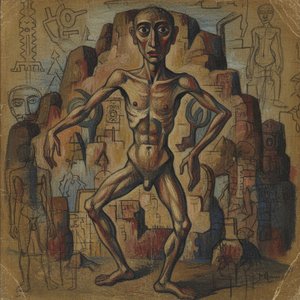
Wersja olejowa
 Wszystko o Study for Kites







































 W przypadku dzieł sztuki lub reprodukcji, których którykolwiek z boków przekracza 105 cm (około 41 cali), rama zostanie wysłana w formie zestawu do samodzielnego montażu. Metoda ta zapewnia bezpieczną dostawę i zapobiega uszkodzeniom podczas transportu.


William Roberts is a British painter of figure compositions and portraits. He was a pioneer of abstract art before the First World War. Roberts worked outside the mainstream. Later in his career he would describe himself as an English Cubist. In 1914 Roberts joined the short-lived art movement the Vorticists, founded by the artist and writer Wyndam Lewis. The Vorticists believed that British art at this time was in a decayed state. Their aesthetic combined the geometrical fragmentation of Cubism with Futurist machine-like imagery. During the First World War, Roberts was a gunner on the Western Front. Later he became a war artist, a position he held in both world wars. He is best remembered for his large complex and colourful compositions.Roberts has marked this reference picture with a grid to help him to transfer it to canvas. The canvas is marked with a corresponding grid allowing the picture to be enlarged and transferred one square at a time.
Pytania i odpowiedzi
Czy Study for Kites jest dziełem namalowanym ręcznie, czy wydrukiem?
Malowane ręcznie: wykwalifikowany artysta wykonuje olejną kopię Study for Kites na płótnie lnianym.
Jaki rozmiar wybrać dla Study for Kites?
Dostępne rozmiary obejmują zakres od 30.4 x 32.9 cm (zł782) do 230.3 x 249.3 cm (zł8097); tabela na tej stronie przedstawia główne warianty oraz ich ceny.
Ile trwa dostawa?
Czas dostawy wynosi od 4 do 5 tygodni, przy czym oferujemy bezpłatną ekspresową wysyłkę na cały świat; na tej stronie dostępna jest również opcja pilnej produkcji. Możesz dokonać zwrotu w ciągu 100 dni z pełnym zwrotem kosztów, bez żadnych dodatkowych warunków.
Gdzie znajduje się oryginał Study for Kites?
Oryginał znajduje się w zbiorach Royal Albert Memorial Museum - Art Gallery w Exeter.
Jakiej techniki użył/a William Roberts w pracy Study for Kites?
Watercolor
 Podgląd w skali 1:1

 Wyślij jako kartkę
 Udostępnij
 Szczegóły dzieła
 Karta informacyjna


 Pobierz obraz
 Podobne obiekty
 RTG
 Pokaz slajdów
 Pytania i odpowiedzi

 Statystyki