Menu
BEZPŁATNA KONSULTACJA ARTYSTYCZNA
Podgląd w skaliPodgląd w skali Podgląd ARPodgląd AR Zamów wydruk Zamów wydrukKup obraz wysokiej rozdzielczości Kup obraz wysokiej rozdzielczości Wyślij jako kartkęWyślij jako kartkę
Szczegóły dziełaSzczegóły dzieła Dodaj do ulubionych Dodaj do ulubionych PobierzPobierz Podobne obiektyPodobne obiekty RTGRTG Pokaz slajdówPokaz slajdów

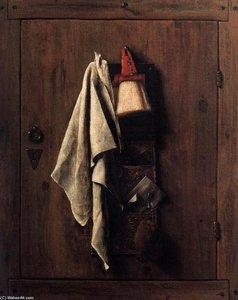
Old Man Looking Through a Window

Experience the Baroque drama of Samuel Dirksz van Hoogstraten's Old Man Looking Through a Window; explore this masterful study of isolation from the Dutch Golden Age.

"meta_description": "Samuel van Hoogstraten (1627-1678) – holenderski malarz epoki Złotej, znany z iluzjonizmu, puszek perspektywicznych i traktatu o sztuce. Eksperymentował z perspektywą i światłem, pozostawiając trwałe dziedzictwo."

Ręcznie malowana reprodukcja olejowa

Ręcznie malowany obraz olejny na płótnie, wykonany na zamówienie przez naszych artystów w wybranym przez Ciebie wymiarze i oprawie. (Zamów wydruk Zamów wydrukKup obraz wysokiej rozdzielczości Kup obraz wysokiej rozdzielczości)

P118B $10
P118H $10
P118W $10
P438Z $10
P508JH $12
P508YH $12
P805H $10
P805Z $10
P919BZ $10
P919G $10
P919XJ $10
P959ZH $10
P968JZ $12
W106C $8
W218G $10
W218JH $8
W218Y $10
W307PJ $10
W316G $10
W316PJ $8
W316Y $10
W398PJ $8
W4111J $10
W500HY $15
W500JH $15
W692G $12
W849H $8
W940BG $15
W953PJ $8

Standard
custom
CM
INCH

Wybierz spośród naszych standardowych rozmiarów, które zachowują oryginalne proporcje dzieła sztuki.

szerokość
wysokość

Możesz wprowadzić własne wymiary, aby dopasować obraz do konkretnej ramy lub przestrzeni. Jeśli wybrany rozmiar nie będzie odpowiadał proporcjom oryginału, przytniecie dzieło sztuki lub rozszerzymy je o dodatkowe elementy, ręcznie domalowane przez artystę. Przed rozpoczęciem produkcji wyślemy projekt cyfrowy do Twojej akceptacji.
Należy pamiętać, że podgląd na ekranie nie odzwierciedla rzeczywistego przycinania ani rozszerzania obrazu. Tylko projekt dokładnie pokaże ostateczną kompozycję.
Choć oferujemy możliwość zamówienia niestandardowych rozmiarów, zalecamy wybór wymiaru z gotowej listy, aby zachować oryginalne proporcje dzieła.

Przykłady możliwych zmian: Zamień twarz na zdjęcie klienta; Dodaj zwierzę domowe (np. zamień kota na psa); Ukryj wiadomość w tle; Zmień krajobraz lub elementy tła.
Po złożeniu zamówienia zespół OriginalUniqueArt.com skontaktuje się z klientem drogą mailową w celu uzyskania instrukcji i prześle wizualizację projektu

Dostawa na całym świecie () w ciągu 3–4 tygodni zamiast standardowych 5 tygodni. (17 Sierpień). Bez kompromisów w kwestii jakości.

why_choose_icon
Bezpłatna ekspresowa wysyłka na cały świat
why_choose_icon
Wysokiej jakości płótno lniane
why_choose_icon
Pełne ubezpieczenie przesyłki
why_choose_icon
Gwarancja zwrotu należności celnych i podatków importowych
why_choose_icon
Gwarancja wiernego odwzorowania kolorów
why_choose_icon
Polityka 60-dniowego zwrotu (tylko w przypadku wad)
why_choose_icon
Gwarancja 100% zwrotu kosztów
why_choose_icon
Zniżka przy zamówieniu wielu produktów

Suma całkowita

$ 300

reproduction

Old Man Looking Through a Window

Technika reprodukcji

Wymiary reprodukcji

-

Cena całkowita

$ 300

Szybki podgląd

  • Title: Old Man Looking Through a Window
  • Influences: Dutch Baroque Tradition
  • Subject or theme: Isolation and Reflection
  • Movement: Baroque
  • Year: 1653
  • Notable elements or techniques: Illusionistic Window Framing
  • Location: Private Collection

Quiz o sztuce

Do każdego pytania dotyczy tylko jedna poprawna odpowiedź.

Pytanie 1:
What artistic style is “Old Man Looking Through a Window” primarily associated with?
Pytanie 2:
The painting depicts an old man gazing through the bars of a window. What emotion is conveyed by his expression?
Pytanie 3:
In what city was Samuel Dirksz van Hoogstraten born and where did he spend most of his artistic career?
Pytanie 4:
What is a notable characteristic of Van Hoogstraten’s approach to artmaking that distinguishes him from other painters of his time?
Pytanie 5:
The painting’s composition utilizes multiple windows. What does this visual element symbolize in terms of the subject's experience?

Opis dzieła

A Window Into Eternity: Exploring Samuel Dirksz van Hoogstraten’s “Old Man Looking Through a Window”

The painting "Old Man Looking Through a Window," completed in 1653 by Samuel Dirksz van Hoogstraten, stands as a testament to the Baroque mastery that flourished during the Dutch Golden Age. More than just a portrait, it's an intricate meditation on time, isolation, and the elusive nature of perception—themes central to the philosophical currents shaping seventeenth-century Europe. Van Hoogstraten wasn’t merely depicting an elderly man; he was crafting an illusion, inviting the viewer into a carefully constructed space where reality bends to artistic intention.

The Baroque Vision: Illusion and Drama

Van Hoogstraten's stylistic allegiance firmly rooted in the Baroque tradition—a movement characterized by grandeur, dynamism, and theatricality—is immediately apparent. Unlike the calmer Renaissance ideals of balance and harmony, Baroque art prioritized emotional impact above all else. The artist skillfully employs chiaroscuro – dramatic contrasts between light and dark – to sculpt the figure’s form and heighten the sense of melancholy that permeates the scene. This technique isn't merely decorative; it serves as a crucial element in conveying psychological depth, mirroring the turbulent inner life of the subject.

Technical Precision: Stone Carving Detail

The painting’s meticulous execution reveals Van Hoogstraten’s profound understanding of artistic craft. He approached his work with the precision of a stone carver, painstakingly rendering textures and surfaces to create an astonishingly realistic portrayal. Notice the subtle gradations of color within the man's beard—a feat of brushwork that captures the delicate interplay of light and shadow. Furthermore, Van Hoogstraten’s masterful depiction of the window frame itself contributes significantly to the overall illusion. The artist meticulously recreates the stone carving detail, emphasizing the materiality of the object and grounding the scene in tangible reality.

Historical Context: Reflections on Mortality

“Old Man Looking Through a Window” emerged during a period marked by profound anxieties concerning mortality—a preoccupation that permeated artistic discourse throughout Europe. The Baroque era witnessed an increasing fascination with death and decay as artists sought to grapple with existential questions about human existence. This preoccupation is subtly conveyed through the man’s gaze, which appears fixed upon something beyond the window frame—perhaps contemplating eternity or reflecting on the passage of time. The painting serves as a poignant reminder of our own vulnerability and underscores the enduring power of art to confront uncomfortable truths.

Symbolism: The Window as Portal

The window itself functions as a powerful symbol within the artwork, representing not merely an architectural feature but also a gateway—both literal and metaphorical—to another realm. Traditionally, windows have been associated with illumination and transcendence, inviting viewers into spaces of contemplation and spiritual insight. In “Old Man Looking Through a Window,” however, the window’s bars suggest confinement and restriction, mirroring the subject's psychological state. The man’s gaze outward is countered by his posture inward—a visual paradox that encapsulates the painting’s central theme: the struggle to reconcile our desire for freedom with the inescapable realities of human experience.

Emotional Resonance: A Portrait of Quiet Desolation

Ultimately, “Old Man Looking Through a Window” succeeds in eliciting a profound emotional response from the viewer. The melancholic expression on the old man's face—coupled with the desolate atmosphere created by Van Hoogstraten’s masterful use of light and shadow—captures the essence of quiet desolation. It is a portrait that speaks volumes about human vulnerability and invites contemplation on themes of loss, remembrance, and the acceptance of mortality. This enduring emotional resonance ensures that Van Hoogstraten's masterpiece continues to inspire awe and provoke reflection centuries after its creation.

O artyście

Samuel Dirksz van Hoogstraten: A Master of Illusion and Intellect

Samuel Dirksz van Hoogstraten, a name synonymous with the brilliance and innovation of the Dutch Golden Age, was far more than just a painter; he was a polymath—an artist, poet, theorist, and administrator—who embodied the era’s spirit of intellectual curiosity and artistic experimentation. Born in Dordrecht in 1627 and passing away there in 1678, Van Hoogstraten left an indelible mark on art history not only through his captivating paintings but also through his groundbreaking theoretical work and masterful manipulation of perception. His journey began within the family workshop of his father, Dirk van Hoogstraten, providing a foundational understanding of artistic principles before he ventured to Amsterdam – the vibrant heart of Dutch artistry in the 17th century. It was there that he entered the esteemed studio of Rembrandt van Rijn, an experience that profoundly shaped his early style and approach to light, shadow, and the very essence of representation.

Rembrandt’s Shadow and the Pursuit of Innovation

The influence of Rembrandt is undeniably present in Van Hoogstraten's initial works. A portrait from 1645, now residing in the Liechtenstein collection in Vienna, serves as a striking testament to this early apprenticeship. The painting demonstrates a clear debt to Rembrandt’s masterful use of chiaroscuro – the dramatic contrast between light and dark – creating a sense of depth and drama that immediately captivates the viewer. However, unlike many students who remained firmly rooted in their master's style, Van Hoogstraten possessed an insatiable desire for experimentation and a restless spirit that propelled him beyond mere imitation. He wasn’t content to simply replicate Rembrandt’s techniques; he sought to deconstruct them, analyze their effects, and ultimately forge his own unique artistic voice—a voice characterized by a profound understanding of perspective, illusionism, and the subtle interplay between representation and reality. This relentless pursuit of innovation led him on extensive travels throughout Europe – to Vienna, Rome, and London – exposing him to diverse artistic traditions, philosophical ideas, and the prevailing aesthetic sensibilities of each locale. These journeys weren’t merely sightseeing expeditions; they were immersive studies in architecture, color theory, and the very nature of visual perception.

The Development of a Unique Style: Trompe-l'œil and Perspective Boxes

Upon returning to Dordrecht, Van Hoogstraten began to develop his distinctive style, characterized by an extraordinary command of trompe-l’œil – the art of deceiving the eye. He didn’t merely depict objects; he created illusions—entire worlds contained within a single canvas. His still lifes, for example, were meticulously crafted arrangements designed to blur the boundaries between reality and representation, inviting viewers to contemplate the transient nature of life and the deceptive allure of material possessions. Simultaneously, he became renowned for his creation of “peepshows” or "perspective boxes"—ingenious devices that offered immersive three-dimensional views into miniature worlds. These weren’t mere novelties; they were sophisticated explorations of perspective and spatial illusion, demonstrating Van Hoogstraten's profound understanding of how the human eye perceives depth and dimension. One such box, currently housed at the National Gallery in London, recreates the interior of a typical Dutch house with astonishing realism when viewed through strategically placed peepholes—a testament to his technical skill and artistic vision. His architectural paintings, such as his 1652 view of the Vienna Hofburg, further showcased his meticulous attention to detail and his ability to render complex spatial relationships with remarkable accuracy.

A Theoretician’s Legacy: ‘Inleyding tot de hooge schoole der schilderkonst’

However, Samuel van Hoogstraten's contribution extends far beyond his paintings and perspective boxes. He was a dedicated art theorist who sought to codify the principles of painting in his magnum opus, *Inleyding tot de hooge schoole der schilderkonst: anders de zichtbaere werelt* (Introduction to the Academy of Painting, or The Visible World), published in 1678. This ambitious treatise stands as one of the most comprehensive and intellectually rigorous explorations of art theory produced in the Dutch Republic during the 17th century. Van Hoogstraten delved into issues of pictorial persuasion, illusionism, the moral responsibilities of the artist, and the relationship between painting and philosophy, drawing upon a vast range of ancient and modern sources—from classical texts to contemporary treatises on optics and perspective. He built upon the foundations laid by Karel van Mander in his earlier work, *Het Schilder-Boeck*, seeking to create a systematic framework for understanding and practicing the art of painting. His writings reflect both international influences gleaned from his travels and contemporary debates within Dutch artistic circles. The treatise wasn’t simply a collection of technical instructions; it was a profound meditation on the nature of art itself, exploring its power to shape perception, evoke emotion, and communicate ideas.

A Lasting Influence and Artistic Legacy

Van Hoogstraten's influence resonated through subsequent generations of artists, notably through his pupils – including his brother Jan van Hoogstraten, Aert de Gelder, Cornelis van der Meulen, and Godfried Schalcken. His legacy is further preserved in the writings of Arnold Houbraken, one of his students who penned a biography of the artist that serves as a valuable primary source of information about his life and work. Samuel Dirksz van Hoogstraten was not simply a painter; he was a polymath—an artist, poet, theorist, and administrator—who embodied the intellectual ferment of the Dutch Golden Age. His innovative techniques, profound insights into perception, and dedication to articulating the principles of art continue to captivate and inspire audiences today, solidifying his position as a master of illusion and intellect whose work transcends time.
Samuel Dirksz van Hoogstraten

Samuel Dirksz van Hoogstraten

1627 - 1678 , Holandia

Krótka nota

  • Artistic Movement Or Style: Złota Era Holenderska
  • Artists Or Movements Influenced By This Artist: ['Aert de Gelder']
  • Artists Who Influenced This Artist: ['Rembrandt']
  • Date Of Birth: 2 sierpnia 1627
  • Date Of Death: 19 października 1678
  • Full Name: Samuel Dirksz van Hoogstraten
  • Nationality: Holender
  • Notable Artworks:
    • Widok na Hofburg w Wiedniu
    • Portret Mathys van den Broucka
  • Place Of Birth: Dordrecht, Holandia
Odkryj dzieła sztuki uporządkowane według tematów, stylów i cech charakterystycznych.