Samuel Dirksz van Hoogstraten: A Master of Illusion and Intellect
Samuel Dirksz van Hoogstraten, a name synonymous with the brilliance and innovation of the Dutch Golden Age, was far more than just a painter; he was a polymath—an artist, poet, theorist, and administrator—who embodied the era’s spirit of intellectual curiosity and artistic experimentation. Born in Dordrecht in 1627 and passing away there in 1678, Van Hoogstraten left an indelible mark on art history not only through his captivating paintings but also through his groundbreaking theoretical work and masterful manipulation of perception. His journey began within the family workshop of his father, Dirk van Hoogstraten, providing a foundational understanding of artistic principles before he ventured to Amsterdam – the vibrant heart of Dutch artistry in the 17th century. It was there that he entered the esteemed studio of Rembrandt van Rijn, an experience that profoundly shaped his early style and approach to light, shadow, and the very essence of representation.Rembrandt’s Shadow and the Pursuit of Innovation
The influence of Rembrandt is undeniably present in Van Hoogstraten's initial works. A portrait from 1645, now residing in the Liechtenstein collection in Vienna, serves as a striking testament to this early apprenticeship. The painting demonstrates a clear debt to Rembrandt’s masterful use of chiaroscuro – the dramatic contrast between light and dark – creating a sense of depth and drama that immediately captivates the viewer. However, unlike many students who remained firmly rooted in their master's style, Van Hoogstraten possessed an insatiable desire for experimentation and a restless spirit that propelled him beyond mere imitation. He wasn’t content to simply replicate Rembrandt’s techniques; he sought to deconstruct them, analyze their effects, and ultimately forge his own unique artistic voice—a voice characterized by a profound understanding of perspective, illusionism, and the subtle interplay between representation and reality. This relentless pursuit of innovation led him on extensive travels throughout Europe – to Vienna, Rome, and London – exposing him to diverse artistic traditions, philosophical ideas, and the prevailing aesthetic sensibilities of each locale. These journeys weren’t merely sightseeing expeditions; they were immersive studies in architecture, color theory, and the very nature of visual perception.The Development of a Unique Style: Trompe-l'œil and Perspective Boxes
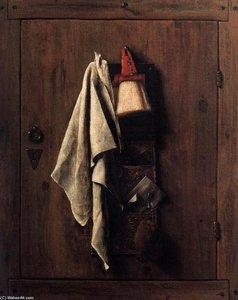
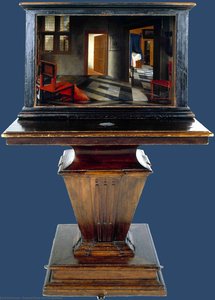
Upon returning to Dordrecht, Van Hoogstraten began to develop his distinctive style, characterized by an extraordinary command of trompe-l’œil – the art of deceiving the eye. He didn’t merely depict objects; he created illusions—entire worlds contained within a single canvas. His still lifes, for example, were meticulously crafted arrangements designed to blur the boundaries between reality and representation, inviting viewers to contemplate the transient nature of life and the deceptive allure of material possessions. Simultaneously, he became renowned for his creation of “peepshows” or "perspective boxes"—ingenious devices that offered immersive three-dimensional views into miniature worlds. These weren’t mere novelties; they were sophisticated explorations of perspective and spatial illusion, demonstrating Van Hoogstraten's profound understanding of how the human eye perceives depth and dimension. One such box, currently housed at the National Gallery in London, recreates the interior of a typical Dutch house with astonishing realism when viewed through strategically placed peepholes—a testament to his technical skill and artistic vision. His architectural paintings, such as his 1652 view of the Vienna Hofburg, further showcased his meticulous attention to detail and his ability to render complex spatial relationships with remarkable accuracy.A Theoretician’s Legacy: ‘Inleyding tot de hooge schoole der schilderkonst’
However, Samuel van Hoogstraten's contribution extends far beyond his paintings and perspective boxes. He was a dedicated art theorist who sought to codify the principles of painting in his magnum opus, *Inleyding tot de hooge schoole der schilderkonst: anders de zichtbaere werelt* (Introduction to the Academy of Painting, or The Visible World), published in 1678. This ambitious treatise stands as one of the most comprehensive and intellectually rigorous explorations of art theory produced in the Dutch Republic during the 17th century. Van Hoogstraten delved into issues of pictorial persuasion, illusionism, the moral responsibilities of the artist, and the relationship between painting and philosophy, drawing upon a vast range of ancient and modern sources—from classical texts to contemporary treatises on optics and perspective. He built upon the foundations laid by Karel van Mander in his earlier work, *Het Schilder-Boeck*, seeking to create a systematic framework for understanding and practicing the art of painting. His writings reflect both international influences gleaned from his travels and contemporary debates within Dutch artistic circles. The treatise wasn’t simply a collection of technical instructions; it was a profound meditation on the nature of art itself, exploring its power to shape perception, evoke emotion, and communicate ideas.A Lasting Influence and Artistic Legacy
Van Hoogstraten's influence resonated through subsequent generations of artists, notably through his pupils – including his brother Jan van Hoogstraten, Aert de Gelder, Cornelis van der Meulen, and Godfried Schalcken. His legacy is further preserved in the writings of Arnold Houbraken, one of his students who penned a biography of the artist that serves as a valuable primary source of information about his life and work. Samuel Dirksz van Hoogstraten was not simply a painter; he was a polymath—an artist, poet, theorist, and administrator—who embodied the intellectual ferment of the Dutch Golden Age. His innovative techniques, profound insights into perception, and dedication to articulating the principles of art continue to captivate and inspire audiences today, solidifying his position as a master of illusion and intellect whose work transcends time.Pytania i odpowiedzi
Gdzie można znaleźć dzieła Samuel Dirksz van Hoogstraten pogrupowane według słów kluczowych?
Aby znaleźć dzieła artysty Samuel Dirksz van Hoogstraten o konkretnej tematyce, skorzystaj ze strony Według słów kluczowych, która grupuje prace według słów kluczowych.
Jak znaleźć wszystkie dzieła Samuel Dirksz van Hoogstraten wykonane w danej technice?
Dzieła artysty Samuel Dirksz van Hoogstraten można przeglądać według techniki na stronie Wszystkie techniki artysty.
Czy mogę sortować dzieła Samuel Dirksz van Hoogstraten według koloru?
Prace Samuel Dirksz van Hoogstraten można przeglądać według kolorów na stronie Indeks kolorystyczny artysty.