
 Podgląd w skali
 Wyślij jako kartkę
 Udostępnij
 Szczegóły dzieła

 Pobierz
 Podobne obiekty
 RTG
RTG Pokaz slajdów
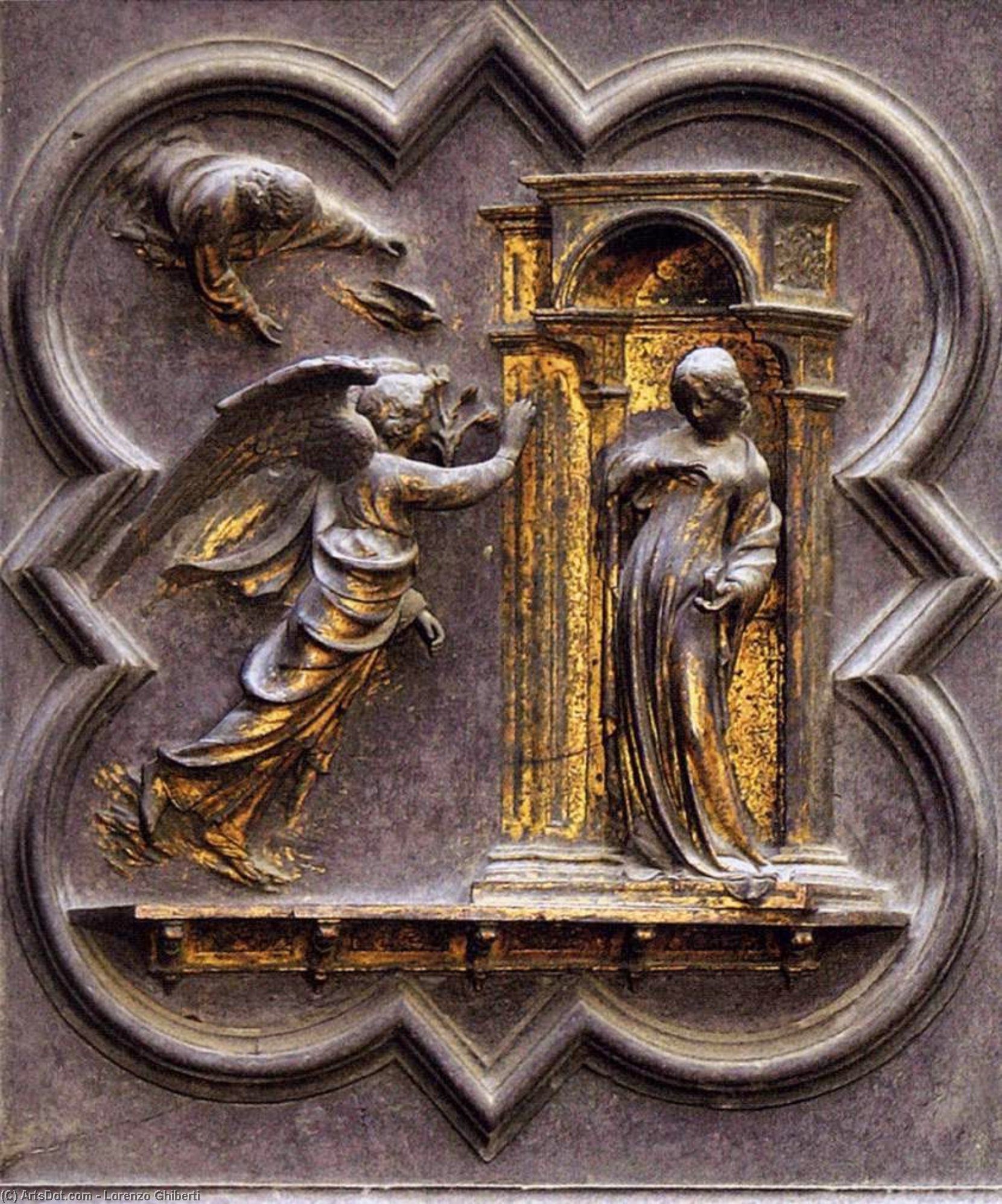
The Annunciation
 Acrylic On Canvas
- WallArt
- Renaissance
 1403
1403 52.0 x 45.0 cm
 Bazylika św. Jana Chrzciciela
 Rozwiń treść
Ręcznie malowana reprodukcja olejowa
Ręcznie malowany obraz olejny na płótnie, wykonany na zamówienie przez naszych artystów w wybranym przez Ciebie wymiarze i oprawie. ( Zamów wydruk Kup obraz wysokiej rozdzielczości)




P118B $10

P118H $10

P118W $10

P438Z $10

P508JH $12

P508YH $12

P805H $10

P805Z $10

P919BZ $10

P919G $10

P919XJ $10

P959ZH $10

P968JZ $12

W106C $8

W218G $10

W218JH $8

W218Y $10

W307PJ $10

W316G $10

W316PJ $8

W316Y $10

W398PJ $8

W4111J $10

W500HY $15

W500JH $15

W692G $12

W849H $8

W940BG $15

W953PJ $8




Wybierz spośród naszych standardowych rozmiarów, które zachowują oryginalne proporcje dzieła sztuki.

Możesz wprowadzić własne wymiary, aby dopasować obraz do konkretnej ramy lub przestrzeni. Jeśli wybrany rozmiar nie będzie odpowiadał proporcjom oryginału, przytniecie dzieło sztuki lub rozszerzymy je o dodatkowe elementy, ręcznie domalowane przez artystę. Przed rozpoczęciem produkcji wyślemy projekt cyfrowy do Twojej akceptacji.
Należy pamiętać, że podgląd na ekranie nie odzwierciedla rzeczywistego przycinania ani rozszerzania obrazu. Tylko projekt dokładnie pokaże ostateczną kompozycję.
Choć oferujemy możliwość zamówienia niestandardowych rozmiarów, zalecamy wybór wymiaru z gotowej listy, aby zachować oryginalne proporcje dzieła.
Po złożeniu zamówienia zespół OriginalUniqueArt.com skontaktuje się z klientem drogą mailową w celu uzyskania instrukcji i prześle wizualizację projektu
Dostawa na całym świecie () w ciągu 3–4 tygodni zamiast standardowych 5 tygodni. (18 Sierpień). Bez kompromisów w kwestii jakości.

Bezpłatna ekspresowa wysyłka na cały świat

Wysokiej jakości płótno lniane

Pełne ubezpieczenie przesyłki

Gwarancja zwrotu należności celnych i podatków importowych

Gwarancja wiernego odwzorowania kolorów

Polityka 60-dniowego zwrotu (tylko w przypadku wad)

Gwarancja 100% zwrotu kosztów

Zniżka przy zamówieniu wielu produktów
 Opcja ze szkłem jest dostępna wyłącznie w rozmiarach poniżej 110 cm

The Annunciation
Technika reprodukcji
Wymiary reprodukcji
-


Cena całkowita
$ 300
Opis dzieła
Lorenzo Ghiberti’s Divine Revelation
Lorenzo di Bartolo Ghirlandaio, better known as Lorenzo Ghiberti, stands as a monumental figure in the history of Florentine sculpture. Born in Florence around 1378 and passing away in 1455, his life was inextricably linked to the artistic flourishing of the Early Renaissance. Ghiberti’s genius wasn't confined to a single style; instead, he masterfully blended Gothic influences with emerging humanist ideals, creating works that resonate with both spiritual depth and technical brilliance. His early training in goldsmithing instilled an unparalleled understanding of metalworking – a skill he would later translate into the breathtaking detail and luminosity of his bronze sculptures. However, it was his appointment to work on the Baptistery doors in Florence that cemented his legacy, culminating in the iconic “Gates of Paradise,” which redefined the possibilities of relief sculpture.

(Image of The Annunciation, first panel of the North Doors of the Baptistery in Florence)
A Moment of Grace: Depicting the Annunciation
The subject matter – the Annunciation – itself is rich with theological significance. This pivotal scene from Luke’s Gospel recounts the moment when the Archangel Gabriel appears to Mary, informing her that she will conceive and bear a son, Jesus Christ. Ghiberti's interpretation captures this profound revelation with exquisite sensitivity. The composition immediately draws the eye to Mary, depicted in a pose of gentle surprise and contemplative grace. Her hands are raised modestly, reflecting humility before the divine messenger. The angel, rendered with an almost ethereal quality, extends his hand towards her, presenting the news of salvation. The architectural setting – a simple doorway framed by a receding perspective – serves not as mere backdrop but as a symbolic representation of Mary’s entrance into God's plan.
Notice the meticulous detail in Ghiberti’s rendering: the folds of Mary’s robe, the delicate features of the angel, and the subtle play of light on the bronze surface. The use of *chiaroscuro* – the contrast between light and shadow – adds depth and volume to the figures, bringing them to life with remarkable realism. The overall effect is one of serene beauty and spiritual intensity.
Renaissance Symbolism and Technique
Ghiberti’s mastery extends beyond mere representation; he was deeply attuned to the symbolic language of his time. The dove descending from heaven, a traditional symbol of the Holy Spirit, hovers above the scene, signifying God's presence and divine intervention. The lilies adorning Mary’s robes represent purity and virginity – virtues essential to her role as the Mother of God. Furthermore, Ghiberti employed innovative techniques for his era, particularly in his use of *bassorilievo*—low-relief sculpture—which allowed him to create incredibly detailed figures within a limited space. The polished bronze surface reflects light beautifully, enhancing the luminosity and vibrancy of the artwork.
The North Doors of the Baptistery, where this panel resides, were commissioned as part of a larger project intended to adorn the exterior of Florence’s iconic Baptistery. Ghiberti's work here represents a pivotal moment in Renaissance art, showcasing the burgeoning interest in classical forms and humanist ideals while retaining a deep sense of religious devotion.
A Timeless Testament to Faith
“The Annunciation” by Lorenzo Ghiberti is more than just a beautiful sculpture; it’s a profound meditation on faith, grace, and the mystery of divine revelation. Its enduring appeal lies in its ability to evoke a sense of wonder and spiritual contemplation. Reproductions of this masterpiece offer an opportunity to bring this iconic image into any setting, serving as a constant reminder of humanity's connection to something greater than itself. Consider commissioning a hand-painted reproduction from OriginalUniqueArt.com – a faithful recreation that captures the essence of Ghiberti’s genius and allows you to experience this timeless testament to faith in your own home.
O artyście
A Florentine Renaissance Forged in Bronze: The Life and Legacy of Lorenzo Ghiberti
Lorenzo di Bartolo – a name destined to become synonymous with artistic innovation as Lorenzo Ghiberti – was born near Florence in 1378, into a family deeply rooted in the world of goldsmithing. His early life wasn’t one of privileged leisure; instead, he learned the craft from his stepfather, Bartolo di Michele, absorbing the meticulous techniques and practical skills essential to shaping metal into breathtaking works of art. This foundational training instilled within him an unparalleled mastery of bronze casting – a skill that would ultimately transform him into one of the most celebrated sculptors of the Renaissance. Yet, Ghiberti’s ambitions stretched far beyond the confines of the workshop; he possessed a restless curiosity and a desire to explore the broader realms of artistic expression, leading him to pursue formal painting lessons under the guidance of Gherardo Starnina, broadening his horizons and laying the groundwork for a truly multifaceted talent. A brief but formative period in Rimini, assisting Carlo I Malatesta with frescoes during the devastating outbreak of plague in 1400, exposed him to diverse artistic currents and honed his observational skills – experiences that would profoundly shape his future work. Little did he realize that these early influences were preparing him for a competition that would catapult him into the annals of art history.The Baptistery Doors: A Triumph of Skill and Vision
In 1401, Florence held a contest of unparalleled significance – a competition to select an artist to create new bronze doors for the city’s magnificent Baptistery. This commission was considered the most prestigious in the entire region, a testament to the artistic prowess of those chosen to adorn this sacred space. Lorenzo Ghiberti, a young and relatively unknown artisan at just twenty-one years old, entered this arena alongside some of the era's most established and formidable minds, including the towering figure of Filippo Brunelleschi. The challenge was audacious: to depict the *Sacrifice of Isaac* in relief – a biblical narrative brimming with drama, symbolism, and profound theological significance. Ghiberti’s panel wasn’t merely a demonstration of technical skill; it was a revelation. His innovative approach, characterized by graceful figures rendered with an unprecedented level of realism and a sophisticated understanding of perspective, immediately captivated the judges and secured his victory. This triumph wasn't simply about winning a commission; it was a declaration of a new artistic sensibility – a bold assertion that Florence’s artistic future lay in embracing innovation and pushing the boundaries of traditional craftsmanship. He swiftly began work on the North Doors, a project that would consume over two decades and fundamentally transform the Baptistery into a showcase of Renaissance artistry.The “Gates of Paradise”: A Masterpiece Unveiled
Following the resounding success of the North Doors, Ghiberti was entrusted with an even more ambitious undertaking – the creation of a second set of bronze doors for the Baptistery’s east entrance. These doors, completed in 1452, would become his magnum opus – and earn him a nickname bestowed by none other than Michelangelo himself: the “Gates of Paradise.” Each panel depicts scenes from the Old Testament with an unprecedented level of realism, detail, and emotional depth. Ghiberti’s mastery of bronze casting and relief sculpture reached its zenith in these works. The panels aren't merely representations of biblical stories; they are immersive narratives brought to life through meticulous attention to anatomy, drapery, and spatial relationships. He pioneered the use of perspective – a revolutionary technique at the time – to create a sense of depth and realism that was truly groundbreaking. The figures seem to emerge from the bronze itself, imbued with a palpable sense of movement and emotion. The sheer scale and complexity of the “Gates of Paradise” were astonishing, requiring not only exceptional technical skill but also an extraordinary vision and unwavering dedication.Style, Influences, and Lasting Impact
Ghiberti’s artistic style represents a beautiful synthesis of Gothic elegance and the emerging principles of Renaissance humanism. While rooted in the traditions of medieval craftsmanship – evident in his meticulous attention to detail and the rich textures of the bronze – he embraced classical antiquity, incorporating elements of Roman art and sculpture into his work. This fusion created a unique aesthetic that was both refined and emotionally resonant. He wasn’t simply imitating the past; he was reinterpreting it through a distinctly Renaissance lens. His use of *rilievo schiacciato* – a technique involving flattening the relief to create an illusion of depth – added to the dynamism and complexity of his compositions, drawing inspiration from classical sculpture while simultaneously forging a new path for Italian art. Beyond his artistic achievements, Ghiberti left behind a valuable intellectual legacy in the form of *Commentarii*, an autobiographical treatise on art history, theory, and technique – one of the earliest examples of its kind by an artist. He meticulously documented his own creative process, offering insights into the materials, methods, and philosophical underpinnings of Renaissance sculpture. His writings reveal a deep appreciation for classical art and a belief in the importance of studying both the liberal arts and theoretical sciences to achieve artistic excellence.A Legacy Cast in Bronze
Lorenzo Ghiberti’s contributions were instrumental in establishing Florence as a leading artistic center during the Renaissance, and the “Gates of Paradise” remain an enduring symbol of Florentine civic pride and artistic achievement. His innovations paved the way for masters like Leonardo da Vinci and Michelangelo, solidifying his place as a pivotal figure in Western art history. His legacy extends far beyond his technical brilliance; he embodied the spirit of the Early Renaissance – a period marked by intellectual curiosity, artistic innovation, and a renewed appreciation for classical learning. Ghiberti’s meticulous attention to detail, his mastery of perspective, and his ability to imbue his sculptures with emotional depth set a new standard for artistic excellence. *His work continues to inspire artists and art lovers alike*, reminding us of the power of human creativity and the enduring beauty of Renaissance artistry. Ghiberti’s legacy is not just in the bronze he shaped, but in the very spirit of innovation that he embodied.
Lorenzo Ghiberti
1378 - 1455 , Włochy
Krótka nota
- Artistic Movement Or Style: Renesansowy humanizm
- Artists Or Movements Influenced By This Artist:
- Donatello
- Masolino
- Artists Who Influenced This Artist:
- Gherardo Starnina
- Bartolo di Michele
- Date Of Birth: 1378
- Date Of Death: 1455
- Full Name: Lorenzo Ghiberti
- Nationality: Włoski
- Notable Artworks:
- Drzwi Raju
- Drzwi północne
- Statua Jana Chrzciciela
- Place Of Birth: Florencja, Italia
Powiązane artykuły
Dante Gabriel Rossetti: 25 Arcydzieł Pełnych Pasji i Symboliki | OriginalUniqueArt
Odkryj 25 najpiękniejszych obrazów Dante Gabriela Rossettiego! Poznaj historię, symbolikę i techniki prerafaelitów. Reprodukcje najwyższej jakości do Twojego wnętrza – OriginalUniqueArt.

10 Legendarnych Brązów Rzeźbiarskich, Które Zmieniły Sztukę | OriginalUniqueArt
Odkryj 10 legendarnych rzeźb brązowych od Rodina, Degasa i innych mistrzów! Poznaj historię powstania arcydzieł sztuki i inspiruj się do dekoracji wnętrz. Reprodukcje najwyższej jakości na OriginalUniqueArt.com – zobacz kolekcję!

Celestial Messengers: Angels in Painting – A Historical & Artistic Exploration
Explore the captivating history of angels in painting! Discover symbolism, iconic Renaissance & Byzantine masterpieces, and renowned artists. Expert insights for art lovers & collectors at OriginalUniqueArt.

Trwałe Formy: Ewolucja Technik i Tematów w Rzeźbie Przez Wieki – Od Antyku do Renesansu
Poznaj fascynującą historię rzeźby od antyku do renesansu! Odkryj techniki, wybitnych artystów i wpływ na współczesną sztukę. Ekspercka analiza dla kolekcjonerów i miłośników.

Niebiańscy Posłańcy w Sztuce: Ewolucja Symboliki i Emocjonalnego Oddziaływania Anielskich Reprezentacji na Przez Wieki
Odkryj fascynującą historię aniołów w sztuce! Analizujemy ewolucję ikonografii, symbolikę i emocjonalny wpływ anielskich reprezentacji od starożytności po współczesność. Ekspercka analiza dla miłośników sztuki.

