Rozmiar tekstu

() ·

Obraz stworzony dla Ciebie, własnoręcznie

Dropping Off

Ręcznie malowana reprodukcja olejowa

Ręcznie malowany obraz olejny na płótnie, wykonany na zamówienie przez naszych artystów w wybranym przez Ciebie wymiarze i oprawie. ( Przełącz na wydania drukowane Przejdź do wersji cyfrowej)

Opis obiektu

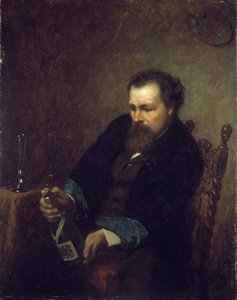
Capture the quiet intimacy of daily life with Jonathan Eastman Johnson's 'Dropping Off.' This 1873 genre painting depicts an older man reading by a warm fireplace, showcasing Johnson’s skill as 'American Rembrandt'.

Biografia artysty

Jonathan Eastman Johnson – 'Amerykański Rembrandt'. Obrazy z życia codziennego, portrety i wpływ holenderskich mistrzów. Odkryj jego unikalną wizję Ameryki!

od ·

Rozdział 1

Jak duży powinien być ten format?

Przesuń suwak, aby zmienić rozmiar; obraz po lewej stronie przedstawia ramę w jej rzeczywistej szerokości. Zachowano proporcje oryginału.

Standardowy format
personalizowane
CM
INCH

Wybierz spośród naszych standardowych rozmiarów, które zachowują oryginalne proporcje dzieła sztuki.

szerokość
wysokość

Wpisz wymaganą szerokość i wysokość, aby obraz pasował do Twojej ramy lub ściany. Ponieważ jest to dzieło malowane ręcznie, w przypadku rozmiaru o innych proporcjach artysta może domalować nieco więcej wokół obrazu lub przyciąć jego fragmenty — wybór należy do Ciebie. Przed rozpoczęciem pracy prześlemy Ci cyfrową wizualizację do zatwierdzenia. Obraz widoczny na tej stronie nie przedstawia rzeczywistego efektu — jedynie wizualizacja oddaje realny rezultat.

Rozdział 2

W jaki sposób ma zostać dostarczone?

Wybierz krawędzie płótna naciągniętego na ramę

Wybierz ramę

Corner sample of the WhiteWrap canvas edge finish, stretched on lite drewno bars
Białe krawędzie zł1
Corner sample of the BlurSideWrap canvas edge finish, stretched on lite drewno bars
rozmyte krawędzie zł1
Corner sample of the ExtendedWrap canvas edge finish, stretched on lite drewno bars
Przedłużony zł1
Corner sample of the P118B picture frame: polistyren formowany, 5 cm wide and 3 cm thick
P118B zł10
Corner sample of the P118H picture frame: polistyren formowany, 5 cm wide and 3 cm thick
P118H zł10
Corner sample of the P118W picture frame: polistyren formowany, 5 cm wide and 3 cm thick
P118W zł10
Corner sample of the P438Z picture frame: polistyren formowany, 5.5 cm wide and 3.5 cm thick
P438Z zł10
Corner sample of the P508JH picture frame: polistyren formowany, 7 cm wide and 3.5 cm thick
P508JH zł12
Corner sample of the P508YH picture frame: polistyren formowany, 7 cm wide and 3.5 cm thick
P508YH zł12
Corner sample of the P805H picture frame: polistyren formowany, 5 cm wide and 3.5 cm thick
P805H zł10
Corner sample of the P805Z picture frame: polistyren formowany, 5 cm wide and 3.5 cm thick
P805Z zł10
Corner sample of the P919BZ picture frame: polistyren formowany, 7 cm wide and 3.5 cm thick
P919BZ zł10
Corner sample of the P919G picture frame: polistyren formowany, 7 cm wide and 3.5 cm thick
P919G zł10
Corner sample of the P919XJ picture frame: polistyren formowany, 7 cm wide and 3.5 cm thick
P919XJ zł10
Corner sample of the P959ZH picture frame: polistyren formowany, 5 cm wide and 3 cm thick
P959ZH zł10
Corner sample of the P968JZ picture frame: polistyren formowany, 6 cm wide and 4 cm thick
P968JZ zł12
Corner sample of the W106C picture frame: lite drewno, 5 cm wide and 3 cm thick
W106C zł8
Corner sample of the W218G picture frame: lite drewno, 5 cm wide and 3 cm thick
W218G zł10
Corner sample of the W218JH picture frame: lite drewno, 5 cm wide and 3 cm thick
W218JH zł8
Corner sample of the W218Y picture frame: lite drewno, 5 cm wide and 3 cm thick
W218Y zł10
Corner sample of the W307PJ picture frame: lite drewno, 6 cm wide and 3 cm thick
W307PJ zł10
Corner sample of the W316G picture frame: lite drewno, 6 cm wide and 3 cm thick
W316G zł10
Corner sample of the W316PJ picture frame: lite drewno, 6 cm wide and 3 cm thick
W316PJ zł8
Corner sample of the W316Y picture frame: lite drewno, 6 cm wide and 3 cm thick
W316Y zł10
Corner sample of the W398PJ picture frame: lite drewno, 5 cm wide and 3 cm thick
W398PJ zł8
Corner sample of the W4111J picture frame: lite drewno, 6.5 cm wide and 3.5 cm thick
W4111J zł10
Corner sample of the W500HY picture frame: lite drewno, 7 cm wide and 5 cm thick
W500HY zł15
Corner sample of the W500JH picture frame: lite drewno, 7 cm wide and 5 cm thick
W500JH zł15
Corner sample of the W692G picture frame: lite drewno, 8 cm wide and 4 cm thick
W692G zł12
Corner sample of the W849H picture frame: lite drewno, 5 cm wide and 3 cm thick
W849H zł8
Corner sample of the W940BG picture frame: lite drewno, 7.5 cm wide and 4.5 cm thick
W940BG zł15
Corner sample of the W953PJ picture frame: lite drewno, 6 cm wide and 3.5 cm thick
W953PJ zł8
Corner sample of the H24-GOLD picture frame: rzeźbione drewno pokryte gipsem, 10 cm wide and 6 cm thick
H24-GOLD zł30
Corner sample of the H24-SILVER picture frame: rzeźbione drewno pokryte gipsem, 10 cm wide and 6 cm thick
H24-SILVER zł30
Corner sample of the H36-GOLD picture frame: rzeźbione drewno pokryte gipsem, 15 cm wide and 6.5 cm thick
H36-GOLD zł45
Corner sample of the H36-SILVER picture frame: rzeźbione drewno pokryte gipsem, 15 cm wide and 6.5 cm thick
H36-SILVER zł45

Profil: . Wymiar całkowity w ramie: .

Rozdział 3

Kto go maluje i czy coś powinno ulec zmianie?

Przykłady możliwych zmian: Zastąpienie twarzy zdjęciem klienta; Dodanie zwierzęcia (np. zamiana kota na psa); Ukrycie wiadomości w tle; Zmiana krajobrazu lub elementów tła.
Po złożeniu zamówienia zespół OriginalUniqueArt.com skontaktuje się z klientem drogą mailową w celu uzyskania instrukcji i prześle podgląd projektu

Dostawa na całym świecie () w ciągu 3–4 tygodni zamiast standardowych 5 tygodni. (14 Listopad). Bez kompromisów w kwestii jakości.

Rozdział 4

Ostatnie szlify

Tabliczka informacyjna, jak w muzeum?

Szczegóły grawerowanej brązowej tabliczki

This elegant plaque features the artist's name and the title of the artwork, finely engraved for a timeless presentation.

It is made from bronze with a refined, elegant finish. The text is precisely laser-engraved for a sharp and permanent result. Measuring 9x2 cm, the plaque is compact yet easy to read. It's built to be durable and scratch-resistant, offering a professional, museum-quality look. Mounting is simple thanks to the included adhesive backing.

Szczegóły przezroczystej tabliczki akrylowej

The plaque includes essential engraved details such as the artist's name, the title of the artwork, the date it was created, the type of media used-like oil on canvas or watercolor-a brief description of the piece, and a QR code that links to the complete artwork information.

It is crafted from clear acrylic, offering a sleek, modern appearance. The text is UV-engraved in black to ensure strong visual contrast. With a size of 10x15 cm, it ensures optimal readability. It comes equipped with two metal hooks for secure wall mounting. The plaque is designed to be weather-resistant, making it suitable for various environments, and it includes interactive features that work seamlessly with smartphone scanning.

Szczegóły czarnej tabliczki akrylowej

This elegant plaque includes engraved information such as the artist's name, the title of the artwork, the date it was created, the type of media used (like oil on canvas or watercolor), a short description of the artwork, and a QR code for quick access to more information.

The plaque itself is made from refined black acrylic with a premium finish. The text is laser-engraved in white for high contrast and readability. Its size is 10x15 cm, designed to be easy to read. It comes with two metal hooks for professional mounting. The design is sleek and fits any interior style. It is also weather-resistant and durable, with built-in digital integration for mobile compatibility.

Werniks ochronny?

Kiedy potrzebujesz dostawy?

Rozdział 5

Twoje dzieło, dokładnie tak, jak zamówiłeś

Dropping Off

Technika reprodukcji

Wymiary reprodukcji

-

Wybitny mistrz artystyczny

Większa szczegółowość, finezja i dodatkowy czas na realizację

-

Opcje oprawy reprodukcji

-

-

W przypadku dzieł sztuki lub reprodukcji, których którykolwiek z boków przekracza 105 cm (około 41 cali), rama zostanie wysłana w formie zestawu do samodzielnego montażu. Metoda ta zapewnia bezpieczną dostawę i zapobiega uszkodzeniom podczas transportu.

Wymagany profesjonalny montaż – nie jest to produkt typu DIY.
Zestaw musi zostać złożony, a płótno naciągnięte przez doświadczonego profesjonalnego ramiarza, przy użyciu kleju do drewna (brak w zestawie), kleszczy do naciągania płótna oraz ścisków, które utrzymają krosna w równej pozycji podczas schnięcia kleju. Nieprawidłowy montaż lub nierównomierne napięcie płótna może trwale uszkodzić dzieło sztuki i nie podlega naszej gwarancji.

  • W zestawie znajdują się wszystkie listwy z litego drewna, precyzyjnie docięte do wymiarów.

  • Montaż odbywa się przy użyciu dołączonych wkrętów oraz kleju do drewna do łączenia narożników, którego zestaw nie zawiera i który musi zostać dostarczony przez ramiarza.

  • Wymagane są profesjonalne narzędzia, których nie ma w zestawie: kleszcze do naciągania płótna (napinacz) oraz zaciski, które pozwolą utrzymać listwy w równej pozycji podczas schnięcia kleju.

Ważne:
Do połączenia narożników niezbędny jest klej do drewna, listwy należy unieruchomić za pomocą ścisków do momentu całkowitego wyschnięcia kleju, a naciągnięcie płótna na złożoną ramę wymaga użycia kleszczy do naciągania płótna. Żaden z tych elementów nie jest dołączony do zestawu. Przed zamówieniem tego rozmiaru zalecamy konsultację z doświadczonym ramiarzem.

Etykieta obiektu

-

-

Lakier ochronny

Lakier z połyskiem (pogłębia kolory, chroni przed światłem i wilgocią)

-

Personalizacja dzieła

Przykłady możliwości personalizacji: zastąp twarz zdjęciem klienta; dodaj zwierzę domowe (np. zamień kota na psa); umieść ukrytą wiadomość w tle; zmień krajobraz lub elementy tła.

-

Ekspresowa

Dostawa na cały świat () w ciągu 3–4 tygodni zamiast standardowych 5 tygodni. (14 Listopad). Bez kompromisów w kwestii jakości.

-

Przesyłka ekspresowa

Dostawa na cały świat () w ciągu 5 tygodni. (21 Listopad).

W cenie

Cena całkowita

zł 1165

Suma całkowita zł 1165

Opcja ze szkłem jest dostępna wyłącznie w rozmiarach poniżej 110 cm

W każdym zamówieniu

  • Bezpłatna ekspresowa wysyłka na cały świat
  • Wysokiej jakości płótno lniane
  • Pełne ubezpieczenie przesyłki
  • Gwarancja zwrotu należności celnych i podatków importowych
  • Gwarancja wiernego odwzorowania kolorów
  • 100-dniowa polityka zwrotów (tylko w przypadku wad)
  • Gwarancja 100% zwrotu pieniędzy
  • Zniżka przy zakupie wielu sztuk

A Moment of Quiet Reflection: Jonathan Eastman Johnson's "Dropping Off"

Jonathan Eastman Johnson’s “Dropping Off,” painted in 1873, offers a captivating glimpse into domestic life during the late 19th century. This genre painting, characteristic of Johnson’s style, depicts an older gentleman engrossed in reading within the comforting embrace of his home. The scene exudes tranquility and invites viewers to pause and appreciate the simple pleasures of solitude and intellectual pursuit. Johnson, often dubbed the "American Rembrandt" for his masterful use of light and shadow, skillfully captures a moment suspended in time – a quiet respite from the bustle of daily life.

Style & Technique: The American Rembrandt

Johnson’s artistic approach is deeply rooted in Realism, yet infused with a subtle warmth reminiscent of Dutch Masters like Rembrandt. He employs a rich palette of earthy tones—browns, ochres, and deep reds—to create an atmosphere of cozy intimacy. Notice the careful rendering of textures: the plushness of the chair, the worn pages of the book, the flickering light from the fireplace. Johnson’s technique involves meticulous attention to detail, evident in the precise depiction of the clock on the wall and the carefully placed bottle nearby. The use of *chiaroscuro*, the dramatic contrast between light and dark, is particularly striking, drawing the eye towards the man's face and emphasizing his contemplative expression. This masterful handling of light contributes significantly to the painting’s overall sense of depth and realism.

Historical Context & Genre Painting

“Dropping Off” emerged during a period when genre painting—depicting scenes from everyday life—was gaining popularity in American art. Artists like Johnson sought to elevate ordinary subjects, portraying the dignity and quiet beauty found within domestic settings. The late 19th century witnessed rapid industrialization and urbanization; paintings such as this offered a nostalgic yearning for simpler times and a celebration of traditional values. Johnson’s focus on middle-class life reflects the changing social landscape of America during this era. His portraits of prominent figures like Abraham Lincoln, Nathaniel Hawthorne, Ralph Waldo Emerson, and Henry Wadsworth Longfellow demonstrate his ability to capture both the essence of individuals and the spirit of an age.

Symbolism & Emotional Impact

Beyond its realistic depiction, "Dropping Off" carries subtle symbolic weight. The book represents knowledge and intellectual engagement, suggesting a life enriched by learning. The fireplace symbolizes warmth, comfort, and domesticity – a haven from the outside world. The clock on the wall subtly alludes to the passage of time and the fleeting nature of existence. Ultimately, the painting evokes a sense of peaceful introspection and quiet contentment. It invites viewers to reflect on their own moments of solitude and appreciate the simple joys of life. The overall emotional impact is one of gentle nostalgia and understated elegance – a timeless portrayal of human experience.

Why Choose a Reproduction?

Bringing "Dropping Off" into your home through a hand-painted reproduction allows you to experience the beauty and tranquility of this classic American genre painting firsthand. Our skilled artisans meticulously recreate Johnson’s original masterpiece, capturing every nuance of color, texture, and detail. Whether you're an art enthusiast, collector, or interior designer seeking to add warmth and sophistication to your space, a OriginalUniqueArt reproduction offers an accessible way to own a piece of American artistic heritage.

Pytania i odpowiedzi

Jak mogę pobrać obraz „Dropping Off” – Eastman Johnson?

„Dropping Off” – Eastman Johnson można pobrać ze strony Pobierz plik cyfrowy dzieła jako wysokiej rozdzielczości cyfrowe zdjęcie do pobrania.

Do którego etapu twórczości Eastman Johnson należy dzieło „Dropping Off”?

„Dropping Off” pochodzi z okresu Mature Period w twórczości Eastman Johnson. Klasyfikacja ta wiąże dzieło z rozwojem artysty.

Do jakiego nurtu w sztuce należy „Dropping Off” – Eastman Johnson?

„Dropping Off” – Eastman Johnson należy do nurtu Contemporary Realism. Nurt ten stanowi stylistyczny kontekst dzieła.

Więcej o tym obrazie

Podgląd w skali 1:1 Podgląd AR Przełącz na wydania drukowane Przejdź do wersji cyfrowej Wyślij jako kartkę
Szczegóły dzieła Przewodnik Dodaj do ulubionych Pobierz obraz Podobne obiekty RTG Pokaz slajdów Pytania i odpowiedzi Statystyki

W liczbach

  • 1873rok powstania dzieła
  • 29dostępne ramy do wyboru
  • standardowe formaty, w ich własnych proporcjach
  • 5tygodni na namalowanie i dostarczenie dzieła
Eastman Johnson

Eastman Johnson

1824 - 1906, Stany Zjednoczone

Krótkie informacje o Eastman Johnson

  • Artistic Movement Or Style: Realizm, malarstwo genra
  • Artists Or Movements Influenced By This Artist: ['Amerykański realizm']
  • Artists Who Influenced This Artist:
    • Mistrzowie holenderscy
    • Jean-François Millet
  • Date Of Birth: 29 lip 1824
  • Date Of Death: 5 apr 1906
  • Full Name: Jonathan Eastman Johnson
  • Nationality: Amerykański
  • Notable Artworks:
    • Życie czarne na południu
    • Rydz dla wolności
  • Place Of Birth: Lovell, Wielka Brytania

Biografia artysty

A Life Etched in American Realism

Jonathan Eastman Johnson, a name that now resonates with the quiet dignity of 19th-century American life, was far more than simply a painter; he served as a visual chronicler of his era. Born in Lovell, Maine, in 1824, his artistic journey wasn’t one of immediate, dazzling recognition but rather a gradual unfolding shaped by familial connections, rigorous training, and an unwavering dedication to capturing the world as he perceived it – with a profound honesty, nuanced observation, and a subtle undercurrent of melancholic beauty. His father, Philip Carrigan Johnson, held positions in business and fraternal organizations, instilling in young Eastman a deep-seated sense of community engagement that would later find its expression through his artistic subjects. Early experiences within the landscapes of Fryeburg and Augusta, Maine, provided the foundational bedrock upon which his understanding of everyday existence was built – an understanding he skillfully translated onto canvas with remarkable sensitivity and detail. His formal artistic education began in 1840 as an apprenticeship with a Boston lithographer, marking the initial step on a career trajectory defined by meticulous observation and technical mastery. A pivotal move to Washington D.C., alongside his family due to his father’s naval appointment, broadened his horizons considerably, exposing him to a diverse range of subjects and experiences that subtly influenced his artistic vision and deepened his appreciation for American society.

From Dutch Masters to American Scenes

Johnson's artistic development unfolded as a fascinating interplay between European influences and uniquely American sensibilities. Initially drawn to the elegance and formality of portraiture, he swiftly expanded his repertoire to encompass genre painting – scenes depicting the vibrant tapestry of everyday life in America. This wasn’t merely an act of representation; it was a deliberate effort to capture the very essence of American society, offering glimpses into the lives of ordinary people often overlooked by more grandiose historical narratives and artistic conventions. A truly transformative moment arrived during his sojourn in The Hague in the 1850s, where he immersed himself completely within the works of 17th-century Dutch masters. This encounter proved profoundly influential, shaping not only his technical approach but also fundamentally altering his artistic perspective. He absorbed their mastery of composition, masterful use of light and shadow (chiaroscuro), and an almost photographic attention to detail – qualities that would become hallmarks of his mature style. The impact was immediate and profound; critics began to affectionately refer to him as “The American Rembrandt,” a testament to the remarkable resemblance between his work and that of the celebrated Dutch painter. However, Johnson didn’t simply emulate; he skillfully synthesized these European techniques with his distinctly American sensibility, creating works that were both technically brilliant and deeply rooted in the social fabric of his time. He consciously aligned himself with the burgeoning Realist movement, rejecting idealized representations and romanticized notions in favor of accurate, unvarnished depictions of everyday life – a commitment that would ultimately define his artistic legacy.

Bearing Witness to an Era

Johnson’s oeuvre is remarkably diverse, encompassing portraits of prominent figures such as Abraham Lincoln, Nathaniel Hawthorne, Ralph Waldo Emerson, and Henry Wadsworth Longfellow alongside intimate scenes of domesticity and the rhythms of rural life. Yet, certain works stand out for their powerful social commentary and artistic innovation. Negro Life at the South (1859) remains one of his most celebrated – and intensely debated – paintings. Depicting African Americans engaged in leisure activities within a carefully constructed tableau vivant set in the yard of a Washington D.C. tenement, it sparked widespread public discussion regarding race relations, the realities of slavery, and the complexities of American society during that tumultuous period. The inherent ambiguity within the scene—was it intended as a romanticized portrayal or a subtle critique of the institution of slavery?—fueled passionate debates that extended far beyond the art world itself. His response to the Civil War was equally poignant and deeply personal. Rather than focusing on grand battles and heroic narratives, Johnson turned his attention to the often-overlooked impact of conflict on civilian life, creating hauntingly evocative images of anxious families, displaced individuals, and scenes removed from the immediate chaos of the front lines. Ride For Liberty (1862), depicting an enslaved family courageously escaping to freedom across Union lines, stands as a powerful testament to his commitment to social justice and his unwavering belief in the ideals of liberty and equality. His depictions of New England’s rural landscapes – the industrious harvesting of maple syrup, the bountiful picking of cranberries – celebrated the traditional values and craftsmanship of the region's hardworking farmers with a quiet reverence and understated beauty.

A Legacy Beyond the Canvas

Beyond his artistic achievements, Jonathan Eastman Johnson played a crucial role in shaping the American art landscape. His dedication to genre painting elevated it as a respected and significant form of artistic expression, challenging prevailing notions of what constituted “high art” and broadening its appeal beyond the confines of aristocratic patronage. He wasn’t merely an artist; he was a cultural advocate, actively promoting the value of accessible and relatable subject matter in art. This commitment extended far beyond his own practice, culminating in his co-founding of the Metropolitan Museum of Art in New York City – a testament to his profound belief in the transformative power of art to educate, inspire, and foster a deeper understanding of society. His name is proudly inscribed above the museum’s entrance, serving as a permanent recognition of his significant contribution to the nation's artistic heritage. Johnson’s influence on American Realism was undeniable; his dedication to depicting everyday life with honesty, meticulous detail, and an empathetic eye paved the way for future generations of artists who sought to capture the complexities and nuances of the human experience. He died in New York City in 1906, leaving behind a substantial body of work that continues to captivate and inspire viewers today, ensuring his enduring recognition as a pivotal figure in American art history.

Enduring Significance

Johnson’s legacy extends far beyond specific paintings or institutional contributions. He was a true pioneer, bridging the gap between European artistic traditions and uniquely American subject matter with remarkable skill and sensitivity. His ability to imbue ordinary scenes with profound meaning, his willingness to engage with complex social issues, and his unwavering commitment to realism cemented his place as a pivotal figure in 19th-century American art. He wasn’t simply recording life; he was interpreting it, prompting viewers to reflect on their own values, beliefs, and the broader context of their time. His work serves as a powerful reminder that true artistry lies not just in technical proficiency but also in the capacity to connect with the human spirit and illuminate the world around us – a legacy that continues to resonate powerfully today.

Najważniejsze informacje

  • Influences: Dutch Masters
  • Artistic style: Genre Painting
  • Subject or theme: Domestic Interior Scene
  • Notable elements or techniques: Warm color palette, cozy atmosphere

Quiz o sztuce

Do każdego pytania dotyczy tylko jedna poprawna odpowiedź.

Pytanie 1:
What is the primary subject matter depicted in "Dropping Off" by Jonathan Eastman Johnson?
Pytanie 2:
Jonathan Eastman Johnson is known for portraying which type of scenes in his genre paintings?
Pytanie 3:
Which prominent figures did Jonathan Eastman Johnson famously paint portraits of?
Pytanie 4:
Based on the description, what element contributes to a sense of warmth and coziness within the scene?
Pytanie 5:
What artistic style is Jonathan Eastman Johnson often associated with?