
 Podgląd w skali 1:1
 Wyślij jako kartkę
 Udostępnij
 Szczegóły dzieła
 Przewodnik

 Pobierz obraz
 Podobne obiekty
 RTG
RTG Pokaz slajdów
 Pytania i odpowiedzi
 Statystyki
Dropping Off


 Rozwiń treść
Otrzymaj plik gotowy do druku, którego jakość znacznie przewyższa podgląd internetowy. Każdy sprzedawany przez nas obraz cyfrowy pochodzi z wysokorozdzielczego pliku wzorcowego w naszej bazie — zazwyczaj o szerokości od 5 000 do 15 000 pikseli — dzięki czemu możesz drukować w dużym formacie, mocno kadrować lub z pełnym przekonaniem odwzorowywać najdrobniejsze detale.
Żaden plik nie opuszcza naszego studia bez odpowiedniej obróbki. Ekspert ds. cyfrowej edycji sprawdza zgodność kolorów z oryginałem i w razie potrzeby je koryguje, a następnie za pomocą profesjonalnych narzędzi do retuszu poprawia ostrość oraz szczegółowość — zawsze zachowując wierność pociągnięciom pędzla i stylowi artysty. Rezultatem jest obraz, który wygląda jak prawdziwe dzieło, a nie jak przefiltrowany skan.
Zatwierdzasz przed finalizacją zamówienia: nasz ekspert prześle obraz drogą mailową w ciągu 72 godzin do Twojego wglądu. Nie jesteś zadowolony? Poproś o poprawki lub korektę, bądź o zwrot kosztów, jeśli jakość nie spełnia oczekiwań.
To jakość, na której polegają wydawcy, studia projektowe, galerie oraz drukarnie.
Obraz cyfrowy
Pobierz plik o wysokiej rozdzielczości do osobistego użytku, druku oraz projektów kreatywnych. ( Przełącz na wydania drukowane Zamów ręcznie malowaną reprodukcję)
W każdym zamówieniu na obraz cyfrowy znajduje się
Profesjonalna dostawa cyfrowa z gwarancją
Wybierając OriginalUniqueArt.com, nie otrzymujesz jedynie obrazu – otrzymujesz profesjonalnie udoskonalone cyfrowe dzieło sztuki, stworzone z najwyższą precyzją i objęte gwarancją satysfakcji. Oto wszystko, co automatycznie dołączane jest do Twojego zamówienia:

Błyskawiczna wysyłka e-mailowa
Plik z obrazem cyfrowym w wysokiej rozdzielczości zostanie przesłany na Twój adres e-mail w ciągu 72 godzin od złożenia zamówienia – gotowy do natychmiastowego użycia.

Plik cyfrowy wzbogacony przez AI
Twoja grafika została profesjonalnie zoptymalizowana przy użyciu zaawansowanych narzędzi AI oraz ręcznej edycji, co zapewnia maksymalną szczegółowość, klarowność i wierność kolorów.

Darmowe ponowne przesyłki dożywotnio
Przypadkowo usunąłeś lub zgubiłeś swój plik? Bez obaw – prześlemy go Tobie ponownie w dowolnym momencie, bez żadnych opłat.

Bez opłat importowych – zawsze
Ciesz się swoją sztuką natychmiast, bez żadnych opłat celnych, należności ani kosztów dostawy – pliki cyfrowe są zawsze wolne od podatku.

Gwarancja wierności kolorów
Dzięki zastosowaniu profesjonalnych narzędzi i procesów zarządzania barwą zapewniamy, że Twoje cyfrowe zdjęcie odzwierciedla oryginalne kolory tak wiernie, jak to tylko możliwe.

Gwarancja satysfakcji przez 100 dni
Jeśli nie będziesz zadowolony ze swojego cyfrowego obrazu, dokonamy jego poprawki lub zwrócimy 100% kosztów w ciągu 100 dni – bez zbędnych pytań.

100% Gwarancja zwrotu pieniędzy
Nie jesteś zadowolony? Otrzymaj pełny zwrot kosztów w ciągu 100 dni od otrzymania pliku cyfrowego – bez zbędnych pytań.

Rabaty przy zamówieniach hurtowych
Kup 3 obrazy, oszczędź 10% - Kup 5, oszczędź 15% - Kup 10+, oszczędź 20%. Idealne do projektów kreatywnych, galerii i agencji.
A Moment of Quiet Reflection: Jonathan Eastman Johnson's "Dropping Off"
Jonathan Eastman Johnson’s “Dropping Off,” painted in 1873, offers a captivating glimpse into domestic life during the late 19th century. This genre painting, characteristic of Johnson’s style, depicts an older gentleman engrossed in reading within the comforting embrace of his home. The scene exudes tranquility and invites viewers to pause and appreciate the simple pleasures of solitude and intellectual pursuit. Johnson, often dubbed the "American Rembrandt" for his masterful use of light and shadow, skillfully captures a moment suspended in time – a quiet respite from the bustle of daily life.Style & Technique: The American Rembrandt
Johnson’s artistic approach is deeply rooted in Realism, yet infused with a subtle warmth reminiscent of Dutch Masters like Rembrandt. He employs a rich palette of earthy tones—browns, ochres, and deep reds—to create an atmosphere of cozy intimacy. Notice the careful rendering of textures: the plushness of the chair, the worn pages of the book, the flickering light from the fireplace. Johnson’s technique involves meticulous attention to detail, evident in the precise depiction of the clock on the wall and the carefully placed bottle nearby. The use of *chiaroscuro*, the dramatic contrast between light and dark, is particularly striking, drawing the eye towards the man's face and emphasizing his contemplative expression. This masterful handling of light contributes significantly to the painting’s overall sense of depth and realism.Historical Context & Genre Painting
“Dropping Off” emerged during a period when genre painting—depicting scenes from everyday life—was gaining popularity in American art. Artists like Johnson sought to elevate ordinary subjects, portraying the dignity and quiet beauty found within domestic settings. The late 19th century witnessed rapid industrialization and urbanization; paintings such as this offered a nostalgic yearning for simpler times and a celebration of traditional values. Johnson’s focus on middle-class life reflects the changing social landscape of America during this era. His portraits of prominent figures like Abraham Lincoln, Nathaniel Hawthorne, Ralph Waldo Emerson, and Henry Wadsworth Longfellow demonstrate his ability to capture both the essence of individuals and the spirit of an age.Symbolism & Emotional Impact
Beyond its realistic depiction, "Dropping Off" carries subtle symbolic weight. The book represents knowledge and intellectual engagement, suggesting a life enriched by learning. The fireplace symbolizes warmth, comfort, and domesticity – a haven from the outside world. The clock on the wall subtly alludes to the passage of time and the fleeting nature of existence. Ultimately, the painting evokes a sense of peaceful introspection and quiet contentment. It invites viewers to reflect on their own moments of solitude and appreciate the simple joys of life. The overall emotional impact is one of gentle nostalgia and understated elegance – a timeless portrayal of human experience.Why Choose a Reproduction?
Bringing "Dropping Off" into your home through a hand-painted reproduction allows you to experience the beauty and tranquility of this classic American genre painting firsthand. Our skilled artisans meticulously recreate Johnson’s original masterpiece, capturing every nuance of color, texture, and detail. Whether you're an art enthusiast, collector, or interior designer seeking to add warmth and sophistication to your space, a OriginalUniqueArt reproduction offers an accessible way to own a piece of American artistic heritage.Pytania i odpowiedzi
Jak mogę pobrać obraz „Dropping Off” – Eastman Johnson?
„Dropping Off” – Eastman Johnson można pobrać ze strony Pobierz plik cyfrowy dzieła jako wysokiej rozdzielczości cyfrowe zdjęcie do pobrania.
Do którego etapu twórczości Eastman Johnson należy dzieło „Dropping Off”?
„Dropping Off” pochodzi z okresu Mature Period w twórczości Eastman Johnson. Klasyfikacja ta wiąże dzieło z rozwojem artysty.
Do jakiego nurtu w sztuce należy „Dropping Off” – Eastman Johnson?
„Dropping Off” – Eastman Johnson należy do nurtu Contemporary Realism. Nurt ten stanowi stylistyczny kontekst dzieła.
Biografia artysty
A Life Etched in American Realism
Jonathan Eastman Johnson, a name that now resonates with the quiet dignity of 19th-century American life, was far more than simply a painter; he served as a visual chronicler of his era. Born in Lovell, Maine, in 1824, his artistic journey wasn’t one of immediate, dazzling recognition but rather a gradual unfolding shaped by familial connections, rigorous training, and an unwavering dedication to capturing the world as he perceived it – with a profound honesty, nuanced observation, and a subtle undercurrent of melancholic beauty. His father, Philip Carrigan Johnson, held positions in business and fraternal organizations, instilling in young Eastman a deep-seated sense of community engagement that would later find its expression through his artistic subjects. Early experiences within the landscapes of Fryeburg and Augusta, Maine, provided the foundational bedrock upon which his understanding of everyday existence was built – an understanding he skillfully translated onto canvas with remarkable sensitivity and detail. His formal artistic education began in 1840 as an apprenticeship with a Boston lithographer, marking the initial step on a career trajectory defined by meticulous observation and technical mastery. A pivotal move to Washington D.C., alongside his family due to his father’s naval appointment, broadened his horizons considerably, exposing him to a diverse range of subjects and experiences that subtly influenced his artistic vision and deepened his appreciation for American society.From Dutch Masters to American Scenes
Johnson's artistic development unfolded as a fascinating interplay between European influences and uniquely American sensibilities. Initially drawn to the elegance and formality of portraiture, he swiftly expanded his repertoire to encompass genre painting – scenes depicting the vibrant tapestry of everyday life in America. This wasn’t merely an act of representation; it was a deliberate effort to capture the very essence of American society, offering glimpses into the lives of ordinary people often overlooked by more grandiose historical narratives and artistic conventions. A truly transformative moment arrived during his sojourn in The Hague in the 1850s, where he immersed himself completely within the works of 17th-century Dutch masters. This encounter proved profoundly influential, shaping not only his technical approach but also fundamentally altering his artistic perspective. He absorbed their mastery of composition, masterful use of light and shadow (chiaroscuro), and an almost photographic attention to detail – qualities that would become hallmarks of his mature style. The impact was immediate and profound; critics began to affectionately refer to him as “The American Rembrandt,” a testament to the remarkable resemblance between his work and that of the celebrated Dutch painter. However, Johnson didn’t simply emulate; he skillfully synthesized these European techniques with his distinctly American sensibility, creating works that were both technically brilliant and deeply rooted in the social fabric of his time. He consciously aligned himself with the burgeoning Realist movement, rejecting idealized representations and romanticized notions in favor of accurate, unvarnished depictions of everyday life – a commitment that would ultimately define his artistic legacy.Bearing Witness to an Era
Johnson’s oeuvre is remarkably diverse, encompassing portraits of prominent figures such as Abraham Lincoln, Nathaniel Hawthorne, Ralph Waldo Emerson, and Henry Wadsworth Longfellow alongside intimate scenes of domesticity and the rhythms of rural life. Yet, certain works stand out for their powerful social commentary and artistic innovation. Negro Life at the South (1859) remains one of his most celebrated – and intensely debated – paintings. Depicting African Americans engaged in leisure activities within a carefully constructed tableau vivant set in the yard of a Washington D.C. tenement, it sparked widespread public discussion regarding race relations, the realities of slavery, and the complexities of American society during that tumultuous period. The inherent ambiguity within the scene—was it intended as a romanticized portrayal or a subtle critique of the institution of slavery?—fueled passionate debates that extended far beyond the art world itself. His response to the Civil War was equally poignant and deeply personal. Rather than focusing on grand battles and heroic narratives, Johnson turned his attention to the often-overlooked impact of conflict on civilian life, creating hauntingly evocative images of anxious families, displaced individuals, and scenes removed from the immediate chaos of the front lines. Ride For Liberty (1862), depicting an enslaved family courageously escaping to freedom across Union lines, stands as a powerful testament to his commitment to social justice and his unwavering belief in the ideals of liberty and equality. His depictions of New England’s rural landscapes – the industrious harvesting of maple syrup, the bountiful picking of cranberries – celebrated the traditional values and craftsmanship of the region's hardworking farmers with a quiet reverence and understated beauty.A Legacy Beyond the Canvas
Beyond his artistic achievements, Jonathan Eastman Johnson played a crucial role in shaping the American art landscape. His dedication to genre painting elevated it as a respected and significant form of artistic expression, challenging prevailing notions of what constituted “high art” and broadening its appeal beyond the confines of aristocratic patronage. He wasn’t merely an artist; he was a cultural advocate, actively promoting the value of accessible and relatable subject matter in art. This commitment extended far beyond his own practice, culminating in his co-founding of the Metropolitan Museum of Art in New York City – a testament to his profound belief in the transformative power of art to educate, inspire, and foster a deeper understanding of society. His name is proudly inscribed above the museum’s entrance, serving as a permanent recognition of his significant contribution to the nation's artistic heritage. Johnson’s influence on American Realism was undeniable; his dedication to depicting everyday life with honesty, meticulous detail, and an empathetic eye paved the way for future generations of artists who sought to capture the complexities and nuances of the human experience. He died in New York City in 1906, leaving behind a substantial body of work that continues to captivate and inspire viewers today, ensuring his enduring recognition as a pivotal figure in American art history.Enduring Significance
Johnson’s legacy extends far beyond specific paintings or institutional contributions. He was a true pioneer, bridging the gap between European artistic traditions and uniquely American subject matter with remarkable skill and sensitivity. His ability to imbue ordinary scenes with profound meaning, his willingness to engage with complex social issues, and his unwavering commitment to realism cemented his place as a pivotal figure in 19th-century American art. He wasn’t simply recording life; he was interpreting it, prompting viewers to reflect on their own values, beliefs, and the broader context of their time. His work serves as a powerful reminder that true artistry lies not just in technical proficiency but also in the capacity to connect with the human spirit and illuminate the world around us – a legacy that continues to resonate powerfully today.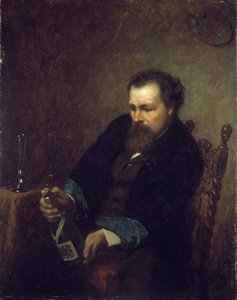
Eastman Johnson
1824 - 1906 , Stany Zjednoczone
Krótka nota
- Artistic Movement Or Style: Realizm, malarstwo genra
- Artists Or Movements Influenced By This Artist: ['Amerykański realizm']
- Artists Who Influenced This Artist:
- Mistrzowie holenderscy
- Jean-François Millet
- Date Of Birth: 29 lip 1824
- Date Of Death: 5 apr 1906
- Full Name: Jonathan Eastman Johnson
- Nationality: Amerykański
- Notable Artworks:
- Życie czarne na południu
- Rydz dla wolności
- Place Of Birth: Lovell, Wielka Brytania