Baroque · 1650
Concert (Jacob van Loo, 1650)
Jacob van Loo (1614–1670) stworzył Concert. Dzieło pochodzi z 1650. Należy do nurtu Baroque. Wykonano w technice Oil On Canvas. Przechowywane jest w Ermitaż w Sankt Petersburg, Rosja. Wymiary to 76 × 65 cm.
- 1650
- Oil On Canvas
- 76 × 65 cm
- Ermitaż, Sankt Petersburg

 Podgląd w skali 1:1

 Ręcznie malowany obraz olejny
 Wyślij jako kartkę
 Udostępnij
 Karta informacyjna


 Pobierz obraz
 Podobne obiekty
 RTG
 Pokaz slajdów
 Pytania i odpowiedzi

 Statystyki
Concert w skrócie
- Tytuł
- Concert
- Artysta
- Jacob van Loo (1614–1670)
- Miejsce urodzenia artysty
- Sluis, Holandia
- Data powstania
- 1650
- Technika wykonania
- Oil On Canvas
- Wymiary
- 76 × 65 cm
- Gdzie można je zobaczyć
- Ermitaż, Sankt Petersburg, Rosja
- Ruch
- Baroque
- Temat
- dutch golden age, conversation grouping, intimate gathering, classical interior, musical performance, portraiture detail
Co przedstawia Concert?
Jacob van Loo’s Concert: A Symphony of Light and Emotion
The artwork depicts a scene of an intimate gathering within a classical architectural setting—a Dutch Golden Age painting, likely from the 17th century, characterized by its realistic portrayal of figures and detailed rendering of textures and fabrics. It's a masterful example of Jacob van Loo’s signature style: Conversational Groupings – a technique that elevates portraiture beyond mere likeness to capture the essence of human interaction and emotion. The composition centers around a table where several individuals are engaged in various activities – playing music, reading, and conversing—a tableau typical of aristocratic life during the Baroque period.- Subject Matter: The scene portrays a musical ensemble performing for an audience comprised of noblemen and women. This wasn’t simply about documenting appearances; it aimed to convey social status and intellectual pursuits.
- Style: Van Loo's work embodies the Baroque aesthetic, prioritizing dramatic lighting—originating from a window to the left—to cast strong shadows and highlight key areas of the composition. Lines are predominantly linear, defining architectural elements and outlining figures’ forms, while shapes are largely organic – rounded faces, draped fabrics, and curved musical instruments – creating a harmonious balance against geometric structures.
- Technique: The artist meticulously employed brushwork and glazing to achieve depth and luminosity, layering pigments to create an illusion of three-dimensionality that captures the subtle nuances of light and atmosphere. This painstaking process resulted in remarkably realistic textures, particularly evident in the clothing and wooden furniture.
Historical Context: The Dutch Golden Age – A Flourishing Artistic Landscape
Painted around 1650-52 during the apex of the Dutch Republic’s cultural brilliance—the Dutch Golden Age—this artwork reflects the prevailing artistic sensibilities of the time. Rembrandt, Frans Hals, and Bartholomeus van der Helst were contemporaries who similarly explored themes of human psychology and social dynamics. The patronage system fostered by wealthy merchants and aristocratic families fueled innovation and propelled artists like Van Loo to unprecedented heights of success. This painting stands as a testament to the era’s commitment to portraying life with accuracy and conveying profound emotional resonance.Symbolism: Intrigue and Intellectual Exchange
Beyond its visual splendor, “Concert” carries symbolic weight. The woman positioned near the musician playing a lute embodies focused attention—perhaps representing contemplation or intellectual engagement—a common motif in Baroque art. Her gaze directs towards a document held by another gentleman, hinting at discussions concerning matters of state or philosophical debate. These subtle gestures invite viewers to ponder the complexities of human relationships and the pursuit of knowledge within an opulent setting. The scene encapsulates the spirit of aristocratic society – where artistic pursuits intertwined with political influence—a hallmark of the Baroque era’s cultural landscape.Emotional Impact: Capturing Transient Moments
Ultimately, Van Loo's "Concert" succeeds in conveying a palpable sense of atmosphere and emotion. The dramatic lighting underscores the importance of visual storytelling, transporting the viewer into the heart of this social gathering. It’s a piece that speaks to our fascination with human connection and the beauty found within refined environments—a timeless reminder of the power of art to capture fleeting moments of life and intellect.W którym muzeum znajduje się Concert?
Ermitaż
Sankt Petersburg, Rosja
Początki i historia Ermitażu Historia Ermitażu bierze swój początek w 1764 roku, kiedy to świat sztuki wzbogacił się o niezwykłą kolekcję 225 obrazów, nabytych od berlińskiego kupca Johanna Ernsta Gotzkowsky’ego. To właśnie Katarzyna Wielka położyła fundamenty pod tę niezwykłą zbiorowość, nadając początek obecności muzeum w Sankt Petersburgu w Rosji. Te wczesne nabytki stały się jądrem, z którego wyrosło potężne i rozległe repozytorium zachodniej sztuki europejskiej.


Zdjęcia w wysokiej rozdzielczości dzieła Concert
Domena publiczna: artysta zmarł w 1670.
Jacob van Loo, Concert (1650).
Jacob van Loo (1614–1670), Concert, 1650, oil on canvas, Ermitaż, Sankt Petersburg, Rosja. Domena publiczna Źródło obrazu: OriginalUniqueArt.com.
Odpowiedzi na pytania dotyczące Concert
Gdzie można obecnie zobaczyć dzieło „Concert” – Jacob van Loo?
„Concert” – Jacob van Loo znajduje się w zbiorach Ermitaż, Sankt Petersburg, Rosja. Informacja o muzeum dotyczy oryginału, a nie reprodukcji.
W którym roku powstało dzieło „Concert” – Jacob van Loo?
Powstanie „Concert” – Jacob van Loo datuje się na 1650.
W jakiej technice wykonano „Concert” – Jacob van Loo?
Technika wykonania dzieła „Concert” – Jacob van Loo to Oil On Canvas. Reprodukcje mają na celu wierne oddanie wyglądu tej techniki.
Jakie są wymiary oryginału "Concert"?
Wymiary dzieła „Concert” – Jacob van Loo to 76 x 65 cm. Reprodukcje można zamówić w innych rozmiarach, zachowując te same proporcje.
Co przedstawia „Concert” – Jacob van Loo?
Tematyka obecna w „Concert” – Jacob van Loo obejmuje dutch golden age, conversation grouping, intimate gathering, classical interior, musical performance, portraiture detail, baroque lighting. Razem stanowią one podsumowanie tematyki dzieła.
Czy „Concert” – Jacob van Loo znajduje się w domenie publicznej?
„Concert” – Jacob van Loo znajduje się w domenie publicznej (należy do domeny publicznej – autorskie prawa majątkowe wygasły). Status ten określa zasady reprodukcji obrazu tego dzieła.
Kto stworzył "Concert"?
Autorstwo dzieła "Concert" przypisuje się Jacob van Loo.
Do jakiego nurtu w sztuce należy „Concert” – Jacob van Loo?
„Concert” to dzieło należące do nurtu Baroque. Nurt ten określa tradycję artystyczną, w której osadzone jest dzieło.
Do którego etapu twórczości Jacob van Loo należy dzieło „Concert”?
„Concert” pochodzi z okresu Mature Period w twórczości Jacob van Loo. Klasyfikacja ta wiąże dzieło z rozwojem artysty.
O artyście: Jacob van Loo

1614–1670, Holandia
Jacob van Loo
Jacob van Loo: Mistrz Scen Dialogowych Urodzony w 1614 roku w Sluis, tętniącym życiem porcie Republiki Zjednoczonych Prowincji, Jacob van Loo był artystą, którego życie nierozerwalnie splotło się z najgorętszymi prądami artystycznymi swojej epoki. Jego wczesne lata ukształtowały nauki ojca, Jana van Loo, malarza, który zaszczepił w nim fundamentalne zrozumienie techniki i wrażliwości estetycznej. Choć szczegóły dotyczące jego okresu formacyjnego pozostają częściowo niejasne ze względu na zniszczenie archiwów miejskich podczas wojen, jest oczywiste, że artystyczna podróż Van Loo rozpoczęła się w samym sercu bogatego gobelinu Złotego Wieku Holandii – ery słynącej z nowatorskich stylów malarskich i niezwykle płodnych twórców. Historia jego rodziny ma ogromne znaczenie; dziedzictwo ojca-malarza stało się fundamentem, na którym ostatecznie wyrosła dynastia artystów, na zawsze zmieniająca oblicze sztuki europejskiej.
Inne prace Jacob van Loo
 Allegory of Fortune1655
 Bacchus and Ariadne1650
 Portrait of Thomas Corneille1660
 Portrait of a Young Girl1650
Eseje o Concert
 Masterpieces of the Dutch Golden Age: Top 25 Jan van Goyen ArtworksBorn in Leiden in 1596, Jan van Goyen pioneered a revolutionary tonal style, using a restrained palette to capture the shifting light of th…
 17th century Dutch paintersRembrandt's 1642 Night Watch and Vermeer's 1665 Girl with a Pearl Earring reveal how 10 masters used light to define the Dutch Golden Age.
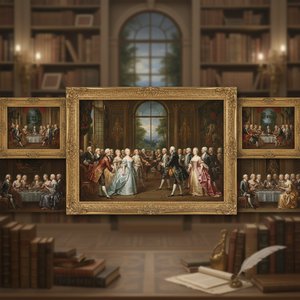 Capturing Elegance: The Art of the Formal Gathering in Masterpiece PaintingsExplore the timeless elegance of formal gatherings through the lens of art history. Discover how master painters captured social grace, sta…