Przełącz na wydania drukowane
 Rozwiń treść







































 W przypadku dzieł sztuki lub reprodukcji, których którykolwiek z boków przekracza 105 cm (około 41 cali), rama zostanie wysłana w formie zestawu do samodzielnego montażu. Metoda ta zapewnia bezpieczną dostawę i zapobiega uszkodzeniom podczas transportu.


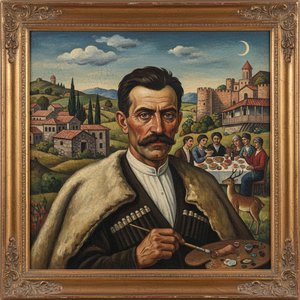
Grigory Gagarin’s “Caucasian Soldier”: A Portrait of Resilience Amidst Imperial Ambition
The painting "Caucasian Soldier" by Grigory Gagarin stands as a poignant testament to the turbulent era of the Caucasian War (1846-1859), capturing not merely a depiction of military personnel but also an embodiment of cultural exchange and artistic observation. Executed in 1855, this artwork resides within the Art Palace of Georgia – Museum of Cultural History in Tbilisi, offering visitors a glimpse into Gagarin’s meticulous documentation of Georgian society during his time serving under Mikhail Vorontsov. More than just a visual record, it's an exploration of identity and circumstance against the backdrop of imperial expansion.- Subject Matter: The central figure portrays a Circassian soldier – a representative of one of the numerous ethnic groups resisting Russian dominion in the Caucasus Mountains. His posture exudes quiet dignity, conveying both strength and vulnerability simultaneously.
- Style & Technique: Gagarin’s approach aligns with Realism, prioritizing accurate representation over idealized beauty. He employs oil paints on canvas, utilizing subtle tonal gradations to achieve a remarkable level of detail—particularly noticeable in the uniform fabric and weaponry. The artist's meticulous brushstrokes convey texture and depth, bringing forth an impressionistic quality that enhances the painting’s emotional resonance.
- Historical Context: The Caucasian War was fueled by Russia’s ambition to consolidate control over the Caucasus region – a strategic endeavor aimed at securing access to trade routes and bolstering imperial prestige. Gagarin's presence as a diplomat and artist within Vorontsov’s administration underscores the intersection of military strategy and cultural patronage during this period.
- Symbolism: Beyond its literal depiction, “Caucasian Soldier” speaks volumes about resilience and adaptation. The soldier embodies the spirit of resistance against oppression—a theme prevalent throughout Georgian history. Furthermore, Gagarin's inclusion of a book symbolizes knowledge and observation – mirroring his role as a scholar documenting the complexities of Caucasus culture.
- Emotional Impact: Gazing upon this artwork evokes contemplation on themes of courage, duty, and cultural heritage. The painting’s subdued palette—dominated by earthy tones—creates an atmosphere of solemn reflection, inviting viewers to consider the human cost of imperial ambition and the enduring spirit of those who defend their traditions.
A Detailed Examination of Gagarin's Artistic Process
Gagarin’s artistic journey began with formal instruction from Karl Briullov, a celebrated Russian painter known for his dramatic compositions and masterful use of color. This mentorship instilled in Gagarin a disciplined technique focused on capturing the essence of observed subjects—a characteristic that shines through in “Caucasian Soldier.” He meticulously studied anatomy and perspective, striving to achieve an illusionistic effect that faithfully reproduces reality. The artist’s dedication to detail is evident in every brushstroke, reflecting his commitment to artistic excellence.The Art Palace's Collection & Gagarin's Legacy
“Caucasian Soldier” constitutes a cornerstone of the Art Palace of Georgia’s collection—a repository of Georgian art spanning centuries. Its inclusion underscores the importance of preserving cultural heritage and celebrating artistic achievement. Grigory Gagarin’s contribution to Georgian culture extends beyond this singular masterpiece; his involvement in restoring frescoes of historic churches exemplifies his dedication to revitalizing Georgian artistic traditions. He remains a figure of considerable admiration within Georgian artistic circles, symbolizing intellectual curiosity and artistic integrity.Further Research & Artistic Inspiration
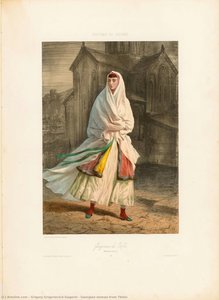
For those interested in delving deeper into Gagarin’s oeuvre, scholarly resources include biographical studies examining his life and career as well as analyses of his other paintings—such as “Circassian Woman,” which similarly explores themes of cultural identity within the context of imperial influence. Examining Gagarin's artistic style can inspire contemporary artists seeking to convey emotion through meticulous observation and skillful technique – a legacy that continues to resonate today.Pytania i odpowiedzi
Jaka technika i styl charakteryzują „Żołnierz Kaukaski” – Grigory Gagarin?
W "Żołnierz Kaukaski" technika Akryl na płótnie łączy się z nurtem Romantic Realism.
Czy „Żołnierz Kaukaski” – Grigory Gagarin to jasne czy ciemne dzieło?
Pod względem postrzeganej jasności, „Żołnierz Kaukaski” – Grigory Gagarin jest świetlisty.
Jaki rozmiar i orientacja są zalecane dla wydruku dzieła „Żołnierz Kaukaski” – Grigory Gagarin?
W przypadku "Żołnierz Kaukaski" zalecanym formatem wydruku jest rozmiar Duży format w orientacji Portret.
 Podgląd w skali 1:1
 Wyślij jako kartkę
 Udostępnij
 Szczegóły dzieła
 Przewodnik

 Pobierz obraz
 Podobne obiekty
 RTG
RTG Pokaz slajdów
 Pytania i odpowiedzi
 Statystyki