Zobacz w skali 1:1
 Wyślij
 Udostępnij
 Szczegóły
 Przewodnik

 Pobierz plik obrazu
 Podobne obiekty
 RTG
RTG Pokaz slajdów
 Statystyki
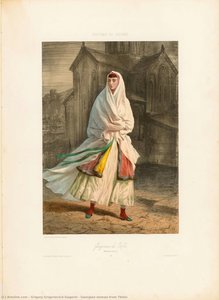
Принц Григорий Григорьевич Гагарин
 Akryl na płótnie
- Sztuka ścienna
- Romanticism
 1855
1855 59.0 x 42.0 cm
 Art Palace of Georgia - Museum of Cultural History
 Czytaj więcej
Giclée / Wydruk artystyczny
Wydruki giclée lub płótna o jakości muzealnej, szybka realizacja i szeroki wybór opcji wykończenia. ( Kup ręcznie malowany obraz Przełącz na wersję cyfrową)




P118B zł10

P118H zł10

P118W zł10

P438Z zł10

P508JH zł12

P508YH zł12

P805H zł10

P805Z zł10

P919BZ zł10

P919G zł10

P919XJ zł10

P959ZH zł10

P968JZ zł12

W106C zł8

W218G zł10

W218JH zł8

W218Y zł10

W307PJ zł10

W316G zł10

W316PJ zł8

W316Y zł10

W398PJ zł8

W4111J zł10

W500HY zł15

W500JH zł15

W692G zł12

W849H zł8

W940BG zł15

W953PJ zł8




Wybierz spośród naszych standardowych rozmiarów, które zachowują oryginalne proporcje dzieła sztuki.

Wpisz wymaganą szerokość i wysokość, aby dopasować grafikę do ramy lub ściany. Wydruk można jedynie przyciąć, nigdy nie powiększając go poza oryginalny obraz, dlatego format o innym proporcji spowoduje utratę części kompozycji. Przed rozpoczęciem druku prześlemy Ci cyfrowy podgląd do zatwierdzenia. Obraz wyświetlany na tej stronie nie pokazuje rzeczywistego przycięcia — jedynie podgląd oddaje ten efekt.
Dostawa na cały świat () w ciągu 2 tygodni zamiast standardowych 4/5 tygodni. (25 Październik)

Bezpłatna ekspresowa wysyłka na cały świat

Wysokiej jakości płótno lniane

Pełne ubezpieczenie transportowe

Gwarancja zwrotu należności celnych i podatków importowych

Gwarancja idealnego odwzorowania barw

100-dniowy okres na zwrot dzieła w przypadku wykrycia wad produkcyjnych

Gwarancja 100% zwrotu pieniędzy

Oferta przy zakupie wielu sztuk
 Opcja ze szkłem jest dostępna wyłącznie w rozmiarach poniżej 110 cm

Принц Григорий Григорьевич Гагарин
Giclée / Wydruk artystyczny
Rozmiar reprodukcji
-


Suma do zapłaty
zł 307
Grigory Gagarin: A Pioneer of Romantic Landscape Painting
Grigory Grigorievich Gagarin (1810–1893) stands as an enigmatic figure in Russian art history—a prince, diplomat, military officer, and above all, a painter whose work captures the spirit of his era with remarkable sensitivity. Born into the aristocratic Gagarin family amidst turbulent political currents, he defied convention by pursuing artistic endeavors alongside official duties, forging a path that would ultimately earn him recognition as one of Russia’s foremost landscape painters during the Romantic period. His canvases aren't merely depictions of scenery; they are imbued with emotion and philosophical contemplation—a testament to his profound engagement with the natural world and its influence on human experience.- Early Life & Education: Gagarin’s formative years were spent in Paris and Rome, nurtured by the patronage of his father, Prince Grigory Ivanovich Gagarin, who served as Russian ambassador to Italy. This exposure to European artistic culture profoundly shaped his aesthetic sensibilities, introducing him to the luminism style championed by Karl Briullov—a movement characterized by soft, diffused light and atmospheric perspective.
- The Siena Years: Recognizing his son’s talent, Gagarin enrolled him at the Collegium Tolomei in Siena, Italy, where he honed his artistic skills under the guidance of Jesuit educators. This institution fostered a humanist tradition that encouraged observation and intellectual curiosity—qualities evident throughout Gagarin's oeuvre.
- Pushkin & Lermontov: Gagarin’s friendship with Alexander Pushkin and Mikhail Lermontov cemented his place in literary circles. He illustrated Pushkin’s celebrated poems “The Queen of Spades” and “Eugene Onegin,” capturing the poet’s lyrical vision with meticulous detail, demonstrating a masterful understanding of visual storytelling.
- Caucasus Campaign & Artistic Output: Gagarin's involvement in the Caucasian War provided him with unparalleled access to the dramatic landscapes of Georgia and Armenia—inspiration for his iconic paintings like “Caucasian Prince” and “Circassian Woman.” These works exemplify Romantic idealism, portraying idealized figures amidst sublime vistas, reflecting a fascination with heroism and beauty.
- Legacy & Influence: Gagarin’s artistic legacy extends beyond individual masterpieces. He championed the revival of Georgian frescoes—a tradition that had fallen into decline—and contributed significantly to the cultural enrichment of Tbilisi. His work continues to inspire artists today, reminding us of the power of art to convey profound emotions and capture the essence of a bygone era.
The “Caucasian Prince” – A Symphony of Light and Emotion
“Caucasian Prince,” housed in the Art Palace of Georgia—Museum of Cultural History in Tbilisi—is arguably Gagarin’s most celebrated work. Executed in 1855, it embodies the Romantic spirit perfectly. The painting depicts two figures standing on a hillside against a backdrop of towering mountains bathed in soft, diffused light—a technique characteristic of luminism, which sought to capture the grandeur and majesty of nature. The meticulous attention to detail—the textures of clothing, the subtle shading of skin tones—reveals Gagarin’s mastery of artistic craft. More than just a visual representation, “Caucasian Prince” conveys a sense of serenity and contemplation—a reflection of Gagarin's belief in the transformative power of art and its ability to elevate the human spirit. The artist skillfully uses color to convey mood and emotion, creating an unforgettable image that encapsulates the Romantic ideal of sublime beauty.Symbolism & Artistic Technique: Luminism Revisited
Gagarin’s artistic technique—luminism—was influenced by Karl Briullov's pioneering explorations into capturing atmospheric effects. Luminists rejected theatrical lighting and dramatic contrasts, favoring instead a gentle illumination that mimicked the natural radiance of sunlight filtering through mountain peaks. This approach wasn’t merely stylistic; it served as a philosophical statement—a desire to depict nature in its purest form, unburdened by artificial embellishments. Gagarin's brushstrokes are deliberate and precise, conveying both textural richness and tonal subtlety. He achieved remarkable depth and realism by layering colors gradually, creating an illusion of three-dimensionality that draws the viewer into the scene. The artist’s meticulous observation of geological formations—evident in the depiction of Caucasus mountains—demonstrates a commitment to scientific accuracy alongside artistic expression.A Window Into Georgian Culture & Artistic Revival
Gagarin's involvement in Tbilisi was pivotal for reviving Georgian frescoes, which had suffered considerable damage during the Ottoman occupation. Recognizing the importance of preserving cultural heritage, he undertook extensive restoration work—a testament to his humanist values and dedication to artistic excellence. His efforts contributed significantly to the revitalization of Tbilisi’s artistic landscape and cemented his reputation as a benefactor of Georgian culture. The Art Palace of Georgia houses a remarkable collection of Gagarin's sketches and drawings—providing invaluable insight into his creative process and capturing the essence of his time in Caucasus.Conclusion: Beyond Technique – An Artistic Soul
Grigory Gagarin’s paintings transcend mere technical skill; they resonate with profound emotional depth and philosophical contemplation. He wasn’t simply reproducing landscapes; he was attempting to convey a sense of wonder—a recognition of the sublime beauty inherent in the natural world. Through his masterful use of luminism, meticulous observation, and expressive brushstrokes, Gagarin created artworks that continue to inspire admiration and evoke powerful emotions—solidifying his place as one of Russia’s most enduring artistic figures.Pytania i odpowiedzi
Kto stworzył "Принц Григорий Григорьевич Гагарин" i kiedy?
Grigory Gagarin stworzył/a "Принц Григорий Григорьевич Гагарин" w 1855 roku.
Do jakiego nurtu i do której epoki zalicza się „Принц Григорий Григорьевич Гагарин” autorstwa Grigory Gagarin?
"Принц Григорий Григорьевич Гагарин" należy do nurtu Romanticism, a jego twórca tworzył w epoce – Wiek XIX.
Ile lat miał(a) Grigory Gagarin, tworząc "Принц Григорий Григорьевич Гагарин" w 1855 roku?
Grigory Gagarin stworzył/a "Принц Григорий Григорьевич Гагарин" w wieku 45 lat. Artysta urodził/a się w 1810, a datowanie dzieła to 1855.
Biografia artysty
Grigory Gagarin (1810 - 1893)
Grigory Grigorievich Gagarin (Russian: Григо́рий Григо́рьевич Гага́рин, May 29 April 1810 – January 30 January 1893) was a Russian painter, Major General and administrator. He stands as one of the most prominent figures in Russian Romanticism, celebrated for his captivating depictions of Caucasian landscapes and portraits—particularly those capturing the spirit of the Circassian people. His artistic journey began under the tutelage of Karl Briullov, a titan of Russian art, shaping his style and fostering an enduring fascination with observation and expressive color. ### Early Life and Artistic Formation Born into the noble Rurikid Gagarin family – descendants of Vladimir Rus’—Grigory’s upbringing instilled in him a deep appreciation for heritage and tradition. His father, Prince Grigory Ivanovich Gagarin (Saint Petersburg, March 29 March 1782 – Tegernsee, February 12 February 1837), served as Russia's ambassador to Italy, exposing young Grigory to European culture and fostering a cosmopolitan outlook. Despite lacking formal artistic training, Gagarin’s talent blossomed thanks to invaluable lessons from Karl Briullov, whose influence would permeate his entire oeuvre. This formative period in Siena solidified his commitment to capturing the beauty of the natural world and conveying emotion through visual art. ### Artistic Career: Landscapes and Portraits Gagarin's artistic career gained momentum during his time in Saint Petersburg, where he befriended literary luminaries like Alexander Pushkin and Mikhail Lermontov—artists who profoundly impacted Russian culture. He meticulously illustrated Pushkin’s masterpieces, “The Queen of Spades” and “The Tale of Tsar Saltan,” demonstrating a masterful command of narrative storytelling through painting. Furthermore, Gagarin's artistic explorations extended beyond literature; he embarked on expeditions to the Caucasus region, documenting its dramatic vistas with breathtaking precision. His canvases—such as "Caucasian Prince" and "Circassian Woman"—became emblems of Romantic idealism, reflecting his belief in the sublime power of nature and the importance of portraying human subjects with sensitivity and nuance. He also produced portraits of Armenian clergymen and Kurds from Ararat, showcasing his dedication to documenting diverse ethnic groups and traditions. ### Military Service and Administrative Roles Beyond his artistic pursuits, Gagarin distinguished himself as a military officer and administrator—serving as a Major General in the Russian Army and holding positions within the Imperial Court. His diplomatic service spanned Paris, Rome, and Constantinople, providing him with invaluable experience in international relations and fostering an understanding of diverse cultures. Notably, he was appointed Vice President of the Fine Arts Academy since 1859, cementing his legacy as a champion of artistic excellence and furthering Russia’s cultural standing on the global stage. ### Legacy and Significance Grigory Gagarin's contribution to Russian art is undeniable—his landscapes embody Romantic ideals, while his portraits capture the essence of human character with remarkable accuracy. His work continues to inspire admiration for its beauty and emotional depth, serving as a testament to the enduring power of observation and artistic expression. He remains an important figure in Russian cultural history, symbolizing the harmonious blend of intellectual curiosity and creative talent that characterized the Romantic era. ### References:- Caucasus Prince, OriginalUniqueArt.com
- Russian Art, wikipedia

Grigory Gagarin
1810 - 1893 , Rosja
Najważniejsze informacje
- Artistic Movement Or Style: Romanticism
- Artists Who Influenced This Artist: ['Karl Briullov']
- Date Of Birth: May 29 April 1810
- Date Of Death: January 30 January 1893
- Full Name: Grigory Grigorievich Gagarin
- Nationality: Russian
- Notable Artworks:
- Caucasian Prince
- Circassian Woman
- A Priest from Armenia
- Kurds from Ararat
- Georgian Man
- Place Of Birth: Saint Petersburg, Russia
Zobacz także powiązane artykuły

Discover Russian Realism: Soulful Masterpieces and the Timeless Spirit of the Peredvizhniki for Your Modern Home
Elevate your home with the soulful beauty of Russian Realism. Discover exquisite hand-painted reproductions of Peredvizhniki masterpieces, from lyrical landscapes to profound portraits, curated to bring historical depth and timeless elegance to your modern interior design.

Victor Vasnetsov: Myth, Nationalism & the Revival of Russian Fairy Tale Painting
Explore the captivating world of Victor Vasnetsov, a co-founder of Russian folklorist painting. Discover his iconic works, influence on national identity, and lasting legacy in this expert guide.

Ivan Bilibin: A Synthesis of Folklore, Modernism & National Identity in Russian Illustration
Explore the enchanting world of Ivan Bilibin, a master Russian illustrator who synthesized folklore, Art Nouveau & national identity. Discover his iconic fairy tale illustrations and legacy with OriginalUniqueArt.

Mikhail Nesterov: Spiritual Quests & Symbolic Landscapes of Russian Symbolism
Explore the captivating world of Mikhail Nesterov, a pioneer of Russian Symbolism. Discover his spiritual themes, iconic paintings like 'The Hermit,' and lasting influence on Russian art history. Learn more at OriginalUniqueArt.

Vladimir Makovsky: Realism, Social Commentary & Russian Life in Late 19th-Century Painting
Explore the captivating world of Vladimir Makovsky, a leading Russian realist painter. Discover his insightful depictions of 19th-century life, social commentary & legacy with OriginalUniqueArt.