

 Se i rommet
 Del som digitalt kort
 Del
Del
 Detaljer
 Studentguide

 Last ned
 Liknende objekter
 Røntgen
 Lysbildefremvisning
 Besøksstatistikk
Richard Potter
 Acrylic On Canvas
- WallArt
- Romantic Landscape Painting
 90.0 x 69.0 cm
 Manchester Town Hall
 Les mer
Giclée / Kunsttrykk
Giclée- eller lerretsprint av museumskvalitet med rask produksjon og fleksible valgmuligheter for etterbehandling. ( Bestill håndmalt reproduksjon Gå til digitalt bilde)




P118B Nkr10

P118H Nkr10

P118W Nkr10

P438Z Nkr10

P508JH Nkr12

P508YH Nkr12

P805H Nkr10

P805Z Nkr10

P919BZ Nkr10

P919G Nkr10

P919XJ Nkr10

P959ZH Nkr10

P968JZ Nkr12

W106C Nkr8

W218G Nkr10

W218JH Nkr8

W218Y Nkr10

W307PJ Nkr10

W316G Nkr10

W316PJ Nkr8

W316Y Nkr10

W398PJ Nkr8

W4111J Nkr10

W500HY Nkr15

W500JH Nkr15

W692G Nkr12

W849H Nkr8

W940BG Nkr15

W953PJ Nkr8




Velg mellom våre forhåndsdefinerte størrelser som bevarer kunstverkets opprinnelige proporsjoner.

Skriv inn bredden og høyden du trenger, slik at den passer til din ramme eller vegg. Et trykk kan kun beskjæres, aldri gjøres større enn bildet, så et format med en annen form vil miste en del av motivet. Vi sender deg en digital mockup for godkjenning før vi trykker noe som helst. Bildet som vises på denne siden viser ikke den faktiske beskjæringen — det er kun mockuppen som gjør det.
Verdensomspennende levering () på 2 uker i stedet for standard 4/5 uker. (27 October)

Gratis ekspressfrakt over hele verden

Lerretsduk av høykvalitets lin

Full transportforsikring

Garanti for refusjon av toll og importavgifter

Garantert fargeekthet

100 dagers returrett ved fabrikasjonsfeil

100% pengene tilbake-garanti

Mengderabatt
 Glassalternativet er kun tilgjengelig i størrelser under 110 cm

Richard Potter
Giclée / Kunsttrykk
Format på reproduksjon
-


Totalpris
Nkr 761
Richard Potter - A Portrait of Quiet Dignity
Samuel William Reynolds’s depiction of Richard Potter stands as a testament to the meticulous artistry of mezzotint engraving in the early 19th century. Executed around 1830 or 1840, this portrait captures Potter—a prominent businessman and founding member of the Great Western Railway company—with remarkable detail and understated elegance.
Reynolds’s skill is immediately evident in the subtle tonal gradations achieved through the printing process. The mezzotint technique, pioneered by Rembrandt and perfected by artists like John Raphael Smith, allowed for incredibly nuanced shading – a crucial element in conveying Potter's character and conveying an aura of calm confidence. Observe how Reynolds skillfully renders the folds of Potter’s suit and waistcoat, highlighting the texture of fabric with astonishing precision.
The painting’s composition is deliberately restrained, placing Potter centrally within a dark background that serves to emphasize his form and features. This stylistic choice reflects the prevailing taste for formal portraiture during the Victorian era—a period characterized by an obsession with documenting individuals of distinction. The artist's careful attention to detail extends beyond mere representation; it aims to capture not just what Potter looked like, but also something of his inner state.
The Artist’s Legacy: Reynolds and Mezzotint Mastery
Samuel William Reynolds Jr., son of the celebrated landscape painter Samuel William Reynolds Sr., inherited his father's exceptional talent for engraving. Like his father, Reynolds Jr. was a prolific artist who embraced multiple mediums—oil painting and watercolor—demonstrating versatility and an understanding of artistic expression.
Reynolds’s reputation as a mezzotint engraver soared throughout Britain and France during his lifetime. Over 400 examples of his work reside in the National Portrait Gallery, London, cementing his place among the foremost artists of his time. His dedication to mastering the technique—a laborious process involving etching plates with acid rollers—is evident in every plate he produced.
Considered a pioneer of the art form, Reynolds Jr.’s work exemplifies the meticulous craftsmanship demanded by mezzotint engraving. He skillfully combined etching and stipple engraving techniques to achieve breathtaking levels of tonal subtlety, mirroring his father’s approach to landscape painting—a commitment to capturing atmospheric conditions with unparalleled accuracy.
Historical Context: Victorian Portraiture and Social Status
The portrait was created during the reign of Queen Victoria (1837-1901), a period marked by significant social and economic transformations. Victorian society placed immense importance on lineage, status, and outward appearances—factors meticulously documented in portraits commissioned by wealthy families and prominent figures.
Richard Potter’s image embodies the ideals of Victorian gentlemanly culture: intellect, responsibility, and adherence to moral principles. The pose—seated upright with a dignified gaze—communicates composure and self-assurance—qualities highly valued during this era. Furthermore, the dark background serves as a symbolic device, emphasizing Potter's presence against an implied backdrop of societal influence.
Symbolism: Quiet Strength and Reflection
Beyond its technical brilliance, the portrait possesses subtle symbolic resonance. The muted palette—primarily browns and blacks—suggests introspection and seriousness—characteristics associated with intellectual pursuits and moral contemplation. Potter’s gaze directs towards the viewer, fostering a connection between sitter and observer—a gesture that speaks to the Victorian fascination with conveying inner character.
The meticulous rendering of Potter's attire—the suit and waistcoat—represents social status and professionalism—affirming his position within the upper echelons of Victorian society. Reynolds’s masterful execution elevates this simple depiction into a profound statement about human dignity and artistic achievement.
Spørsmål og svar
Hvilken lysstyrke har "Richard Potter" av Samuel William Reynolds?
Luminansen som er registrert for "Richard Potter" av Samuel William Reynolds er Dark.
Hvilken atmosfære har "Richard Potter"?
"Richard Potter" har en Serene atmosfære.
Hvor og til hvilket formål anbefales "Richard Potter"?
"Richard Potter" anbefales til Accent, og det anbefalte rommet er et Living Room.
Kunstnerbiografi
The Master of Light and Shadow: The Life of Samuel William Reynolds
In the golden age of British printmaking, few names resonated with as much technical prowess and versatility as Samuel William Reynolds. Born on July 4, 1773, Reynolds emerged from a background that bridged the colonial reaches of the West Indies and the refined artistic circles of England. Though his father’s roots lay in the plantations of the Caribbean, Reynolds was shaped by the rigorous academic traditions of London. His journey into the heart of the art world began under the tutative guidance of esteemed mezzotint engravers such as Charles Howard Hodges and John Raphael Smith. This early immersion in the delicate nuances of tonal depth allowed him to master the complex interplay of light and dark, a skill that would soon make him a celebrated figure in both Britain and France.
The artistry of Reynolds was never confined to a single medium or subject. He was a true polymath of the visual arts—a mezzotint engraver, a landscape painter, and even a landscape gardener. His early career was marked by an extraordinary technical dexterity; he possessed the rare ability to combine etching, aquatint, and stipple engraving with the rich, velvety textures of mezzotint. This hybrid approach allowed him to breathe life into various compositions, ranging from the dramatic animal studies of James Northcote to the sweeping, atmospheric landscapes inspired by masters like George Morland. His work often captured a sense of raw, natural tension, seen in evocative pieces such as The Vulture and Lamb and Leopards, Vulture and Snake, where the predator and prey are rendered with startling anatomical precision and emotional weight.
A Legacy Carved in Copper and Canvas
Reynolds’ significance in the history of art is perhaps most profoundly felt through his role as a bridge between the great masters of the past and the burgeoning print culture of the nineteenth century. He was not merely an interpreter of art but a vital participant in its dissemination. His immense productivity is evidenced by the staggering collection of over 400 examples of his work housed within the National Portrait Gallery in London. Much of his renown stemmed from his ability to translate the painterly genius of Sir Joshua Reynolds into the reproducible medium of print, ensuring that the grandeur of British portraiture could be appreciated far beyond the walls of private estates.
Beyond his technical achievements, Reynolds moved within the most vibrant social and theatrical circles of his era. His life was intertwined with the legends of the London stage; he maintained close friendships with figures such as Thomas Sheridan and Edmund Kean, even assisting the latter with the intricate art of theatrical makeup for iconic roles like Othello. This connection to the drama of the theatre undoubtedly informed the dramatic flair found in his engravings. Whether he was working on the monumental Liber Studiorum alongside J.M.W. Turner or recreating the luminous compositions of Rubens and Rembrandt, Reynolds approached every plate with a sense of narrative urgency. His career remains a testament to the power of the engraver's hand to capture the soul of an era, leaving behind a legacy of shadows, light, and enduring beauty.

Samuel William Reynolds
1773 - 1835
Kort om kunstneren
- Full Name: Samuel William Reynolds
- Nationality: British
- Date Of Birth: 1773
- Date Of Death: 1835
- Notable Artworks:
- The Vulture and Lamb
- The Falconer
- Leopards, Vulture and Snake
- Heron and Spaniel
- A Land Storm
- Artistic Movement Or Style: Mezzotint engraving, Landscape painting
- Artists Who Influenced This Artist:
- Charles Howard Hodges
- John Raphael Smith
- Sir Joshua Reynolds
- James Northcote
Relaterte artikler
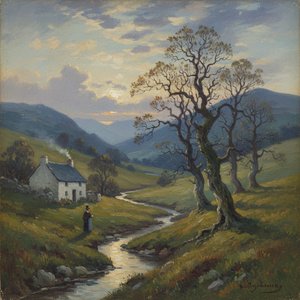
Penry Williams: Evoking Welsh Nostalgia Through Impressionistic Landscapes
Explore the captivating world of Penry Williams (1802-1885), a Welsh artist renowned for his evocative Impressionistic landscapes and scenes of Italy. Discover his life, style & legacy with OriginalUniqueArt.

Christopher Williams: Deconstructing Representation & Materiality in Contemporary Art
Explore the groundbreaking work of Christopher Williams, a pivotal figure in contemporary art. This analysis delves into his deconstruction of representation, materiality, and institutional critique – essential reading for serious collectors.
Sir Joshua Reynolds' Mesterverk: 25 Ikoniske Maler for Kunstelskere
Oppdag Sir Joshua Reynolds' 25 mest ikoniske malerier! Fordyp deg i portrettkunsten fra det 18. århundre, barokk og rokokko-stilen. Finn inspirasjon til interiørdesign & kjøp reproduksjoner av høy kvalitet på OriginalUniqueArt.com.
Sir Joshua Reynolds: Shaping British Art Through Grand Style & Societal Portraiture
Explore the life & work of Sir Joshua Reynolds, a master of British portraiture and founder of the Royal Academy. Discover his 'Grand Style,' techniques, and lasting influence on art history. Learn more at OriginalUniqueArt.
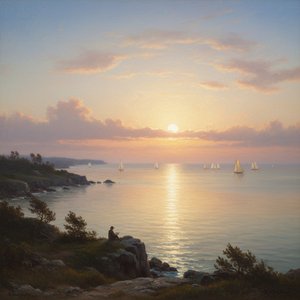
William Trost Richards: Luminism, Spirituality & the American Landscape Tradition
Explore the captivating landscapes of William Trost Richards, a master of Luminism associated with both the Hudson River School & American Pre-Raphaelite movements. Discover his spiritual connection to nature and lasting influence on American art.