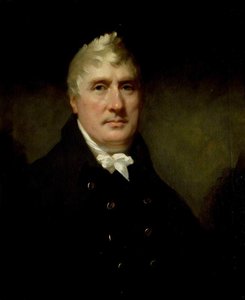
Portret van Henry Raeburn

De 100 bekendste schilderijen van Henry Raeburn, een selectie uit de galerie

Bijgewerkt in november 2026 · gerangschikt op basis van onze populariteitsscore (zoekopdrachten, bezoeken en bestellingen per kunstwerk) · 438 werken van Henry Raeburn in onze catalogus

Kortom

Van alle originele werken die Henry Raeburn heeft nagelaten, is Reverend Dr Robert Walker (1755–1808) Schatseren op Duddingston Loch (1795) het bekendst, in de collectie van het Scottish National Gallery, Edinburgh. Direct daarna volgen Justina Camilla Wynne, Mrs Alexander Finlay of Glencorse (1785 1814) (1810) en Young Girl Holding Flowers (1798). Onze catalogus bevat 438 werken van Henry Raeburn; de galerie heeft de 100 meest bewonderde werken ter wereld bewaard, elk voorzien van de datum, het museum en het verhaal erachter.

1756 – 1823, Stockbridge Scottish neoclassicism Meeste werken: Scottish National Portrait Gallery

De top 10 schilderijen van Henry Raeburn: de selectie van de galerie

1
Reverend Dr Robert Walker (1755–1808) Schatseren op Duddingston Loch (1795) door Henry Raeburn

Reverend Dr Robert Walker (1755–1808) Schatseren op Duddingston Loch

1795 · Olieverf op canvas · Scottish National Gallery, Edinburgh

De lucht voelt scherp en koud aan terwijl een eenzame figuur over de bevroren uitgestrektheid van Duddingston Loch glijdt. Het is een man van aanzien, gekleed in een zware zwarte jas en een hoge hoed, maar hij beweegt met een lichtheid die zijn formele kledij tart. Eén been is opgetild, balancerend in een delicaat evenwicht, terwijl zijn handen naar beneden reiken om zijn voet vast te pakken, waardoor een vluchtig…

2
Justina Camilla Wynne, Mrs Alexander Finlay of Glencorse (1785 1814) (1810) door Henry Raeburn

Justina Camilla Wynne, Mrs Alexander Finlay of Glencorse (1785 1814)

1810 · Oil On Canvas · Scottish National Gallery, Edinburgh

To gaze upon this portrait of Justina Camilla Wynne, Mrs Alexander Finlay of Glencorse, is to step directly into the refined atmosphere of the early nineteenth century. Rendered with an exquisite mastery that speaks to the height of Neoclassicism, the painting captures more than just a likeness; it encapsulates an entire era's idealization of feminine dignity and quiet grandeur. The subject is presented in a pose of effortless elegance, seated…

3
Young Girl Holding Flowers (1798) door Henry Raeburn

Young Girl Holding Flowers

1798 · Oil On Canvas · Louvre, Parijs

Henry Raeburn's "Young Girl Holding Flowers," painted in 1798 and currently residing within the hallowed halls of the Musée du Louvre, is more than just a charming pastoral scene; it’s a profound meditation on youth, beauty, and the fleeting joys of nature. This exquisite oil-on-canvas work captures a young girl, seemingly lost in contemplation as she cradles a vibrant bouquet of wildflowers. Raeburn's masterful technique—characterized by soft, luminous colors and…

4
Henry Mackenzie (1810) door Henry Raeburn

Henry Mackenzie

1810 · Oil On Canvas

To stand before this portrait is to encounter not merely a likeness, but a carefully curated moment of intellectual gravity. Painted by the master of Scottish realism, Henry Raeburn in 1810, this work captures Henry Mackenzie with an arresting dignity that seems to transcend the passage of time. The composition itself speaks volumes; while the subject occupies a central space, his slight off-centering lends a subtle dynamism, preventing the formality…

5
Professor Dugald Stewart (1753–1828), Philosopher (1810) door Henry Raeburn

Professor Dugald Stewart (1753–1828), Philosopher

1810 · Oil On Canvas · Scottish National Portrait Gallery, Edinburgh

To stand before Henry Raeburn’s portrait of Professor Dugald Stewart is to encounter not merely a likeness, but an embodiment of Enlightenment intellect. Painted in 1810, this work transcends simple portraiture; it is a carefully constructed meditation on genius itself. The subject, Professor Dugald Stewart, is presented in a three-quarter view that immediately draws the viewer into a direct, compelling dialogue. Raeburn masterfully isolates him against a background so deep…

6
Pringle Fraser (1804) door Henry Raeburn

Pringle Fraser

1804 · Oil On Canvas · Tate Gallery, Londen

To stand before this portrait of Pringle Fraser is to encounter not merely a likeness, but a carefully constructed moment of contemplation. Painted around 1804, this work captures the essence of early nineteenth-century masculine dignity. The subject commands attention through his direct, almost challenging gaze. He is presented in attire that speaks of respectable standing—the crisp white shirt contrasting sharply with the somber black vest and tie. This deliberate contrast…

7
Allan Maconochie (1748–1816), 1st Lord Meadowbank, Judge (1814) door Henry Raeburn

Allan Maconochie (1748–1816), 1st Lord Meadowbank, Judge

1814 · Oil On Canvas · Scottish National Portrait Gallery, Edinburgh

To stand before Henry Raeburn’s portrait of Allan Maconochie is to encounter not merely a likeness, but a carefully curated study in character and societal standing. Painted in 1814, this work transcends simple portraiture; it is a document of early nineteenth-century British gentry, imbued with the quiet weight of authority. Raeburn, the master chronicler of Scottish life elevated to national prominence, captures Maconochie—the 1st Lord Meadowbank and Judge—with an unflinching…

8
John Balmanno, MD, President, FPSG (1800–1802, 1806–1808, 1818–1820 1826–1828) (1820) door Henry Raeburn

John Balmanno, MD, President, FPSG (1800–1802, 1806–1808, 1818–1820 1826–1828)

1820 · Oil On Canvas · Nhs Greater Glasgow And Clyde, Glasgow

This captivating portrait captures John Balmanno, MD, in a moment of considered repose. The sitter is presented with an air of profound accomplishment and quiet authority, hallmarks of the distinguished professional of the early nineteenth century. Dressed in the sober elegance expected of a man of his standing—a tailored suit and tie speak to a life navigated within academic and civic circles—he occupies a space that feels both intimate and…

9
George Malcolm (1790) door Henry Raeburn

George Malcolm

1790 · Oil On Canvas · Courtauld Gallery, Londen

To stand before this portrait of George Malcolm is to step directly into the refined drawing rooms of the late eighteenth century. Painted around 1790, this oil on canvas captures more than just a likeness; it arrests a moment of profound contemplation. The subject, depicted as a gentleman in his prime with distinguished white hair, meets the viewer's gaze with an intensity that is both direct and deeply thoughtful. His…

10
John James Audubon (1785–1851) door Henry Raeburn

John James Audubon (1785–1851)

Oil On Canvas · Temple Newsam House, Leeds

This meticulously rendered portrait of John James Audubon, executed in shades of gray, black, and white, offers a profound glimpse into the mind and character of one of history’s most celebrated ornithologists. Attributed to the masterful hand of Sir Henry Raeburn, a Scottish painter renowned for his realism and ability to capture the essence of his subjects, this artwork transcends a simple likeness; it's an embodiment of dedication, intellect, and…

De selectie van Henry Raeburn gaat verder, van 11 tot 100

11Portrait of Catherine Vorontsova (1810) door Henry RaeburnPortrait of Catherine Vorontsova1810 · Pushkin Staatsmuseum voor Schone Kunsten 12Daniel Stewart (1741–1814) (1812) door Henry RaeburnDaniel Stewart (1741–1814)1812 · The Merchant's Hall 13Mrs. Anne Hart (1810) door Henry RaeburnMrs. Anne Hart1810 · Staatliche Museen zu Berlin 14Charles Gordon of Buthlaw, Lonmay and Cairness (1747–1797) (1790) door Henry RaeburnCharles Gordon of Buthlaw, Lonmay and Cairness (1747–1797)1790 · The National Trust For Scotland 15William Law of Elvinston (1714-1806) (1795) door Henry RaeburnWilliam Law of Elvinston (1714-1806)1795 · Kunsthistorisches Museum 16A Young Lady (1795) door Henry RaeburnA Young Lady1795 · Tate Gallery 17Mrs Downey (1787) door Henry RaeburnMrs Downey1787 · Tate Gallery 18Rear-Admiral Charles Inglis (1783) door Henry RaeburnRear-Admiral Charles Inglis1783 · National Gallery of Scotland 19Mrs H.W. Lauzun (1796) door Henry RaeburnMrs H.W. Lauzun1796 · Tate Gallery 20Adam Rolland of Gask II (1800) door Henry RaeburnAdam Rolland of Gask II1800 · Art Institute of Chicago 21Robert Cunninghame Graham of Gartmore, d. 1797. Poet and politician (1794) door Henry RaeburnRobert Cunninghame Graham of Gartmore, d. 1797. Poet and politician1794 · Scottish National Portrait Gallery 22Lady Montgomery, née Helen Graham, d. 1828. (1818) door Henry RaeburnLady Montgomery, née Helen Graham, d. 1828.1818 · Scottish National Portrait Gallery 23Ann Fraser, Mrs. Alexander Fraser Tytler (1802) door Henry RaeburnAnn Fraser, Mrs. Alexander Fraser Tytler1802 · Brooklyn Museum 24Sir Walter Scott (1822) door Henry RaeburnSir Walter Scott1822 · National Gallery of Scotland 25Mrs John Campbell of Kilberry (1802) door Henry RaeburnMrs John Campbell of Kilberry1802 · Bayerische Staatsgemäldesammlungen 26Lady Dalrymple door Henry RaeburnLady DalrympleTate Gallery 27Professor James Gregory (1753–1821) (1798) door Henry RaeburnProfessor James Gregory (1753–1821)1798 · The National Trust For Scotland 28William Glendonwyn (1800) door Henry RaeburnWilliam Glendonwyn1800 · Fitzwilliam College 29Robert Brown of Newhall (1792) door Henry RaeburnRobert Brown of Newhall1792 · Art Institute of Chicago 30Sir James Montgomery, Second Baronet of Stanhope (1804) door Henry RaeburnSir James Montgomery, Second Baronet of Stanhope1804 · Detroit Institute of Arts 31Portrait of David Cowan (1823) door Henry RaeburnPortrait of David Cowan1823 · Auckland Art Gallery Toi o Tāmaki 32Eleanor Margaret Gibson-Carmichael (1802) door Henry RaeburnEleanor Margaret Gibson-Carmichael1802 · Art Institute of Chicago 33Portrait of a Man. (1810) door Henry RaeburnPortrait of a Man.1810 · Nationaal Museum in Warschau 34Sir William Napier (1810) door Henry RaeburnSir William Napier1810 · Fine Arts Museums of San Francisco 35Mrs. Alexander Campbell of Possil (1756) door Henry RaeburnMrs. Alexander Campbell of Possil1756 · Detroit Institute of Arts 36Master James Hay (1793) door Henry RaeburnMaster James Hay1793 · Auckland Art Gallery Toi o Tāmaki 37Portrait of John Baillie (1772-1833) (1817) door Henry RaeburnPortrait of John Baillie (1772-1833)1817 · Minneapolis Institute of Art 38Andrew Spottiswoode (1815) door Henry RaeburnAndrew Spottiswoode1815 · Art Gallery of New South Wales 39Portrait of a Man with Gray Hair (1815) door Henry RaeburnPortrait of a Man with Gray Hair1815 · Art Institute of Chicago 40E. Finley, Esquire (1800) door Henry RaeburnE. Finley, Esquire1800 · Birmingham Museum of Art 41Mrs. James Wedderburn, née Isabelle Clerk (1819) door Henry RaeburnMrs. James Wedderburn, née Isabelle Clerk1819 · Yale University Art Gallery 42Sir Duncan Campbell of Barcaldine (1812) door Henry RaeburnSir Duncan Campbell of Barcaldine1812 · Fine Arts Museums of San Francisco 43Resemblance of a Girl and a Boy (1800) door Henry RaeburnResemblance of a Girl and a Boy1800 · Slovak National Gallery 44Alexander Murray, 8th Baron Elibank (1800) door Henry RaeburnAlexander Murray, 8th Baron Elibank1800 · Detroit Institute of Arts 45Portrait of a Man (1812) door Henry RaeburnPortrait of a Man1812 · Statens Museum for Kunst 46Dr. Mackenzie of Edinburgh (1790) door Henry RaeburnDr. Mackenzie of Edinburgh1790 · Augustiner Museum 47Portrait of Mrs. George Bell (1801) door Henry RaeburnPortrait of Mrs. George Bell1801 · Minneapolis Institute of Art 48Alexander Leith of Freeland door Henry RaeburnAlexander Leith of FreelandThe National Trust For Scotland 49William Stuart Forbes, elder son of Sir William Forbes of Pitsligo, 1802–1826 (1811) door Henry RaeburnWilliam Stuart Forbes, elder son of Sir William Forbes of Pitsligo, 1802–18261811 · Scottish National Gallery 50Thomas Williamson Ramsay (1756–1838) (1810) door Henry RaeburnThomas Williamson Ramsay (1756–1838)1810 · National Trust 51Portrait of Sir Patrick Inglis, Baronet of Sunnyside (1790) door Henry RaeburnPortrait of Sir Patrick Inglis, Baronet of Sunnyside1790 · Minneapolis Institute of Art 52Bailie William Galloway (1716–1801) (1798) door Henry RaeburnBailie William Galloway (1716–1801)1798 · The Merchant's Hall 53Admiral Adam Duncan (1731-1804), 1st Viscount Duncan (1731) door Henry RaeburnAdmiral Adam Duncan (1731-1804), 1st Viscount Duncan1731 · National Maritime Museum 54Rev. Dr John Erskine, 1721 - 1803. Theologian (1804) door Henry RaeburnRev. Dr John Erskine, 1721 - 1803. Theologian1804 · Scottish National Portrait Gallery 55Quintin McAdam (1815) door Henry RaeburnQuintin McAdam1815 · Yale Center for British Art 56Lady Anne Torphicen door Henry RaeburnLady Anne TorphicenFinnish National Gallery 57Mrs Robert Adam (1780) door Henry RaeburnMrs Robert Adam1780 58Portrait of James Veitch, Lord Eliock (1776) door Henry RaeburnPortrait of James Veitch, Lord Eliock1776 59Portrait of Lady Cathcart (1776) door Henry RaeburnPortrait of Lady Cathcart1776 60Portrait of Mrs Allan Maconochie of Meadowbank and one of her sons (1787) door Henry RaeburnPortrait of Mrs Allan Maconochie of Meadowbank and one of her sons1787 61Portrait of Thomas Wood (1790) door Henry RaeburnPortrait of Thomas Wood1790 · Indianapolis Museum of Art 62Portrait of a Man Seated in an Armchair (said to be William Fairlie) (1795) door Henry RaeburnPortrait of a Man Seated in an Armchair (said to be William Fairlie)1795 · Museum of Fine Arts 63Mr George Paterson of Castle Huntly (1734–1813) (1790) door Henry RaeburnMr George Paterson of Castle Huntly (1734–1813)1790 · Mcmanus: Dundee's Art Galleries And Museums 64Lady Anne Miller of Glenlee (1788) door Henry RaeburnLady Anne Miller of Glenlee1788 65Dr Nathaniel Spens in the uniform of the Royal Company of Archers (1793) door Henry RaeburnDr Nathaniel Spens in the uniform of the Royal Company of Archers1793 66Miss Macartney (1794) door Henry RaeburnMiss Macartney1794 67William Beveridge (1795) door Henry RaeburnWilliam Beveridge1795 · Scottish National Gallery 68Miss Eleanor Urquhart (1795) door Henry RaeburnMiss Eleanor Urquhart1795 · National Gallery of Art 69Portrait of Andrew Wauchope of Niddrie (1800) door Henry RaeburnPortrait of Andrew Wauchope of Niddrie1800 · Dayton Art Institute 70Lieutenant-General Sir Hildebrand Oakes, 1st Bt GCB (1754-1822) (1802) door Henry RaeburnLieutenant-General Sir Hildebrand Oakes, 1st Bt GCB (1754-1822)1802 · Killerton 71Mrs. Macdowall (1800) door Henry RaeburnMrs. Macdowall1800 · Indianapolis Museum of Art 72Miss Elizabeth Haig (1799) door Henry RaeburnMiss Elizabeth Haig1799 73Edward Satchwell Fraser (1803) door Henry RaeburnEdward Satchwell Fraser1803 74John Tait of Harviestoun (1800) door Henry RaeburnJohn Tait of Harviestoun1800 · Fine Arts Museums of San Francisco 75Frances Harriet Wynne (1786 1860), Mrs Hamilton of Kames (1811) door Henry RaeburnFrances Harriet Wynne (1786 1860), Mrs Hamilton of Kames1811 · Scottish National Gallery 76Professor Andrew Dalzel (1742–1806), Classical Scholar (1798) door Henry RaeburnProfessor Andrew Dalzel (1742–1806), Classical Scholar1798 · Scottish National Portrait Gallery 77Portrait of Mrs George Joseph Bell, née Barbara Shaw (1790-1883) (1806) door Henry RaeburnPortrait of Mrs George Joseph Bell, née Barbara Shaw (1790-1883)1806 78Sir Charles Forbes (1774-1849) (1810) door Henry RaeburnSir Charles Forbes (1774-1849)1810 · National Library of Wales 79Henry David Erskine, Twelfth Earl of Buchan (1805) door Henry RaeburnHenry David Erskine, Twelfth Earl of Buchan1805 · Detroit Institute of Arts 80Portrait of Robert Sym (1810) door Henry RaeburnPortrait of Robert Sym1810 · Rhode Island School of Design Museum of Art 81Lieutenant General Duncan Campbell (1810) door Henry RaeburnLieutenant General Duncan Campbell1810 · Cleveland Museum of Art 82Portrait of Hugh Hope (1810) door Henry RaeburnPortrait of Hugh Hope1810 · Cleveland Museum of Art 83Robert Hay (1805) door Henry RaeburnRobert Hay1805 · Museum of Fine Arts 84The Hon. Lady Jane Ogilvie (1811) door Henry RaeburnThe Hon. Lady Jane Ogilvie1811 85William Law (1756–1823), Depute Sherriff of East Lothian door Henry RaeburnWilliam Law (1756–1823), Depute Sherriff of East LothianJohn Muir House 86Mrs Charles Steuart (1794) door Henry RaeburnMrs Charles Steuart1794 · Tate Gallery 87John Playfair (1748–1819) (1814) door Henry RaeburnJohn Playfair (1748–1819)1814 88Samuel Anderson (1811) door Henry RaeburnSamuel Anderson1811 89The 1st Viscount Melville (1805) door Henry RaeburnThe 1st Viscount Melville1805 90John Rennie (1761–1821), Engineer (1810) door Henry RaeburnJohn Rennie (1761–1821), Engineer1810 · Scottish National Portrait Gallery 91Portrait of Sir Walter Scott and his dogs (1820) door Henry RaeburnPortrait of Sir Walter Scott and his dogs1820 92Peter Van Brugh Livingston (1792-1868) (1819) door Henry RaeburnPeter Van Brugh Livingston (1792-1868)1819 · New York Historical Society 93Robert Shuttleworth (1784–1818) (1818) door Henry RaeburnRobert Shuttleworth (1784–1818)1818 · Gawthorpe Hall 94William Scott Elliot of Arkleton (1811 1901) (1815) door Henry RaeburnWilliam Scott Elliot of Arkleton (1811 1901)1815 · Metropolitan Museum of Art 95Charles Grant (1746–1823), MP (1819) door Henry RaeburnCharles Grant (1746–1823), MP1819 · Inverness Library 96James Duff, 4th Earl of Fife (1815) door Henry RaeburnJames Duff, 4th Earl of Fife1815 · University of Dundee 97William Urquhart (c.1794–1840) (1815) door Henry RaeburnWilliam Urquhart (c.1794–1840)1815 98Dr Gardiner (1726–1807) (1806) door Henry RaeburnDr Gardiner (1726–1807)1806 · Scottish National Gallery 99Portrait of The Reverend Robert Walker Skating door Henry RaeburnPortrait of The Reverend Robert Walker Skating 100Mrs. Irvine J. Boswell (1820) door Henry RaeburnMrs. Irvine J. Boswell1820 · Detroit Institute of Arts

De beroemde schilderijen van Henry Raeburn, periode voor periode

De onderwerpen die de aandacht van Henry Raeburn troffen

De vier onderwerpen die het meest voorkomen in deze originelen, elk met zijn mooiste voorbeeld.

De musea waar de originele werken van Henry Raeburn worden bewaard

De 8 musea met de meeste schilderijen op deze pagina.

Museum Stad Werken van Henry Raeburn Schilderijen uit deze lijst
Scottish National Portrait Gallery, EdinburghScottish National Portrait Gallery Edinburgh 29 Professor Dugald Stewart (1753–1828), Philosopher, Allan Maconochie (1748–1816), 1st Lord Meadowbank, Judge, Robert Cunninghame Graham of Gartmore, d. 1797. Poet and politician
Scottish National Gallery, EdinburghScottish National Gallery Edinburgh 37 Reverend Dr Robert Walker (1755–1808) Schatseren op Duddingston Loch, Justina Camilla Wynne, Mrs Alexander Finlay of Glencorse (1785 1814), William Stuart Forbes, elder son of Sir William Forbes of Pitsligo, 1802–1826
Tate Gallery, LondenTate Gallery Londen 8 Pringle Fraser, A Young Lady, Mrs Downey
Detroit Institute of Arts, DetroitDetroit Institute of Arts Detroit 5 Sir James Montgomery, Second Baronet of Stanhope, Mrs. Alexander Campbell of Possil, Alexander Murray, 8th Baron Elibank
Art Institute of Chicago, ChicagoArt Institute of Chicago Chicago 4 Adam Rolland of Gask II, Robert Brown of Newhall, Eleanor Margaret Gibson-Carmichael
Fine Arts Museums of San Francisco, San FranciscoFine Arts Museums of San Francisco San Francisco 3 Sir William Napier, Sir Duncan Campbell of Barcaldine, John Tait of Harviestoun
Minneapolis Institute of Art, MinneapolisMinneapolis Institute of Art Minneapolis 3 Portrait of John Baillie (1772-1833), Portrait of Mrs. George Bell, Portrait of Sir Patrick Inglis, Baronet of Sunnyside
The National Trust For Scotland, TurriefThe National Trust For Scotland Turrief 6 Charles Gordon of Buthlaw, Lonmay and Cairness (1747–1797), Professor James Gregory (1753–1821)

Henry Raeburn decennium voor decennium: het origineel dat elk tijdperk definieert

Werken per decennium

Kies een decennium om het origineel te zien dat dit tijdperk definieert.

Vragen van verzamelaars over de schilderijen van Henry Raeburn

Waar is Henry Raeburn het meest bekend om?Onthul het antwoord

Reverend Dr Robert Walker (1755–1808) Schatseren op Duddingston Loch (1795), Scottish National Gallery, Edinburgh. Justina Camilla Wynne, Mrs Alexander Finlay of Glencorse (1785 1814) (1810) en Young Girl Holding Flowers (1798) volgen.

Hoe oud was Henry Raeburn toen Reverend Dr Robert Walker (1755–1808) Schatseren op Duddingston Loch werd gemaakt?Onthul het antwoord

39 jaar oud: Reverend Dr Robert Walker (1755–1808) Schatseren op Duddingston Loch dateert uit 1795, en Henry Raeburn werd geboren in 1756.

Wat zijn de tien beroemdste schilderijen van Henry Raeburn?Onthul het antwoord

Reverend Dr Robert Walker (1755–1808) Schatseren op Duddingston Loch, Justina Camilla Wynne, Mrs Alexander Finlay of Glencorse (1785 1814), Young Girl Holding Flowers, Henry Mackenzie, Professor Dugald Stewart (1753–1828), Philosopher, Pringle Fraser, Allan Maconochie (1748–1816), 1st Lord Meadowbank, Judge, John Balmanno, MD, President, FPSG (1800–1802, 1806–1808, 1818–1820 1826–1828), George Malcolm en John James Audubon (1785–1851). De bovenstaande ranglijst vermeldt het jaar en het museum van elk werk.

Hoeveel schilderijen heeft Henry Raeburn nagelaten?Onthul het antwoord

Onze catalogus bevat 438 werken van Henry Raeburn, daterend van 1776 tot 1823.

In welke musea hangen de meesterwerken van Henry Raeburn?Onthul het antwoord

Voornamelijk in Scottish National Portrait Gallery (Edinburgh), Scottish National Gallery (Edinburgh) en Tate Gallery (Londen). De bovenstaande museumtabel bevat een volledig overzicht.

In welke jaren schilderde Henry Raeburn de beroemdste werken?Onthul het antwoord

In 1810s: 34 van de 100 werken op deze pagina werden toen gemaakt, waaronder Justina Camilla Wynne, Mrs Alexander Finlay of Glencorse (1785 1814).

Wat zijn de eerste en de laatste beroemde originelen van Henry Raeburn?Onthul het antwoord

Op deze pagina is het vroegste Portrait of James Veitch, Lord Eliock (1776) en het laatste Portrait of David Cowan (1823).

Welke onderwerpen koos Henry Raeburn het vaakst?Onthul het antwoord

Portrait (43), Man (41) en Dark background (28), verspreid over de 100 werken op deze pagina.

Welke techniek gebruikte Henry Raeburn het meest?Onthul het antwoord

Oil On Canvas, voor 90 van de 100 werken op deze pagina.

Bij welke kunststroming behoort Henry Raeburn?Onthul het antwoord

Scottish neoclassicism en Romantiek, te oordelen aan de originelen op deze pagina.

Welke werken van Henry Raeburn hangen in het Scottish National Portrait Gallery?Onthul het antwoord

Professor Dugald Stewart (1753–1828), Philosopher, Allan Maconochie (1748–1816), 1st Lord Meadowbank, Judge en Robert Cunninghame Graham of Gartmore, d. 1797. Poet and politician: het Scottish National Portrait Gallery, Edinburgh herbergt 7 van de werken op deze pagina.

Henry Raeburn: leven en werk

A Scottish Master of Realism: The Life and Art of Sir Henry Raeburn

Sir Henry Raeburn, a name synonymous with the vibrant spirit of 18th-century Scotland, was more than just a painter; he was a cultural icon. Born in Stockbridge, near Edinburgh, in 1756, his journey from an orphaned boy to one of Britain’s most celebrated portraitists is a testament to artistic talent, relentless dedication, and a profound connection to his homeland. His life unfolded against the backdrop of the Scottish Enlightenment, a period of intellectual and cultural flourishing that profoundly shaped his art and worldview.

Early Years and Artistic Beginnings

Raeburn's early life was marked by hardship and resilience. Orphaned at the tender age of six, he found solace and guidance in the care of his elder brother, William, who secured him a place at Heriot’s Hospital in Edinburgh – an institution renowned for its classical education. While initially destined for a career as an engraver, Raeburn's innate artistic inclinations soon led him down a different path. He began to hone his skills by apprenticing himself to James Gilliland, a goldsmith and craftsman known for his intricate miniature portraits. This early experience instilled in him a meticulous attention to detail and a deep appreciation for the subtleties of form and texture – qualities that would become hallmarks of his later work. It was during this period that Raeburn’s talent for capturing likenesses with remarkable accuracy began to emerge, laying the foundation for his future success as a portrait painter.

From Miniature Precision to Grand Portraiture

Raeburn's artistic evolution wasn’t linear; it was a process of constant refinement and experimentation. Initially focused on miniature portraits – delicate works executed on ivory – he gradually expanded his scale, embracing the challenge of larger-scale oil paintings. This transition was fueled by a desire to capture not just physical resemblance but also the inner character and personality of his subjects. He sought to portray individuals with honesty and immediacy, eschewing the idealized representations that were common in many contemporary portraits. A pivotal moment in his career came with his marriage to Ann Edgar in 1778. This union provided him with financial stability, allowing him to dedicate himself fully to painting without the constraints of commercial obligations. He immersed himself in studying the works of masters like Joshua Reynolds, whom he met during a brief sojourn in London en route to Italy – though the Italian journey itself was ultimately cut short. Raeburn’s style began to coalesce around a powerful realism, characterized by dramatic lighting and an ability to capture not just physical resemblance but also the inner character of his sitters.

Capturing Character: Raeburn's Artistic Signature

Raeburn’s portraits are not merely representations of individuals; they are psychological studies rendered in oil paint. He possessed an extraordinary ability to convey the personality, status, and even the mood of his subjects. His technique was masterful – a combination of meticulous observation, confident brushwork, and a sophisticated understanding of light and shadow. The Young Polo Player, for example, is not simply a depiction of a sporting gentleman; it’s an energetic snapshot of youthful vitality and aristocratic leisure. Similarly, his portrait of Alexander Allan, a prominent figure in Scottish art, reveals a man of intellect and refinement. Raeburn's use of chiaroscuro – the dramatic contrast between light and dark – became a hallmark of his style, lending depth and intensity to his compositions. He often positioned his subjects against dark backgrounds, allowing their faces and figures to emerge with striking clarity. This technique not only enhanced the visual impact of his portraits but also served to focus attention on the individual’s character and presence.

Recognition and Legacy: A Scottish Icon

Throughout his career, Raeburn enjoyed considerable success and recognition. He became a leading member of Edinburgh society, attracting commissions from prominent families and individuals. In 1815, he was elected to the Royal Academy in London, solidifying his reputation on a national level. His appointment as Portrait Painter to King George IV in Scotland in 1822 – shortly before his death in 1823 – was the ultimate acknowledgment of his artistic achievements. Raeburn’s influence on Scottish art is immeasurable. He established a standard for portraiture that subsequent generations would strive to emulate, and his work continues to inspire artists today. His paintings are now held in prestigious collections around the world, including the Scottish National Gallery in Edinburgh and The Frick Collection in New York.
  • His dedication to realism and psychological insight set him apart from many of his contemporaries.
  • He helped establish a distinctly Scottish identity within British art.
  • His masterful technique continues to be studied and admired by artists and scholars alike.
Raeburn’s legacy extends beyond the canvas. He represents a triumph of self-education, perseverance, and artistic vision – a testament to the power of talent nurtured by unwavering dedication. He remains an integral part of Scotland's rich cultural heritage, a master portraitist whose works continue to captivate and inspire audiences centuries after their creation.