Schakel over naar print
 Lees meer







































 Voor kunstwerken of reproducties die aan één zijde groter zijn dan 105 cm (ongeveer 41 inch), wordt de lijst als een losse set verzonden. Deze methode garandeert een veilige levering en voorkomt schade tijdens het transport.


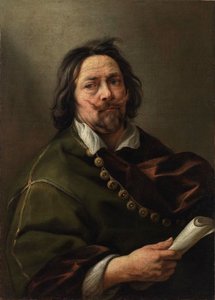
A Celebration of Rustic Joy: Jacob Jordaens’ “Pan Playing the Flute”
Jacob Jordaens' "Pan Playing the Flute," painted in 1678, is more than just a depiction of a man playing an instrument; it’s a vibrant snapshot of Flemish life during the late Baroque period. This captivating work, brimming with earthy realism and a palpable sense of merriment, offers a rare glimpse into the world as seen through the eyes of one of Flanders' most significant artists. Jordaens, deeply rooted in his Antwerp surroundings, eschewed the fashionable Italianate trends of his time, instead choosing to celebrate the simple pleasures and unvarnished truths of everyday existence – a decision that cemented his reputation as “The Painter of Peasant Revelry.” The painting’s immediate appeal lies in its subject: a naked Pan, the Greek god of the wild, lost in the joyous act of playing his flute. This figure, rendered with remarkable detail and a touch of mischievous humor, immediately draws the viewer into a scene of uninhibited delight.
A Masterclass in Baroque Realism
Jordaens’ technical skill is immediately apparent in the meticulous rendering of textures – the rough linen of Pan's loincloth, the smooth curve of his flute, and the subtle variations in skin tone. His brushwork is loose yet controlled, creating a sense of movement and spontaneity that contributes significantly to the painting’s lively atmosphere. The artist employs a technique known as *alla prima*, or ‘at first sight,’ which means he applied paint directly to the canvas with minimal layering, resulting in a rich, vibrant surface. This approach, favored by Rubens himself – Jordaens' former master – is evident in the luminous quality of the light and the dynamic interplay of shadows. The composition itself is carefully constructed, utilizing diagonal lines to guide the eye across the scene and creating a sense of depth and perspective that was highly valued during the Baroque period.
Symbolism and Context: A Flemish Feast
“Pan Playing the Flute” isn’t simply a portrait; it's imbued with symbolic meaning rooted in classical mythology and Flemish social customs. Pan, representing nature and rustic joy, embodies a rejection of courtly refinement in favor of a more primal connection to the earth. The presence of two additional figures – one on the left and another on the right – adds layers of complexity. These individuals, likely friends or companions, further amplify the sense of communal revelry. The painting’s creation in 1678, at the very end of Jordaens' life, is particularly poignant. It reflects a desire to capture a fleeting moment of happiness and connection before his own passing, aligning with the Baroque fascination with mortality and the transience of earthly pleasures. The work speaks to the values of the Antwerp art world – a celebration of human experience in all its forms.
Emotional Impact and Artistic Legacy
The enduring appeal of “Pan Playing the Flute” lies not only in Jordaens’ masterful technique but also in its ability to evoke a powerful emotional response. The painting's inherent joy, combined with the figure of Pan’s carefree expression, invites viewers to share in his moment of blissful abandon. Jordaens’ work has had a lasting impact on art history, influencing generations of artists who sought to capture the essence of human experience with honesty and passion. Today, this reproduction offers an opportunity to own a piece of this artistic legacy – a testament to Jordaens' genius and a celebration of the simple joys of life.
Veelgestelde vragen
Waar wordt het Portrait-formaat van "Pan playing the flute" aanbevolen te tonen?
Met zijn Portrait-formaat is een reproductie van "Pan playing the flute" een prachtige aanvulling op een Living Room.
Waar komen de bezoekers van "Pan playing the flute" door Jacob Jordaens vandaan?
De Statistieken-pagina van "Pan playing the flute" door Jacob Jordaens toont statistieken over de publieksbezoeken: het aantal maandelijkse bezoeken aan dit kunstwerk, een vergelijking met de meest bekeken werken van de kunstenaar en de herkomst van de bezoekers.
Uit welke materialen bestaat "Pan playing the flute" en in welke stijl is het uitgevoerd?
In "Pan playing the flute" komen de Oil-techniek en de Baroque-stroming samen.
 Voorvertoning
 Verstuur
 Delen
Delen
 Details bekijken
 Gids
Gids

 Download
 Vergelijkbare items
 Röntgenonderzoek
 Diavoorstelling
 Vraag & antwoord
 Statistieken