The Genesis of Impression: Early Printmaking Techniques & Materials
Printmaking is the process of creating artworks by printing, normally on paper, but also on fabric, wood, metal, and other surfaces. "Traditional printmaking" normally covers only the process of creating prints using a hand processed technique, rathe...
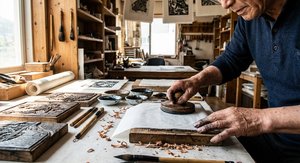
The story of printmaking is, at its heart, a tale of human ingenuity – the persistent desire to replicate beauty and disseminate ideas beyond the limitations of individual handcraftsmanship. Long before the advent of digital reproduction, artists sought methods to create multiple impressions from a single source, a pursuit that began not with aesthetics in mind, but with practicality. The earliest examples, emerging from Han Dynasty China, weren’t grand artistic statements, but rather woodblock prints used for textiles and, crucially, for Buddhist scriptures. These early matrices, carved with meticulous detail, demonstrate an understanding of relief printing – the process of removing material *around* the desired image, leaving a raised surface to be inked and pressed onto paper or fabric. This foundational technique, though born from necessity, laid the groundwork for centuries of artistic innovation. The transfer of this knowledge westward was gradual, but by the 14th century, woodcut prints were beginning to appear in Europe, initially serving religious purposes – devotional images readily accessible to a wider audience than illuminated manuscripts. The materials themselves dictated much of the early aesthetic: the grain of the wood, the quality of the ink (often water-based and prone to fading), and the pressure applied all contributed to the unique character of each impression. These weren’t perfect copies; they were imbued with the hand of the maker, a subtle variability that adds to their charm today.
From Japonisme to the Renaissance: Historical Influences on Print Aesthetics
 The Child's Bath 2
Discover Mary Cassatt’s ‘The Child’s Bath 2’. An exquisite Impressionist masterpiece blending Japonisme & domestic intimacy. A timeless piece for art collectors.
The 15th and 16th centuries witnessed a blossoming of printmaking in Europe, fueled by both technological advancements – the development of metal engraving allowing for finer detail – and a growing appetite for visual culture. However, it was the encounter with Japanese prints, or *ukiyo-e*, in the late 19th century that profoundly altered Western artistic sensibilities. Artists like Mary Cassatt, captivated by the bold compositions, flattened perspectives, and vibrant color palettes of ukiyo-e masters such as Hokusai and Hiroshige, began to incorporate these elements into their own work. The Child’s Bath 2, for example, beautifully demonstrates Cassatt's assimilation of Japonisme – the influence of Japanese art – blending domestic intimacy with a simplified aesthetic reminiscent of woodblock prints. This wasn’t merely imitation; it was a dialogue between cultures, a re-evaluation of perspective and composition. Simultaneously, the Renaissance saw printmaking become an indispensable tool for disseminating knowledge. Engravings allowed for the accurate reproduction of anatomical studies, architectural designs, and classical motifs, democratizing access to information previously confined to scholarly circles. Artists like Albrecht Dürer elevated engraving to new heights, showcasing technical virtuosity and establishing a precedent for artistic authorship in the print medium.
Mastering the Matrix: Intaglio, Relief, and Planographic Processes Explained
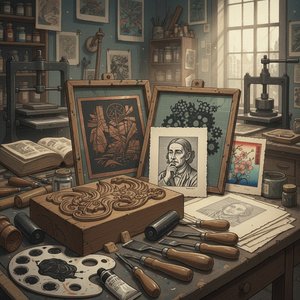
Understanding the core techniques of printmaking is essential for appreciating the nuances of each impression. Relief printing, as previously discussed, involves carving away non-image areas from a surface – wood, linoleum, or metal – leaving raised elements to receive ink. This method yields bold, graphic results with a distinct tactile quality. In contrast, Intaglio printing operates on the opposite principle: the image is incised into a matrix (typically copper or zinc), and ink settles *within* these grooves. The surface is then wiped clean, leaving ink only in the recessed areas. When pressed against paper, this creates incredibly detailed prints with rich tonal variations – think of the delicate lines and shadows achieved by Rembrandt van Rijn through etching. Planographic printing, perhaps the most conceptually challenging, relies on the principle that oil and water repel each other. Lithography, a prime example, involves drawing directly onto a stone or metal plate using a greasy substance. The surface is then treated to accept ink only in the areas where the grease was applied, resulting in prints with a painterly quality. Each technique demands specific skills and yields unique aesthetic characteristics; the choice of matrix and process profoundly impacts the final result.
Print Collecting as an Investment: Assessing Value & Authenticity
For the discerning collector, fine art prints represent not only aesthetic pleasure but also potential investment value. However, navigating this market requires careful consideration. Unlike unique paintings, prints exist in editions – multiple impressions from a single matrix – and understanding the size of the edition is crucial. Smaller editions generally command higher prices due to their rarity. The condition of the print is paramount; factors such as fading, foxing (brown spots caused by oxidation), tears, or repairs significantly impact value. Provenance – the documented history of ownership – also plays a vital role, establishing authenticity and tracing the artwork’s journey through time. Roy Lichtenstein’s ‘Bull Head’, for instance, is highly sought after not only for its iconic Pop Art style but also for its limited edition size and historical significance. Authenticity can be verified by examining the paper quality, ink type, and signature (if present), often requiring expert appraisal. Consulting with reputable galleries or auction houses specializing in prints is essential before making any significant investment.
The Resurgence of Contemporary Printmaking: Artists Pushing Boundaries
While historically rooted in traditional techniques, printmaking continues to thrive as a dynamic and innovative art form. Contemporary artists are pushing the boundaries of the medium, experimenting with new materials, hybrid processes, and digital technologies. Screenprinting, for example, has evolved beyond its commercial origins to become a powerful tool for artistic expression, allowing for bold colors, layered imagery, and textured surfaces. Artists are also embracing alternative techniques like collagraphy – creating matrices from assembled materials – and viscosity printing – utilizing inks of varying consistencies to achieve complex color effects. The rise of digital printmaking offers new possibilities for manipulating images and creating large-scale works, though the debate continues regarding its status as “true” printmaking. Regardless of technique, contemporary artists are demonstrating a renewed appreciation for the tactile qualities of the medium and its ability to convey nuanced meaning.
Preservation & Care: Ensuring the Longevity of Your Fine Art Prints
Protecting your investment requires diligent care and attention. Light exposure is a print’s greatest enemy, causing fading and discoloration over time. Framing prints under UV-protective glass or acrylic is essential, as is storing them in acid-free materials – mats, backing boards, and folders – to prevent deterioration. Maintaining consistent temperature and humidity levels is also crucial; avoid displaying prints in areas prone to fluctuations. Handling prints with clean gloves prevents the transfer of oils and dirt. For valuable works, professional conservation services may be necessary to address issues such as foxing or tears. Proper storage and display not only preserve the aesthetic beauty of your prints but also safeguard their long-term value. By understanding the materials and techniques involved in printmaking, collectors can appreciate these artworks on a deeper level and ensure their enduring legacy for generations to come.