

 Voorvertoning
 Verstuur
 Delen
Delen
 Details bekijken

 Download
 Vergelijkbare items
 Röntgenonderzoek
 Diavoorstelling
Charity
 Oil On Panel
- High Renaissance
 1518
1518- Renaissance
 185.0 x 137.0 cm
 Louvre
 Lees meer
Handgemaakte olieverfreproductie
Met de hand geschilderd in olieverf op canvas in uw gewenste maat en lijst, op bestelling gemaakt door onze kunstenaars. ( Bestel print Koop afbeelding)




P118B $10

P118H $10

P118W $10

P438Z $10

P508JH $12

P508YH $12

P805H $10

P805Z $10

P919BZ $10

P919G $10

P919XJ $10

P959ZH $10

P968JZ $12

W106C $8

W218G $10

W218JH $8

W218Y $10

W307PJ $10

W316G $10

W316PJ $8

W316Y $10

W398PJ $8

W4111J $10

W500HY $15

W500JH $15

W692G $12

W849H $8

W940BG $15

W953PJ $8




Kies uit onze vooraf ingestelde maten die overeenkomen met de originele verhoudingen van het kunstwerk.

U kunt uw eigen afmetingen invoeren om in een specifieke lijst of ruimte te passen. Als de door u gekozen maat niet overeenkomt met de verhoudingen van het originele beeld, zullen we het kunstwerk bijsnijden of het schilderij uitbreiden met extra handgeschilderde elementen. Een digitale mockup wordt ter goedkeuring naar u verzonden voordat de productie begint.
Houd er rekening mee dat de preview op het scherm niet de werkelijke uitsnede of uitbreiding weergeeft. Alleen de mockup toont de uiteindelijke compositie nauwkeurig.
Hoewel aangepaste afmetingen mogelijk zijn, raden we aan een maat uit de vooraf gedefinieerde lijst te selecteren om de originele verhoudingen te behouden.
Na de bestelling zal het team van OriginalUniqueArt.com per e-mail contact opnemen met de klant voor instructies en een mockup-voorbeeld sturen.
Wereldwijde levering () binnen 3 tot 4 weken in plaats van de standaard 5 weken. (21 augustus). Zonder concessies aan de kwaliteit.

Gratis wereldwijde expressverzending

Hoogwaardig linnen canvas

Volledige verzendverzekering

Garantie op terugbetaling van invoerrechten

Garantie op exacte kleurweergave

Retourbeleid van 60 dagen (alleen bij defecten)

100% Geld-terug-garantie

Korting bij meerdere afnames
 De optie voor glas is alleen beschikbaar bij een formaat kleiner dan 110 cm.

Charity
Druktechniek
Afmetingen reproductie
-


Eindtotaal
$ 300
Beschrijving kunstwerk
A Portrait of Benevolence Embodied
Andrea del Sarto's “Charity,” completed around 1518, stands as a testament to the humanist ideals flourishing during the High Renaissance. More than just a depiction of motherhood—a motif prevalent in Florentine art at the time—the painting delves into profound theological concepts and masterful artistic execution, offering viewers an experience that transcends mere visual pleasure.
Executed in grisaille, a monochrome technique favored by del Sarto for monumental frescoes, “Charity” showcases his unparalleled ability to convey emotion through subtle shading and textural detail. The artist’s meticulous attention to anatomical accuracy—evident in the idealized figures of Mary and her children—reflects the burgeoning scientific curiosity of the era, fueled by discoveries made during Leonardo da Vinci's anatomical studies.
Symbolism Rooted in Christian Virtue
The central figure, representing Charity itself, is portrayed with serene dignity, cradling two infants – symbols of innocence and divine grace. Surrounding her are three additional children, mirroring the Holy Family’s sacred unity and highlighting the importance of familial devotion within Christian belief. The inclusion of a sleeping child underscores the nurturing aspect of compassion and care.
Beyond its religious iconography, “Charity” operates on multiple levels. Del Sarto skillfully employs atmospheric perspective—a technique pioneered by Masaccio—to create depth and realism in the background landscape, subtly reinforcing the painting’s overarching theme of spiritual contemplation. The carefully positioned paper bearing the artist's signature and date serves as a reminder of the creative process itself, elevating the artwork to a level of intellectual engagement.
A Masterpiece of Florentine Artistic Tradition
“Charity” resides in the Museo del Cenacolo di San Salvi in Florence—a hidden gem within Palazzo Barberini—and exemplifies the artistic legacy of Andrea del Sarto. His work aligns seamlessly with the broader Renaissance preoccupation with humanist ideals and biblical narratives, cementing his place as one of the era’s most influential painters. Reproductions of this iconic piece offer collectors and interior designers alike a chance to appreciate the enduring beauty and intellectual richness of Florentine High Renaissance art.
Biografie van de kunstenaar
Early Life and Training
Andrea del Sarto, a name synonymous with understated elegance and masterful technique in the Florentine Renaissance, was born on July 16, 1486, in Gualfonda, a small village near Florence. His origins were humble; his father, Agnolo, was a tailor – a profession reflected in the “del Sarto” (tailor’s son) that became his surname. Early indications suggest he received an initial apprenticeship with a goldsmith, followed by training under the painter and wood sculptor Gian Barile. This foundational period instilled within him a solid understanding of materials and craftsmanship, setting the stage for his future artistic endeavors. Later, he honed his skills working alongside Piero di Cosimo and Raffaellino del Garbo, absorbing the stylistic nuances of these prominent figures and developing his own burgeoning artistic voice. It was during this time that he began to forge a distinctive approach, one characterized by an interest in color and atmosphere – a departure from the purely linear styles prevalent at the time.Artistic Career and Notable Works
Andrea’s career truly blossomed through a collaboration with Franciabigio, resulting in their joint creation of the *Baptism of Christ* for the Compagnia dello Scalzo in Florence around 1503-1504. This fresco marked a pivotal moment, establishing his reputation and initiating a long series of monochromatic (grisaille) frescoes – a technique he would master with remarkable skill. These works, often depicting religious scenes in shades of gray, showcased his ability to create depth and form through subtle variations in tone. A particularly significant achievement is the *Cenacolo di Andrea del Sarto* (The Last Supper), a monumental fresco spanning over 40 square meters at the Museo del Cenacolo di Andrea del Sarto in Florence. This masterpiece, completed around 1507-1508, demonstrates his exceptional command of composition and his innovative use of color to convey emotion and drama. Furthermore, he created the *Holy Family*, commissioned by Zanobi Strozzi for his villa at Rovezzano, now housed in the Pinacoteca delle Gallerie Nazionali d’Arte Antica in Rome – a testament to his versatility and ability to adapt his style to diverse patrons and settings. His early work also included frescoes depicting the *Stories of Miracles of San Filippo Benizzi* for the Loggia dei Servi di Maria, revealing his initial skill with monochromatic grisaille and foreshadowing his later mastery.Influence and Style
Despite being often overshadowed by the towering figures of Leonardo da Vinci, Michelangelo, and Raphael during his lifetime, Andrea del Sarto’s artistic legacy is profound. His work embodies a unique synthesis of High Renaissance ideals and nascent Mannerist tendencies. He skillfully blended the balanced compositions and harmonious colors of the Renaissance with a subtle sense of unease and ambiguity characteristic of Mannerism – a shift away from strict realism towards expressive distortion and psychological depth. His approach to color was particularly innovative, employing a rich and nuanced palette that created a captivating sense of atmosphere and luminosity. Andrea’s influence extended beyond his own creations; he mentored younger artists like Giorgio Vasari, shaping the artistic landscape of Florence for generations to come.Legacy and Historical Significance
Andrea del Sarto's contribution to art history is often underestimated, yet it remains undeniably significant. He was a master of his craft, capable of producing works that are both technically brilliant and emotionally resonant. His frescoes, in particular, stand as remarkable achievements, demonstrating his exceptional skill in creating depth, form, and atmosphere through the manipulation of light and shadow. While he may not have achieved the same level of fame as some of his contemporaries, Andrea del Sarto’s work continues to be admired for its quiet elegance, subtle complexity, and enduring beauty. His legacy lies not only in his individual masterpieces but also in his influence on subsequent generations of artists – a testament to his lasting impact on the course of art history.
Andrea del Sarto
1486 - 1530 , Italië
Belangrijkste feiten
- Artistic Movement Or Style: Hoge Renaissance & Manierisme
- Artists Or Movements Influenced By This Artist:
- Leonardo da Vinci
- Michelangelo Buonarroti
- Artists Who Influenced This Artist:
- Piero di Cosimo
- Raffaellino del Garbo
- Date Of Birth: 16 juli 1486
- Date Of Death: 29 september 1530
- Full Name: Andrea d'Agnolo di Francesco di Luca
- Nationality: Italiaans
- Notable Artworks:
- Het Laatste Avondmaal
- Heilig Familie
- St. Johannes de Baptist
- Place Of Birth: Florence, Italië
Gerelateerde artikelen
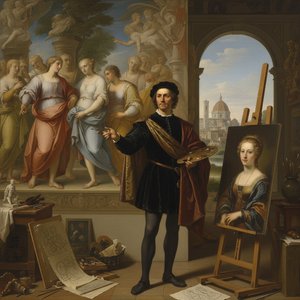
Andrea del Sarto: Florentine Grace, Technical Mastery & Artistic Ambition
Explore the life & art of Andrea del Sarto, a Florentine Renaissance master renowned for harmonious compositions & technical brilliance. Discover his frescoes, portraits, and lasting influence on art history.
Giclée Prints: Archival Quality & Aesthetic Nuances for the Discerning Collector
Explore the world of giclée prints with OriginalUniqueArt. Learn about archival quality, aesthetic nuances & investment potential. Expert guidance for discerning art collectors seeking museum-quality reproductions and lasting value.
Giclée Prints Explained: The Ultimate Guide to Museum-Quality Art Reproductions
Master the nuances of Giclée printing with our expert guide. Discover how pigment-based inks and museum-grade substrates create fade-resistant, high-fidelity art reproductions designed for discerning collectors seeking unparalleled quality and longevity.

The Enduring Legacy of Fine Art Prints: Technique, History & Aesthetic Impact
Explore the rich history & techniques of fine art prints. Discover investment potential, assess authenticity, and learn how to preserve your collection with expert guidance. Trusted insights for discerning collectors.
Kunst reproducties: Een gids voor olie-, canvas- en papierreproductiemedia
Ontdek hoogwaardige kunst reproducties bij . Kies uit olie op canvas, prints en meer. Maatwerk mogelijk! Vertrouw op onze expertise voor museumkwaliteit replica's.

