Alexandre Calame portretas

58 garsiausių Alexandre Calame paveikių – kiekvienas yra unikalus

Atnaujinta lapkritis 2026 · pagal mūsų populiarumumo koeficientą (paieškos, lankytojai ir užsakymai kiekvienam kūriniui) · 63 Alexandre Calame darbai mūsų kataloge

Trumpai tariant

Torrent in the Alps (1849) yra Alexandre Calame paveikslas, kuriuo gausiausia žmonių žavisi. Po to akmuo patenka į The Mythen (1861) ir Valley of Lauterbrunnen (1856). Iš 63 Alexandre Calame darbų mūsų kataloge šios 58 yra garsiausios – kiekvienas yra unikali originali dai̇lia, pateikta su jos metais, muziejumi ir priežastimi, kodėl ji išlieka per amžius.

1810 – 1864, Vevė Romanticism Daugiausia darbų: Amsterdam Museum

10 geriausių Alexandre Calame paveikslų: galerijos akimais

1
Torrent in the Alps (1849) aut. Alexandre Calame

Torrent in the Alps

1849 · Oil On Canvas

The oil on canvas titled Torrent in the Alps was painted by Alexandre Calame in 1849. This work captures a specific moment of movement within the Swiss landscape. The physical presence of the piece measures 57.8 x 76.0 cm or 58.5 x 76.3 cm.

2
The Mythen (1861) aut. Alexandre Calame

The Mythen

1861 · Oil

The painting depicts a mountain landscape dominated by two prominent, snow-covered peaks. One peak occupies the left side of the composition, while the second rises toward the right. The sky above these summits is rendered in shades of purple. Below the rocky heights, several figures are positioned within the scene. Some individuals appear in the foreground, while others are situated at a distance, creating a sense of scale and depth.…

3
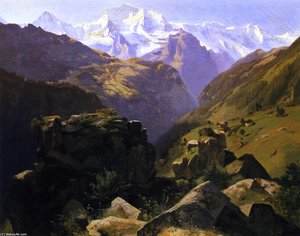
Valley of Lauterbrunnen (1856) aut. Alexandre Calame

Valley of Lauterbrunnen

1856 · Lithograph

The landscape known as Valley of Lauterbrunnen emerges from the hand of Alexandre Calame, a Swiss landscape painter and lithographer. Created in 1856, this work captures a specific moment in the artist's life, a period when he was already well-established in his craft. Calame, who was born in 1810, brings a deep familiarity with the topography of his homeland to this scene. The piece exists as a window into the…

4
Landscape (1837) aut. Alexandre Calame

Landscape

1837 · Print · Rijksmuseum, Amsterdamas

The sun hangs low, casting a luminous yellow-gold glow across a sky that promises either a quiet sunrise or a fading sunset. Below this celestial light, a winding river carves its way through the terrain, leading the eye from the immediate, shadowed foreground into a hazy, distant horizon. The air feels heavy with moisture, creating a misty, ethereal quality that softens the edges of the world. Deep forest greens and…

5
High Mountain Gorge (Handeggtal in the Canton of Bern) (1854) aut. Alexandre Calame

High Mountain Gorge (Handeggtal in the Canton of Bern)

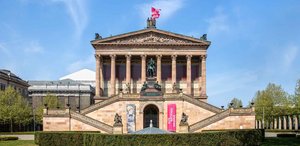
1854 · Oil On Canvas · Alte Nationalgalerie, Berlinas

The rugged terrain of the Handeggtal in the Canton of Bern is rendered with a focus on the overwhelming scale of the natural world. A dark, wind-swept evergreen tree anchors the mid-ground, its verticality contrasting against the steep, diagonal slopes of the gorge. Light breaks through a turbulent, heavy sky to illuminate a distant, rocky peak and a small, cascading waterfall on the left. This composition emphasizes the immense depth…

6
Fallen Tree (1842) aut. Alexandre Calame

Fallen Tree

1842 · Oil On Canvas · National Gallery of Art, Vašingtonas

The composition is dominated by heavy, diagonal lines created by fallen trunks that cut across the frame. These splintered remains of large trees lie in a state of chaotic movement, their jagged edges pointing into the depths of the forest. The scene focuses on the immediate aftermath of natural destruction, where the structural integrity of the woods has been broken. Deep shadows settle within the hollows of the fractured wood,…

7
Landscape with Oaks (1859) aut. Alexandre Calame

Landscape with Oaks

1859 · Oil On Canvas · Ermitažas, Šv. Peterburgas

In this 1859 oil on canvas, we find ourselves standing before a scene of profound stillness. A large tree, heavy with green leaves, anchors the center of the composition, its roots seemingly entwined with a rugged, rocky terrain. The ground beneath is a mixture of dirt and grass, suggesting a corner of the world left to its own devices. In the distance, other trees emerge through a soft haze, providing…

8
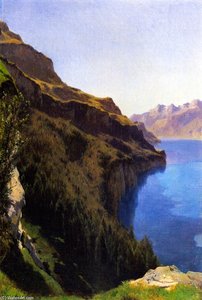
Lake Lucerne (1853) aut. Alexandre Calame

Lake Lucerne

1853 · Oil On Canvas · Alte Nationalgalerie, Berlinas

Alexandre Calame captures the stillness of the Swiss landscape in his 1853 oil painting, Lake Lucerne. This landscape painting focuses on the quietude of the water held between steep, rugged cliffs. The artist, born in Vevey, Switzerland, translates the physical weight of the Alps into a study of light and shadow. The composition centers on the lake itself, a serene blue expanse nestled beneath the shadow of the mountains.

9
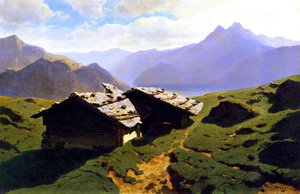
Chalets at Rigi (1861) aut. Alexandre Calame

Chalets at Rigi

1861 · Oil On Canvas · National Gallery, Londonas

In this oil on canvas, Alexandre Calame presents a quiet moment amidst the high peaks. The work, titled Chalets at Rigi, captures a specific slice of mountain life. We find ourselves looking upon a hillside where three main chalets sit nestled against the landscape. Each structure possesses its own unique size and shape, appearing as if they have grown naturally from the earth itself. The scene unfolds with a sense…

10
Swiss Landscape (1830) aut. Alexandre Calame

Swiss Landscape

1830 · Oil On Canvas · National Gallery of Art, Vašingtonas

In the work Swiss Landscape by Alexandre Calame, the composition is organized around a wide, panoramic view. The perspective is elevated, providing a high vantage point that looks out over a vast expanse of terrain. The viewer's eye is led from a textured, shadowed foreground through a series of patterned agricultural fields. These fields are defined by the geometric boundaries of cultivated plots and the undulating contours of the hills.…

žinomi Alexandre Calame paveikslai, nuo 11 iki 58 numerio

11Waterfall of the Handeck at the Grimsel (1839) aut. Alexandre CalameWaterfall of the Handeck at the Grimsel1839 · Amsterdam Museum 12landscape: river-valley with rocks in the mountains (1835) aut. Alexandre Calamelandscape: river-valley with rocks in the mountains1835 13Mountain Landscape (1838) aut. Alexandre CalameMountain Landscape1838 · Amsterdam Museum 14italian landscape with lake (1835) aut. Alexandre Calameitalian landscape with lake1835 15Mountain landscape (1835) aut. Alexandre CalameMountain landscape1835 16Lake with mountains in the background (1835) aut. Alexandre CalameLake with mountains in the background1835 17landscape with figures (1835) aut. Alexandre Calamelandscape with figures1835 18Mountain Landscape, Valais, Switzerland (1838) aut. Alexandre CalameMountain Landscape, Valais, Switzerland1838 19The Thunderstorm at Handeck (1839) aut. Alexandre CalameThe Thunderstorm at Handeck1839 20Edge of the Forest (1847) aut. Alexandre CalameEdge of the Forest1847 21In the Berner Oberland (1847) aut. Alexandre CalameIn the Berner Oberland1847 · Amsterdam Museum 22Mountain Stream in the Alps (Reichenbach) (1842) aut. Alexandre CalameMountain Stream in the Alps (Reichenbach)1842 · Amsterdam Museum 23The Sycamores (1848) aut. Alexandre CalameThe Sycamores1848 24Lake at the Edge of a Forest (1848) aut. Alexandre CalameLake at the Edge of a Forest1848 · Museum of Fine Arts 25Mountaneous Landscape in Valais (1840) aut. Alexandre CalameMountaneous Landscape in Valais1840 · Nationalmuseum 26Pozzuoli and the Bay of Naples (1844) aut. Alexandre CalamePozzuoli and the Bay of Naples1844 27Mountainous Landscape with a Torrent (1840) aut. Alexandre CalameMountainous Landscape with a Torrent1840 28Part of Lake Geneva (1852) aut. Alexandre CalamePart of Lake Geneva1852 29Lake Lucerne (1852) aut. Alexandre CalameLake Lucerne1852 · Amsterdam Museum 30Broken Tree at Kerket, near Meyringen (Bernese Oberland) (1850) aut. Alexandre CalameBroken Tree at Kerket, near Meyringen (Bernese Oberland)1850 31View Taken in the Ansasca Valley (Piedmont). Evening Effect. (1850) aut. Alexandre CalameView Taken in the Ansasca Valley (Piedmont). Evening Effect.1850 32Grimsel Pass (Canton of Berne) (1850) aut. Alexandre CalameGrimsel Pass (Canton of Berne)1850 33Winter (1851) aut. Alexandre CalameWinter1851 · Musée d'Art et d'Histoire de Genève 34The Sycamores (1854) aut. Alexandre CalameThe Sycamores1854 · Cincinnati Art Museum 35Lake of the Four Cantons (1850) aut. Alexandre CalameLake of the Four Cantons1850 · Nacionalinis muziejus Varšuvoje 36The Jungfrau, Switzerland (1853) aut. Alexandre CalameThe Jungfrau, Switzerland1853 · Walters Art Museum 37Mountain Torrent before a Storm (also known as The Aare River, Hastital) (1850) aut. Alexandre CalameMountain Torrent before a Storm (also known as The Aare River, Hastital)1850 38Mountain Torrent (1850) aut. Alexandre CalameMountain Torrent1850 39Trunk of a Beech Tree (1850) aut. Alexandre CalameTrunk of a Beech Tree1850 40A View of the Jungfrau Massif seen from Above, Interlaken (1854) aut. Alexandre CalameA View of the Jungfrau Massif seen from Above, Interlaken1854 41Study from Nature Near Villeneuve (1855) aut. Alexandre CalameStudy from Nature Near Villeneuve1855 42Lake of the Four Cantons (Lake Lucerne), near Brunnen (1852) aut. Alexandre CalameLake of the Four Cantons (Lake Lucerne), near Brunnen1852 43Rocky Path (1860) aut. Alexandre CalameRocky Path1860 44Cliffs of Seelisberg, Lake Lucern (1861) aut. Alexandre CalameCliffs of Seelisberg, Lake Lucern1861 45Riverbed at Rosenlaui (1862) aut. Alexandre CalameRiverbed at Rosenlaui1862 46The River Lutschine near Lauterbrunnen (1862) aut. Alexandre CalameThe River Lutschine near Lauterbrunnen1862 47Souvenir of Lake Lucerne (1862) aut. Alexandre CalameSouvenir of Lake Lucerne1862 48Souvenir of Rosenlaui, Switzerland (1860) aut. Alexandre CalameSouvenir of Rosenlaui, Switzerland1860 · Wallace Collection 49Storm at Handeck (1838) aut. Alexandre CalameStorm at Handeck1838 · Fitzwilliam College 50Alpine Landscape aut. Alexandre CalameAlpine LandscapeFinnish National Gallery 51Alpine Waterfall aut. Alexandre CalameAlpine WaterfallFinnish National Gallery 52The Wetterhorn aut. Alexandre CalameThe WetterhornAntverpio karališkasis gražiųjų menų muziejus 53Etude de montagne aut. Alexandre CalameEtude de montagne 54Alpine Landscape aut. Alexandre CalameAlpine Landscape 55Etude de torrent aut. Alexandre CalameEtude de torrent 56The Lake of Thun aut. Alexandre CalameThe Lake of ThunNational Gallery 57Mountainous Riverscape aut. Alexandre CalameMountainous Riverscape 58Trees at the Bank aut. Alexandre CalameTrees at the Bank

žymios Alexandre Calame tapiojamos, pagal laikotarpį

Temos, kurios domino Alexandre Calame

Ketverios temos, dažniausiai pasikrausto originaluose, kiekvienos su savo puikiausiu pavyzdžiu.

Muziejai, kuriuose saugomi Alexandre Calame originalūs darbai

8 muziejai, kuriuose saugoma daugiausia šioje pusėje esamų paveikslų.

Muzejaus Miestas Alexandre Calame darbai Šiojo sąrašo paveikslai
Amsterdam Museum, AmsterdamasAmsterdam Museum Amsterdamas 5 Waterfall of the Handeck at the Grimsel, Mountain Landscape, In the Berner Oberland
Alte Nationalgalerie, BerlinasAlte Nationalgalerie Berlinas 2 High Mountain Gorge (Handeggtal in the Canton of Bern), Lake Lucerne
National Gallery of Art, VašingtonasNational Gallery of Art Vašingtonas 2 Fallen Tree, Swiss Landscape
National Gallery, LondonasNational Gallery Londonas 2 Chalets at Rigi, The Lake of Thun
Finnish National Gallery, HelsinkisFinnish National Gallery Helsinkis 2 Alpine Landscape, Alpine Waterfall
Rijksmuseum, AmsterdamasRijksmuseum Amsterdamas 1 Landscape
Ermitažas, Šv. PeterburgasErmitažas Šv. Peterburgas 1 Landscape with Oaks
Museum of Fine Arts, BostonasMuseum of Fine Arts Bostonas 1 Lake at the Edge of a Forest

Alexandre Calame per dešimtmečius: vieniškas originalas kiekvienam

Darbai pagal dešimtmečius

Pasirinkite dešimtmetį, kad pamatytėte jį apibrėžusį originalą.

Alexandre Calame tapų klausimai galerijai

Koks yra garsiausias Alexandre Calame kūrinys?Atsakymas

Torrent in the Alps (1849). Toliausiai eina The Mythen (1861) ir Valley of Lauterbrunnen (1856).

Kuriu amžiaus Alexandre Calame sukūrė Torrent in the Alps?Atsakymas

39 metų amžiaus: Torrent in the Alps sukurta 1849 m. Nr. Alexandre Calame gimė 1810.

Kurios Alexandre Calame dešimt paveikslų yra garsiausi?Atsakymas

Torrent in the Alps, The Mythen, Valley of Lauterbrunnen, Landscape, High Mountain Gorge (Handeggtal in the Canton of Bern), Fallen Tree, Landscape with Oaks, Lake Lucerne, Chalets at Rigi ir Swiss Landscape. Viršuje esančioje reitingo sąraše nurodyta kiekvieno kūrinio metis ir muziejus.

Kiek žinoma Alexandre Calame darbų?Atsakymas

Mūsų kataloge yra 63 Alexandre Calame darbų, skirtų laikotarpiui nuo 1830 iki 1862.

Kur galima pamatyti garsiausių Alexandre Calame originalų?Atsakymas

Daugiausia – Amsterdam Museum (Amsterdamas), Alte Nationalgalerie (Berlinas) ir National Gallery of Art (Vašingtonas). Viršuje esančiame muziejų sąraše yra visi jie.

Kuriuo laikotarpiu Alexandre Calame sukūrė savo žymiausias paveikslus?Atsakymas

1850s laikotarpiu: 19 iš 58 šioje pusėje esančių darbų buvo sukurtos tada, iš jų Valley of Lauterbrunnen.

Kuris iš garsių Alexandre Calame paveikslų yra pirmasis, o kuris – paskutinis?Atsakymas

Šioje pusėje seniausias darbas yra Swiss Landscape (1830), o naujausias – Riverbed at Rosenlaui (1862).

Kokia temos Alexandre Calame mėgavosi?Atsakymas

Sky (32), Trees (27) ir Rocks (25) iš 58 šioje pusėje esamų darbų.

Kuriomis medžiagomis Alexandre Calame tapė dažniausiai?Atsakymas

Oil On Canvas, iš 58 šios puslapio darbų – 36.

Kelią meno kryžkelę priklauso Alexandre Calame kūryba?Atsakymas

Romanticism, vadovaujantis šios puslapio originalais kūriniais.

Kurius Alexandre Calame originalius galėčiau pamatyti Amsterdam Museum?Atsakymas

Waterfall of the Handeck at the Grimsel, Mountain Landscape ir In the Berner Oberland: Amsterdam Museum, Amsterdamas kolekcijoje yra 5 šioje pusėje esančių darbų.

Alexandre Calame: meno kūrinys – autoportretas

Alexandre Calame (1810 – 1864): Capturing Alpine Majesty

Alexandre Calame, born in Arabie (modern Vevey), Switzerland, in 1810, was a Swiss landscape painter who achieved considerable renown during the Romantic era and is considered a pivotal figure within the Düsseldorf School of Painting. His artistic journey began amidst challenging circumstances—his father’s financial ruin precluded him from pursuing formal education, forcing him to work as a bank clerk from adolescence. Yet, this pragmatic necessity fueled his passion for art, nurtured by an encounter with banker Diodati who secured him invaluable tuition under François Diday, a celebrated Düsseldorf landscape painter. Recognizing his innate talent and dedication, Calame swiftly abandoned clerical duties for the pursuit of artistic excellence.
  • Early Years & Patronage: Calame’s formative years were marked by diligent sketching of Swiss landscapes—primarily views of Bernese Oberland—a practice honed under Diday's guidance. This early focus established a lifelong preoccupation with Alpine scenery, reflecting the Romantic fascination for untamed wilderness and sublime beauty.
  • The Düsseldorf School Connection: Calame’s association with the Düsseldorf School cemented his reputation as a master of atmospheric perspective and tonal modulation. Artists like Wilhelm Leibl and Anton Richter championed Calame's style, emphasizing meticulous observation and expressive brushwork to convey the emotional impact of nature.

Artistic Style & Technique

Calame’s artistic signature lay in his ability to translate the grandeur of the Alps onto canvas with remarkable accuracy and sensitivity. He employed a technique characterized by layered glazes—thin, translucent washes of pigment applied sequentially—to achieve luminous color palettes and capture subtle variations in light and shadow. This meticulous approach mirrored Diday's influence and distinguished Calame from many of his contemporaries who favored looser brushstrokes. His landscapes weren’t merely representations; they were imbued with palpable emotion, conveying the drama of storms, the serenity of glacial lakes, and the vibrant hues of alpine meadows. Notable works include “Handeck Fall,” “Torrent in the Alps,” and “Storm at Handeck,” each demonstrating his mastery of tonal harmony and compositional balance.
  • Lithography: Calame’s contribution extended beyond painting; he excelled as a lithographer, producing stunning prints that further disseminated his vision of Alpine landscapes.

Notable Achievements & Legacy

Calame gained considerable acclaim in Germany during the 1830s and 40s, becoming a favorite among collectors and critics alike. Exhibitions in Paris showcased his talent to a wider audience, solidifying his position as one of Switzerland’s foremost landscape artists. He taught at Geneva University, fostering the artistic development of students like Adolf Mosengel, who continued Calame's legacy. His journey to Italy yielded invaluable inspiration—particularly from Rome and Naples—resulting in paintings that captured the essence of Italian natural beauty alongside his beloved Alpine vistas. The enduring fascination with Calame’s depictions of glaciers and mountain streams testifies to their timeless appeal and continues to inspire artists today.

Illustrative Works & Artistic Influence

Calame's artistic influence resonated throughout the Romantic movement, shaping the aesthetic sensibilities of subsequent generations. His meticulous observation and expressive technique served as a model for landscape painters striving to capture the sublime grandeur of nature. Furthermore, his lithographic prints played a crucial role in popularizing Alpine scenery and disseminating Romantic ideals across Europe. The enduring beauty and emotional depth of Calame’s paintings ensure that his contribution to art history remains firmly established.