Ukiyo-e, one artist at a time
39 Famous Ukiyo-e 아티스트 Who Shaped the Movement
가쓰시카 호쿠사이 (1760–1849) is the most famous Ukiyo-e 아티스트, whose singular vision gave us 후지산: 맑은 날씨 (붉은 후지) 및 神奈川沖浪図 (かながわおきなみず). Next stand 우타가와 히로시게, 기타가와 우타마로, 요시토시 및 토리이 키요나가. These 39 아티스트, from 히시카와 모로노부 (born 1618) to Goyō Hashiguchi (born 1880), came from 2 countries.
Our selection. Artists whose works our catalogue attaches to Ukiyo-e, in the order of our fame ranking. Artists born after 1955 with no Wikidata identifier stay out until verified. The Wikipedia figure counts our 32 languages with an article on the artist.


In brief
Ukiyo-e in brief
- 39아티스트
- 1618–1880출생 연도
- 2출생 국가
- 0여성
- 1현역 작가
- 5,896카탈로그 내 작품들
- 주요 작품을 가장 많이 보유한 미술관
- Bujalance Collection (11), 게이오 대학교 도서관 (10), 메트로폴리탄 미술관 (9), 미니애폴리스 미술관 (5)
One artist at a time
39 Ukiyo-e 아티스트 and their signature works


6of 39
우타가와 구니요시 1798–1861
일본인 Born in 도쿄 우키요에 Wikipedia in 24/32 languages

Pupil of Utagawa Toyokuni I #13 · Teacher of Utagawa Yoshitora #32, Kawanabe Kyōsai #11


9of 39
우타가와 구니사다 1786–1865
일본 Born in 에도 우키요에 Wikipedia in 17/32 languages

Pupil of Utagawa Toyokuni I #13




11of 39
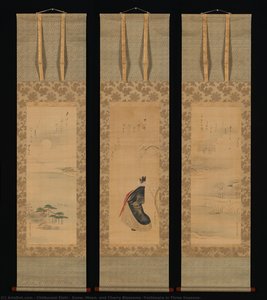
Kawanabe Kyōsai 1831–1889
Japanese Born in Koga Ukiyo-e, Caricature, Manga pioneer Wikipedia in 10/32 languages

In 1874, he helped create what is considered the first manga magazine, Eshinbun Nipponchi, alongside Kanagaki Robun.


12of 39
Keisai Eisen 1790–1848
Japanese Born in Edo Bunsei Era Ukiyo-e Wikipedia in 15/32 languages

This shift defined the aesthetic of the Bunsei era (1818–1830), a period often characterized by its decadent and psychologically complex atmosphere.


13of 39
Utagawa Toyokuni I 1769–1825
Japanese Born in Shiba Ukiyo-e Wikipedia in 13/32 languages

He didn’t seek to revolutionize ukiyo-e overnight; instead, he embarked on a period of intense study, focusing intently on the works of masters like Utamaro, Chōbunsai Eishi, and Eishōsai Chōki. He wasn't simply copying their styles but rather dissecting them, understanding their strengths, and ultimately synthesizing them into something uniquely his own. While Sharaku is often lauded by modern art historians for his psychological insight, it was Toyokuni who captured the hearts of the Edo public.
Teacher of Utagawa Kunimasa #15, Utagawa Toyokuni II #35


15of 39
Utagawa Kunimasa 1773–1810
Japanese Born in Aizuwakamatsu Utagawa School

He served as a vital link in the evolution of Japanese printmaking, helping to refine the stylistic language that would later be perfected by masters like Hiroshige and Kuniyoshi. His prints remain much more than historical artifacts; they are windows into the heart of Edo culture, reflecting a period of unparalleled artistic innovation and social vibrancy. In the bustling, neon-lit atmosphere of Edo-period Japan, few artists captured the electric pulse of urban life as evocatively as Utagawa Kunimasa.


16of 39
Nishikawa Sukenobu 1671–1750
Japanese Born in Kyoto Ukiyo-e Wikipedia in 9/32 languages

These works demonstrate his versatility as an artist and underscore his commitment to exploring diverse artistic mediums—a testament to his intellectual curiosity and artistic ambition. Legacy & Recognition: Nishikawa Sukenobu’s enduring legacy resides in his contribution to Japanese art history, particularly his groundbreaking portrayal of women. Influence on Subsequent Artists: Sukenobu’s influence extended far beyond his own lifetime, inspiring subsequent generations of printmakers like Suzuki Harunobu and Kitao Shigemasa.


17of 39
Sharaku
Japan ukiyo-e Wikipedia in 19/32 languages

Despite the mystery surrounding his true identity, his work has been recognized for its mastery of the medium. His reputation rests largely on his earlier prints, while his later output is often considered to have a declining artistry. Sharaku's technique involved the use of woodblock prints, sometimes employing extravagant methods such as the dusting of mica in the backgrounds to create a glittering effect.


18of 39
Utashige
Japanese Ukiyo-e

He often incorporated poetic verses – haiku – into his compositions, adding layers of meaning and inviting viewers to contemplate the deeper significance of the scenes depicted. Hiroshige’s prints are not simply images; they are windows into the soul of Japan. Hiroshige’s reputation solidified with his Fifty-three Stations of the Tōkaidō (1833–1834), a horizontal-format series depicting the journey along the main road connecting Edo to Kyoto.


19of 39
Miyagawa Chōshun 1683–1753
Japanese Born in Miyagawa Ukiyo-e Wikipedia in 9/32 languages

The works of Chōshun are instantly recognizable for their evocative atmosphere and tender execution. His subjects—often the elegant courtesans of the pleasure districts—were depicted with a fuller, more voluptuous grace than the slender, stylized figures seen in the works of later artists like Harunobu. His pupils, including his son Miyagawa Isshō and the talented Miyagawa Chōki, carried forward his dedication to depicting the tastes and textures of urban life.


20of 39
Goyō Hashiguchi 1880–1921
Dutch Born in Kagoshima Post-Impressionism

Goyō’s initial foray into the art world wasn't through printmaking but rather illustration. He gained recognition for his work on Natsume Sōseki’s celebrated novel, I Am a Cat, and subsequently illustrated works by other prominent authors like Futabatei Shimei, Tanizaki Jun'ichirō, and Nagai Kafū. Despite his frail health, exacerbated by beriberi, Goyō continued to produce prints at a remarkable pace from 1915 until his untimely death in 1921 at the age of forty-one.


21of 39
Isoda Koryūsai 1735–1790
Japanese Born in Tokyo Ukiyo-e Wikipedia in 10/32 languages

Establishing himself near the iconic Ryōgoku Bridge in 1769, he positioned himself at the epicenter of Edo's entertainment and commercial life.


22of 39
Ogata Gekko 1859–1920
Japanese Born in Tokyo Ukiyo-e, Nihonga Wikipedia in 9/32 languages

His most celebrated series, “One Hundred Views of Mount Fuji” (1896-1905), exemplifies his mastery. Beyond Mount Fuji, he produced numerous other series, including “Bijin Meisho Awase” (Beautiful Women in Famous Places), offering intimate glimpses into Japanese society and daily life, and dramatic triptychs depicting historical events like the Iwakura Taiko incident – a pivotal clash between Japanese and Western powers. His exposure to European art through scholars like Ernest Fenellosa and Okakura Kakuzō further broadened his artistic horizons.


23of 39
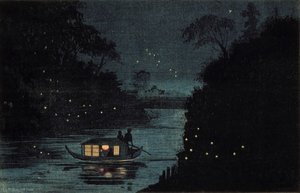
고바야시 기요치카 1847–1915
일본 Born in 도쿄 우키요에, 코센가 Wikipedia in 10/32 languages

Pupil of Kawanabe Kyōsai #11


24of 39
Adachi Ginko 1853년생
Japanese Ukiyo-e

In the vibrant, transformative era of the late Meiji period, few artists captured the shifting soul of Japan as vividly as Adachi Ginkō.


25of 39
Toyohara Chikanobu 1838–1912
Japanese Shin-hanga

In the twilight of the Edo period and the dawn of a modernizing Japan, few artists captured the profound tension between tradition and transformation as masterfully as Toyohara Chikanobu. While his real name, Hashimoto Naoyoshi, whispered of a more private existence, his artistic persona commanded the attention of a nation undergoing rapid metamorphosis. Born in 1838, an era of profound cultural shifts, Chikanobu—often recognized by his art name Yōshū Chikanobu —emerged as a monumental figure in the world of Japanese woodblock printing.


26of 39
우타가와 토요히로 1773–1828
Japanese Born in Toyooka Ukiyo-e Wikipedia in 8/32 languages

Born as Okajima Tōjiro in Toyooka, Japan, this distinguished artist emerged as a pivotal figure within the renowned Utagawa school.


27of 39
Mizuno Toshikata 1866–1908
Japanese Born in Tokyo Ukiyo-e, Kuchi-e

He was particularly renowned for his bijin-ga – portraits of beautiful women – which he approached with a keen eye for capturing not just physical beauty but also the inner lives and emotions of his subjects. He skillfully employed subtle gradations of tone to create atmospheric effects and to convey nuanced emotional states. His career gained momentum in 1887 when he secured a position as an illustrator for the Yamato shinbun newspaper.


28of 39
Ishikawa Toyonobu 1711–1785
Japanese Born in Tokyo Ukiyo-e (Lacquer Print Art) Wikipedia in 7/32 languages

A hallmark of these compositions was a deliberate stillness, an impassivity in the faces of the subjects reminiscent of the Kaigetsudō school's aesthetic.


29of 39
Kogyo Sakamaki 1869–1927
Japanese Noh Theatre Prints

He was awarded a prize at the Panama Pacific International Exposition in San Francisco in 1915 for his woodcut “The Horse Market at Kiso,” cementing his reputation as one of Japan's foremost printmakers. Technique & Style: Sakamaki employed a distinctive watercolor -like technique, layering translucent washes to achieve luminous effects that captured the subtle nuances of Noh theatre—a stylistic innovation that distinguished him from his contemporaries.


30of 39
Hokkei 1780–1850
Born in Tokyo Wikipedia in 8/32 languages

While Hokkei produced a variety of ukiyo-e subjects – including landscapes, bird-and-flower paintings, and scenes from daily life – he is perhaps best known for his illustrations of Murasaki Shikibu's monumental novel, The Tale of Genji. He was undoubtedly influenced by earlier masters of ukiyo-e, particularly Kanenobu and the traditions of Edo period painting.


31of 39
Sadatora
Japanese Born in Tokyo Ukiyo-e

Born around 1825 in the bustling metropolis of Tokyo, Sadatora was more than just a practitioner of woodblock printing; he was a poet of the atmospheric and the transient. His formative years were spent under the rigorous and inspiring tutelage of masters such as Utagawa Yoshitora and Kunisada. The career of Utagawa Sadatora, spanning roughly from 1818 to 1844, coincided with a period of profound cultural transition in Japan.


32of 39
Utagawa Yoshitora

Utagawa Yoshitora, a name resonating within the vibrant world of ukiyo-e, stands as a compelling figure whose career bridged traditional Japanese artistry with an increasingly globalized aesthetic. While his work may not be as widely recognized as that of Hokusai or Kuniyoshi, Yoshitora’s contributions are increasingly appreciated by scholars and collectors alike.


Signature works · The 100 signature works
 Print commemorating the death of the actors Segawa Michinojo and Bando Mitsugoro
 The kabuki actors (right to left) Ichimura Kakitsu IV as Asahina Tobei, Nakamura Shikan IV as Washi no Chokichi and Sawamura Tosshi II as Yume no Ichirobei, IV/1868
 Artisans, Beauties, and Annual Events
- 11All 11 works by 토요하라 쿠니치카
34of 39
우타가와 쿠니사다 Ii 1823–1880
일본 Born in 도쿄 우키요에 (야쿠샤에) Wikipedia in 6/32 languages

AllPaintingsStore.com에서 노노야마 코잔의 회화 발견하기. 1823년: 일본 에도에서 탄생. 1850-51년: 쿠니사다 II 라는 이름을 사용하기 시작. 1852년: 팔견전 제작. 1868–1912년: 메이지 시대, 그의 예술적 인기가 쇠퇴한 시기. 1880년 7월 20일: 별세 후 반쇼인 코운지 에 안치. 홋카이도 현립 근대 미술관 (일본) - 문화적 안식처.


35of 39
Utagawa Toyokuni II 1777–1835
Japanese Ukiyo-e Wikipedia in 4/32 languages

This ambitious undertaking demanded exceptional artistic skill and logistical organization, cementing Hiroshige’s reputation as a visionary artist who could transform ordinary scenes into sublime expressions of beauty. Technique & Style: Hiroshige’s prints are distinguished by their subtle tonal gradations achieved through layering multiple blocks of color.
Pupil of Utagawa Toyokuni I #13


36of 39
Utagawa Yoshitaki 1841–1899
Japanese Born in Osaka Ukiyo-e Wikipedia in 4/32 languages

He mastered the complex techniques of nishiki-e (錦絵), utilizing multiple woodblocks to achieve a full spectrum of hues – a significant advancement over earlier monochrome or limited-color prints. The influence of Kuniyoshi is evident in Yoshitaki’s bold outlines and dramatic lighting, but he developed a distinctly personal style characterized by a remarkable sensitivity to human expression. Ichiyosai Yoshitaki’s prolific output provides an invaluable window into 19th-century Japanese society.


37of 39
Utagawa Kunitsuna Ii, Ichiransai, Sadashige
Japanese Ukiyo-e

Pinpointing Kunitsuna’s artistic lineage proves challenging due to the limited documentation surrounding his early career. However, scholars believe he was heavily influenced by earlier masters of bijin-ga such as Kitagawa Utamaro and Keisai Eisen.


38of 39
Utagawa Yoshikazu
Japanese Born in Edo Ukiyo-e, Yokohama-e Wikipedia in 3/32 languages

As with most Ukiyo-e artists of his time, Yoshikazu employed the traditional collaborative process of woodblock printing. He demonstrated a particular mastery of capturing textures and materials, from the sheen of Western fabrics to the rough surfaces of Japanese buildings.


39of 39
Shunkōsai Hokushū
Japanese Born in Osaka Kamigata-e Wikipedia in 3/32 languages

Shunkōsai Hokuchō (春曙斎 北頂), born around 1802 in Osaka, Japan, stands as a fascinating figure within the vibrant tapestry of Edo-period art history. Early Life & Training: Hokuchō’s formative years were spent under the tutelage of Shunkōsai Hambei, a respected Osaka artist who instilled in him foundational skills in woodblock printing and design. While Hokuchō may not command the same level of fame as Hokusai or Hiroshige, his quiet mastery of tsukuri-e and his profound understanding of theatrical emotion solidified his place as a pivotal figure in Osaka’s artistic heritage.


Signature works
Signature Ukiyo-e works
A timeline
Ukiyo-e through its signature works
- 1667
- 1776
- 1790
- 1809
- 1825
- 1825
- 1827
- 1831
- 1850
- 1855
- 1870
- 1873
- 1874
- 1887
Figures
The figures
| Japan | 21 |
|---|---|
| 일본 | 15 |
| 17th 세기 | 3 |
|---|---|
| 18th 세기 | 17 |
| 19th 세기 | 12 |
| Bujalance Collection | 11 |
|---|---|
| 게이오 대학교 도서관 | 10 |
| 메트로폴리탄 미술관 | 9 |
| 미니애폴리스 미술관 | 5 |
| 브루클린 미술관 | 2 |
| 시카고 미술관 | 2 |
| 킴벨 미술관 | 2 |
| Patrick and Beatrice Haggerty Museum of Art | 2 |
Every name
List of 39 famous Ukiyo-e 아티스트, every name
- 1
 가쓰시카 호쿠사이일본인 · 1760–1849
- 2
 우타가와 히로시게일본 · 1797–1858
- 3
 기타가와 우타마로일본 · 1753–1806
- 4
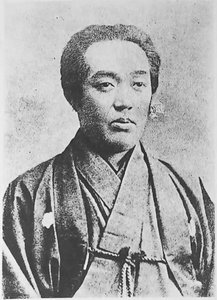 요시토시일본 · 1839–1892
- 5
 토리이 키요나가일본 · 1752–1815
- 6우타가와 구니요시일본인 · 1798–1861
- 7
 스즈키 하루노부일본 · 1724–1770
- 8
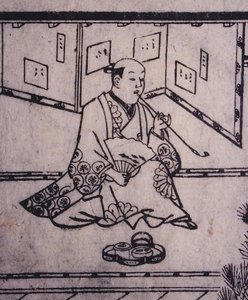 히시카와 모로노부일본 · 1618–1694
- 9우타가와 구니사다일본 · 1786–1865
- 10
 초분사이 에이시일본 · 1756–1829
- 11Kawanabe KyōsaiJapanese · 1831–1889
- 12Keisai EisenJapanese · 1790–1848
- 13Utagawa Toyokuni IJapanese · 1769–1825
- 14
 우타가와 히로시게Japanese · 1797–1858
- 15Utagawa KunimasaJapanese · 1773–1810
- 16Nishikawa SukenobuJapanese · 1671–1750
- 17SharakuJapan ·
- 18UtashigeJapanese ·
- 19Miyagawa ChōshunJapanese · 1683–1753
- 20Goyō HashiguchiDutch · 1880–1921
- 21Isoda KoryūsaiJapanese · 1735–1790
- 22Ogata GekkoJapanese · 1859–1920
- 23고바야시 기요치카일본 · 1847–1915
- 24Adachi GinkoJapanese · 1853년생
- 25Toyohara ChikanobuJapanese · 1838–1912
- 26우타가와 토요히로Japanese · 1773–1828
- 27Mizuno ToshikataJapanese · 1866–1908
- 28Ishikawa ToyonobuJapanese · 1711–1785
- 29Kogyo SakamakiJapanese · 1869–1927
- 30Hokkei1780–1850
- 31SadatoraJapanese ·
- 32Utagawa Yoshitora
- 33
 토요하라 쿠니치카일본 · 1835–1900
- 34우타가와 쿠니사다 Ii일본 · 1823–1880
- 35Utagawa Toyokuni IIJapanese · 1777–1835
- 36Utagawa YoshitakiJapanese · 1841–1899
- 37Utagawa Kunitsuna Ii, Ichiransai, SadashigeJapanese ·
- 38Utagawa YoshikazuJapanese ·
- 39Shunkōsai HokushūJapanese ·
Questions
Your questions
Which Ukiyo-e 아티스트 is the most famous?
Who are the 5 most famous Ukiyo-e 아티스트?
Who was the first Ukiyo-e 아티스트?
The earliest-born 아티스트 in this list is 히시카와 모로노부 (#8), born in 1618.
In which period did Ukiyo-e art flourish?
Most 아티스트 in this list were born in the 18th 세기 (17 of 39), between 1618 and 1880 overall.
Who are the most famous Ukiyo-e 아티스트 from Japan?
The highest-ranked 아티스트 born in Japan are Kawanabe Kyōsai (#11), Keisai Eisen (#12), Utagawa Toyokuni I (#13), Utagawa Kunimasa (#15) 및 Nishikawa Sukenobu (#16).
Which techniques define Ukiyo-e art?
“While he mastered the precise brushwork required by tradition, his spirit gravitated toward the more liberated styles of the popular schools.” — from our biography of Kawanabe Kyōsai (#11).
Where are the great works of Ukiyo-e art today?
The museums holding the most key works of this list are Bujalance Collection (11), 게이오 대학교 도서관 (10) 및 메트로폴리탄 미술관 (9).
Which city was home to the most Ukiyo-e 아티스트?
도쿄: 6 of the 아티스트 in this list were born there.
Who are famous Ukiyo-e 아티스트 today?
The highest-ranked living 아티스트 in this list are Adachi Ginko (#24).
Where were most Ukiyo-e 아티스트 born?
Japan: 21 of the 39 아티스트 in this list were born there, then 일본 (15).
Who are the most famous Ukiyo-e 아티스트 from 일본?
Where can I see more works by these 아티스트?
Our catalogue holds 5,896 works by these 아티스트.
Read
Stories on OriginalUniqueArt.com
Other movements
Famous artists of other movements
 유명한 Baroque 예술가밤의 망루 (De Nachtwacht) · 렘브란트
 유명한 Contemporary Realist 예술가이삭 줍는 사람들 · 장프랑수아 밀레
 유명한 Impressionist 예술가별이 빛나는 밤 (뉴욕, MoMA) · 빈센트 반 고흐
 유명한 Romanticist 예술가토성, 그의 아들을 잡아먹는 중 · 프란시스코 데 고야
 유명한 Neoclassicist 예술가The Death of Marat · 자크루이 다비드
 유명한 Realist 예술가세계의 기원 · 귀스타브 쿠르베
 유명한 Renaissance 예술가모나리자 (라 죠콘다) · 레오나르도 다 빈치
 유명한 Dutch Golden Age 예술가진주 귀걸이를 한 소녀 · 요하네스 페르메이르
 유명한 Expressionist 예술가구성 VII · 바실리 칸딘스키
 유명한 Rococo 예술가사랑의 교훈 · 앙투안 바토
Other periods
Famous artists across the periods
 유명한 Early Medieval 예술가Snowy River · 왕유
 유명한 High Medieval 예술가마에스타의 마돈나 (오니산티 마돈나) · 조토 디 본도네
 유명한 Late Medieval 예술가수태고지와 두 성인 · 시모네 마르티니
 유명한 Renaissance 예술가아담의 창조 · 미켈란젤로 부오나로티
 유명한 Early Modern 예술가마태오의 부르심 · 카라바조
 유명한 19th Century 예술가수련 (또는 연꽃) · 클로드 모네
 유명한 Modern 예술가게르니카 · 파블로 피카소
 유명한 Contemporary 예술가Wind Sculpture III (one in a series of nine) · Yinka Shonibare
Discover more