산드로 보티첼리 (1445–1510) is the most famous Early Renaissance 아티스트, whose singular vision gave us 산드로 보티첼리의 '비너스의 탄생'을 경험해 보세요! 고전적인 아름다움과 우아함을 보여주는 르네상스 걸작입니다. 이 상징적인 작품의 멋진 복제품을 소유하고 시대를 초월한 우아함을 만나보세요.
The Birth of Venus
artworks_database
/en/art/sandro-botticelli-the-birth-of-venus-5ZKBGL-en/
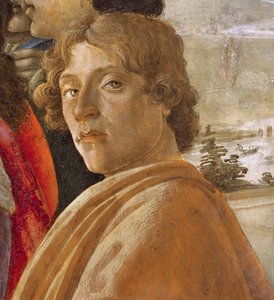
/media/artworks/images/thumbnails/17/7a/177a3bd7498 및 동방박사의 경배 (세부 도상). Next stand 마사초, 피에로 델라 프란체스카, 프라 안젤리코 및 안드레아 만테냐. These 61 아티스트, from 우골리노 디 네리오 (born 1280) to 알루노 디 도메니코 (바르톨로메오 디 조반니) (born 1475), came from 5 countries.
OSelected by OriginalUniqueArt.com
Our selection. Artists whose works our catalogue attaches to Early Renaissance, in the order of our fame ranking. Artists born after 1955 with no Wikidata identifier stay out until verified. The Wikipedia figure counts our 32 languages with an article on the artist.
ItalianBorn in SienaEarly RenaissanceWikipedia in 13/32 languages
His compositions often feature: Luminous Pigments: A palette rich in ultramarine, vermilion, and gold leaf that reflects the divine splendor of his subjects. Architectural Precision: The use of structured backgrounds to ground holy figures within a tangible, albeit idealized, reality. The historical significance of Taddeo di Bartolo lies in his role as a custodian of Sienese identity during a period of immense change.
ItalianBorn in SienaEarly RenaissanceWikipedia in 12/32 languages
Around 1468, Neroccio entered into a significant collaboration with Francesco di Giorgio Martini, an architect, painter, and engineer who would become a lifelong associate. While working alongside di Giorgio, Neroccio began to develop his own distinct style—one that subtly diverged from the prevailing trends. In 1483, he designed the Hellespontine Sybil for the mosaic pavement of Siena Cathedral—a testament to his skill as a designer and draftsman.
In the vibrant heart of Westphalia, during the turn of the 15th century, Konrad von Soest emerged as a transformative figure in Northern European painting. Whether depicting the tender grace of the Holy Family or the heavy grief of the Passion, von Soest’s hand is unmistakable, marked by an ability to marry the decorative splendor of the Gothic tradition with a deeply moving, humanistic touch.
FrenchBorn in UzèsEarly Renaissance; Flemish StyleWikipedia in 14/32 languages
He achieved considerable renown for his monumental altarpiece commissioned in Aix-en-Provence for Catherine Spifami, depicting the Passion of Christ and incorporating scenes from Mary Magdalene's life—a testament to the prevailing devotional fervor of the time. He stands as a pivotal conduit for disseminating Flemish artistic innovations, propelling the Second School of Avignon toward a more expressive and realistic aesthetic.
ItalianBorn in 산조반니발다르노Early RenaissanceWikipedia in 8/32 languages
While his brother Masaccio is celebrated as the pioneer of groundbreaking realism, Giovanni di Ser Giovanni —affectionately known to history as Lo Scheggia, or "the splinter"—carved out a legacy defined by a different, more delicate kind of mastery.
ItalianBorn in PerugiaUmbrian RenaissanceWikipedia in 9/32 languages
In the heart of the Umbrian Renaissance, a period defined by spiritual luminosity and the dawn of humanistic perspective, the name Benedetto Bonfigli emerges as a vital architect of visual devotion.
Working primarily within the Republic of Venice, Vivarini occupied a unique historical space, bridging the transition between the ornate elegance of the late Gothic period and the burgeoning humanism of the early Renaissance.
Nanni di Banco’s most celebrated achievement is undoubtedly the Quattro Santi Coronati (Four Crowned Martyrs), commissioned between 1412 and 1415 for the Orsanmichele church in Florence.
Reflecting on his body of work, several key elements define his artistic identity: Stylistic Versatility: The ability to merge the structural rigor of Florentine sculpture with the lyrical beauty of the International Gothic. Though his life ended in 1451, leaving behind a fragmented biographical record, the echoes of "il Rosso" remain etched in the very fabric of Italian art history. Cultural Diffusion: Acting as a bridge between the artistic epicenters of Florence and the burgeoning markets of Venice and Northern Italy.
ItalianBorn in SienaRenaissance artWikipedia in 6/32 languages
His early works, such as the celebrated “ Adoration of the Shepherds ” with Saint Augustine and Saint Galgano (circa 1430-1435), demonstrate a masterful command of composition and a burgeoning interest in depicting human emotion. D’ Ambrogio’s artistic development was undoubtedly shaped by the prevailing trends of the early Renaissance, particularly those emanating from Florence.
While definitively named only recently thanks to meticulous research by Maria Falcone, this artist—now recognized as Sano di Pietro —left behind a remarkable cycle of eight panels depicting scenes from the life of Saint Anthony Abbot, works that continue to captivate viewers with their haunting beauty and psychological depth. Despite his anonymity for centuries, the Master of the Osservanza's work has exerted a significant influence on subsequent generations of Italian painters.
ItalianProto-RenaissanceWikipedia in 4/32 languages
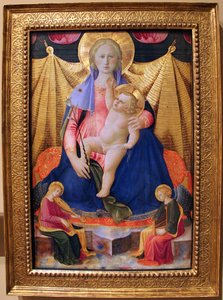
A key feature of his work is the variation in the presentation of the infant Jesus within Mary’s arms – a subtle but significant departure from the static poses often found in earlier depictions. Artists like Giotto, Masaccio, and Donatello were challenging established conventions and experimenting with new techniques – paving the way for the High Renaissance.


 산드로 보티첼리의 '비너스의 탄생'을 경험해 보세요! 고전적인 아름다움과 우아함을 보여주는 르네상스 걸작입니다. 이 상징적인 작품의 멋진 복제품을 소유하고 시대를 초월한 우아함을 만나보세요.
The Birth of Venus
artworks_database
/en/art/sandro-botticelli-the-birth-of-venus-5ZKBGL-en/
/media/artworks/images/thumbnails/17/7a/177a3bd7498
 동방박사의 경배 (세부 도상)
 프라미네라