


Signature works · The 100 signature works
Cubist: original voices
Famous Cubist 화가들: 47 Original Voices
파블로 피카소 (1881–1973) is the most famous Cubist 화가, whose singular vision gave us 아비뇽의 처녀들 및 게르니카. Next stand 조르주 브라크, 페르낭 레제, 후안 그리스 및 로베르 들로네. These 47 화가들, from Carl Newman (born 1858) to 디아 알-아자위 (born 1939), came from 28 countries.
Our selection. Artists whose works our catalogue attaches to Cubist, in the order of our fame ranking. Artists born after 1955 with no Wikidata identifier stay out until verified. The Wikipedia figure counts our 32 languages with an article on the artist.
In brief
Cubist in brief
- 47아티스트
- 1858–1939출생 연도
- 28출생 국가
- 4여성
- 1현역 작가
- 7,389카탈로그 내 작품들
- 주요 작품을 가장 많이 보유한 미술관
- 필립스 컬렉션 (4), 뉴욕 현대 미술관 (3), 레이나 소피아 국립 미술관 (2), 시카고 미술관 (2)
One artist at a time
47 Cubist 화가들 and their signature works


2of 47
조르주 브라크 1882–1963
프랑스 Born in 아르장퇴유 ['야수파', '입체주의', '분석적 입체주의', '종합적 입체주의'] Wikipedia in 31/32 languages
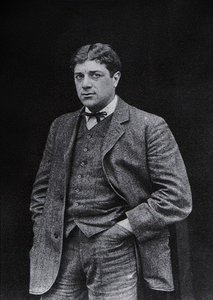
Signature works · The 100 signature works


3of 47
페르낭 레제 1881–1955
프랑스 Born in 아르장탕 ['입체주의', '튜브즘', '황금 비율', '순수주의', '다다이즘', '구성주의'] Wikipedia in 27/32 languages

Signature works · The 100 signature works


Signature works · The 100 signature works


Signature works · The 100 signature works


Signature works · The 100 signature works


Signature works · The 100 signature works


13of 47
올가 로자노바 1886–1918
러시아 Born in 멜렌키 ['절대주의', '큐보-미래주의', '네오-프리미티비즘'] Wikipedia in 17/32 languages


14of 47
장 메챙제 1883–1956
프랑스 Born in 낭트 ['신인상주의', '야수파', '입체주의', '결정적 입체주의'] Wikipedia in 22/32 languages

출생: 프랑스 낭트 (1883년). 사망: 1956년. 장 도미니크 안토니 메트장은 20세기 미술사의 흐름을 바꾼 결정적인 인물이었습니다. 그는 단순히 뛰어난 프랑스 화가에 머물지 않고, 이론가이자 작가, 비평가, 그리고 시인으로서 입체주의(Cubism) 운동의 기틀을 마련하는 데 중추적인 역할을 수행했습니다. 그의 예술적 공헌은 캔버스 위의 창작물을 넘어, 입체주의를 정의하고 대중화하는 데 기여한 혁신적인 이론적 작업들로까지 확장됩니다.


16of 47
Carl Newman 1858–1932
American Figurative art, Cubism

Pinpointing specific artistic influences on Newman is complex, yet the echoes of European academic painting are clearly discernible in his early work. While not fully embracing Cubism or other avant-garde movements, Newman’s experimentation demonstrates an openness to new ideas and a desire to push the boundaries of his own artistic expression. This can be seen in pieces like “ Abstract Flowers in Left,” where geometric forms and muted tones suggest a move away from purely representational art.


Signature works · The 100 signature works


20of 47
Arthur Segal 1875–1944
Romanian Born in Iași ['Expressionism', 'Dadaism']

His studies at the Academy of Art in Berlin provided a solid grounding in classical techniques, but it was his exposure to the works of artists like Schmid-Reutte and Hölzel that ignited his interest in exploring new modes of representation.


Signature works · The 100 signature works


26of 47
Julio González 1876–1942
Spanish Born in Barcelona Cubism Wikipedia in 15/32 languages

His life's work remains a testament to the power of tradition meeting innovation—a journey from the ancestral forge of Barcelona to the cutting edge of the Parisian avant-garde.
Signature works · The 100 signature works


27of 47
Louis Marcoussis 1878–1941
Polish-French Born in Warsaw Cubism, School of Paris, Impressionism Wikipedia in 11/32 languages

Marcoussis's contribution to Cubism is undeniable, though often overshadowed by Picasso and Braque. Collaboration With Miró: Marcoussis maintained a fruitful creative partnership with Joan Miró, exploring shared interests in Surrealism and experimenting with expressive abstraction. Despite his relatively modest output compared to Picasso or Braque, Louis Marcoussis’s artistic vision endured.


28of 47
Raymond Duchamp-Villon 1876–1918
French Born in Damville Cubism Wikipedia in 18/32 languages

Raymond Duchamp - Villon, born Pierre-Maurice-Raymond Duchamp in 1876 in Damville, France, stands as a pivotal figure in the dramatic shift from traditional sculpture to the dynamic language of modernism.


29of 47
Armand Schonberger 1885–1974
French Cubism

Beyond his individual stylistic achievements, Armand Schonberger played a vital role in the collective movement of the European avant-garde.


30of 47
Gabriel Portillo Del Toro 1927–2013
Mexican Cubism

Beyond the individual beauty of his canvases, Gabriel Portillo del Toro’s significance lies in his role as a transitional figure in Mexican art history. His monumental murals, which adorned public spaces across Mexico, solidified his reputation as an artist capable of commanding large-scale narratives, while his smaller paintings offered a more intimate dialogue with the viewer. In the grand tapestry of Mexican modernism, few artists managed to weave together the structural rigor of European avant-garde with the soulful warmth of regional tradition as masterfully as Gabriel Portly Del Toro.


34of 47
에밀리오 페토루티 1892–1971
아르헨티나인 Born in 라플라타 ['입체주의', '미래주의', '구성주의'] Wikipedia in 8/32 languages

Signature works · The 100 signature works


35of 47
아우렐리오 아르테타 1879–1940
스페인 국적 Born in 빌바오 ['상징주의', '입체주의', '사회 사실주의'] Wikipedia in 5/32 languages


38of 47
István Farkas 1887–1944
Hungarian Born in Budapest École de Paris, Cubism Wikipedia in 5/32 languages

Farkas’s artistic development during his time in Paris is particularly fascinating. His work demonstrates a unique blend of influences – Cubism's fragmented forms, elements of Fauvism’s bold color palettes, and a distinctly Hungarian sensibility. He became a significant figure within the École de Paris, an umbrella term encompassing artists from across Europe who flocked to the city seeking inspiration and recognition.


39of 47
William Roberts 1895–1980
British Born in London English Cubism Wikipedia in 6/32 languages

The evolution of Roberts’ work is inextricably linked to the historical tremors of his era. Whether depicting the quiet intimacy of a portrait, such as Sarah, or the bustling, structured chaos of street scenes like Les Routiers, he maintained a commitment to emotional depth. The significance of William Patrick Roberts lies in his ability to synthesize the radical abstractions of Continental Europe with a distinctly British sensibility.


42of 47
Karl Knaths 1891–1971
American Born in Eau Claire Cubism, Modernism Wikipedia in 3/32 languages

Gale facilitated an introduction to Dudley Crafts Watson at the Milwaukee Art Institute, providing Knaths with formal training and setting him on a course toward professional artistry. Further experience as a scenery painter with the Wisconsin Players honed his skills in design and composition, while a move to Provincetown, Massachusetts, in 1919 proved decisive.


44of 47
Franco Gentilini 1909–1981
Italian Born in Faenza Roman School; Archaic Style Wikipedia in 5/32 languages

Frescoes & Decorative Art: Beyond painting, Gentilini excelled as a fresco artist, contributing to monumental murals that showcased his mastery of color and form on a grand scale. His involvement in the 5th Esposizione Internazionale delle Arti Decorative in Milan and the 2nd Quadriennale Nazionale d’Arte in Rome underscored his versatility and solidified his position within Italy's artistic landscape. Following World War II, Gentilini experienced considerable acclaim among private collectors—a testament to the enduring appeal of his understated aesthetic.


46of 47
Cliff Rowe 1904–1988
British Socialist Realism; New Realism Wikipedia in 1/32 languages

His early years were defined by a dual education: the formal training at the Wimbledon School of Art and the Royal College of Art, which sharpened his technical draughtsmanship, and the raw, lived experience of London’s streets, which forged his political soul. A pivotal moment occurred in 1930 when he traveled to the Soviet Union.
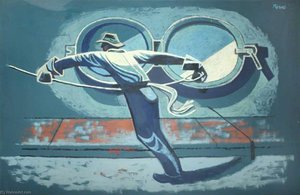


47of 47
Emilio Tadini 1927–2002
Spanish Born in Milan Catalan Modernisme Wikipedia in 1/32 languages

Emilio Tadini was far more than a painter; he was a profound architect of meaning within the Italian cultural landscape. Born in Milan in 1927, his journey began not with a brush, but with the written word. A poet, novelist, and essayist, Tadini first emerged onto the prestigious literary stage in 1947 through Elio Vittorini's magazine, Politecnico.
Signature works · The 100 signature works

Signature works
Signature Cubist works
A timeline
Cubist through its signature works
- 1904
- 1908
- 1910
- 1911
- 1916
- 1917
- 1917
- 1917
- 1920
- 1921
- 1930
- 1933
- 1937
- 1949
Figures
The figures
| 프랑스 | 7 |
|---|---|
| 스페인 | 4 |
| 러시아 | 3 |
| 영국 | 3 |
| 미국 | 2 |
| 우크라이나 | 2 |
| United Kingdom | 2 |
| Italy | 2 |
| 1850s | 1 |
|---|---|
| 1860s | 1 |
| 1870s | 7 |
| 1880s | 21 |
| 1890s | 9 |
| 1900s | 4 |
| 1910s | 1 |
| 1920s | 2 |
| 1930s | 1 |
| 필립스 컬렉션 | 4 |
|---|---|
| 뉴욕 현대 미술관 | 3 |
| 레이나 소피아 국립 미술관 | 2 |
| 시카고 미술관 | 2 |
| 솔로몬 R. 구겐하임 미술관 | 2 |
| 크롤러뮐러 미술관 | 2 |
| Staatliche Kunsthalle Karlsruhe | 2 |
| 퐁피두 센터 | 2 |
Every name
List of 47 famous Cubist 화가들, every name
- 1
 파블로 피카소스페인 · 1881–1973
- 2조르주 브라크프랑스 · 1882–1963
- 3페르낭 레제프랑스 · 1881–1955
- 4
 후안 그리스스페인 · 1887–1927
- 5
 로베르 들로네프랑스인 · 1885–1941
- 6
 블라디미르 타틀린우크라이나/러시아 · 1885–1953
- 7
 라이오넬 파이닝거독일계 미국인 · 1871–1956
- 8
 지노 세베리니1883–1966
- 9
 알렉산더 아르키펜코우크라이나계 미국인 · 1887–1964
- 10
 자크 립시츠리투아니아-프랑스-미국 · 1891–1973
- 11
 벤 니콜슨영국 · 1894–1982
- 12
 마리 로랑생프랑스 · 1883–1956
- 13올가 로자노바러시아 · 1886–1918
- 14장 메챙제프랑스 · 1883–1956
- 15
 류보비 포포바러시아인 · 1889–1924
- 16Carl NewmanAmerican · 1858–1932
- 17
 로제 데 라 프레나예프랑스 · 1885–1925
- 18
 아메데오 데 소우자 카르도소1887–1918
- 19
 루피노 타마요멕시코 · 1899–1990
- 20Arthur SegalRomanian · 1875–1944
- 21
 맥스 웨버미국인 · 1881–1961
- 22
 호아킨 토레스 가르시아우루과이-스페인 국적 · 1874–1949
- 23
 나단 알트만러시아 · 1889–1970
- 24
 앙드레 로트프랑스 · 1885–1962
- 25
 마리아 블랑샤르스페인 · 1881–1932
- 26Julio GonzálezSpanish · 1876–1942
- 27Louis MarcoussisPolish-French · 1878–1941
- 28Raymond Duchamp-VillonFrench · 1876–1918
- 29Armand SchonbergerFrench · 1885–1974
- 30Gabriel Portillo Del ToroMexican · 1927–2013
- 31
 크리스토퍼 리처드 윈 위닝 네빈슨영국 · 1889–1946
- 32
 알프레드 헨리 마우러미국인 · 1868–1932
- 33
 디아 알-아자위이라크인 · 1939년생
- 34에밀리오 페토루티아르헨티나인 · 1892–1971
- 35아우렐리오 아르테타스페인 국적 · 1879–1940
- 36
 Morris KantorRussian · 1896–1974
- 37
 로요스 바이다헝가리 · 1908–1941
- 38István FarkasHungarian · 1887–1944
- 39William RobertsBritish · 1895–1980
- 40
 빌헬름 헨리크 룬스트룀노르웨이 · 1893–1950
- 41
 윌리엄 조지 길리스1899–1970
- 42Karl KnathsAmerican · 1891–1971
- 43
 니코스 하지키리아코스-기카그리스 · 1906–1994
- 44Franco GentiliniItalian · 1909–1981
- 45
 로버트 콜쿤스코틀랜드인 · 1914–1962
- 46Cliff RoweBritish · 1904–1988
- 47Emilio TadiniSpanish · 1927–2002
Questions
Your questions
Which Cubist 화가 is the most famous?
Who are the 5 most famous Cubist 화가들?
In which period did Cubist art flourish?
Most 화가들 in this list were born in the 1880s (21 of 47), between 1858 and 1939 overall.
Where are the great works of Cubist art today?
The museums holding the most key works of this list are 필립스 컬렉션 (4), 뉴욕 현대 미술관 (3) 및 레이나 소피아 국립 미술관 (2).
Who was the first Cubist 화가?
The earliest-born 화가 in this list is Carl Newman (#16), born in 1858.
Where were most Cubist 화가들 born?
프랑스: 7 of the 47 화가들 in this list were born there, then 스페인 (4) 및 러시아 (3).
Who are famous Cubist 화가들 today?
The highest-ranked living 화가들 in this list are 디아 알-아자위 (#33).
Which city was home to the most Cubist 화가들?
뉴욕: 2 of the 화가들 in this list were born there.
Who are the most famous Cubist 화가들 from 프랑스?
Who are the most famous female Cubist 화가들?
Where can I see more works by these 화가들?
Our catalogue holds 7,389 works by these 화가들.
Read
Stories on OriginalUniqueArt.com
Other movements
Famous artists of other movements
 유명한 Baroque 예술가밤의 망루 (De Nachtwacht) · 렘브란트
 유명한 Contemporary Realist 예술가이삭 줍는 사람들 · 장프랑수아 밀레
 유명한 Impressionist 예술가별이 빛나는 밤 (뉴욕, MoMA) · 빈센트 반 고흐
 유명한 Romanticist 예술가토성, 그의 아들을 잡아먹는 중 · 프란시스코 데 고야
 유명한 Neoclassicist 예술가The Death of Marat · 자크루이 다비드
 유명한 Realist 예술가세계의 기원 · 귀스타브 쿠르베
 유명한 Renaissance 예술가모나리자 (라 죠콘다) · 레오나르도 다 빈치
 유명한 Dutch Golden Age 예술가진주 귀걸이를 한 소녀 · 요하네스 페르메이르
 유명한 Expressionist 예술가구성 VII · 바실리 칸딘스키
 유명한 Rococo 예술가사랑의 교훈 · 앙투안 바토
Other periods
Famous artists across the periods
 유명한 Early Medieval 예술가Snowy River · 왕유
 유명한 High Medieval 예술가마에스타의 마돈나 (오니산티 마돈나) · 조토 디 본도네
 유명한 Late Medieval 예술가수태고지와 두 성인 · 시모네 마르티니
 유명한 Renaissance 예술가아담의 창조 · 미켈란젤로 부오나로티
 유명한 Early Modern 예술가마태오의 부르심 · 카라바조
 유명한 19th Century 예술가수련 (또는 연꽃) · 클로드 모네
 유명한 Modern 예술가캠벨 수프 통 · 앤디 워홀
 유명한 Contemporary 예술가Wind Sculpture III (one in a series of nine) · Yinka Shonibare
Discover more