


1


10월 2026 업데이트 · 인기 점수 기준 순위 (각 작품의 검색, 방문 및 주문 수) · 24점의 Julio González 작품 (당사 카탈로그 기준)
요약하자면
갤러리가 선정한 Julio González의 가장 유명한 작품은 Maternity (1906)이며, 원작은 바르셀로나의 카탈루냐 국립 미술관에 전시되어 있습니다. Personnage à la Main Percée II 16-2 38 (1936)와 Etude pour Danseuse à la Palette (1934)가 더해져 누구나 한눈에 알아볼 수 있는 완벽한 트리오를 완성합니다. Julio González의 작품 24점 중, 갤러리는 가장 유명한 23점을 아래와 같이 소개합니다. 각 작품은 제작 연도, 소장 미술관 및 작품의 특징을 포함한 독창적인 원작입니다.


The artwork titled Head Shouting is a creation by the artist Julio González. It is a work that carries many names, known in various contexts as Cap cridant or Tête de Montserrat criant. In other records, it appears as Head of the Montserrat, II or Head of Screaming Montserrat. The subject is a peasant woman with a face frozen in terror, a figure often identified as a Catalan Peasant Mother.


 Personnage Spatial1942 · Museu Coleção Berardo
12
 Character Seated카탈루냐 국립 미술관
13
 Prayer1932 · 크롤러뮐러 미술관
14
 Portrait de Marie-Thérèse (Portrait of Marie-Thérèse)레이나 소피아 국립 미술관
15
 Nature morte aux oignons (Still Life with Onions)레이나 소피아 국립 미술관
16
 Paysanne assise (Seated Peasant Woman)레이나 소피아 국립 미술관
17
 Deux femmes (Two Women)레이나 소피아 국립 미술관
18
 La récolte de pommes (The Apple Harvest)레이나 소피아 국립 미술관
19
 Femme lisant (Woman Reading)레이나 소피아 국립 미술관
20
 Untitled (787)
21
 Head, (1936)
22
 Abstraction of a woman's head with hat
23
 Masque de montserrat criant, (1939)
이 페이지에 있는 작품을 가장 많이 소장하고 있는 5개의 미술관
| 소장 미술관 | 도시 | Julio González의 작품 | 이 목록의 작품들 |
|---|---|---|---|
 Museu Coleção Berardo |
리스본 | 7 | Personnage à la Main Percée II 16-2 38, Etude pour Danseuse à la Palette, Femme Etrange |
 레이나 소피아 국립 미술관 |
마드리드 | 6 | Portrait de Marie-Thérèse (Portrait of Marie-Thérèse), Nature morte aux oignons (Still Life with Onions), Paysanne assise (Seated Peasant Woman) |
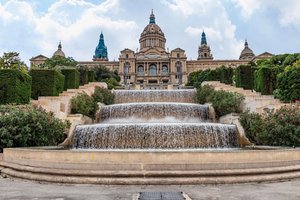 카탈루냐 국립 미술관 |
바르셀로나 | 4 | Maternity, Head Shouting, Self-portrait 113511-000 |
 Staatliche Kunsthalle Karlsruhe |
카를스루에 | 1 | Cactus Person II |
 크롤러뮐러 미술관 |
오터로 | 1 | Prayer |
그 시대를 정의하는 오리지널 작품을 만나보려면 연대를 선택하세요.
Maternity (1906), 카탈루냐 국립 미술관, 바르셀로나. 다음은 Personnage à la Main Percée II 16-2 38 (1936)와 Etude pour Danseuse à la Palette (1934)입니다.
30세: Maternity은(는) 1906년 작품이며, Julio González은(는) 1876년에 태어났습니다.
Maternity, Personnage à la Main Percée II 16-2 38, Etude pour Danseuse à la Palette, Femme Etrange, Deux études pour monsieur Cactus (L, Head Shouting, Self-portrait 113511-000, Les Plans Rigoureux, Femme au Miroir Rouge, Vert et Jaune 및 Cactus Person II. 위 순위는 각 작품의 제작 연도와 소장 박물관을 나타냅니다.
저희 카탈로그에는 1906년부터 1942년 사이의 Julio González 작가의 작품 24점이 수록되어 있습니다.
대부분 Museu Coleção Berardo (리스본), 레이나 소피아 국립 미술관 (마드리드) 및 카탈루냐 국립 미술관 (바르셀로나)에 소장되어 있습니다. 위의 박물관 목록에서 전체 목록을 확인하실 수 있습니다.
1930s 동안: 이 페이지의 총 23점의 작품 중 7점이 해당 시기에 제작되었으며, 그중 Personnage à la Main Percée II 16-2 38점입니다.
이 페이지에서 가장 오래된 작품은 Maternity (1906)이며, 가장 최근 작품은 Personnage Spatial (1942)입니다.
이 페이지의 총 23점의 작품 중 2점의 Oil
이 페이지의 원작들을 기준으로 볼 때, Cubism
Personnage à la Main Percée II 16-2 38, Etude pour Danseuse à la Palette 및 Femme Etrange: Museu Coleção Berardo, 리스본은(는) 이 페이지에 있는 작품 중 7점을 소장하고 있습니다.
Julio González stands as a monumental figure in the history of modern sculpture, a visionary who transformed the very language of three-dimensional form. Born in Barcelona on September 21st, 1876, González was destined for a life intertwined with metal. He descended from a lineage steeped in the meticulous traditions of craftsmanship; his grandfather was a goldsmith in Galicia, and his father, Concordio González, operated a workshop specializing in the fabrication of gold, silver, and iron. From his earliest years, the rhythmic clang of the hammer and the intense heat of the forge were not merely background noises but the foundational elements of his artistic vocabulary. This deep-seated mastery of metallurgy would later allow him to achieve what many thought impossible: treating iron with the same lyrical fluidity as a painter treats a brushstroke.
The trajectory of González’s life took a transformative turn when he moved to Paris in 1902, immersing himself in the electric atmosphere of Montmartre. It was here that his technical prowess met the radical spirit of the avant-garde. He found himself part of a vibrant circle of Spanish expatriates, most notably Pablo Picasso and Pablo Gargallo. The relationship with Picasso was particularly profound; their shared passion for experimentation led to a legendary artistic dialogue that would redefine the boundaries of sculpture. While Picasso provided the conceptual spark of Cubism, González provided the technical innovation required to translate those fragmented, multi-dimensional ideas into physical reality. Together, they pioneered a new way of seeing, moving away from the heavy, solid masses of traditional bronze and marble toward something far more ethereal.
González’s true genius lay in his ability to treat iron as if it were a sketch drawn in mid-air. He moved beyond the concept of sculpture as a solid volume, instead embracing the idea of drawing in space. By utilizing flat pieces, strips, and rods of scrap and old iron, he could suggest the presence of a figure through nothing more than a few expressive, ascending lines. This technique allowed him to capture the essence of movement and light, creating works that felt both skeletal and incredibly alive. His favorite subjects—often women captured in moments of quiet introspection, dancing, or grooming—were rendered with a sketchy, rhythmic quality that emphasized line over mass.
As his career progressed, particularly from 1932 onwards, his work underwent a fascinating evolution toward a more sober and austere aesthetic. The complexity of his earlier assemblages gave way to a profound linearity. In masterpieces such as Prayer, the use of simple bars and rods creates a hauntingly beautiful suggestion of a kneeling woman, her arms reaching upward in a gesture of spiritual yearning. This period demonstrated his ability to strip away the unnecessary, leaving behind only the most potent emotional traces. His mastery of welding, cutting, and forging allowed him to manipulate the industrial medium of iron to convey the most delicate human emotions, bridging the gap between the industrial age and the human soul.
Though he remained largely unrecognized by the mainstream during much of his lifetime, the historical significance of Julio González cannot be overstated. He is widely revered as the "father of all iron sculpture of this century," a title that honors his role in legitimizing iron as a primary medium for fine art. His innovations paved the way for generations of abstract sculptors who would continue to explore the interplay between void and solid, line and volume. By breaking the traditional mold of sculpture, he liberated the medium from its reliance on weight and density, offering instead a vision of art that is light, transparent, and infinitely expressive.
Today, the legacy of González lives on in every modern work that dares to use negative space as a structural element. His life's work remains a testament to the power of tradition meeting innovation—a journey from the ancestral forge of Barcelona to the cutting edge of the Parisian avant-garde. Through his hands, the cold, unyielding nature of iron was transformed into a medium of profound grace, forever changing how we perceive the relationship between matter and space.