96 Famous High Medieval Művészek Who Shaped the Movement
Giotto Di Bondone (1267–1337) is the most famous High Medieval művész, whose singular vision gave us Madonna in Maest (Ognissanti Madonna) és Új ítélet (detil 3) (Scrovegni-kápolna (Arena Chapel), Pádua). Next stand Duccio Di Buoninsegna, Cimabue, Zhao Mengfu és Zhu Xi. These 96 művészek, from Xu Daoning (born 970) to Huang Gongwang (born 1269), came from 24 countries.
OSelected by OriginalUniqueArt.com
Our selection. Artists whose works our catalogue attaches to High Medieval, in the order of our fame ranking. Artists born after 1955 with no Wikidata identifier stay out until verified. The Wikipedia figure counts our 32 languages with an article on the artist.
OlaszBorn in VicchioProto-reneszánszWikipedia in 31/32 languages
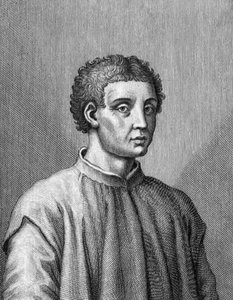
Körülbelül 1267-ben, a toszkánai dombok között született Giotto di Bondone kétségtelenül az egyik legfontosabb alakja volt a középkori művészet átmenetének a reneszánszba.
OlaszBorn in SienaSienai iskola, Trecento gótikusWikipedia in 31/32 languages
He frequently embellished these surfaces with gold leaf, a practice that maintained a visual connection to the Byzantine tradition. His compositions often featured the gold backgrounds and religious scenes characteristic of the era, yet he sought to move beyond the flat, static nature of his predecessors. The stylistic footprint left by Duccio di Buoninsegna helped define the visual language of the Trecento Gothic style and established the foundations of the Sienese school.
Where to see The physical remnants of Duccio's career are scattered across several major institutions, offering a way to encounter his specific approach to light and form.
OlaszBorn in FirenzeBizánci és reneszánsziWikipedia in 28/32 languages
Ezt követte az Arezzóban, a San Domenico templomban található, 1270-es évek körüli Crucifix, amelyben Krisztus teste úgy tűnik, mintha a saját kínálatának súlya alatt megcsúszna. Ugyanebben az időszakban festette meg a Virgin and Child in Majesty surrounded by Six Angels alkotást is, amely egy 1270-es évszárhoi mű, melyben még a korabeli, etablált minták keretein belül mozog a művészi keze.
KínaiBorn in HuzhouLiterati festészet; TájképfestészetWikipedia in 18/32 languages
Zhao Mengfu (1254–1322) a J Yuan-dinasztia művészetének monumentális alakjának tekinthető, aki talán a modern kínai tájművészet atyja is. A nemes Song-származású családba született Zhao korai élete a kiváltságoktól, ugyanakkor a turbulens politikai időktól is meghatározott volt – a mongol hódítás pedig alapjaiban változtatta meg Kína kulturális arcát.
Zhu Xi a déli Song-dinasztia egyik meghatározó kínai filozófusa, történelmeje, politikusai, költője és kalligráfusa volt. Életpályája során Zhu Xi többször szolgált kormányzati tisztként, többek között a Nankang katonai kerület prefektusjaként, ahol újjáalapította a Fehér Bambusz-barlang Akadémiát. Kiterjedt magyarázataival a Négy Klasszikusról végül a császári államigazgatási vizsgák alapvető szövegei váltak, meghatározva ezzel a kínai tudomány és oktatás irányait.
KínaiBorn in HangcsouMa-Xia iskola, Déli Song-dinasztiaWikipedia in 19/32 languages
A déli Song-dinasztia tájfestészetének megértéséhez meg kell vizsgálnunk, hogyan kezelte Ma Yuan a semmit. Ő nem csupán hegyeket festett; ő a teret tervezte meg. Az olyan művekben, mint a Tudós a vízesésnél, a tusfesték precízen rétegzett, finom tónusok váltakozásával építve fel mélységet és hangulatot, anélkül, hogy nehéz körvonalakra támaszkodott volna.
KínaiBorn in YanchengÉszak-Song kịpori tájképészetWikipedia in 16/32 languages
Unlike preceding styles which often prioritized stylized representations, Guo Xi championed a revolutionary approach—the “angle of totality,” or “floating perspective”—that sought to capture the illusion of depth and atmosphere with unprecedented realism. This technique involved layering ink washes to create subtle gradations of tone and texture, mimicking the way light interacts with mountainous terrain. His treatise, “The Lofty Message of Forest and Streams”(林泉高致), solidified his position as a leading voice on artistic philosophy.
KínaiBorn in KaifengSong-dinasztia; Slender Gold kalligráfiaWikipedia in 19/32 languages
A kínai történelem krónikáiban kevés olyan alak testesül meg olyan mélyen a fenséges művészet és a politikai katasztrófa tragikus metszetében, mint Song Híres Császár Huizong. Mecénásként az császári udvart a tehetség szentélyévé alakította, létrehozva a Hanlin Imperial Painting House institutionált intézményt, hogy összegyűjtse a birodalom legjobb mestereit. Song Híres Császár Huizong művészeti öröksége legnyilvánabban a finom, naturalisztikus motívumok uralmában érvényesül.
KínaiBorn in SichuanChan festészetWikipedia in 14/32 languages
Muqi Fachang, akit a történelem Muqi vagy Muxi művészneven ismert, nem csupán festő volt, hanem egyfajta spirituális közvetítő, aki a Chan buddhizmus mély hallgatását tinta és papír nyelvére fordította. A Déli Song-dinasztia végén született Muqi egy hatalmas kulturális átalakulás idején élt, művészete pedig hidat képezett a múlt strukturált hagyományai és a világ megismerésének egy új, intuitív módja között.
FranciaBorn in OlaszországKözépkori építészet/designWikipedia in 17/32 languages
Villard de Honnecourt, akit titokzatos rejtélyek örvénye körül csaptak, a 13. századi Franciaország egyik legjelentősebb, mégis legrejtélyesebb művészének tekinthetünk. Körülbelül 1230 körül született Picardy vidéken – egy olyan régióban, amely ebben az időszakban híres volt művészeti vibranciájáról –, és öröksége szinte teljes egészében egy lenyűgöző „eszközkönyvre”, vagy albumra épül, amely ma Párizsban, a Bibliothèque nationale de France gyűjteményében őrzik.
OlaszBorn in LuccaByzantine stílusWikipedia in 14/32 languages
Bonaventura Berlinghieri, az olasz Luccaból származó meghatározó festő, a 13. században (1210–1287) érte el csúcsát. Apja, Berlinghiero Berlinghieri, valamint testvérei, Barone és Marco Berlinghieri szintén kiváló képességekkel rendelkező művészek voltak. Az Assisi Szent Ferenc (1235), amely egy megrendelés eredményeként készült a pesciai /hu/art/show/church-of-san-francesco/">San Francesco templomba, az 1228-ban kanonizált Szent Ferenc egyik korai ábrázolása. 1244-ben Lombardo, a Lucca székesegyház mesterfogadalmasa felbízatta Bonaventurát, hogy díszítse az archidiakonos szobát.
While his contemporaries often relied on stylized, flat figures, Mateo meticulously studied human anatomy and the complex behavior of drapery, achieving an astonishing accuracy in his depictions. His mastery of limestone carving was unparalleled, particularly through his use of a technique known as trabajo vivo.
Giovanni Pisano 1248-ban, Olaszország művészeti kályháján, Pisa városában jöttre létre. Fiatal éveit a monumentális kézműves hagyományok áztatták, hiszen ő volt a neves szobrász, Nicola Pisano fia. Nicola dengan együtt alkotott jelentős művei, mint például a sienai székesegyház emlékezetes szószék (1265–1268) vagy a perugiai fontana maggiore kút (a munka 1278-ban заверződött), tagadhatatlan formateremtő mesterséget mutatnak, amelyet apja kezétől örökölt meg.
KínaiBorn in CsiangszuSong-dinasztia művészeteWikipedia in 17/32 languages
Mi Fei, a kínai festő, költő és kalligráfus, 1051-ben született Taiyuanban a Song-dinasztia idején. Ez az egyedülálló módszer megkínálta neki a hírnevet, mint a Song-dinasztia négy legnagyobb kalligráfusa Su Shi, Su Shi, Hung Tingjian és Cai Xian mellett. Zhao Mengfu: lovasok egy fehér ló vezetélén (Indianapolis Művészeti Múzeuma, selyem) – amely Mi Fei művészeti befolyását mutatja be a következő művészgenerációk körében.
Born in TongchengSong Dynasty paintingWikipedia in 9/32 languages
Li Gonglin’s painting style is often described as a deliberate revival of earlier traditions, particularly those of the Five Dynasties period (907-960). He consciously rejected the prevailing trends of his time – the opulent and decorative styles favored by many court painters. Li Gonglin, formally known as Longmian Jushi (meaning “Old Man with the Dragon Face”), and bearing the style name Boshi, stands as a towering figure in the landscape of Chinese painting during the Northern Song dynasty.
KínaiBorn in Baoding'Boneless' festési technikaWikipedia in 7/32 languages
ma lin, a prominent chinese court painter, flourished during the early to mid 13th century (c. 1180 - 1256). as the son of the renowned artist ma yuan, ma lin was immersed in the art world from a young age, learning the intricacies of painting from his illustrious father.
Rooted in Confucian ethics—emphasizing filial piety, righteousness, benevolence, and ritual propriety—his poetry reflects a deep engagement with moral dilemmas and explores the human condition through the lens of ethical contemplation.
While biographical details remain scarce, scholars believe he was trained at Cluny Abbey, arguably the epicenter of European monastic art and intellectual life at the time. While his roots are firmly planted in the Romanesque tradition of Cluny, his expressive power and narrative complexity hint at the burgeoning naturalism that would later define Gothic art.
MuslimBorn in Jazirat Ibn OmarIslamic Golden Age Engineering
He represents a pivotal figure in the Golden Age of Islam, a period characterized by intellectual flourishing and groundbreaking innovation across diverse fields.
ItalianBorn in PisaRenaissance styleWikipedia in 10/32 languages
The Crucifix of San Raniero demonstrates this perfectly, showcasing the artist’s ability to convey both physical pain and spiritual anguish with astonishing realism. Byzantine Influence: His early works show clear traces of Byzantine iconography, particularly in the composition and rendering of Christ’s figure. Artists like the Master of the Blue Crucifixes, the Master of the Treasury, and Vicino da Pistoia are believed to have been influenced by his work.
Song dynastyBorn in HangzhouWikipedia in 16/32 languages
The surviving works of Xia Gui include various genres, such as small album leaves and hand scrolls. Notable examples of his work include: His influence extended far beyond his own era, impacting the Japanese master Sesshū Tōyō, who was influenced by Xia's idiom and made studies of his landscape fans. While much of his life remains unknown, he served in the Imperial Painting Academy during the reign of Emperor Ningzong.
Nicola Pisano (kb. 1220/1225 – kb. 1284) az olasz szobrászművészet monumentális alakjaként áll mūsų előtt, akit nem csupán művészi képességei, hanem alapvetően mint a modern szobrászat atyjának is ismernek. Annak ellenére, hogy bizonytalanságok övélik születési idejét és pontos származását – Itália, Apulia területén született –, Pisano hatása a művészettörténetre vitathatatlan. A feljegyzések arra utalnak, hogy Nicola Pisano születési helye Apulia volt, bár a végleges részletek még mindig homályosak.
Song dynastyBorn in Meng PrefectureAcademy-style landscapeWikipedia in 15/32 languages
They strike the silk or paper like a chisel hitting wood, carving out the rugged textures of the natural world. Through this precision, his approach became the foundation for what is recognized as the academy-style landscape of the Southern Song. Southern Song painters Xia Gui and Ma Yuan studied his compositions and techniques, absorbing his approach to space and form.
Where to see The physical remnants of Li Tang's brushwork reside primarily within major institutional collections.
ChineseBorn in Wuxing DistrictFur and feathers painting; Song realism blended with archaic Tang styleWikipedia in 12/32 languages
Similarly, his ability to interpret the styles of predecessors, such as his breathtaking Landscape in the Style of Ni Zan, demonstrates a deep reverence for the lineage of Chinese art and an ability to weave historical continuity into his own unique vision.
His contributions can be summarized through several enduring legacies: The Chronica Majora: A monumental historical achievement that remains a primary source for understanding mid-13th century Europe.
Fueled by royal patronage and a strategic location along the vital trade routes connecting China with Central Asia and Persia, Jingdezhen became a crucible of cultural exchange.
Herrad of Landsberg, a woman of noble Alsatian lineage, emerged not merely as a religious leader but as one of the most significant polymaths of the Middle Ages. Though she passed away on July 25, 1195, after twenty-eight years of influential leadership, her voice remains audible through the surviving pages of her Garden.
His relationship with the imperial court, particularly his complex bond with the Retired Emperor Go-Toba, was a saga of high artistic commissions followed by the sting of political banishment.
ByzantineBorn in standardized city nameManuscript illumination
Creating such a masterpiece demanded immense patience and skill. The tempera paint had to be applied in thin layers, allowing each layer to dry completely before adding the next. It is not merely a beautiful object but also a valuable historical document, offering insights into the religious beliefs, artistic conventions, and technological skills of 12th-century Byzantium.
In the turbulent tapestry of medieval Europe, few figures loom as large or as formidable as Bretislav I, a ruler whose very name evokes the strength and strategic brilliance of the Přemyslid dynasty.
He clearly drew upon the established traditions of medieval architecture, particularly the Cistercian style prevalent in northern France. However, he also incorporated elements from other sources: the writings of classical mathematicians like Euclid, the techniques employed by medieval workshops, and perhaps even contemporary innovations in engineering.
His verse often explores themes of impermanence, the beauty of transience, and the emotional resonance of natural imagery. His most famous poem, included in the renowned Hyakunin Isshu anthology, vividly depicts mist rising over dew-kissed pines on an autumn evening—a motif that resonated deeply with later artists and poets. Though Jakuren’s life was tragically cut short in 1202—before the completion of the Shin Kokin Wakashū—his legacy endured.
Chinese EmpireBorn in Zhuchengshan shuiWikipedia in 15/32 languages
Zhang Zeduan’s technical precision helped define the early development of shan shui, the foundational Chinese landscape art style. His approach moved beyond mere representation to establish a structural language for depicting the natural and built environments. Zhang Zeduan’s influence is measured by the sheer volume of iterations his themes have inspired.
Where to see Tracing the physical presence of Zhang Zeduan's output requires looking toward two major institutions in East Asia.
His subjects were often drawn from domestic life – children at play, women engaged in scholarly pursuits or gentle pastimes. These weren’t idealized representations; rather, they felt remarkably real, capturing fleeting moments of joy, contemplation, and connection. Although Su Hanchen’s surviving oeuvre is relatively small, his influence on subsequent generations of Chinese painters is undeniable.
The essence of Saigyō’s work lies in his mastery of waka, a classical form of Japanese poetry characterized by its delicate emotional resonance and rhythmic elegance.
The Coronation of the Virgin: A breathtaking mosaic situated over the interior door of the Florence Cathedral, dated to approximately 1307, which stands as a testament to his ability to marry spiritual grandeur with technical precision.
Yuan dynastyBorn in ChangzhouLiterati painters (wenrenhua)Wikipedia in 12/32 languages
Huang Gongwang’s approach to the landscape was a deliberate departure from the rigid conventions of the era's Academy. Rather than adhering to the formal structures of his contemporaries, he sought a more personal expression of the natural world. His approach moved away from the rigid conventions of the imperial academies, favoring instead a personal, scholarly expression.
Rai Kuniyuki (1219-1298) stands as a monumental figure within the annals of Japanese swordsmithing, embodying the zenith of Bizen tradition – a style characterized by its exceptional purity of steel and meticulous craftsmanship.
This work, depicting Christ alongside the Virgin, Saint Peter, Saint Paul, and Saint John the Evangelist, represents a significant departure from his earlier geometric roots, embracing a style that is reminiscent of the great Cimabue. Christ the Redeemer and Four Saints: A profound example of his ability to weave complex theological narratives through balanced, sacred imagery. By integrating the geometric discipline of the Master of the Bigallo Crucifix with the more expressive, proto-Renaissance techniques seen in the works of Cimabue, Meliore helped pave the way for the dramatic innovations that would later define Florentine art.
ChineseBorn in HuzhouBamboo painting, CalligraphyWikipedia in 15/32 languages
Although few works are definitively attributed solely to Guan Zhongji due to historical challenges in authentication – a common issue with artists from this period – her influence is undeniable.
His efforts to consolidate royal power, though often controversial—particularly his suppression of the Knights Templar and conflicts with the papacy—laid the groundwork for a more unified and centralized France.
His calligraphy wasn’t simply about elegant handwriting; it was considered a high art form, deeply connected to the aesthetic principles of miyabi—refinement and elegance.
ChineseBorn in HangzhouSong Dynasty Science & Philosophy
Born in the vibrant landscape of Hangzhou around 1031, the historical figure was a true polymath, often likened to a Chinese Leonardo da Vinci. The foundations of this intellectual and creative prowess were laid in the fertile soil of the Song Dynasty’s golden age. While history often remembers the name Shen Kuo as the towering intellectual giant of the Song Dynasty—a man whose mind spanned the celestial mechanics of the stars and the magnetic pull of the earth—the contemporary artistic identity of River Kuo breathes new life into this ancestral legacy.
KínaiBorn in Colle Val d'ElsaYuan-dinasztia festészet
Közel 1245 körül született Colle Val D'Elsában, élete egy mély művészeti átalakuláson áramló korszakot ölel be, amely lehetővé tette számára, hogy befogadja a római antikvitás pompáját, miközben olyan új formákat kísérelt meg, amelyek évszázadokon át meghatározták a gótikus érzékiséget. Korai tan läródja olyan mesterek alatt, mint Nicola Pisano, felbecsülhetetlen alapvető tudást nyújtott neki, ami különösen jól látható az 1265 és 1268 közötti munkálataiban, amikor a sienai Duomo márvány pulpitumát készítette.
Muhammad Ibn Ammar, más néven abū bakr muḥammad ibn ʿammār ibn al-ḥusayn ibn ʿammār al-quḍā'ī, Portugália Silves városában született, 1031 körül, mint egy meghatározó arab költő és festő. Egyetlen félelemmentes győzelme even a kasztília király, Alfons VI ellen olyan hatást gyakorolt, amely végül a kastília monarchia szévillából való visszavonásához vezetett.
Hemachandra was a prolific scholar and monk of the Śvetāmbara school of Jainism. Born in Dhandhuka, India, he was a man of immense intellect, earning the title kalikālasarvajña, meaning "the knower of all knowledge in his times." His vast contributions spanned numerous disciplines, including mathematics, history, philosophy, poetry, and grammar.
In the turbulent landscape of twelfth-century Poland, where the echoes of the Piast dynasty's greatness still resonated, Bolesław IV the Curly emerged not merely as a ruler, but as a transformative force. Following the untimely passing of his elder brothers, Leszek and Casimir, Bolesław ascended to the dukedom of Masovia, stepping into a political arena fraught with tension and the looming shadow of his half-brother, Władysław II the Exile.
He is best known for his exquisite calligraphy on scrolls featuring poems from the Wakan Roeishu, a renowned anthology of Japanese and Chinese verses compiled in the early eleventh century. These were not simply copies; Koreyuki imbued each character with a subtle energy, demonstrating mastery over brushstroke variation and spatial composition.
Cultural Connectivity: Through his education in Toulouse, he acted as a conduit for French artistic influences within the German ecclesiastical tradition. Patronage of Visual Identity: His oversight of the minting process helped establish a cohesive visual brand for the Hildesheim diocese, emphasizing themes of purity and strength. While much of his early education remains shrouded in the mists of time, historical records point toward his training at the Toulouse Cathedral in France.
KhitanBorn in BeijingLiterati painting, Confucian tradition
Chucai’s artistic style is most accurately described as “literati painting,” a genre deeply rooted in Chinese tradition. The use of gold leaf – particularly evident in works like “Landscape with Tower” – added an element of luxury and spiritual significance, elevating the paintings beyond mere representations of the world to symbolic expressions of higher ideals. Perhaps his most significant contribution was persuading Genghis Khan to adopt a strategy of incorporating Chinese administrators and artisans into the conquered territories – a decision that proved instrumental in consolidating Mongol control over vast swathes of China.
This image symbolizes his deep love for Christ and his role as a protector of children. The artistic representations serve not only to commemorate his life but also to convey the core values he embodied: faith, humility, charity, and unwavering love for God and humanity. In 1946, Pope Pius XII bestowed upon him the title of “Doctor of the Church,” a prestigious honor reserved for saints whose writings and teachings have had a significant influence on Catholic theology.
Operating primarily around Florence during a period of immense artistic ferment, this anonymous artist stands as a pivotal figure bridging the late Gothic and early Renaissance, yet stubbornly resisting easy categorization. Pinpointing the exact dates of his career is challenging, though scholars generally place his activity between 1215/20 and 1265. Despite remaining anonymous, the Master of the Bigallo’s contribution to Italian art is undeniable.
What sets the Master of Cabestany apart is not merely the quality of his work—though that is undeniably exceptional—but also its surprisingly broad geographic distribution. Despite the distances involved, a remarkable consistency in style binds these works together—a testament to the Master’s strong artistic vision and perhaps his direct involvement in overseeing key aspects of each project. The Master of Cabestany did not emerge from a vacuum.
His era was one of profound transition, where the rugged energy of the Kamakura period met the refined aesthetic sensibilities of the Yamato-e tradition. His ability to blend the sacred with the beautiful, and the historical with the poetic, set a standard for the emakimono tradition that few could ever hope to reach.
Issan Ichinei, born Hu in 1247 in Linhai, Zhejiang province, China, stands as a pivotal figure in the transmission of Zen Buddhism from its native land to Japan.
ChineseBorn in YuyangYuan Dynasty Poetry & Calligraphy
Xianyu Shu, also known as Boji (1256-1301), stands as a compelling figure bridging the worlds of poetry, calligraphy, connoisseurship, and official life during the Yuan Dynasty.
The technical prowess displayed by Antelami reflects a pivotal moment in medieval art history. This evolution is evident in masterpieces such as the Deposition from the Cross, where dramatic relief carving and poignant religious scenes showcase a burgeoning Gothic influence. Whether carving the intricate Histories of the Virgin or the symbolic History of Borgo, Antelami utilized a multi-layered arrangement to guide the viewer’s eye through sacred timelines, turning architectural surfaces into epic tapestries of stone.
ChineseBorn in LeyingZen Calligraphy, Wanshi-ha Poetry
Wanshi-ha Poetry Movement: Qingmao Gulin was an integral part of the Wanshi-ha poetry movement, known for its unique writing style influenced by the Sōtō monk-poet Hongzhi Zhengjue. Elegance and Beauty: Despite the boldness of his strokes, his calligraphy is also celebrated for its elegance and beauty, serving as an inspiration to subsequent generations of artists. He not only produced stunning works of art but also contributed significantly to the intellectual and artistic landscape of his time through his involvement in the Wanshi-ha poetry movement.
Between 1158 and 1163, she composes Liber Vitae Meritorum. This preoccupation with moral struggle extends into her musical compositions, specifically the morality play Ordo Virtutum. A number of scholars consider her to be the founder of scientific natural history in Germany.
The Zen monks traveling between China and Japan became the primary conduits for his vision, carrying his ink washes into the heart of Japanese aesthetic development.
Filippo Rusuti (c. 1255 – c. 1325) stands as a cornerstone figure in the late thirteenth-century Roman school, an artistic movement that irrevocably transformed European painting and cemented Rome’s position as a center for artistic innovation. The career of Filippo Rusuti spanned nearly four decades, a period that witnessed a dramatic shift in artistic styles and techniques within Italy.
FranciaBorn in TobaRealizmusWikipedia in 10/32 languages
Toba Sōjō, más néven Kakuyū, egy japán művész-szerzetes volt, aki 1053-ban született, Minamoto no Takakuni fiaként. Élete során a Tendai buddhizmus egyik magasrendű papja lett, és 1138-ban erreichte a Tendai szekta 48. zasu (főpap) rangját, mélyen összekötve a művészetét a vallásos elkötelezettséggel. Művészetének lenyűgöző példája a japán fontos kulturális kincs, a Fudōmyō'ō-ritsuzō a Daigo-dzsi templomban, amely remekül bemutatja művészének mesteri tudását a különböző médiumok használatában.
ChineseBorn in ChangshaNorthern Song DynastyWikipedia in 7/32 languages
In the vibrant artistic landscape of the Northern Song Dynasty, few names resonate with as much specialized brilliance as Yi Yuanji. Born in the scenic region of Changsha, Hunan, around the year 1000, this master painter emerged from a cultural milieu deeply influenced by the contemplative depths of Buddhist philosophy and the organic aesthetics of Daoism. The Emperor Yingzong himself was so moved by Yi's prowess that he commissioned a monumental work titled The Picture of a Hundred Gibbons.
Around 1205, Nicolas turned his attention to Cologne Cathedral, undertaking the creation of the Shrine of the Three Kings—a reliquary intended to house the bones of the biblical Magi. The figures of the prophets, with their supple drapery and individualized features, represent a significant departure from earlier Romanesque conventions. Nicolas of Verdun’s impact on medieval art extends far beyond his individual creations.
ChineseBorn in HangzhouZen Buddhist ink art and calligraphy
His works, such as the Calligraphy of a Seven-character Line About the Seven Deities of Good Fortune, demonstrate an exquisite command of East Asian calligraphy, where every stroke carries the weight of spiritual intention and Taoist influence.
ChineseBorn in HangzhouSouthern Song DynastyWikipedia in 7/32 languages
Furthermore, Liu was influenced by other artists like Gion Nankai, a prominent Nanga painter who brought a more expressive and emotionally charged approach to landscape painting.
Born in Roda de IsábenaWikipedia in 7/32 languages
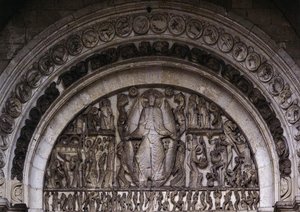
The name of the person who painted the walls of Sant Climent remains lost to time, leaving only the title of the Master of Taüll to mark their presence. The focus remained on the central figure, a Christ in Majesty, seated upon a throne and surrounded by the symbols of the four Evangelists.
ChineseBlue-green landscapeWikipedia in 10/32 languages
Wang Ximeng was a Chinese painter active during the Northern Song dynasty. A remarkable prodigy, he was a student at the imperial court's school of paintings. His talent was recognized by Emperor Huizong of Song, who saw his potential and personally taught him.
JapaneseBorn in KyotoNise-e, Yamato-e, Kamakura periodWikipedia in 8/32 languages
In his approach to painting, Nobuzane utilized a technique that favored clarity and psychological depth over mere decoration. These lines were often filled with dense masses of color, particularly when depicting the heavy, stiff robes of the nobility. Portrait of Emperor Go-Toba: An example of his engagement with the highest levels of Japanese leadership.
Rómában született körülbelrel 1240-ben, élete azonban viszonylag sötét háttérben marad; a feljegyzések szerint pictor romanus néven írta alá alkotásait, ami a Szent Pál Apostol külvárosi bazilika köréhez való mély kötődését sejteti, ahol kezdődött fényes pályafutása. Ez az első megrendelés merész szakítást jelentett az akkori Európában uralkoló stilisztikus, síkos ábrázolásokból, Cavallinit pedig a művészettörténet egyik korai hőseként állította be arra a irányzatra, amely később a római naturalizmus néven vált ismertté.
He was active in the towns of Noyon, Amiens, and Reims around 1225, absorbing the High Gothic style that defined the era. By around 1230, he was working at Mainz Cathedral. In these portraits, such as those of Margrave Eckard II of Meissen and his consort Uta von Ballenstedt, the stone takes on a human quality.
Where to see Tracing the physical remains of his hand requires traveling across several locations.
ChineseBorn in XinzhengTribal ArtWikipedia in 9/32 languages
Jie’s paintings are infused with Buddhist iconography—lotuses symbolizing purity and enlightenment, dragons representing imperial power and auspiciousness—reflecting the dominant religious beliefs of his era. However, these symbols transcend mere decoration; they serve as vehicles for conveying spiritual truths—a hallmark of Daoist art alongside Buddhist principles. Pulleyblank and Alexander Vovin arguing for a profound connection between Jie’s name ("jie") and Proto-Yeniseian (qeˀt/s), “stone.” This hypothesis posits that the root qeˀt/s underlies the ethnonym itself—a daring proposition that suggests Jie's art reflects an awareness of linguistic structures predating Chinese civilization.
His technique showed a movement toward a more substantial depiction of bodies and a greater attention to color. Additionally, some frescoes in the crypt of Siena Cathedral, such as the depiction of the Kiss of Judas, are considered to be his work.
ItalianBorn in ArezzoByzantine influenceWikipedia in 8/32 languages
Born around 1240 in Arezzo, Tuscany, his life is shrouded in mystery, known primarily from a single documentary mention dating back to 1262. The very fact that Giorgio Vasari dedicated space to him in The Lives of the Artists, though often colored by inaccuracies regarding chronology, underscores Margarito’s importance within the local art historical consciousness. His work was largely forgotten until its rediscovery by Giorgio Vasari in the 16th century.
Gao Kegong remains a significant figure for anyone studying the shifting aesthetics of the Yuan dynasty. His technical foundation was built upon the heavy influence of Mi Fu and Mi Youren. The stylistic influence of Dong Yuan and Ju Ran.
ChineseBorn in Fengyang CountyNorthern Song Dynasty paintingWikipedia in 8/32 languages
Cui Bai (崔白), a name synonymous with the delicate vitality of the Northern Song Dynasty, stands as a pivotal figure whose brushwork breathed new life into the classical traditions of China.
Song dynastyBorn in KaifengWikipedia in 7/32 languages
Su Hanchen lived during the Song dynasty, a period of significant change in China. Born in Kaifeng, he spent much of his life in Zhejiang. His talent was recognized early by the imperial court, where he served as a Painter-in-Attendance for Emperor Huizong.
ChineseBorn in Xi'anNorthern Song DynastyWikipedia in 7/32 languages
Daoning’s artistic journey was profoundly shaped by Li Cheng (李成, 919–967), one of the most celebrated landscape painters of the Mid-Song period. His early works, such as “ Snow-covered Mountains ” (雪山), demonstrate this clear influence; the composition is characterized by broad washes of ink, suggesting vast distances and an ethereal quality. Daoning deeply admired Li Cheng's masterful use of atmospheric perspective – the subtle gradations of color and tone that create a sense of depth and distance – and meticulously emulated his techniques.
ChineseBlue-and-green landscape paintingWikipedia in 6/32 languages
Zhao Boju’s brushwork was defined by a meticulous precision that bridged the gap between different eras of Chinese tradition. He was a practitioner of the blue-and-green landscape style, a method that relied on the application of mineral pigments to create a sense of depth and permanence.
Born in ChinaTang dynasty styleWikipedia in 6/32 languages
Ren Renfa was an expert of irrigation works, artist, and a government official of the Yuan dynasty. Born in Qinglong Town, Songjiang, he also served as a hydrological engineer, where his work included dredging an area in what is now Beijing to improve the water supply and leading a team to build embankments after the Yellow River burst its banks.
“Duccio’s hand worked primarily in egg tempera on wood panels, a medium that required both patience and precision.” — from our biography of Duccio Di Buoninsegna (#2).
Where are the great works of High Medieval art today?