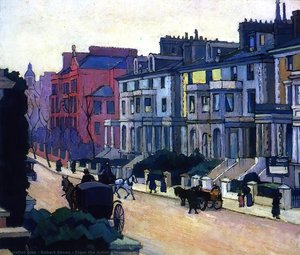
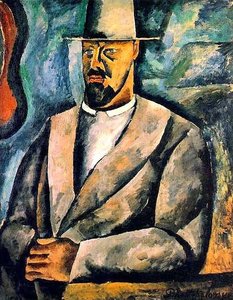
Fauvist: original voices

Famous Fauvist Festőalkotók: 14 Original Voices

Henri Matisse (1869–1954) is the most famous Fauvist festő, whose singular vision gave us The Joy of Life - Henri Matisse és Nasturtiums with ''The Dance'' (II). Next stand André Derain, Maurice de Vlaminck, Raoul Dufy és Georges Rouault. These 14 festőalkotók, from Robert Polhill Bevan (born 1865) to Marguerite Zorach (born 1887), came from 6 countries.

Our selection. Artists whose works our catalogue attaches to Fauvist, in the order of our fame ranking. Artists born after 1955 with no Wikidata identifier stay out until verified. The Wikipedia figure counts our 32 languages with an article on the artist.

  1. The Joy of Life - Henri Matisse, Henri Matisse alkotása1Henri Matisse
  2. London Bridge, André Derain alkotása2André Derain
  3. Houses at Chatou, Maurice de Vlaminck alkotása3Maurice de Vlaminck

In brief

Fauvist in brief

  • 14Művészek
  • 1865–1887Születési év
  • 6Születési országok
  • 2Nők
  • 3 799Művek a katalógusunkban
A legtöbb születéssel rendelkező városok
Le Cateau-Cambrésis (1), Chatou (1), Párizs (1), Le Havre (1)
A legfontosabb művekkel rendelkező múzeumok
Hermitaeus-múzeum (2), MoMA - Museum of Modern Art (1), Art Institute of Chicago (1), Villa Flora (1)
Ezen a listán szereplő nők
Georgette Agutte, Marguerite Zorach

One artist at a time

14 Fauvist Festőalkotók and their signature works

1of 14

Henri Matisse

Francia Born in Le Cateau-Cambrésis Fauvizmus, posztimpresszionizmus, kubizmus Wikipedia in 32/32 languages
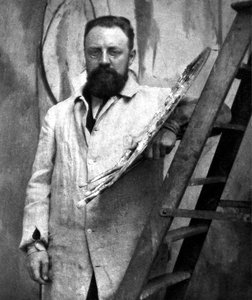
Henri Matisse

Matisse 1869. december 31-én érkezett a világra egy szövőház kis otthonában a rue du Chêne Arnaud utcában. Ez a apró ház Franciaország, Le Cateau-Cambrésis településén volt az a kiindulópont, amelyről az élet később messze elszakadt a Nord megye csendjétől. A középiskola befejezése után Matisse Párizsba költözött, hogy jogot tanuljon. 1887-ben a francia fővárosban a jogelmélet merev struktúráira összpontosítva töltötte idejét.

Signature works · The 100 signature works

2of 14

André Derain

Francia Born in Chatou ['Fauvizmus', 'Újklasszicizmus'] Wikipedia in 28/32 languages

André Derain

1880-ban André Derain a Franciaország Yvelines tartományában fekvő, békés Chatou falujában jött a világra. A festőművész útja azonban nem volt az egyetlen gondolata. 1898-ban egy strukturáltabb oktatást keresve rövid ideig a mérnöki tanulmányokat folytatta az Académie Camillo képviselője alatt. Pont ezek a akadémiai termekben vette el az életének döntő irányt; Eugène Carrière tanítványaként vett részt festőtanfolyamokon, ahol találkozott Henri Matisse -szal.

Signature works · The 100 signature works

3of 14

Maurice de Vlaminck

Francia Born in Párizs Fauvizmus Wikipedia in 26/32 languages

Maurice de Vlaminck

Vlaminck stands as a cornerstone of the Fauvist movement (1904–1908), a revolutionary artistic endeavor characterized by its audacious embrace of color and simplified forms. His distinctive style is instantly recognizable through several key elements: Bold Color Choices: Vlaminck eschewed naturalistic hues, opting instead for vibrant, emotionally charged colors—a deliberate departure from Impressionist tradition. From 1908 onwards, Cézanne’s palette—characterized by muted tones—influenced Vlaminck’s artistic explorations, prompting a shift towards monochromatic hues that conveyed solemnity and contemplation.

Signature works · The 100 signature works

4of 14

Raoul Dufy

Francia Born in Le Havre Fauvizmus Wikipedia in 27/32 languages

Raoul Dufy

By the 1920s, Dufy had fully blossomed into a master of what became known as his “stenographic” style. He painted orchestras, racecourses, and seascapes with an effervescent quality that captured the spirit of the Jazz Age. Initially, the Impressionists – Monet, Pissarro, and others – provided him with a foundational understanding of light, color, and landscape painting.

Signature works · The 100 signature works

6of 14

Albert Marquet

Francia Born in Bordeaux Fauvizm, Naturalizmus Wikipedia in 20/32 languages

Albert Marquet

Élete egyik kulcsfontosságos fordulópontja 15 éves korában volt, amikor Párisba költözött és felvételt nyert az École des Arts Décoratifs-ba. Marquet továbbra is tanulmányozta a prestíziós École des Beaux-Arts-ot Gustave Moreau irányítása alatt, elmélyülve a szimbolista esztétikában, miközben saját utat is meghatározott a modern kifejezésmód felé.

Signature works · The 100 signature works

7of 14

Kees Van Dongen

Holland Born in Delfshaven Fovizmus Wikipedia in 26/32 languages

Kees Van Dongen

Kees van Dongen, született nevén Cornelis Theodorus Maria van Dongen, 1877-ben, a XX. század elejének egyik leglenyűgözőbb hangjaként maradt fenn. Hazája, Rotterdam sötét tónusú, melankolikus hagyományait képviselő Haag Iskola környékéről indult, majd 1897-ben, Párizs megérkezésével radikális metamorfózison ment keresztül. Távolodva a Rembrandt hatását visszhangzó, visszafogott tájaktól, van Dongen magát a Montmartre neonfényű pulzusának áldozattá érezte.

Signature works · The 100 signature works

8of 14

Georgette Agutte

Francia Born in Calais Fauvista, festő, szobrász Wikipedia in 10/32 languages

Georgette Agutte

Georgette Agutte (1867-1922) e történelmi elhanyagolás megrendítő példájaként áll a múlt előtt. Körében olyan fénycsillagok találtak meg, mint Matisse vagy Georges Rouault, ami a korabeli fejlődő avantgarde áramlatok iránti érdeklődésére utalt. Tájképei, mint például a „Le Château Antique” (1903), álomszerű intenzitással vannak átárasztva, ahol a formákat egyszerűsített alakokként jeleníti meg a színek viharos háttere előtt.

Signature works · The 100 signature works

9of 14

Louis Valtat

French Born in Dieppe Fauvism Wikipedia in 8/32 languages

Louis Valtat

Under the guidance of masters such as Gustave Boulanger and Jules Lefebvre, he mastered the disciplined foundations of academic painting, yet his spirit yearned for something more liberated. Even as he experimented with the optical precision of Pointillism and the decorative flatness of the Nabis, a sense of joyful immediacy remained the hallmark of his oeuvre.

Signature works · The 100 signature works

10of 14

Charles Camoin

French Born in Marseille Fauvist Expressionism Wikipedia in 9/32 languages

Charles Camoin

While his initial artistic sensibilities were nurtured by the soft, atmospheric nuances of Impressionism —drawing inspiration from the delicate touch of Monet and Sisley—Camoin possessed an underlying restlessness that sought something far more visceral. The trajectory of his life shifted irrevocably when he moved to Paris to study at Gustave Moreau's École des Beaux-Arts. Whether capturing the tranquil harbor of Cassis or the winding village streets of Collioure, his paintings are characterized by a heavy impasto technique.

Signature works · The 100 signature works

11of 14

Marguerite Zorach

Born in Santa Rosa Wikipedia in 8/32 languages

Marguerite Zorach

A lengthy world tour with her aunt from 1911-1912 took her to Jerusalem, Egypt, India, Burma, China, Hong Kong, Japan, and Hawaii. Upon returning to California, she painted the Sierra Nevada mountains but faced disapproval from her parents, resulting in the destruction of much of her early work. Despite being initially rejected from the École des Beaux-Arts, she studied at the Académie de la Palette under John Duncan Fergusson and Jacques-Emile Blanche, fostering her unique style.

Signature works · The 100 signature works

12of 14

Robert Polhill Bevan

Brit Born in Hajóhíd Fauvizm, Szegénység Wikipedia in 7/32 languages

Robert Polhill Bevan

This collective spirit extended to his involvement with the London Group and the Cumberland Market Group, further demonstrating his commitment to progressive artistic movements. These affiliations were not merely social; they fostered a dynamic exchange of ideas that shaped Bevan's artistic trajectory and contributed to the broader evolution of British art. His landscapes – particularly those depicting the Blackdown Hills near Clayhidon in Devon – are imbued with an atmospheric sensitivity that captures the subtle nuances of light and color.

Signature works · The 100 signature works

13of 14

Konchalovsky Pjotr

Orosz Born in Szlovjanszk Fauvizmus, Cézannizmus, Szocialista realizmus Wikipedia in 9/32 languages

Konchalovsky Pjotr

The story of Pyotr Konchalovsky begins in the village of Slavianka, located within the Kharkov Governorate of the Russian Empire. His formal education began in the classrooms of the Moscow School of Painting, Sculpture and Architecture. This pursuit of color and emotion led him to Arles, where he attempted to penetrate the heart of Van Gogh’s vision.

Signature works · The 100 signature works

14of 14

Auguste Chabaud

Amerikai Born in Nîmes Realizmus, Modernizmus Wikipedia in 5/32 languages

Auguste Chabaud

Edward Hopper (1882. július 22. – 1967. május 15.) az amerikai művészet egyik tartós és rejtélyes legmeghatározóbb alakja marad. Rövid ideig a New York-i Correspondence School of Illustrating intézményében tanult, mielőtt beiratkozott a New York School of Art egyetemre, William Merritt Chase és Robert Henri tanítványaként.

Signature works · The 100 signature works

Signature works

Signature Fauvist works

  1. The Joy of Life - Henri Matisse, Henri Matisse alkotása

    The Joy of Life - Henri Matisse

    Henri Matisse

    2026

  2. London Bridge, André Derain alkotása

    London Bridge

    André Derain

    1906 · MoMA - Museum of Modern Art, New York

  3. Houses at Chatou, Maurice de Vlaminck alkotása

    Houses at Chatou

    Maurice de Vlaminck

    Art Institute of Chicago

  4. The Thoroughbred, Raoul Dufy alkotása

    The Thoroughbred

    Raoul Dufy

    1940

  5. Head of Christ, Georges Rouault alkotása

    Head of Christ

    Georges Rouault

  6. National Holiday at Le Havre, Albert Marquet alkotása

    National Holiday at Le Havre

    Albert Marquet

    1906 · Villa Flora, Winterthur

  7. Saida, Kees Van Dongen alkotása

    Saida

    Kees Van Dongen

    1920

  8. Cactus rouges (dans trois cache pots de Metthey) Cactus rouges (dans trois vases Methey) (Titre attribué), Georgette Agutte alkotása

    Cactus rouges (dans trois cache pots de Metthey) Cactus rouges (dans trois vases Methey) (Titre attribué)

    Georgette Agutte

A timeline

Fauvist through its signature works

  1. 1903
  2. 1906
  3. 1906
  4. 1911
  5. 1911
  6. 1915
  7. 1920
  8. 1927
  9. 1940

Figures

The figures

Every name

List of 14 famous Fauvist festőalkotók, every name

  1. 1Henri MatisseHenri MatisseFrancia · 1869–1954
  2. 2André DerainAndré DerainFrancia · 1880–1954
  3. 3Maurice de VlaminckMaurice de VlaminckFrancia · 1876–1958
  4. 4Raoul DufyRaoul DufyFrancia · 1877–1953
  5. 5Georges RouaultGeorges RouaultFrancia · 1871–1958
  6. 6Albert MarquetAlbert MarquetFrancia · 1875–1947
  7. 7Kees Van DongenKees Van DongenHolland · 1877–1968
  8. 8Georgette AgutteGeorgette AgutteFrancia · 1867–1922
  9. 9Louis ValtatLouis ValtatFrench · 1869–1952
  10. 10Charles CamoinCharles CamoinFrench · 1879–1965
  11. 11Marguerite ZorachMarguerite Zorach1887–1968
  12. 12Robert Polhill BevanRobert Polhill BevanBrit · 1865–1925
  13. 13Konchalovsky PjotrKonchalovsky PjotrOrosz · 1876–1956
  14. 14Auguste ChabaudAuguste ChabaudAmerikai · 1882–1955

Questions

Your questions

  • Which Fauvist festő is the most famous?

    First place goes to Henri Matisse (#1); André Derain (#2) and Maurice de Vlaminck (#3) complete the podium.

  • Who are the 5 most famous Fauvist festőalkotók?

  • Which techniques define Fauvist art?

    “Energetic Brushwork: His canvases pulsate with dynamism thanks to thick, visible brushstrokes that capture the immediacy of observation and imbue his paintings with palpable energy.” — from our biography of Maurice de Vlaminck (#3).

  • In which period did Fauvist art flourish?

    Most festőalkotók in this list were born in the 1870s (7 of 14), between 1865 and 1887 overall.

  • Where are the great works of Fauvist art today?

    The museums holding the most key works of this list are Hermitaeus-múzeum (2), MoMA - Museum of Modern Art (1) és Art Institute of Chicago (1).

  • Who are the most famous Fauvist festőalkotók from Franciaország?

    The highest-ranked festőalkotók born in Franciaország are Henri Matisse (#1), André Derain (#2), Maurice de Vlaminck (#3), Raoul Dufy (#4) és Georges Rouault (#5).

  • Where were most Fauvist festőalkotók born?

    Franciaország: 8 of the 14 festőalkotók in this list were born there, then France (2) és Hollandia (1).

  • Who was the first Fauvist festő?

    The earliest-born festő in this list is Robert Polhill Bevan (#12), born in 1865.

  • Who are the most famous female Fauvist festőalkotók?

    This list includes 2 women: Georgette Agutte (#8) és Marguerite Zorach (#11).

  • Where can I see more works by these festőalkotók?

    Our catalogue holds 3,799 works by these festőalkotók.

Read

Stories on OriginalUniqueArt.com

Other movements

Famous artists of other movements

Other periods

Famous artists across the periods

Discover more

More artists to discover