

 Előnézet
 Megosztás
 Megosztás
 Részletek
 Útmutató

 Letöltés
 Hasonló darabok
 X-ray felvétel
 Diavetítés
 Statisztika
Evening Breeze


 Tovább olvasom
Giclée / Műnyomat
Múzeumi minőségű giclée vagy vászonnyomat, gyors gyártással és rugalmas finomítási lehetőségekkel. ( Kézzel festett másolat vásárlása Áttérés digitális képre)




P118B Ft10

P118H Ft10

P118W Ft10

P438Z Ft10

P508JH Ft12

P508YH Ft12

P805H Ft10

P805Z Ft10

P919BZ Ft10

P919G Ft10

P919XJ Ft10

P959ZH Ft10

P968JZ Ft12

W106C Ft8

W218G Ft10

W218JH Ft8

W218Y Ft10

W307PJ Ft10

W316G Ft10

W316PJ Ft8

W316Y Ft10

W398PJ Ft8

W4111J Ft10

W500HY Ft15

W500JH Ft15

W692G Ft12

W849H Ft8

W940BG Ft15

W953PJ Ft8




Válasszon előre meghatározott méreteink közül, amelyek megfelelnek a műalkotás eredeti arányainak.

Írja be a keretének vagy a falának megfelelő szélességet és magasságot. A nyomatot csak le lehet vágni, soha nem tehető nagyobbá, mint az eredeti kép, így egy eltérő alakú méretnél a kép egy része elveszik. Mielőtt bármit kinyatintanánk, küldünk egy digitális próbamodellt jóváhagyásra. Az oldalon látható kép nem tartalmazza a valós levágást — ezt csak a próbamodell mutatja meg.
Világszerte történő kiszállítás területére mindössze 2 hét alatt, a szokásos 4-5 hét helyett. (25 október)

Ingyenes globális expressz szállítás

Prémium minőségű len vászon

Teljes körű szállítási biztosítás

Vámvisszatérítési Garancia

Tökéletes színarányosság garancia

100 napos visszaküldési garancia (csak gyártási hibás termékek esetén)

100% pénzvisszatérítési garancia

Több darab vásárlásakor kedvezmény
 Az üvegkeretes opció csak 110 cm alatti méretben érhető el

Evening Breeze
Giclée / Műnyomat
Reprodukció méretei
-


Összesített ár
Ft 25642
A Symphony of Light and Color
In the quiet transition between day and night, where the sun’s warmth lingers against the encroaching cool of the dusk, lies the soul of Henri Edmond Cross’s “Evening Breeze.” Completed between 1893 and 1894, this masterpiece serves as a luminous gateway into the heart of Neo-Impressionism. The painting invites the viewer to a tranquil coastal vista, where the air feels heavy with the scent of salt and the soft hum of twilight. It is not merely a landscape; it is an intellectual and emotional exploration of how we perceive light. As the eye wanders across the canvas, one is immediately struck by the ethereal glow that seems to emanate from within the paint itself, capturing that fleeting, magical moment when the world holds its breath before the stars emerge.
The composition is a masterclass in balance and depth, guiding the observer through a series of carefully layered planes. In the immediate foreground, two reclining female figures rest amidst flowering shrubs, their presence lending a sense of profound peace and human connection to the wildness of the coast. As the gaze moves toward the midground, a solitary figure stands near the trees, acting as a bridge between the intimate foreground and the expansive horizon. Beyond them, the sea stretches toward distant, hazy hills, dotted with the tiny, rhythmic silhouettes of sailboats. This arrangement creates a sense of immense space, drawing the viewer into a world that feels both vast and intimately reachable.
The Science of the Dot: Pointillist Mastery
To understand the brilliance of “Evening Breeze,” one must look closer at the revolutionary technique employed by Cross. Moving away from the spontaneous, blended strokes of traditional Impressionism, Cross embraced Pointillism—a method of applying tiny, distinct dots of pure color side-by-side. This was not merely a stylistic choice but a scientific endeavor. By placing contrasting hues next to one another, Cross relied on the viewer's eye to perform "optical mixing." When standing at a distance, the vibrant oranges, yellows, and pinks of the sunset merge with the deep blues and charcoal greys of the sea and cliffs, creating a shimmering, vibrating effect that traditional pigment blending could never achieve.
This granular texture gives the surface of the painting a unique luminosity. The light does not just sit upon the canvas; it seems to dance within the very structure of the color dots. For the collector or interior designer, this technique offers an unparalleled visual richness. A high-quality reproduction of this work brings a dynamic energy into a room, as the interplay of light and color changes subtly depending on the ambient lighting of the space, much like the real evening breeze that inspired its creation.
Symbolism and Emotional Resonance
Beyond its technical prowess, “Evening Breeze” is steeped in symbolic meaning. The palette itself tells a story of resilience. The somber, dark tones of the rocky shoreline and the deep shadows of the cliffs represent the inevitable approach of darkness and the unknown. Yet, these are punctuated by brilliant, defiant splashes of warmth—the fiery oranges and soft pinks of the setting sun. This juxtaposition serves as a metaphor for vitality and beauty persisting even in the face of encroaching shadows, offering a message of hope and enduring grace.
The atmosphere of the painting is one of profound serenity and contemplation. The figures in repose suggest a state of meditative rest, encouraging anyone who views the piece to pause their own frantic pace and embrace a moment of stillness. For those seeking to curate an environment of sophistication and calm, “Evening Breeze” provides more than just decoration; it provides an emotional sanctuary. It is a timeless tribute to the beauty of the natural world and the enduring power of light to transform our perception of reality.
Gyakran Ismételt Kérdések
Milyen kontraszt jellemzi „Evening Breeze”, Henri-Edmond Cross alkotása alkotást?
A „Evening Breeze”, Henri-Edmond Cross alkotása kontrasztszintje Balanced.
Hol láthatom a(z) "Evening Breeze" előnézetét?
A „Evening Breeze”, Henri-Edmond Cross alkotása reprodukciójának megtekintéséhez nyissa meg a mű Előnézet oldalát.
Hogyan írják le „Evening Breeze”, Henri-Edmond Cross alkotása színezetét?
A "Evening Breeze" színei egy Earthy palettát alkotnak. Ez a besorolás a domináns színek családjait írja le.
A művész életrajza
A Life Bathed in Light: The Journey of Henri Edmond Cross
Henri Edmond Cross, born Henri-Edmond-Joseph Delacroix in 1856 in the northern French town of Douai, was an artist whose life and work were inextricably linked to a pursuit of light, color, and a harmonious vision of existence. His story is one of artistic evolution, driven by both personal circumstance and a fervent embrace of avant-garde ideals. The son of an adventurous father and a British mother, Cross’s early years saw a relocation to Lille, where his budding talent was recognized and nurtured by Dr. Auguste Soins, a patron who provided crucial financial support for lessons with the esteemed Carolus-Duran. This foundational training instilled in him a respect for classical technique—a grounding that would later be brilliantly subverted as he ventured into the revolutionary world of Neo-Impressionism. Even early on, a desire to forge his own artistic identity led him to adopt “Cross” as part of his name, and eventually fully transition to "Henri-Edmond Cross" in 1886, distancing himself from both the celebrated Eugène Delacroix and another contemporary artist sharing the same surname. This act was symbolic of a larger ambition: to define a unique artistic voice amidst a rapidly changing art world.From Realism to Radiant Divisionism
Cross’s initial artistic explorations leaned towards the Realist tradition, manifesting in portraits and still lifes that demonstrated technical skill but lacked a distinctive spark. He began with depictions of everyday life, capturing the faces and scenes of his native Douai with meticulous detail. However, the Parisian art scene of the 1880s was abuzz with new ideas, and Cross found himself increasingly drawn to the revolutionary principles of Neo-Impressionism—a movement spearheaded by Georges Seurat and Paul Signac. This encounter proved transformative. The scientific approach to color theory, the meticulous application of tiny, distinct brushstrokes (or “points”) designed to create optical mixing, resonated deeply with his artistic sensibilities. Simultaneously, recurring bouts of rheumatism led him to seek solace in the warmer climate of southern France, beginning in 1883 and culminating in a permanent settlement in Saint-Clair in 1891. The radiant light and vibrant landscapes of this region became integral to his artistic vision. He didn’t simply replicate Seurat's pointillism; instead, he evolved it, favoring larger, more mosaic-like brushstrokes that retained the luminosity of divided color while allowing for greater expressive freedom. This “second generation” Neo-Impressionism was characterized by its bold chromatic intensity and dynamic compositions—a style that would become his signature.Anarchist Ideals and Utopian Visions
Beyond technical innovation, Cross’s work was deeply informed by a strong sense of social and political idealism—specifically, anarchist beliefs. This conviction wasn't overtly propagandistic; rather, it manifested in his depictions of idyllic rural scenes, portraying harmonious coexistence between humanity and nature as an alternative to the perceived corruption and alienation of modern urban life. His paintings weren’t merely aesthetic exercises but visual statements advocating for a more equitable and peaceful world. The influence of this ideology is subtly woven into the fabric of his compositions, imbuing them with a sense of utopian longing. Works like *Before the Storm* and *The Farm, Evening* are not simply representations of nature; they are allegories for a just society—the vibrant colors and dynamic brushwork evoking energy and optimism, suggesting transformation and renewal. He sought to capture a world where humanity lived in balance with its surroundings, free from the constraints of industrialization and social hierarchy.The Development of His Style & Key Works
Cross’s artistic style underwent a significant evolution throughout his career. Initially, he employed a more rigid adherence to Seurat's pointillist technique, creating works dominated by precise, geometric patterns of color. However, as he spent increasing time in southern France and developed a deeper understanding of light and atmosphere, his approach became looser and more expressive. He began to incorporate larger brushstrokes, allowing for greater textural variation and a richer sense of depth. This shift is particularly evident in his later landscapes, which are characterized by their luminous colors, dynamic compositions, and evocative mood. Key works such as *Before the Storm*, with its dramatic skies and hints of anarchist themes, *The Washerwoman*, showcasing his mastery of Pointillism and divisionism, and *The Farm, Evening*, a serene depiction of rural life embodying his utopian vision, exemplify this evolution. These paintings demonstrate not only technical skill but also a profound engagement with the world around him—a desire to capture its beauty, complexity, and inherent contradictions.Legacy and Influence on Modern Art
Henri-Edmond Cross’s artistic journey culminated in a significant body of work that profoundly impacted the course of modern art. His first individual exhibition at the Galerie Druet in 1905, followed by a retrospective organized by Félix Fénéon at the Galerie Bernheim-Jeune in 1908, cemented his reputation as a leading figure in Neo-Impressionism. However, his influence extended far beyond this movement. His bold use of non-local color—applying colors not according to their natural appearance but for expressive effect—and his willingness to distort forms paved the way for the radical experimentation of Fauvism. Artists like Henri Matisse and André Derain were deeply inspired by Cross’s work, recognizing in it a liberation from traditional constraints and a pathway towards greater artistic freedom. He demonstrated that color could be used not merely to represent reality but to evoke emotion and create a purely visual experience. He died of cancer in Saint-Clair in 1910, leaving behind a legacy that continues to resonate with artists and art lovers today. His paintings remain powerful testaments to the transformative potential of color, light, and form—and to the enduring power of art as a vehicle for social and political expression.
Henri-Edmond Cross
1856 - 1910 , Franciaország
Gyors információk
- Artistic Movement Or Style: Neo-Impressionizmus
- Artists Or Movements Influenced By This Artist:
- Henri Matisse
- Fauvizmus
- Artists Who Influenced This Artist:
- Georges Seurat
- Paul Signac
- Date Of Birth: 1856
- Date Of Death: 1910
- Full Name: Henri Edmond Cross
- Nationality: Francia
- Notable Artworks:
- Les îles d’or
- L’air du soir
- La Ranelagh
- Place Of Birth: Douai, Franciaország
Kapcsolódó cikkek

Paul Cézanne 25 Mesterműve: A Modern Művészet Úttörői | OriginalUniqueArt
Fedezze fel Paul Cézanne 25 legikonikusabb művét! Ismerje meg a posztimpresszionizmus úttörőjének festményeit, technikáját és inspirációit. Vászonképek, portrék, tájképfestmények – minden otthonba. Böngéssze gyűjteményünket a OriginalUniqueArt-on!

Henri Edmond Cross: A Pioneer of Neo-Impressionism & the Divisionist Aesthetic
Explore the life & art of Henri Edmond Cross, a pivotal Neo-Impressionist painter. Discover his innovative divisionist technique, political affiliations, and lasting influence on modern art movements like Fauvism. Learn about key works & legacy.

Evocations of Place: A Historical Journey Through Landscape Art
Explore the rich history of landscape art with OriginalUniqueArt. Discover renowned artists, movements like Impressionism & tonalism, and expert guidance for collecting timeless pieces. Find your perfect serene escape today!

Evocations of Place: A Historical Journey Through Landscape Art
Explore the rich history of landscape art with OriginalUniqueArt. Discover renowned artists, movements like Impressionism & Romanticism, and expert guidance for collecting timeless pieces. Find your perfect serene escape today!
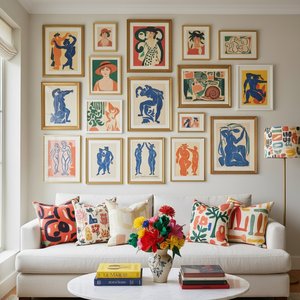
Henri Matisse 25 Mesterműve: Színek és Érzések Világa - OriginalUniqueArt
Fedezze fel Henri Matisse 25 legikonikusabb művét! Ismerje meg a fauvizmus színeit, az expresszionizmus formáit és a modern művészet mesterének életművét. Vászonképek, nyomatok – inspiráció otthonába a OriginalUniqueArt.com-on!


