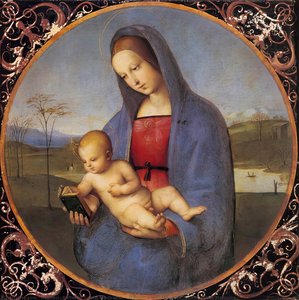
Aperçu en situation
 Partager
 Partager
 Détails
 Guide imprimable

 Télécharger
 Articles similaires
 Radiographie
 Voir le diaporama
 Statistiques
Portrait de Agnolo Doni


 Afficher la suite
Reproduction à l'huile faite à la main
Huile sur toile peinte à la main, avec cadre et dimensions personnalisés, réalisée sur commande par nos artistes. ( Passer au format impression Passer au format image numérique)




P118B €10

P118H €10

P118W €10

P438Z €10

P508JH €12

P508YH €12

P805H €10

P805Z €10

P919BZ €10

P919G €10

P919XJ €10

P959ZH €10

P968JZ €12

W106C €8

W218G €10

W218JH €8

W218Y €10

W307PJ €10

W316G €10

W316PJ €8

W316Y €10

W398PJ €8

W4111J €10

W500HY €15

W500JH €15

W692G €12

W849H €8

W940BG €15

W953PJ €8




Choisissez parmi nos formats prédéfinis qui respectent les proportions originales de l’œuvre.

Saisissez la largeur et la hauteur souhaitées, pour s'adapter à votre cadre ou à votre mur. Cette œuvre est peinte à la main ; ainsi, pour un format de forme différente, l'artiste peut peindre un peu plus autour du tableau ou réduire légèrement les bords — c'est vous qui choisissez. Nous vous envoyons une maquette numérique pour approbation avant que la peinture ne commence. L'image présentée sur cette page ne reflète pas le résultat réel — seule la maquette le fait.
Après la commande, l’équipe OriginalUniqueArt.com contactera le client par e-mail pour recueillir ses instructions et lui fournira une maquette d’aperçu
Livraison dans le monde entier () en 3 à 4 semaines au lieu des 5 semaines habituelles. (21 octobre). Aucun compromis sur la qualité.

Livraison express gratuite dans le monde entier

Toile de lin de haute qualité

Assurance transport complète

Garantie de remboursement des droits de douane

Garantie de fidélité des couleurs

Garantie de retour de 100 jours (uniquement en cas de défaut)

Garantie de remboursement à 100%

Tarifs dégressifs sur quantité
 L'option verre n'est disponible que pour les dimensions inférieures à 110 cm.

Portrait de Agnolo Doni
Technique de reproduction
Format de la reproduction
-


Prix total final
€ 262
Portrait of Agnolo Doni : A Renaissance Masterpiece
Raphael’s “Portrait of Agnolo Doni,” completed around 1506, stands as an emblem of High Renaissance artistic achievement—a testament to meticulous observation and refined aesthetic sensibility. More than just a likeness of a wealthy Florentine merchant, it embodies the humanist ideals that defined the era, reflecting a profound understanding of human psychology and capturing the essence of aristocratic dignity.
- Subject Matter: The portrait depicts Agnolo Doni, married to Maddalena Strozzi, presenting him in a pose that exudes confidence and composure. His gaze directs firmly toward the viewer, establishing an immediate connection between subject and observer—a hallmark of Renaissance portraiture.
- Style & Technique: Raphael employed oil paint on panel, utilizing sfumato—a technique pioneered by Leonardo da Vinci—to achieve subtle gradations of tone and color. This masterful blending creates a luminous effect that softens the contours of the figure, conveying an atmosphere of serenity and elegance.
- Composition: The painting’s balanced composition is characterized by a low horizon line, mirroring the landscape backdrop. This deliberate choice reinforces the humanist preoccupation with observing nature—a stylistic influence traceable to Leonardo’s groundbreaking work on the Mona Lisa. Raphael skillfully integrates architectural elements into the scene, enhancing depth and creating a harmonious visual experience.
- Historical Context: Created during Federico Montefeltro's reign in Urbino—Raphael’s birthplace—the portrait reflects the artistic fervor of the time. It aligns with broader trends toward idealized representations of human beings—a departure from earlier Gothic conventions—and anticipates developments in Mannerism that would emerge shortly thereafter.
- Symbolism: The attire worn by Agnolo Doni—a scarlet jacket adorned with black trim—symbolizes nobility and power, while his hat conveys respectability. Maddalena Strozzi’s dress is equally refined, emphasizing her status as a lady of distinction. The landscape background serves as an allegorical reminder of the beauty and grandeur of the natural world.
Currently housed in the Pitti Palace Museum in Florence—a repository of artistic treasures—the “Portrait of Agnolo Doni” continues to inspire admiration for its technical brilliance and expressive depth. Its enduring appeal lies not only in its visual beauty but also in its ability to convey a timeless vision of human dignity and refinement.
- Further Exploration: For those interested in delving deeper into Raphael’s artistic legacy—visit /art/list/?Filter=8YDNB2-Raphael-(Raffaello-Sanzio-Da-Urbino)-Portrait-of-Agnolo-Doni and /art/list/?Filter=5ZKE7V-Raphael-(R Raffaello-Sanzio-Da-Urbino)-Cardinal-Tommaso-Inghirami for more information about Raphael’s oeuvre and artistic influences.
To gain a comprehensive understanding of Raphael's impact on Renaissance art—consult https://Wikipedia.org/wiki/Raphael.
Questions et réponses
«Portrait de Agnolo Doni» de Raphaël est-elle une œuvre lumineuse ou sombre ?
La luminosité perçue de «Portrait de Agnolo Doni» de Raphaël est équilibré. Elle peut être harmonisée avec la lumière de l'espace prévu.
Puis-je voir «Portrait de Agnolo Doni» de Raphaël sous différents éclairages ?
La page Rayons X de «Portrait de Agnolo Doni» de Raphaël est un visionneur interactif qui vous permet de parcourir onze couches optiques de l'image de l'œuvre, incluant une vue de style radiographie.
Quelle technique a été utilisée pour «Portrait de Agnolo Doni» de Raphaël ?
« Portrait de Agnolo Doni » est réalisé en Huile sur toile.
Biographie de l'artiste
**Jeunesse et formation**
Raphaël (Raffaello Sanzio da Urbino), un peintre et architecte italien renommé, est né entre le 28 mars et le 6 avril 1483, dans la petite mais culturellement significative ville d'Urbino. Son père, Giovanni Santi, était peintre de cour du duc, lui offrant une exposition précoce au monde artistique. Après le décès de son père à l’âge de onze ans, Raphaël a vraisemblablement géré l’atelier familial, consolidant ainsi sa base artistique.**Carrière artistique et influences**
Le parcours artistique de Raphaël peut être divisé en trois phases distinctes, chacune marquée par un style unique :- Premières années à Umbrie : caractérisée par l'influence de son père et l'ambiance culturelle d’Urbino.
- Période florentine (1504-1508) : absorbant les traditions artistiques de Florence, qui a considérablement façonné son style.
- Période romaine (1508-1520) : travaillant pour deux papes et leurs associés, produisant certaines de ses œuvres les plus célèbres, notamment l’école des Athènes dans la stanza della segnatura du Vatican.
**Œuvres notables et héritage**
Certaines des œuvres notables de Raphaël comprennent :- Le jugement de Salomon (voir sur OriginalUniqueArt)
- La madone d’Esterházy (voir sur OriginalUniqueArt)
- Les Stanze Vaticanes - Vue de la stanza della segnatura (voir sur OriginalUniqueArt)
- Saint Sébastien (voir sur OriginalUniqueArt)
- La femme voilée (voir sur OriginalUniqueArt)
**Influence et héritage**
L'influence de Raphaël sur l'art est profonde, avec son œuvre constituant un pilier du grand Siècle. Son style serein et harmonieux a servi de modèle à la peinture néoclassique, comme le note l’historien d’art Johann Joachim Winckelmann. Malgré l'influence ultérieure du style de Michel-Ange, Raphaël reste l'un des artistes les plus vénérés de l'histoire. Voir le profil de Raphaël sur OriginalUniqueArt
Raphaël
1483 - 1520 , Italie
En bref
- Artistes Influents:
- Giovanni Santi
- Pietro Perugino
- Date De Décès: 6 avril 1520
- Date De Naissance: 28 mars 1483
- Influences Artistiques: Peinture néoclassique
- Lieu De Naissance: Urbino, Italie
- Mouvement Artistique: Haute Renaissance
- Nationalité: Italienne
- Nom Complet: Raphaël (Raffaello Sanzio)
- Œuvres Notables:
- L'École d'Athènes
- Madone Esterházy
- La Transfiguration
- Les Stanze Vaticanes
Articles connexes
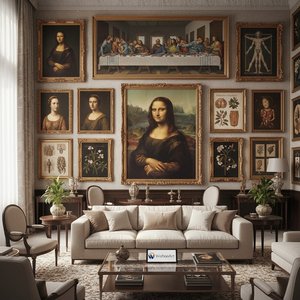
Léonard de Vinci : Les 25 Chefs-d'Œuvre Incontournables pour Décorer Votre Intérieur
Plongez dans l'univers de Léonard de Vinci avec les 25 œuvres incontournables du génie italien. Découvrez l'histoire, les techniques et l'émotion derrière la Mona Lisa, La Cène et bien d'autres chefs-d'œuvre Renaissance. Reproductions haute qualité sur OriginalUniqueArt.com.
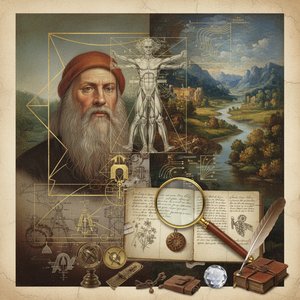
Léonard de Vinci : Synthèse Renaissance de l'Art, de la Science et de l'Observation Humaine – Une Réinterprétation pour le Collectionneur
Explorez l'univers de Léonard de Vinci avec notre analyse approfondie pour collectionneurs avertis. Découvrez ses techniques, son héritage et les clés d'un investissement art réussi. Expertise & authenticité garanties.
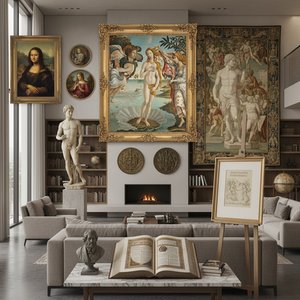
Renaissance Humaniste : 10 Chefs-d'œuvre Révolutionnaires pour Votre Intérieur
Plongez au cœur de la Renaissance humaniste avec 10 chefs-d'œuvre exceptionnels : Léonard de Vinci, Michel-Ange et plus encore. Découvrez l'histoire, les techniques et le symbolisme de ces peintures iconiques. Trouvez votre reproduction d'art idéale sur OriginalUniqueArt.com !
Uffizi : Les 25 Chefs-d'Œuvre Incontournables pour Embellir Votre Intérieur
Plongez au cœur de la Galerie des Offices à Florence ! Découvrez les 25 chefs-d'œuvre incontournables de Botticelli, Léonard de Vinci et autres maîtres italiens. Inspirez votre décoration avec l'art Renaissance : reproductions de qualité muséale sur OriginalUniqueArt.com
Raphaël : Les 25 Chefs-d'œuvre Incontournables pour une Décoration d'Exception
Plongez dans l'univers de Raphaël avec les 25 œuvres incontournables du maître italien. Découvrez l'histoire, la technique et la beauté intemporelle de ses chefs-d'œuvre Renaissance. Reproductions de qualité muséale sur OriginalUniqueArt.com.