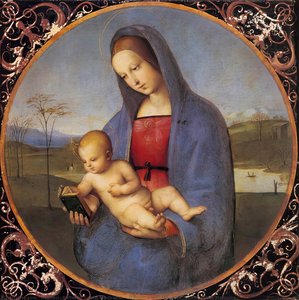
Aperçu en situation
 Partager
 Partager
 Détails
 Guide imprimable

 Télécharger
 Articles similaires
 Radiographie
 Voir le diaporama
 Statistiques
Portrait de Jules II
 Huile sur toile
- Décoration murale
- Renaissance
 1511
1511- Renaissance
 108.0 x 81.0 cm
 National Gallery
 Afficher la suite
Reproduction à l'huile faite à la main
Huile sur toile peinte à la main, avec cadre et dimensions personnalisés, réalisée sur commande par nos artistes. ( Passer au format impression Passer au format image numérique)




P118B €10

P118H €10

P118W €10

P438Z €10

P508JH €12

P508YH €12

P805H €10

P805Z €10

P919BZ €10

P919G €10

P919XJ €10

P959ZH €10

P968JZ €12

W106C €8

W218G €10

W218JH €8

W218Y €10

W307PJ €10

W316G €10

W316PJ €8

W316Y €10

W398PJ €8

W4111J €10

W500HY €15

W500JH €15

W692G €12

W849H €8

W940BG €15

W953PJ €8




Choisissez parmi nos formats prédéfinis qui respectent les proportions originales de l’œuvre.

Saisissez la largeur et la hauteur souhaitées, pour s'adapter à votre cadre ou à votre mur. Cette œuvre est peinte à la main ; ainsi, pour un format de forme différente, l'artiste peut peindre un peu plus autour du tableau ou réduire légèrement les bords — c'est vous qui choisissez. Nous vous envoyons une maquette numérique pour approbation avant que la peinture ne commence. L'image présentée sur cette page ne reflète pas le résultat réel — seule la maquette le fait.
Après la commande, l’équipe OriginalUniqueArt.com contactera le client par e-mail pour recueillir ses instructions et lui fournira une maquette d’aperçu
Livraison dans le monde entier () en 3 à 4 semaines au lieu des 5 semaines habituelles. (21 octobre). Aucun compromis sur la qualité.

Livraison express gratuite dans le monde entier

Toile de lin de haute qualité

Assurance transport complète

Garantie de remboursement des droits de douane

Garantie de fidélité des couleurs

Garantie de retour de 100 jours (uniquement en cas de défaut)

Garantie de remboursement à 100%

Tarifs dégressifs sur quantité
 L'option verre n'est disponible que pour les dimensions inférieures à 110 cm.

Portrait de Jules II
Technique de reproduction
Format de la reproduction
-


Prix total final
€ 262
Portrait of Pope Julius II : A Masterpiece of Renaissance Dignity
Raphael’s “Portrait of Pope Julius II,” completed in 1511, stands as an emblem of the High Renaissance's pursuit of humanist ideals—specifically, portraying human dignity and intellect with unparalleled grace. More than just a likeness of the papal figurehead, it embodies a profound understanding of psychology and visual artistry that continues to captivate viewers centuries later.
- Composition & Symbolism: The painting’s innovative arrangement immediately distinguishes it from earlier portraits. Julius II sits centrally on a throne adorned with acorns—a symbol of the Della Rovere family, Julius II's lineage—underscoring his royal status and familial heritage. His gaze downward conveys thoughtfulness and introspection, reflecting the contemplative spirit characteristic of Renaissance philosophy.
- Technique & Material: Raphael skillfully employs oil paint on panel, achieving remarkable textural depth and luminosity. The meticulous layering of glazes creates a subtle sheen that captures the nuances of light and shadow, enhancing the portrait’s realism. Notably, the background was repainted after its initial creation, revealing an earlier textile design—a testament to the painting's evolution and Raphael’s artistic precision.
- Historical Context: Created during Julius II’s ambitious patronage of the arts – a period marked by transformative cultural endeavors – “Portrait of Pope Julius II” reflects the Renaissance fascination with classical ideals and human potential. It aligns seamlessly with Raphael’s broader artistic vision, exemplified in monumental frescoes adorning Vatican City.
- Emotional Impact: The portrait transcends mere representation; it communicates an aura of solemn dignity and inner contemplation. Raphael's masterful depiction captures Julius II's character—a man burdened by responsibility yet imbued with intellectual curiosity—creating a timeless image that resonates with viewers across generations.
The painting’s enduring influence stems from its pioneering approach to portraiture, establishing a precedent for subsequent artists seeking to convey psychological complexity and visual splendor. Its presence in the National Gallery ensures that this masterpiece continues to inspire admiration and scholarly discussion.
For discerning art enthusiasts and collectors desiring an authentic experience of Raphael's genius, OriginalUniqueArt.com offers exceptional reproductions crafted with meticulous attention to detail—preserving the painting’s original beauty and conveying its profound artistic significance.
Questions et réponses
Quelle est l'orientation de «Portrait de Jules II» de Raphaël ?
«Portrait de Jules II» de Raphaël est une composition en Portrait. Il convient de vérifier les proportions avant de choisir un format d'impression.
Quelle est la forme de «Portrait de Jules II» de Raphaël et quelles sont ses dimensions ?
«Portrait de Jules II» de Raphaël est une composition en Portrait mesurant 108 x 81 cm dans l'original.
«Portrait de Jules II» de Raphaël est-il une peinture, un dessin ou une estampe ?
«Portrait de Jules II» de Raphaël est classé comme Décoration murale. Cette catégorie décrit la nature de l'œuvre originale.
Biographie de l'artiste
**Jeunesse et formation**
Raphaël (Raffaello Sanzio da Urbino), un peintre et architecte italien renommé, est né entre le 28 mars et le 6 avril 1483, dans la petite mais culturellement significative ville d'Urbino. Son père, Giovanni Santi, était peintre de cour du duc, lui offrant une exposition précoce au monde artistique. Après le décès de son père à l’âge de onze ans, Raphaël a vraisemblablement géré l’atelier familial, consolidant ainsi sa base artistique.**Carrière artistique et influences**
Le parcours artistique de Raphaël peut être divisé en trois phases distinctes, chacune marquée par un style unique :- Premières années à Umbrie : caractérisée par l'influence de son père et l'ambiance culturelle d’Urbino.
- Période florentine (1504-1508) : absorbant les traditions artistiques de Florence, qui a considérablement façonné son style.
- Période romaine (1508-1520) : travaillant pour deux papes et leurs associés, produisant certaines de ses œuvres les plus célèbres, notamment l’école des Athènes dans la stanza della segnatura du Vatican.
**Œuvres notables et héritage**
Certaines des œuvres notables de Raphaël comprennent :- Le jugement de Salomon (voir sur OriginalUniqueArt)
- La madone d’Esterházy (voir sur OriginalUniqueArt)
- Les Stanze Vaticanes - Vue de la stanza della segnatura (voir sur OriginalUniqueArt)
- Saint Sébastien (voir sur OriginalUniqueArt)
- La femme voilée (voir sur OriginalUniqueArt)
**Influence et héritage**
L'influence de Raphaël sur l'art est profonde, avec son œuvre constituant un pilier du grand Siècle. Son style serein et harmonieux a servi de modèle à la peinture néoclassique, comme le note l’historien d’art Johann Joachim Winckelmann. Malgré l'influence ultérieure du style de Michel-Ange, Raphaël reste l'un des artistes les plus vénérés de l'histoire. Voir le profil de Raphaël sur OriginalUniqueArt
Raphaël
1483 - 1520 , Italie
En bref
- Artistes Influents:
- Giovanni Santi
- Pietro Perugino
- Date De Décès: 6 avril 1520
- Date De Naissance: 28 mars 1483
- Influences Artistiques: Peinture néoclassique
- Lieu De Naissance: Urbino, Italie
- Mouvement Artistique: Haute Renaissance
- Nationalité: Italienne
- Nom Complet: Raphaël (Raffaello Sanzio)
- Œuvres Notables:
- L'École d'Athènes
- Madone Esterházy
- La Transfiguration
- Les Stanze Vaticanes
Articles connexes

La Haute Renaissance : Éclosion de l'Innovation Artistique et des Idéaux Humanistes
Explorez la Haute Renaissance italienne : ses artistes emblématiques (Léonard de Vinci, Michel-Ange), ses innovations artistiques et son héritage durable. Un guide expert pour les passionnés d'art.
Les 10 Chefs-d'œuvre de la Haute Renaissance : Artistes et Décor d'Exception
Plongez au cœur de la Haute Renaissance avec les 10 chefs-d'œuvre incontournables de Léonard de Vinci, Michel-Ange et Raphaël. Découvrez l'histoire fascinante de ces tableaux emblématiques et trouvez l'inspiration pour une décoration intérieure d'exception sur .
Raphaël : Les 25 Chefs-d'œuvre Incontournables pour une Décoration d'Exception
Plongez dans l'univers de Raphaël avec les 25 œuvres incontournables du maître italien. Découvrez l'histoire, la technique et la beauté intemporelle de ses chefs-d'œuvre Renaissance. Reproductions de qualité muséale sur OriginalUniqueArt.com.
Pietro Perugino: Umbrian Master of Serenity & Precursor to Raphael's High Renaissance
Explore the life & art of Pietro Perugino, a pivotal Renaissance master and Raphael’s influential teacher. Discover his serene compositions, Sistine Chapel frescoes, and lasting legacy with OriginalUniqueArt.
Les 25 Chefs-d'Œuvre du Musée Hermitage : Art, Histoire & Décor d'Intérieur
Plongez au cœur du Musée Hermitage : découvrez les 25 œuvres incontournables de Rembrandt, Léonard de Vinci et autres maîtres. Histoire, technique & inspiration déco. Reproductions tableaux de qualité sur OriginalUniqueArt.com !