Aperçu en situation
 Partager
 Partager
 Détails
 Guide imprimable

 Télécharger
 Articles similaires
 Radiographie
 Voir le diaporama
 Statistiques
Caligula
 Huile sur toile
- Art mural
- Romantisme
 1833
1833- XIXe siècle
 246.0 x 137.0 cm
 Tate Britain
 Afficher la suite
Reproduction à l'huile faite à la main
Huile sur toile peinte à la main, avec cadre et dimensions personnalisés, réalisée sur commande par nos artistes. ( Passer au format impression Passer au format image numérique)




P118B €10

P118H €10

P118W €10

P438Z €10

P508JH €12

P508YH €12

P805H €10

P805Z €10

P919BZ €10

P919G €10

P919XJ €10

P959ZH €10

P968JZ €12

W106C €8

W218G €10

W218JH €8

W218Y €10

W307PJ €10

W316G €10

W316PJ €8

W316Y €10

W398PJ €8

W4111J €10

W500HY €15

W500JH €15

W692G €12

W849H €8

W940BG €15

W953PJ €8




Choisissez parmi nos formats prédéfinis qui respectent les proportions originales de l’œuvre.

Saisissez la largeur et la hauteur souhaitées, pour s'adapter à votre cadre ou à votre mur. Cette œuvre est peinte à la main ; ainsi, pour un format de forme différente, l'artiste peut peindre un peu plus autour du tableau ou réduire légèrement les bords — c'est vous qui choisissez. Nous vous envoyons une maquette numérique pour approbation avant que la peinture ne commence. L'image présentée sur cette page ne reflète pas le résultat réel — seule la maquette le fait.
Après la commande, l’équipe OriginalUniqueArt.com contactera le client par e-mail pour recueillir ses instructions et lui fournira une maquette d’aperçu
Livraison dans le monde entier () en 3 à 4 semaines au lieu des 5 semaines habituelles. (24 octobre). Aucun compromis sur la qualité.

Livraison express gratuite dans le monde entier

Toile de lin de haute qualité

Assurance transport complète

Garantie de remboursement des droits de douane

Garantie de fidélité des couleurs

Garantie de retour de 100 jours (uniquement en cas de défaut)

Garantie de remboursement à 100%

Tarifs dégressifs sur quantité
 L'option verre n'est disponible que pour les dimensions inférieures à 110 cm.

Caligula
Technique de reproduction
Format de la reproduction
-


Prix total final
€ 263
Une Vision de Ruine et de Radiance
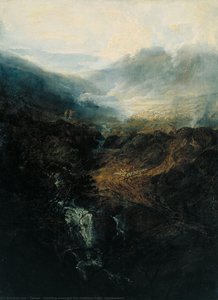
Dans le vaste cosmos tourbillonnant du Romantisme, peu d'artistes ont capturé la danse éphémère entre grandeur et décomposition avec autant de poignance que J.M.W. Turner. Son chef-d'œuvre, Caligula, n'est pas seulement la représentation d'un cadre historique, mais une descente immersive dans le sublime. La peinture présente un panorama dramatique où les vestiges architecturaux du pouvoir rencontrent les éléments indomptés de la nature. Tandis que l'œil parcourt la toile, on rencontre un groupe de silhouettes rassemblées près d'une étendue d'eau scintillante, leur petitesse étant accentuée par l'échelle écrasante du paysage. Un bateau solitaire dérive à la surface, ajoutant un sentiment de mouvement tranquille à une scène qui semble simultanément figée dans le temps et saisie dans un moment de profonde transition. C'est une œuvre qui invite le spectateur à pénétrer dans un monde où les frontières entre réalité et rêve s'estompent magnifiquement.
La technique employée dans Caligula sert de précurseur au mouvement impressionniste, illustrant l'approche révolutionnaire de Turner face à la lumière et à l'atmosphère. Délaissant la précision rigide et clinique de ses contemporains, Turner utilisait des coups de pinceau lâches et expressifs ainsi qu'une palette vibrante et lumineuse pour privilégier la vérité émotionnelle sur l'exactitude topographique. Il a maîtrisé l'art de la luminescence brumeuse, créant une lueur éthérée qui semble émaner de l'intérieur même de la toile. Cet adoucissement délibéré des contours permet à la lumière de dissoudre les formes solides, imprégnant la scène d'un sentiment de brume et d'humidité. Pour le collectionneur averti ou le décorateur d'intérieur, cette technique offre une profondeur texturale unique ; le tableau ne se contente pas de trôner sur un mur, il respire avec une énergie atmosphérique capable de transformer l'ambiance de n'importe quel espace sophistiqué.
Les Échos d'Ozymandias
Au-delà de sa splendeur visuelle, Caligula est imprégné d'une profonde résonance historique et littéraire. Turner fut profondément touché par les thèmes de la fugacité présents dans la poésie de son époque, notamment dans l'Ozymandias de Percy Bysshe Shelley. Tout comme le poème de Shelley contemple la chute inévitable des empires puissants à travers l'image d'un monument en ruines, l'œuvre de Turner sert de métaphore visuelle à l'érosion de la civilisation. Le titre lui-même évoque le célèbre empereur romain, pourtant la peinture se concentre moins sur l'homme que sur la beauté mélancolique de son héritage. La juxtaposition de l'eau et du ciel éternels face aux structures déclinantes crée un dialogue puissant sur la nature éphémère de l'ambition humaine et la persistance éternelle du monde naturel.
Posséder une reproduction de cette œuvre, c'est faire entrer chez soi une part d'une profonde enquête philosophique. C'est un choix idéal pour ceux qui apprécient l'art capable de susciter la conversation — une œuvre qui fait écho aux angoisses de la modernité tout en célébrant la majesté intemporelle de la terre. Qu'il soit placé dans une galerie baignée de lumière ou dans un cabinet d'étude intime et feutré, Caligula constitue un point focal d'une immense gravité émotionnelle. Il offre bien plus qu'une simple décoration ; il propose une invitation à contempler le sublime, ce qui en fait une acquisition incomparable pour quiconque cherche à constituer une collection définie par la profondeur, l'histoire et une passion inébranlable pour le pouvoir transformateur de la lumière.
Questions et réponses
Puis-je visionner « Caligula » sous forme de diaporama en plein écran ?
Un diaporama est disponible : la page Diaporama de «Caligula» de J.M.W. Turner.
Puis-je voir une vue aux rayons X de «Caligula» de J.M.W. Turner ?
La page Rayons X de «Caligula» de J.M.W. Turner est un visionneur interactif qui vous permet de parcourir onze couches optiques de l'image de l'œuvre, incluant une vue de style radiographie.
Quelle émotion «Caligula» de J.M.W. Turner exprime-t-il au sein du mouvement Romantisme ?
Au sein du mouvement Romantisme, « Caligula » est empreint d'un ton Mélancolique.
Biographie de l'artiste
A Life Painted in Light: The World of J.M.W. Turner
Joseph Mallord William Turner, known to the world as J.M.W. Turner, was more than just a painter; he was a visionary who redefined landscape art and paved the way for modern abstraction. Born in Maiden Lane, Covent Garden, London, in 1775, his beginnings were humble – the son of a barber and wig maker. Yet, even as a child, a remarkable talent blossomed within him. By age fourteen, he was enrolled at the Royal Academy, exhibiting his first work just a year later. This early promise wasn’t merely technical skill; it hinted at an innate understanding of light, color, and atmosphere that would become the hallmarks of his extraordinary career. He supplemented his artistic education with practical experience as an architectural draftsman, honing his perspective and compositional abilities – skills that would prove invaluable in rendering both detailed topographical views and vast, emotive landscapes. Turner’s early life was marked by a dedication to his craft, fueled by a natural aptitude and a relentless pursuit of artistic excellence.The Romantic Tempest: Style and Influences
Turner emerged during the height of the Romantic era, but he wasn’t simply a follower of its conventions. He absorbed influences from various sources – the Dutch masters like Claude Lorrain and Aelbert Cuyp for their luminous landscapes, and artists such as Richard Wilson for his poetic approach to nature. However, Turner didn’t merely imitate; he synthesized these influences into something entirely new. His work is characterized by an expressive use of color, often employing bold contrasts and vibrant hues to convey emotion and atmosphere. He was fascinated by the power and drama of nature – turbulent seascapes, fiery sunsets, and swirling storms became recurring motifs in his paintings. He wasn’t interested in simply depicting what he saw; he sought to capture the *feeling* of a place, the sublime awe inspired by the natural world. This pursuit led him to experiment with increasingly loose brushwork, dissolving forms into washes of color and light – techniques that would anticipate the Impressionist movement decades later. From 1840, his work gained significant recognition thanks to the championing of John Ruskin, who elevated landscape painting to a new level of critical acclaim.A Prolific Legacy: The Scope of Turner’s Output
The sheer volume of Turner’s artistic output is astonishing. He created over 550 oil paintings, nearly 2,000 watercolors, and an astounding 30,000 works on paper. This prolificacy wasn’t simply a matter of quantity; it reflected his tireless exploration of different subjects, techniques, and styles. His paintings range from detailed topographical views of British landscapes to dramatic historical scenes and evocative maritime paintings. He was equally adept at capturing the tranquility of a pastoral scene and the terrifying power of a raging storm. Works like “Fort Vimieux” exemplify his mastery of depicting atmospheric effects – the swirling clouds, the crashing waves, and the intense light all contribute to a sense of drama and sublime beauty. Similarly, "Scene in the Campagna" showcases his ability to capture the warmth and serenity of the Italian countryside with delicate brushwork and luminous colors. Beyond painting, Turner was also a skilled printmaker, further disseminating his artistic vision through engravings and lithographs.Turner's Artistic Vision: Light and Atmosphere
Turner’s genius lay in his unparalleled understanding of light and atmosphere—concepts that would become central to the Impressionist movement. He meticulously studied how sunlight interacted with surfaces, capturing fleeting moments of illumination and shadow with astonishing accuracy. His canvases pulsated with color, reflecting the shifting moods of the natural world. Unlike earlier painters who sought to represent landscapes realistically, Turner prioritized conveying emotion and sensation above all else. He achieved this through a revolutionary technique—loose brushstrokes blended together to create luminous washes of color that seemed to dissolve into the air. This approach challenged conventional artistic standards and established Turner as a pioneer of modern art.Recognition and Influence: A Lasting Impact
Turner’s work garnered considerable acclaim during his lifetime, particularly from John Ruskin, who recognized his visionary spirit and championed his artistic achievements. Despite facing criticism for his unconventional style and perceived lack of polish, Turner remained steadfast in his pursuit of artistic excellence. His legacy extends far beyond the canvases he created; he profoundly influenced subsequent generations of artists—inspiring them to embrace experimentation and explore new expressive possibilities. Today, J.M.W. Turner is regarded as one of Britain’s greatest landscape painters—a true titan of Romantic art whose enduring vision continues to captivate audiences worldwide. His paintings are celebrated for their beauty, boldness, and emotional depth—testaments to his extraordinary talent and unwavering dedication to the transformative power of art.
J.M.W. Turner
1775 - 1851 , Royaume-Uni
En bref
- Date De Décès: 19 décembre 1851
- Date De Naissance: 23 avril 1775
- Influence Sur Les Artistes: ['Impressionnisme']
- Lieu De Naissance: Londres, Royaume-Uni
- Mouvement Artistique: Romantisme
- Nationalité: Britannique
- Nom Complet: J.M.W. Turner
- Œuvres Notables:
- Le Combattant téméraire
- Pluie, Vapeur et Vitesse
- Carisbrook Castle, Île de Wight
- Paysage
Articles connexes

Les 10 Chefs-d'œuvre du Paysage Romantique : Artistes et Décor d'Intérieur
Plongez dans l'émotion du Romantisme avec les 10 plus beaux paysages de Friedrich, Turner & Delacroix. Découvrez leur histoire et trouvez l'inspiration déco idéale sur OriginalUniqueArt.com !

The Enduring Legacy of Oil on Canvas: Technique, History & Aesthetic Impact
Explore the rich history & techniques of oil painting – from Renaissance masters to Impressionism. Discover pigments, layering methods, and why this timeless medium endures. Expert insights for artists & art enthusiasts.
Top 10 Chefs-d'œuvre à l'Huile : L'Art qui a Révolutionné le Décor Intérieur
Plongez dans l'histoire de 10 chefs-d'œuvre à l'huile qui ont révolutionné l'art : Monet, Van Gogh, Rembrandt et plus. Découvrez les techniques, les émotions et trouvez l'inspiration déco sur ! Explorez la collection.

Hokusai : Les 25 Œuvres Maîtresses d'un Génie Japonais | OriginalUniqueArt
Plongez dans l'univers de Katsushika Hokusai avec les 25 œuvres incontournables du maître japonais. Découvrez l'histoire, les techniques d'ukiyo-e et la beauté intemporelle de 'La Grande Vague'. Reproductions tableaux de qualité muséale sur OriginalUniqueArt.com.

Constable : Les 25 Chefs-d'Œuvre du Maître Anglais | OriginalUniqueArt
Plongez dans l'univers de John Constable avec les 25 œuvres incontournables du maître anglais. Découvrez l'histoire, la technique et l'émotion derrière ses paysages romantiques. Reproductions de qualité muséale sur OriginalUniqueArt.com.