

 Aperçu en situation
 Partager
 Partager
 Détails
 Guide imprimable

 Télécharger
 Articles similaires
 Radiographie
 Voir le diaporama
 Statistiques
Bethsabée
 Huile sur toile
- Art mural
- Baroque
 L'époque moderne
 102.0 x 130.0 cm
 Musées d'État de Berlin
 Afficher la suite
Reproduction à l'huile faite à la main
Huile sur toile peinte à la main, avec cadre et dimensions personnalisés, réalisée sur commande par nos artistes. ( Passer au format impression Passer au format image numérique)




P118B €10

P118H €10

P118W €10

P438Z €10

P508JH €12

P508YH €12

P805H €10

P805Z €10

P919BZ €10

P919G €10

P919XJ €10

P959ZH €10

P968JZ €12

W106C €8

W218G €10

W218JH €8

W218Y €10

W307PJ €10

W316G €10

W316PJ €8

W316Y €10

W398PJ €8

W4111J €10

W500HY €15

W500JH €15

W692G €12

W849H €8

W940BG €15

W953PJ €8




Choisissez parmi nos formats prédéfinis qui respectent les proportions originales de l’œuvre.

Vous pouvez saisir vos propres dimensions pour l'adapter à un cadre ou à un espace spécifique. Si la taille sélectionnée ne correspond pas aux proportions de l'image d'origine, nous recadrerons l'œuvre ou prolongerons la peinture avec des éléments peints à la main supplémentaires. Une maquette numérique vous sera envoyée pour approbation avant le début de la production.
Veuillez noter que l'aperçu à l'écran ne reflète pas le recadrage ou l'extension réels. Seule la maquette montrera fidèlement la composition finale.
Bien que des tailles personnalisées soient disponibles, nous vous recommandons de sélectionner une dimension dans la liste prédéfinie afin de préserver les proportions d'origine.
Après la commande, l’équipe OriginalUniqueArt.com contactera le client par e-mail pour recueillir ses instructions et lui fournira une maquette d’aperçu
Livraison dans le monde entier () en 3 à 4 semaines au lieu des 5 semaines habituelles. (7 octobre). Aucun compromis sur la qualité.

Livraison express gratuite dans le monde entier

Toile de lin de haute qualité

Assurance transport complète

Garantie de remboursement des droits de douane

Garantie de fidélité des couleurs

Garantie de retour de 100 jours (uniquement en cas de défaut)

Garantie de remboursement à 100%

Tarifs dégressifs sur quantité
 L'option verre n'est disponible que pour les dimensions inférieures à 110 cm.

Bethsabée
Technique de reproduction
Format de la reproduction
-


Prix total final
€ 344
A Vision of Mythic Grace: The Luminous World of Bathsheba
In the quiet, sun-drenched moments captured by Cornelis Cornelisz van Haarlem’s “Bathsheba at Her Toilet,” we are invited into a realm where the boundaries between the earthly and the divine begin to blur. Painted around 1594, this monumental oil on canvas serves as a breathtaking bridge between two eras of European mastery: the intricate, intellectual elegance of Mannerism and the burgeoning, visceral drama of the Baroque. The scene unfolds within an arched gateway that acts as a window into another world, framing a distant, tranquil landscape that provides a sense of infinite depth to the intimate gathering below. As we gaze upon the figures engaged in their ritual of cleansing, there is an immediate sense of profound contemplation, as if time itself has slowed to honor the beauty of the human form and the sanctity of the moment.
The composition is a masterclass in chiaroscuro, the dramatic interplay of light and shadow that would become the heartbeat of the Baroque movement. Van Haarlem directs our eyes through the scene using a sophisticated, directional light source that seems to descend from an unseen height, casting soft glows upon the skin of the figures while plunging the architectural recesses into mysterious shadow. This technique does more than just create volume; it breathes life into the anatomy, lending a palpable, fleshy realism to the nude women. The artist’s brushwork is both deliberate and fluid, particularly evident in the way the heavy drapery cascades around the central figure, its deep folds catching the light to suggest a rich, tactile texture that contrasts beautifully with the smooth, luminous porcelain of the skin.
Symbolism and the Echoes of Antiquity
Beyond its surface splendor, the painting is steeped in the mythological resonances of the classical world. While the subject draws from the biblical narrative of Bathsheba—a woman whose life was forever altered by a single, voyeuristic glance from King David—the visual language often evokes the myth of Actaeon and Diana. This layering of meaning allows the viewer to contemplate themes of purity, vulnerability, and the transformative power of sight. The act of bathing itself serves as a potent symbol of renewal and ritualistic cleansing, an elemental process that connects the physical body to the spiritual essence. Within the group dynamic, there is a subtle tension between the communal intimacy of the attendants and the solitary, introspective gaze of the central figure, creating an emotional complexity that rewards deep observation.
For the discerning collector or interior designer, this artwork offers much more than mere decoration; it provides a focal point of historical gravity and aesthetic sophistication. The warm, earthy palette—dominated by rich ochres, deep browns, and subtle reds—complemented by the cool, receding blues of the distant horizon, makes it a versatile masterpiece capable of anchoring a room with its classical dignity. To possess a high-quality reproduction of this work is to bring into one's space a piece of the Dutch Golden Age’s very foundation, an enduring testament to the moment when art moved from the stylized abstractions of the past toward the breathtaking realism and emotional intensity of the future.
Questions et réponses
Les couleurs de « Bethsabée » paraissent-elles vives ou douces ?
L'intensité des couleurs de « Bethsabée » est Équilibré. L'intensité décrit la force avec laquelle les couleurs apparaissent.
Comment puis-je obtenir une impression de «Bethsabée» de Cornelis Cornelisz van Haarlem ?
Pour obtenir un tirage de «Bethsabée» de Cornelis Cornelisz van Haarlem, il vous suffit de le commander sur cette page : une impression d'art sur toile de coton ou sur papier canvas d'archive.
Qui vend des reproductions peintes à la main de «Bethsabée» de Cornelis Cornelisz van Haarlem ?
« Bethsabée » est disponible en tant que une reproduction à l'huile peinte à la main sur toile de lin. La commande peut être effectuée sur cette page, avec un choix de formats.
Qui a créé "Bethsabée" ?
L'artiste à l'origine de « Bethsabée » est Cornelis Cornelisz van Haarlem. L'œuvre est répertoriée sous le nom de Cornelis Cornelisz van Haarlem.
Dans quelle pièce est-il suggéré d'exposer « Bethsabée », compte tenu de sa palette ?
Les couleurs Tons terreux de «Bethsabée» de Cornelis Cornelisz van Haarlem s'accordent parfaitement avec l'espace recommandé : une Salon.
Un téléchargement est-il disponible pour « Bethsabée » ?
Un téléchargement est disponible pour « Bethsabée » : la page Télécharger de l'œuvre propose un téléchargement d'image numérique haute résolution.
À quel courant artistique «Bethsabée» de Cornelis Cornelisz van Haarlem appartient-il ?
« Bethsabée » est une œuvre de Baroque. Ce mouvement indique la tradition artistique à laquelle l'œuvre appartient.
Biographie de l'artiste
A Forerunner of the Dutch Golden Age: The Life and Art of Cornelis Cornelisz van Haarlem
Cornelis Cornelisz van Haarlem, born in Haarlem around 1562, stands as a pivotal figure bridging the late Mannerist period with the dawn of the Dutch Golden Age. His journey was one of stylistic evolution and significant influence, particularly on Frans Hals, cementing his place among the most celebrated artists of his time. Initially steeped in the highly stylized conventions prevalent at the time—influenced by masters like Bartholomeus Spranger whose drawings circulated throughout Europe—van Haarlem’s formative years were marked by a profound engagement with artistic innovation and cultural dynamism. His parents, fleeing Haarlem during the tumultuous siege of 1572-73 by Spanish forces—a defining moment in the Eighty Years' War—left young Cornelis under the tutelage of Pieter Pietersz., establishing him on a path toward mastering the techniques of his era. This early training instilled within him not only artistic skill but also an unwavering connection to Haarlem’s cultural identity, themes that would subtly permeate his later oeuvre. The siege itself served as a catalyst for artistic experimentation and a heightened awareness of political realities—a context crucial for understanding van Haarlem's evolving worldview.From Mannerist Grandeur to Netherlandish Realism
Van Haarlem’s initial artistic output was characterized by large-scale compositions featuring dramatically posed figures—often Italianate nudes—with an emphasis on artifice and exaggerated anatomy. These works, while demonstrating considerable skill, reflected the prevailing Northern Mannerist aesthetic heavily influenced by artists like Bartholomeus Spranger whose drawings were introduced to Haarlem by Carel van Mander in 1585. However, a distinct shift began to emerge as van Haarlem matured. He gradually moved away from these highly stylized forms toward a more grounded and realistic approach rooted in the Netherlandish tradition—a movement mirroring broader societal changes towards greater naturalism and emotional depth. This transformation wasn’t abrupt but rather a considered evolution, reflecting not only his artistic growth but also a burgeoning interest in humanist ideals. His stylistic development mirrored the intellectual currents of the Renaissance, signaling a move away from purely formal concerns toward capturing human emotion and experience with unprecedented sensitivity.Key Works and Civic Recognition
Throughout his prolific career—spanning roughly 1580-1638—van Haarlem secured numerous commissions that attest to his growing reputation and skill. One of his earliest significant achievements was The Banquet of the Haarlem Civic Guard (1583), a monumental depiction of Haarlem’s militia company showcasing his mastery of group dynamics and meticulous attention to detail. This ambitious undertaking solidified his position within the city’s artistic landscape and established him as a reliable artist capable of fulfilling prestigious civic obligations. Equally noteworthy is The Fall of the Titans (1588-1590)—a dramatic mythological scene demonstrating van Haarlem's command of complex compositions and narrative storytelling—a testament to his ability to convey grand themes with visual eloquence. These monumental paintings weren’t merely displays of technical prowess; they were statements of civic pride and artistic ambition, reflecting the spirit of Haarlem during its golden age. He became deeply involved in the Haarlem art community, participating in informal drawing groups with Hendrick Goltzius and Carel van Mander—a collective often referred to as the “Haarlem Mannerists”—where ideas were exchanged and new artistic directions explored.Influence on Frans Hals and Beyond
Cornelis van Haarlem’s legacy extends far beyond his own impressive output, notably through his profound influence on Frans Hals—one of the most revered portrait painters of the Dutch Golden Age. While the precise nature of their relationship remains a subject of scholarly debate, it's undeniable that van Haarlem served as an important mentor and source of inspiration for Hals’ younger colleague. His emphasis on capturing individual character and psychological depth in his portraits likely paved the way for Hals’ groundbreaking approach to portraiture—characterized by spontaneity, vitality, and remarkable ability to convey personality. Van Haarlem’s role as city painter of Haarlem further solidified his artistic significance, ensuring that his vision continued to shape the cultural landscape of the region. His students included Salomon de Bray, Cornelis Jacobsz Delff, and Gerrit Pietersz Sweelink—continuing his influence into subsequent generations. His paintings remain powerful testaments to an era of artistic innovation and cultural transformation.
Cornelis Cornelisz van Haarlem
1562 - 1638 , Pays-Bas
En bref
- Artistes Influents:
- Pieter Pietersz
- Gillis Coignet
- Date De Décès: 1638
- Date De Naissance: 1562
- Influence Sur L'Art: Frans Hals
- Lieu De Naissance: Haarlem, Pays-Bas
- Mouvement Artistique: Manierisme nordique
- Nationalité: Néerlandais
- Nom Complet: Cornelis Cornelisz van Haarlem
- Œuvres Notables:
- Le banquet de la garde civique
- La chute des titans
Articles similaires

Les 10 Chefs-d'œuvre du Baroque Néerlandais : Artistes et Décor Intemporels
Plongez au cœur du Baroque néerlandais avec les 10 œuvres incontournables de Rembrandt, Vermeer et autres maîtres hollandais. Découvrez l'histoire, la lumière et les couleurs qui ont façonné ce mouvement artistique. Reproductions d'art de qualité muséale sur OriginalUniqueArt.com

Rembrandt van Rijn : Les 25 Œuvres Maîtresses à Redécouvrir | OriginalUniqueArt
Plongez dans l'univers de Rembrandt van Rijn avec les 25 œuvres incontournables du maître baroque. Découvrez l'histoire, la technique et l'émotion derrière ses portraits célèbres et 'La Ronde de Nuit'. Reproductions tableaux haute qualité sur OriginalUniqueArt.com
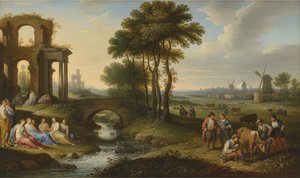
Cornelis van Poelenburch: Bridging Mannerism & the Dutch Baroque Landscape
Discover Cornelis van Poelenburch, a pivotal Dutch Baroque landscape painter bridging Mannerism & Italianate styles. Explore his life, key works, and lasting influence on 17th-century art with OriginalUniqueArt.
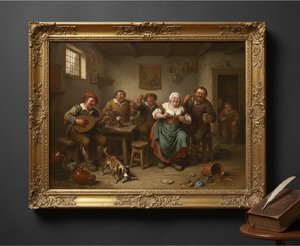
Adriaen van Ostade: A Master of Dutch Genre Painting & Social Commentary
Explore the life & work of Adriaen van Ostade, a leading Dutch Golden Age painter. Discover his realistic genre scenes, social commentary, and lasting influence on art history. Learn more at OriginalUniqueArt.

L'Âge d'Or Néerlandais : Splendeur Baroque et Révolution Artistique
Explorez l'Âge d'Or néerlandais : découvrez les maîtres baroques (Rembrandt, Fabritius) et leur révolution artistique. Analyse approfondie, contexte historique et héritage durable. Un voyage au cœur de la peinture du XVIIe siècle.


