() ·

A painting made for you, by hand

Bethsabée

Reproduction à l'huile faite à la main

Huile sur toile peinte à la main, avec cadre et dimensions personnalisés, réalisée sur commande par nos artistes. ( Passer au format impression Passer au format numérique)

Description de la pièce

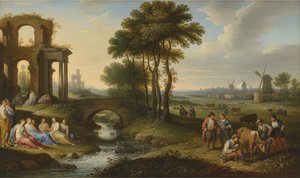
Découvrez « Bethsabée » de Cornelis van Haarlem, un chef-d'œuvre baroque représentant des nus dans une scène de fontaine dramatique. Explorez sa beauté classique et sa technique magistrale de la peinture à l'huile.

Biographie de l'artiste

Découvrez Cornelis van Haarlem (1562-1638), figure clé du maniérisme néerlandais et précurseur de Frans Hals ! Explorez ses scènes mythologiques et portraits.

from ·

Chapter 1

How large should it be?

Slide to change the size; the picture on the left shows the frame at its real width. The proportions of the original are kept.

Format standard
sur mesure
CM
INCH

Choisissez parmi nos formats prédéfinis qui respectent les proportions originales de l’œuvre.

largeur
hauteur

Saisissez la largeur et la hauteur souhaitées, pour s'adapter à votre cadre ou à votre mur. Cette œuvre est peinte à la main ; ainsi, pour un format de forme différente, l'artiste peut peindre un peu plus autour du tableau ou réduire légèrement les bords — c'est vous qui choisissez. Nous vous envoyons une maquette numérique pour approbation avant que la peinture ne commence. L'image présentée sur cette page ne reflète pas le résultat réel — seule la maquette le fait.

Chapter 2

How should it arrive?

Choose the edges of the stretched canvas

Choose your frame

Corner sample of the WhiteWrap canvas edge finish, stretched on bois massif bars
White €1
Corner sample of the BlurSideWrap canvas edge finish, stretched on bois massif bars
Blurside €1
Corner sample of the ExtendedWrap canvas edge finish, stretched on bois massif bars
Extended €1
Corner sample of the P118B picture frame: polystyrène moulé, 5 cm wide and 3 cm thick
P118B €10
Corner sample of the P118H picture frame: polystyrène moulé, 5 cm wide and 3 cm thick
P118H €10
Corner sample of the P118W picture frame: polystyrène moulé, 5 cm wide and 3 cm thick
P118W €10
Corner sample of the P438Z picture frame: polystyrène moulé, 5.5 cm wide and 3.5 cm thick
P438Z €10
Corner sample of the P508JH picture frame: polystyrène moulé, 7 cm wide and 3.5 cm thick
P508JH €12
Corner sample of the P508YH picture frame: polystyrène moulé, 7 cm wide and 3.5 cm thick
P508YH €12
Corner sample of the P805H picture frame: polystyrène moulé, 5 cm wide and 3.5 cm thick
P805H €10
Corner sample of the P805Z picture frame: polystyrène moulé, 5 cm wide and 3.5 cm thick
P805Z €10
Corner sample of the P919BZ picture frame: polystyrène moulé, 7 cm wide and 3.5 cm thick
P919BZ €10
Corner sample of the P919G picture frame: polystyrène moulé, 7 cm wide and 3.5 cm thick
P919G €10
Corner sample of the P919XJ picture frame: polystyrène moulé, 7 cm wide and 3.5 cm thick
P919XJ €10
Corner sample of the P959ZH picture frame: polystyrène moulé, 5 cm wide and 3 cm thick
P959ZH €10
Corner sample of the P968JZ picture frame: polystyrène moulé, 6 cm wide and 4 cm thick
P968JZ €12
Corner sample of the W106C picture frame: bois massif, 5 cm wide and 3 cm thick
W106C €8
Corner sample of the W218G picture frame: bois massif, 5 cm wide and 3 cm thick
W218G €10
Corner sample of the W218JH picture frame: bois massif, 5 cm wide and 3 cm thick
W218JH €8
Corner sample of the W218Y picture frame: bois massif, 5 cm wide and 3 cm thick
W218Y €10
Corner sample of the W307PJ picture frame: bois massif, 6 cm wide and 3 cm thick
W307PJ €10
Corner sample of the W316G picture frame: bois massif, 6 cm wide and 3 cm thick
W316G €10
Corner sample of the W316PJ picture frame: bois massif, 6 cm wide and 3 cm thick
W316PJ €8
Corner sample of the W316Y picture frame: bois massif, 6 cm wide and 3 cm thick
W316Y €10
Corner sample of the W398PJ picture frame: bois massif, 5 cm wide and 3 cm thick
W398PJ €8
Corner sample of the W4111J picture frame: bois massif, 6.5 cm wide and 3.5 cm thick
W4111J €10
Corner sample of the W500HY picture frame: bois massif, 7 cm wide and 5 cm thick
W500HY €15
Corner sample of the W500JH picture frame: bois massif, 7 cm wide and 5 cm thick
W500JH €15
Corner sample of the W692G picture frame: bois massif, 8 cm wide and 4 cm thick
W692G €12
Corner sample of the W849H picture frame: bois massif, 5 cm wide and 3 cm thick
W849H €8
Corner sample of the W940BG picture frame: bois massif, 7.5 cm wide and 4.5 cm thick
W940BG €15
Corner sample of the W953PJ picture frame: bois massif, 6 cm wide and 3.5 cm thick
W953PJ €8
Corner sample of the H24-GOLD picture frame: bois sculpté et apprêté au gesso, 10 cm wide and 6 cm thick
H24-GOLD €30
Corner sample of the H24-SILVER picture frame: bois sculpté et apprêté au gesso, 10 cm wide and 6 cm thick
H24-SILVER €30
Corner sample of the H36-GOLD picture frame: bois sculpté et apprêté au gesso, 15 cm wide and 6.5 cm thick
H36-GOLD €45
Corner sample of the H36-SILVER picture frame: bois sculpté et apprêté au gesso, 15 cm wide and 6.5 cm thick
H36-SILVER €45
Aperçu du cadre
Sous cadre

Moulding: . Overall size with the frame: .

Chapter 3

Who paints it, and should anything change?

Examples of what can be changed: Replace face with customer photo; Add pet (e.g., replace cat with dog); Include hidden message in background; Change background landscape or elements.
After order, OriginalUniqueArt.com team will email client for instructions and provide a mockup preview

Livraison dans le monde entier () en 3 à 4 semaines au lieu des 5 semaines habituelles. (2 novembre). Aucun compromis sur la qualité.

Chapter 4

The finishing touches

A nameplate, as in a museum?

Détails de la plaque en bronze gravée

This elegant plaque features the artist's name and the title of the artwork, finely engraved for a timeless presentation.

It is made from bronze with a refined, elegant finish. The text is precisely laser-engraved for a sharp and permanent result. Measuring 9x2 cm, the plaque is compact yet easy to read. It's built to be durable and scratch-resistant, offering a professional, museum-quality look. Mounting is simple thanks to the included adhesive backing.

Détails de la plaque en acrylique transparent

The plaque includes essential engraved details such as the artist's name, the title of the artwork, the date it was created, the type of media used-like oil on canvas or watercolor-a brief description of the piece, and a QR code that links to the complete artwork information.

It is crafted from clear acrylic, offering a sleek, modern appearance. The text is UV-engraved in black to ensure strong visual contrast. With a size of 10x15 cm, it ensures optimal readability. It comes equipped with two metal hooks for secure wall mounting. The plaque is designed to be weather-resistant, making it suitable for various environments, and it includes interactive features that work seamlessly with smartphone scanning.

Détails de la plaque en acrylique noir

This elegant plaque includes engraved information such as the artist's name, the title of the artwork, the date it was created, the type of media used (like oil on canvas or watercolor), a short description of the artwork, and a QR code for quick access to more information.

The plaque itself is made from refined black acrylic with a premium finish. The text is laser-engraved in white for high contrast and readability. Its size is 10x15 cm, designed to be easy to read. It comes with two metal hooks for professional mounting. The design is sleek and fits any interior style. It is also weather-resistant and durable, with built-in digital integration for mobile compatibility.

A protective varnish?

When do you need it?

Chapter 5

Your painting, as you ordered it

Bethsabée

Technique de reproduction

Format de la reproduction

-

Artiste de prestige

Plus de détails, de finesse et un temps de production accru

-

Cadre de reproduction

-

-

Pour les œuvres ou reproductions dont un côté mesure plus de 105 cm (environ 41 pouces), le cadre sera expédié sous forme de kit démonté. Cette méthode garantit une livraison sécurisée et prévient tout dommage pendant le transport.

Assemblage professionnel requis - ce produit n'est pas destiné au bricolage (DIY).
Le kit doit être assemblé et la toile tendue par un encadreur professionnel expérimenté, en utilisant de la colle à bois (non fournie), une pince à tendre la toile et des serre-joints pour maintenir les traverses d'équerre pendant le séchage de la colle. Un assemblage incorrect ou une tension inégale de la toile peut endommager l'œuvre de manière irréversible et n'est pas couvert par notre garantie.

  • Toutes les baguettes en bois massif sont incluses, découpées avec précision à la taille requise.

  • À assembler avec les vis fournies, ainsi qu'avec de la colle à bois pour les assemblages d'angles (non fournie), à prévoir par votre encadreur.

  • L'utilisation d'outils professionnels est requise et non incluse : une pince à tendre la toile (tendeur) et des serre-joints pour maintenir les baguettes bien d'équerre pendant le séchage de la colle.

Important :
L'assemblage des angles nécessite de la colle à bois, les barres doivent être maintenues avec des serre-joints jusqu'au séchage complet de la colle, et le tendage de la toile sur le châssis assemblé nécessite une pince à tendre la toile. Aucun de ces éléments n'est inclus dans le kit. Veuillez consulter un encadreur professionnel expérimenté avant de commander ce format.

Cartel

-

-

Vernis de protection

Vernis brillant (intensifie les couleurs, protège de la lumière et de l'humidité)

-

Personnaliser mon œuvre

Exemples de personnalisation : remplacer le visage par une photo du client ; ajouter un animal de compagnie (par exemple, remplacer un chat par un chien) ; inclure un message caché en arrière-plan ; modifier le paysage ou les éléments d'arrière-plan.

-

Livraison urgente

Livraison dans le monde entier () en 3 à 4 semaines au lieu des 5 semaines habituelles. (2 novembre). Aucune concession sur la qualité.

-

Livraison express

Livraison dans le monde entier () sous 5 semaines. (9 novembre).

Inclus

Prix total

€ 356

Prix total € 356

L'option verre n'est disponible que pour les dimensions inférieures à 110 cm.

Included with every order

  • Livraison express gratuite dans le monde entier
  • Toile de lin de qualité supérieure
  • Assurance transport complète
  • Garantie de remboursement des droits de douane
  • Garantie de fidélité des couleurs
  • Politique de retour de 100 jours (uniquement en cas de défaut)
  • Garantie de remboursement à 100%
  • Offre de tarifs dégressifs

Une Vision de Grâce Mythique : Le Monde Lumineux de Bethsabée

Dans les instants paisibles et baignés de soleil capturés par l'œuvre de Cornelis Cornelisz van Haarlem, « Bethsabée à sa toilette », nous sommes invités dans un royaume où les frontières entre le terrestre et le divin commencent à s'estomper. Peinte vers 1594, cette huile sur toile monumentale sert de pont époustouflant entre deux époques de la maîtrise européenne : l'élégance intellectuelle et complexe du maniérisme et le drame viscéral et naissant du baroque. La scène se déploie au sein d'une arche qui fait office de fenêtre sur un autre monde, encadrant un paysage lointain et tranquille qui apporte une sensation de profondeur infinie à ce rassemblement intime. Alors que nous contemplons les figures engagées dans leur rituel de purification, un sentiment immédiat de profonde contemplation s'installe, comme si le temps lui-même avait ralenti pour honorer la beauté de la forme humaine et la sainteté de l'instant.

La composition est une leçon magistrale de clair-obscur, ce jeu dramatique d'ombre et de lumière qui deviendra le cœur battant du mouvement baroque. Van Haarlem guide notre regard à travers la scène en utilisant une source lumineuse directionnelle sophistiquée qui semble descendre d'une hauteur invisible, projetant des lueurs douces sur la peau des personnages tout en plongeant les renfoncements architecturaux dans une ombre mystérieuse. Cette technique fait bien plus que créer du volume ; elle insuffle la vie à l'anatomie, prêtant un réalisme charnel et palpable aux femmes nues. La touche de l'artiste est à la fois délibérée et fluide, particulièrement évidente dans la manière dont les draperies lourdes cascadaient autour de la figure centrale, leurs plis profonds captant la lumière pour suggérer une texture riche et tactile qui contraste magnifiquement avec la peau lisse et lumineuse, semblable à de la porcelaine.

Symbolisme et Échos de l'Antiquité

Au-delà de sa splendeur de surface, le tableau est imprégné des résonances mythologiques du monde classique. Bien que le sujet s'inspire du récit biblique de Bethsabée — une femme dont la vie fut à jamais bouleversée par un unique regard voyeuriste du roi David — le langage visuel évoque souvent le mythe d'Actéon et Diane. Cette superposition de significations permet au spectateur de contempler les thèmes de la pureté, de la vulnérabilité et du pouvoir transformateur du regard. L'acte même du bain sert de symbole puissant de renouveau et de purification rituelle, un processus élémentaire qui connecte le corps physique à l'essence spirituelle. Au sein de la dynamique du groupe, une tension subtile s'installe entre l'intimité commune des suivantes et le regard solitaire et introspectif de la figure centrale, créant une complexité émotionnelle qui récompense une observation attentive.

Pour le collectionneur averti ou le décorateur d'intérieur, cette œuvre offre bien plus qu'une simple décoration ; elle constitue un point focal d'une gravité historique et d'une sophistication esthétique remarquables. La palette chaude et terreuse — dominée par des ocres riches, des bruns profonds et des rouges subtils — complétée par les bleus frais et fuyants de l'horizon lointain, en fait un chef-d'œuvre polyvalent capable d'ancrer une pièce avec sa dignité classique. Posséder une reproduction de haute qualité de cette œuvre, c'est faire entrer dans son espace un fragment des fondations mêmes de l'Âge d'Or néerlandais, un témoignage durable du moment où l'art est passé des abstractions stylisées du passé vers le réalisme époustouflant et l'intensité émotionnelle du futur.

Questions et réponses

Quelle taille de reproduction est suggérée pour «Bethsabée» de Cornelis Cornelisz van Haarlem ?

La taille d'impression recommandée pour «Bethsabée» de Cornelis Cornelisz van Haarlem est Grand format.

Où puis-je acheter une reproduction peinte à la main de «Bethsabée» de Cornelis Cornelisz van Haarlem ?

Les reproductions peintes à la main de «Bethsabée» de Cornelis Cornelisz van Haarlem sont disponibles sur ce site : une reproduction à l'huile peinte à la main sur toile de lin, via sa page Reproduction peinte à la main.

Quelle est la forme et les dimensions de «Bethsabée» de Cornelis Cornelisz van Haarlem ?

«Bethsabée» de Cornelis Cornelisz van Haarlem est une composition en Format paysage mesurant 102 x 130 cm dans l'original.

More about this painting

Aperçu en situation Visualiser en RA Passer au format impression Passer au format numérique Envoyer
Détails de l'œuvre Guide Ajouter aux favoris Télécharger l'image Articles similaires Radiographie Diaporama Q&A Statistiques

In numbers

  • 29frames to choose from
  • standard sizes, in its own proportions
  • 5weeks to paint and deliver it
Cornelis Cornelisz van Haarlem

Cornelis Cornelisz van Haarlem

1562 - 1638, Pays-Bas

Quick facts about Cornelis Cornelisz van Haarlem

  • Artistes Influents:
    • Pieter Pietersz
    • Gillis Coignet
  • Date De Décès: 1638
  • Date De Naissance: 1562
  • Influence Sur L'Art: Frans Hals
  • Lieu De Naissance: Haarlem, Pays-Bas
  • Mouvement Artistique: Manierisme nordique
  • Nationalité: Néerlandais
  • Nom Complet: Cornelis Cornelisz van Haarlem
  • Œuvres Notables:
    • Le banquet de la garde civique
    • La chute des titans

Biographie de l'artiste

A Forerunner of the Dutch Golden Age: The Life and Art of Cornelis Cornelisz van Haarlem

Cornelis Cornelisz van Haarlem, born in Haarlem around 1562, stands as a pivotal figure bridging the late Mannerist period with the dawn of the Dutch Golden Age. His journey was one of stylistic evolution and significant influence, particularly on Frans Hals, cementing his place among the most celebrated artists of his time. Initially steeped in the highly stylized conventions prevalent at the time—influenced by masters like Bartholomeus Spranger whose drawings circulated throughout Europe—van Haarlem’s formative years were marked by a profound engagement with artistic innovation and cultural dynamism. His parents, fleeing Haarlem during the tumultuous siege of 1572-73 by Spanish forces—a defining moment in the Eighty Years' War—left young Cornelis under the tutelage of Pieter Pietersz., establishing him on a path toward mastering the techniques of his era. This early training instilled within him not only artistic skill but also an unwavering connection to Haarlem’s cultural identity, themes that would subtly permeate his later oeuvre. The siege itself served as a catalyst for artistic experimentation and a heightened awareness of political realities—a context crucial for understanding van Haarlem's evolving worldview.

From Mannerist Grandeur to Netherlandish Realism

Van Haarlem’s initial artistic output was characterized by large-scale compositions featuring dramatically posed figures—often Italianate nudes—with an emphasis on artifice and exaggerated anatomy. These works, while demonstrating considerable skill, reflected the prevailing Northern Mannerist aesthetic heavily influenced by artists like Bartholomeus Spranger whose drawings were introduced to Haarlem by Carel van Mander in 1585. However, a distinct shift began to emerge as van Haarlem matured. He gradually moved away from these highly stylized forms toward a more grounded and realistic approach rooted in the Netherlandish tradition—a movement mirroring broader societal changes towards greater naturalism and emotional depth. This transformation wasn’t abrupt but rather a considered evolution, reflecting not only his artistic growth but also a burgeoning interest in humanist ideals. His stylistic development mirrored the intellectual currents of the Renaissance, signaling a move away from purely formal concerns toward capturing human emotion and experience with unprecedented sensitivity.

Key Works and Civic Recognition

Throughout his prolific career—spanning roughly 1580-1638—van Haarlem secured numerous commissions that attest to his growing reputation and skill. One of his earliest significant achievements was The Banquet of the Haarlem Civic Guard (1583), a monumental depiction of Haarlem’s militia company showcasing his mastery of group dynamics and meticulous attention to detail. This ambitious undertaking solidified his position within the city’s artistic landscape and established him as a reliable artist capable of fulfilling prestigious civic obligations. Equally noteworthy is The Fall of the Titans (1588-1590)—a dramatic mythological scene demonstrating van Haarlem's command of complex compositions and narrative storytelling—a testament to his ability to convey grand themes with visual eloquence. These monumental paintings weren’t merely displays of technical prowess; they were statements of civic pride and artistic ambition, reflecting the spirit of Haarlem during its golden age. He became deeply involved in the Haarlem art community, participating in informal drawing groups with Hendrick Goltzius and Carel van Mander—a collective often referred to as the “Haarlem Mannerists”—where ideas were exchanged and new artistic directions explored.

Influence on Frans Hals and Beyond

Cornelis van Haarlem’s legacy extends far beyond his own impressive output, notably through his profound influence on Frans Hals—one of the most revered portrait painters of the Dutch Golden Age. While the precise nature of their relationship remains a subject of scholarly debate, it's undeniable that van Haarlem served as an important mentor and source of inspiration for Hals’ younger colleague. His emphasis on capturing individual character and psychological depth in his portraits likely paved the way for Hals’ groundbreaking approach to portraiture—characterized by spontaneity, vitality, and remarkable ability to convey personality. Van Haarlem’s role as city painter of Haarlem further solidified his artistic significance, ensuring that his vision continued to shape the cultural landscape of the region. His students included Salomon de Bray, Cornelis Jacobsz Delff, and Gerrit Pietersz Sweelink—continuing his influence into subsequent generations. His paintings remain powerful testaments to an era of artistic innovation and cultural transformation.

Informations clés

  • Dimensions: 102 x 130 cm
  • Notable elements or techniques: Éclairage dramatique (clair-obscur), coup de pinceau habile
  • Medium: Huile sur toile
  • Artist: Cornelis Cornelisz van Haarlem
  • Title: Bathshéba