A Royal Tapestry of Prussian Grandeur
To step through the gates of Schloss Charlottenburg is to leave the modern pulse of Berlin behind and enter a realm where the echoes of the Hohenzollern dynasty still resonate within gilded walls. This magnificent palace, which began its life in 1695 as a modest summer retreat for Sophie Charlotte, blossomed under the ambitious hands of successive Prussian monarchs into one of Germany’s most breathtaking Baroque and Rococo masterpieces. The architecture itself tells a story of evolving power; what started as a refined villa designed by Johann Arnold Nering expanded through the genius of architects like Andreas Schlüter and Martin Grünberg into a sprawling complex of immense scale. Every Corinthian pilaster and the soaring central cupola serves as a magnificent silent testament to an era when architecture was the ultimate language of legitimacy and royal splendor.
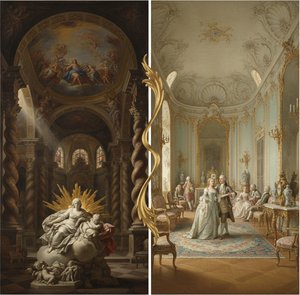
The interior of the palace offers an immersive journey through layers of artistic innovation and courtly opulence, where the very air seems heavy with history. Visitors find themselves wandering through rooms where light and shadow dance across lavish stucco work, from the luminous White Room to the intricate chambers that once hosted the most delicate political maneuvers of the Prussian court. The collection highlights are not merely objects on display but integral components of a living narrative. One cannot help but be moved by the profound sense of drama found in the ceiling frescoes, such as the celestial-themed masterpiece by Hann Trier . These works bridge the gap between historical tradition and modern artistic expression, creating a dialogue between centuries that captivates even the most discerning art lovers and collectors.
Nature, Design, and Architectural Legacy
Beyond the palace walls, the landscape unfolds into a meticulously curated experience of nature and design. The transition from the formal, structured Baroque gardens—reminiscent of the grandeur of Versailles—to the more organic, contemplative English-style park reflects a broader cultural shift toward romanticism and natural beauty. Hidden gems such as the Belvedere tea house, the New Pavilion, and the Orangery offer intimate spaces for reflection, while the mausoleum provides a poignant reminder of the human element behind the royal titles, serving as the final resting place for the beloved Queen Louise.
For the interior designer or the collector of historical aesthetics, the palace serves as an unparalleled source of inspiration, showcasing how grand architectural visions can be harmoniously integrated with lush, verdant surroundings to create a sense of timelessness. The estate's enduring allure is found in its remarkable resilience and its role as a vibrant cultural hub in the heart of Berlin. Having endured the devastating scars of World War II, its meticulous reconstruction stands as a triumph of German craftsmanship and a profound commitment to preserving cultural heritage. Today, the palace does not merely exist as a relic of the past; it breathes through its ongoing exhibitions, concerts, and seasonal events that invite new generations to participate in its legacy. It remains a sanctuary where history, art, and nature converge, offering an unforgettable encounter with the very soul of Prussia.