
A Sanctuary of Time: The Living Soul of Trastevere
Nestled within the labyrinthine heart of Rome’s Trastevere district, where cobblestone streets whisper tales of emperors and artists alike, lies Santa Maria in Trastevere—a basilica that transcends its religious function to become a profound testament to Roman history and artistic evolution. More than just a house of worship, it is a layered narrative etched into stone, mosaic, and the very soul of the city. Founded as an early Christian home church on the site of a former tavern in the 3rd century, this basilica stands as one of Rome’s oldest surviving religious structures, providing a tangible link to the nascent days of Christianity within the Roman Empire. Its story is not merely chronological; it is a vibrant tapestry woven with papal intrigue, artistic innovation, and the enduring spirit of a community that has called this space home for nearly two millennia.
The basilica’s history unfolds in distinct phases, each leaving an indelible mark on its physical presence and spiritual weight. Initially erected as a modest chapel dedicated to Saint Mary Minor, it underwent significant expansion during the Middle Ages under papal patronage—most notably during the reign of Pope Innocent II in 1291. This pivotal era saw the construction of the monumental campanile, a bell tower that mirrors the grandeur of Roman imperial architecture and symbolizes divine authority over the cityscape. Subsequent renovations throughout the Renaissance and Baroque periods further embellished the basilica, reflecting evolving artistic sensibilities and cementing its place as a cornerstone of Rome’s cultural heritage. The meticulous restoration undertaken by Carlo Fontana in 1702 exemplifies this Baroque revival, skillfully blending classical elements with ornate decoration to create a harmonious visual experience that continues to captivate the modern eye.
The Luminous Legacy of Pietro Cavallini
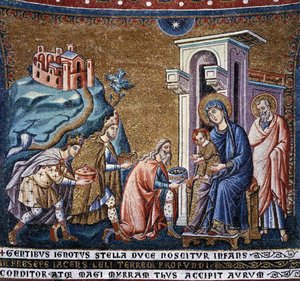
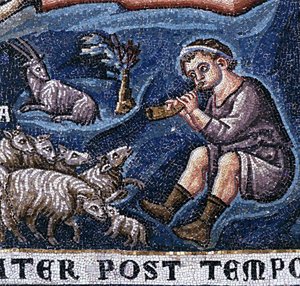
Stepping inside Santa Maria in Trastevere is akin to entering a time capsule where light and color perform a sacred dance. The nave, largely preserved from its original 12th-century design, immediately evokes a sense of reverence and timelessness, yet it is the basilica’s mosaics that truly command the observer's attention. These works, particularly those created by the master Pietro Cavallini, represent the pinnacle of medieval artistry. These are not merely decorative embellishments; they are meticulously crafted narratives imbued with profound symbolism and technical brilliance. The “Adoration of the Magi” mosaic on the façade, depicting the Virgin Mary enthroned with the Child Jesus surrounded by twelve figures, is a breathtaking example of Cavallini's skill—his attention to detail, his mastery of color, and his ability to convey complex theological concepts through visual imagery are simply astonishing.
Within the apse, the “Life of the Virgin” mosaics offer a further glimpse into this artistic vision. Scenes from Mary’s life—her conception, her flight into Egypt, and her visit to Elizabeth—are rendered with exquisite grace and emotional depth. The use of light and shadow, the delicate rendering of facial features, and the vibrant colors all contribute to the mosaic’s captivating power. The sheer scale of these mosaics is remarkable; they dominate the space, drawing the eye upwards towards the heavens and creating a sense of awe and wonder that resonates with every visitor. This mosaic program serves as a window into faith's narrative, where the shimmering gold and glass catch the flickering candlelight to create an atmosphere of divine presence.
Architectural Grandeur and Baroque Illusionism
Beyond its glittering mosaics, Santa Maria in Trastevere boasts impressive architectural features that testify to Rome’s enduring legacy of imperial grandeur. The basilica’s interior is divided by twenty-two ancient granite columns of varying diameters, all featuring Ionic and Corinthian capitals. These magnificent pillars, likely repurposed from the ruins of the Baths of Caracalla , provide a striking contrast to the more rustic materials used in earlier construction phases, adding an unexpected layer of historical continuity between the Roman Empire and the Christian era.
The ceiling offers another spectacular encounter with artistic mastery. The rich, carved, and gilded lacunars were designed by Domenichino in 1617, featuring the breathtaking “Assumption of the Virgin” at its center. This work employs Baroque illusionism, seamlessly blending painted figures with architectural elements to create a visual spectacle that seems to dissolve the boundary between the earthly and the divine. For the art lover or interior designer, the basilica represents a masterclass in how historical layers—from ancient Roman stone to medieval mosaic and Baroque splendor—can coexist to create a space of unparalleled aesthetic and emotional depth.