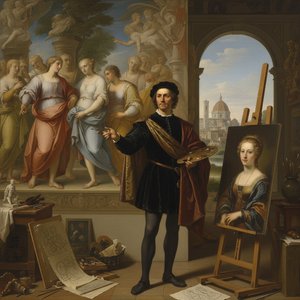
A Renaissance Tapestry Woven in Rome
Nestled within the vibrant heart of Piazza del Popolo, the Basilica of Santa Maria del Popolo stands as a profound testament to Roman artistic ambition and spiritual devotion. To enter this sacred space is to step into a living chronicle of the city's soul, where legend and history intertwine. The very foundations of the basilica are steeped in myth, whispered to have been established following an exorcism by Pope Paschal II to cleanse the area of the dark legacy of Emperor Nero’s nearby tomb. This ancient narrative of purification sets the stage for a sanctuary that has, for centuries, served as a gateway for travelers entering Rome via the Via Flaminia, offering a moment of profound grace to those arriving from the north.
The architecture itself is a breathtaking dialogue between eras, a monumental achievement shaped by the hands of Renaissance masters. The 15th-century rebuilding of the basilica, spearheaded by the visionary Donato Bramante and later enriched by Michelangelo, transformed a modest Romanesque structure into a masterpiece of humanist design. Bramante’s ambitious redesign sought to mirror the grandeur of St. Peter's Square, utilizing classical proportions and an axial composition that evokes the dignity of ancient Greek temples. Within these walls, the sculptural genius of Michelangelo finds expression in the unfinished tomb of Pope Julius II, while the façade continues to tell a story of stylistic evolution through the works of Alessandro Algardi and Gian Lorenzo Bernini, blending the grace of the Renaissance with the theatricality of the Baroque.
The Drama of Light and Shadow
For the connoisseur of light and emotion, the Chapel Cerasi offers an encounter with the revolutionary realism of Caravaggio. Here, the atmosphere shifts as one confronts two monumental canvases: The Crucifixion of St. Peter and The Conversion of St. Paul . These works are masterclasses in tenebrismo , where extreme contrasts between deep, swallowing shadows and piercing, divine light create a psychological depth that was unprecedented in its time. Caravaggio’s ability to capture the raw agony and ecstatic faith of his subjects through dramatic chiaroscuro does more than depict biblical scenes; it invites the viewer into a visceral, human experience of the sacred, making these paintings pivotal cornerstones of Baroque art.
The sensory journey continues within the Chigi Chapel, a breathtaking spectacle of Baroque splendor designed by Gian Lorenzo Bernini. This space is an immersive triumph of marble and movement, where opulent cladding and intricate sculptures of saints and angels create a sense of celestial theater. The soaring dome, adorned with gilded mosaics that shimmer like divine light, serves as a canopy for the intense emotionality that defines the era. It is a space designed to inspire awe, utilizing dynamic poses and expressive gestures to bridge the gap between the earthly and the divine, making it an essential destination for those who seek the height of artistic drama.
A Legacy of Artistic Innovation
Beyond its most famous residents, Santa Maria del Popolo houses a collection that reflects Rome’s role as a crucible of creative genius. The basilica is a treasure trove for art historians and collectors alike, featuring the luminous colors and masterful perspective of Raphael’s Vision of St. Eustace alongside the meticulous, vibrant frescoes of Pinturicchio in the Cappella Nuova. Each corner of the church offers a new layer of discovery, from the delicate Renaissance details to the sweeping Baroque movements. This enduring legacy of innovation makes the basilica not merely a place of worship, but a pilgrimage site for anyone captivated by the evolution of Western art, offering a serene yet powerful environment for contemplation and aesthetic wonder.