A Crossroads of Culture: Exploring the Nelson-Atkins Museum of Art
Kansas City’s Nelson-Atkins Museum of Art stands as a testament to visionary collecting and architectural harmony, a beacon of artistic expression rising from the heartland of America. Founded upon the intertwined legacies of William Rockhill Nelson and Mary McAfee Atkins – a newspaper publisher with an eye for beauty and a philanthropist dedicated to cultural enrichment – the museum opened its doors in 1933, quickly establishing itself as a world-class institution. The very genesis of the Nelson-Atkins speaks to a commitment to accessibility; both founders believed deeply in making art available to all, a principle that continues today with its enduring policy of free general admission. This dedication ensures that the museum isn’t merely a repository for masterpieces but a vibrant public space where creativity and contemplation flourish. The story of its growth is remarkable – strategic acquisitions during challenging economic times, like the Great Depression, allowed the museum to amass an astonishingly diverse collection when opportunities arose, shaping it into the encyclopedic treasure trove it is today.
### An Architectural Dialogue Through Time
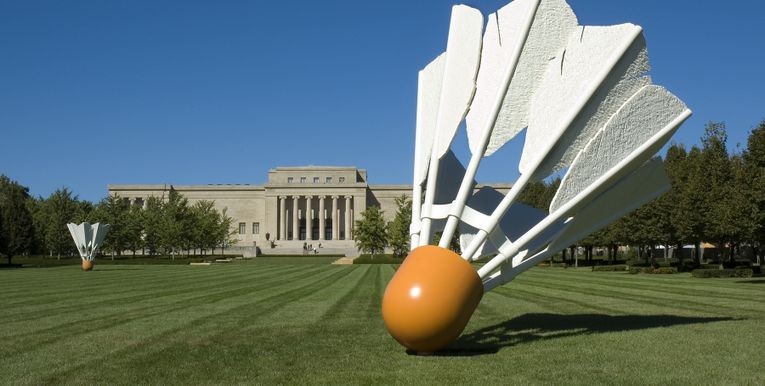
The museum’s physical presence is as compelling as the art within its walls. The original building, a stately embodiment of Beaux-Arts grandeur completed in 1933, immediately evokes a sense of classical permanence and refined elegance. Modeled after the Cleveland Museum of Art, its symmetrical façade and imposing scale command attention, offering a traditional museum experience steeped in history. However, the Nelson-Atkins is not frozen in time. In 2007, a bold architectural statement was added to the landscape: the Bloch Building, designed by Steven Holl Architects. This strikingly modern structure, with its five interlocking glass pavilions, seems to float amidst reflecting pools, creating an ethereal and dynamic counterpoint to the classical architecture. *Time* magazine recognized it as one of the best architectural marvels globally, and rightly so – the juxtaposition isn’t jarring but rather a harmonious dialogue between past and present, tradition and innovation. The Bloch Building doesn't simply house art; it actively engages with it, offering new perspectives and enhancing the visitor experience through its innovative design. Its undulating roofline mimics the curves of nearby hills, symbolizing the museum’s connection to the natural world and inviting visitors to contemplate the interplay between form and function.
### A Global Tapestry of Artistic Expression
The Nelson-Atkins boasts an astonishingly diverse collection spanning 5000 years and nearly every continent. While encyclopedic in scope, certain areas shine particularly brightly. The museum is internationally renowned for its exceptional Asian art holdings – considered among the finest in the United States. From ancient Chinese bronzes and ceramics to intricate Japanese screens and sculptures, this collection offers a profound journey through the artistic traditions of the East. Each piece tells a story—of emperors and artisans, rituals and beliefs—illuminating civilizations far removed from our own. Equally impressive is the European paintings collection, featuring masterpieces from the Renaissance, Baroque, and Impressionist movements. Visitors can lose themselves in the luminous landscapes of Monet, the dramatic compositions of Caravaggio, and the intimate portraits of Rembrandt. These artworks capture not only visual beauty but also the emotional depth of human experience, prompting reflection on themes of love, loss, faith, and ambition. Beyond these highlights, the Nelson-Atkins’ photography collection continues to grow in significance, showcasing images from across history—from daguerreotypes to contemporary digital prints—demonstrating how art communicates ideas and emotions through visual media.
### Sculpture Park and Community Engagement
The artistic experience extends beyond the museum’s walls into its expansive sculpture park – an oasis of art and nature. Iconic installations are thoughtfully placed throughout lush landscapes, inviting visitors to wander and discover works by renowned sculptors like Henry Moore and Alexander Calder. These sculptures engage with natural forms—rocks, trees, water—creating a contemplative space where viewers can contemplate the relationship between art and environment. The sculpture park serves as an important educational resource, fostering dialogue about artistic concepts and inspiring creativity in people of all ages. Furthermore, the Nelson-Atkins actively engages with its community through educational programs, outreach initiatives, and rotating exhibitions, ensuring that art remains accessible and relevant to everyone residing in Kansas City and beyond.
### Legacy and Continued Evolution
The Nelson-Atkins Museum of Art’s enduring success stems from its unwavering commitment to preserving artistic heritage while embracing new perspectives. Its curators diligently research and interpret artworks, presenting them in ways that resonate with audiences today—through scholarly publications, interactive displays, and engaging events. The museum's ongoing expansion demonstrates a belief in the transformative power of art—a conviction rooted in the founding vision of William Rockhill Nelson and Mary McAfee Atkins: to enrich lives and foster understanding across cultures. As it looks toward the future, the Nelson-Atkins Museum of Art remains steadfast in its mission to inspire curiosity, cultivate appreciation for beauty, and promote dialogue about important social issues—solidifying its place as a cornerstone of Kansas City’s cultural landscape.