

The Würzburg Residence - A Symphony of Stone and Light
The Würzburg Residence stands as a breathtaking testament to the power and artistic ambition of the Prince-Bishops who once governed this corner of Franconia. More than just a palace, it is an immersive experience—a journey into the heart of 18th-century Baroque splendor. Commissioned by Prince-Bishop Philipp Franz von Schönborn in 1720, construction continued under his successors, each leaving their indelible mark on what would become one of Germany’s most significant architectural achievements and a designated UNESCO World Heritage site.
Exploring the Residence is akin to stepping into a series of exquisitely decorated jewel boxes. The Venetian Room houses a collection of original paintings that add a touch of intimacy to the grand scale of the palace, showcasing masterful artistry from across Europe. Throughout the complex, one encounters an astonishing level of craftsmanship—from the intricate stucco decorations adorning ceilings and walls to the meticulously carved details on furniture and doors. It’s a testament to the skill and dedication of the artists and artisans who brought this vision to life.
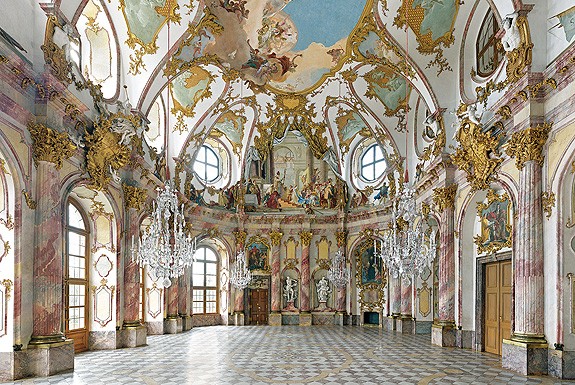
At the heart of this magnificent complex lies the Imperial Hall, designed by Balthasar Neumann, its sheer scale is immediately arresting—a vast chamber crowned by one of the largest continuous ceiling frescoes in Europe. This monumental work, executed by Giovanni Battista Tiepolo between 1751 and 1752, isn’t simply decoration; it's a carefully constructed narrative celebrating the House of Habsburg and their claim to imperial legitimacy. The fresco unfolds like a vibrant tapestry, populated with allegorical figures representing power, justice, and prosperity. Look closely, and you’ll discover scenes depicting pivotal moments in history, subtly interwoven with symbols that speak to the Prince-Bishopric's own ambitions and alliances.
The Imperial Hall: A Celestial Canvas
Beyond the Hall: A Tapestry of Rococo and Craftsmanship
A Legacy of Power and Artistic Patronage
The history of the Würzburg Residence is inextricably linked to the ambitions of its creators, the Prince-Bishops of Würzburg. Philipp Franz von Schönborn envisioned a palace that would not only serve as his official residence but also as a symbol of his power and influence. He assembled a team of leading artists and architects from across Europe—a testament to his commitment to artistic excellence.
Since 1981, the Residence has been a UNESCO World Heritage Site in recognition of its outstanding Baroque art, design, and architecture.