A Sanctuary of Sacred Art: Unveiling the Fabbrica di San Pietro
Within the heart of Vatican City, often overlooked amidst the grandeur of St. Peter’s Basilica itself, lies a treasure trove of faith and artistry – the Fabbrica di San Pietro. More than simply a museum, it is the living embodiment of centuries dedicated to constructing, maintaining, and embellishing one of Christendom's most significant sites. For generations, this institution served as the workshop, the administrative core, and ultimately, the memory of St. Peter’s evolution, now offering an intimate glimpse into the world that shaped its iconic presence. The Fabbrica isn’t about sweeping artistic movements; it is profoundly specific, deeply contextualized, breathing life into the Basilica's history by showcasing the objects that *lived* within its walls and facilitated its ceremonies.
Liturgical Vestments:
Exquisitely crafted garments worn by popes and cardinals during pivotal moments in religious history—embodiments of power, tradition, and devotion woven with precious materials and intricate embroidery.
Sacred Objects:
A breathtaking array of chalices gleaming with gold, monstrances radiating spiritual significance, reliquaries holding fragments of history, each meticulously crafted and imbued with centuries of reverence.
Architectural Documents:
Original plans detailing the Basilica’s evolution, letters exchanged between patrons and artists—tangible connections to the individuals who dedicated their lives to this sacred project.
Papal Artifacts:
Objects directly associated with past popes providing a personal touch, allowing visitors to connect with the human stories behind the papacy.
From Workshop to Museum: A Legacy Forged in Stone and Faith
The story of the Fabbrica di San Pietro is inextricably linked to the ambitious rebuilding of St. Peter’s Basilica initiated by Pope Julius II in 1506. What began as a practical necessity – an administrative body overseeing construction – gradually evolved into a custodian of artistic treasures. As successive popes commissioned works and ceremonies unfolded, objects of significance accumulated, forming the foundation for what would eventually become this dedicated museum. This wasn’t a deliberate collection amassed with aesthetic intent; rather, it was an organic gathering of items essential to the Basilica's functioning and symbolic power. The very name “Fabbrica,” meaning workshop or factory in Italian, hints at its origins – a place where artistry and craftsmanship converged to realize a divine vision. This institution’s longevity is remarkable, representing over five centuries of continuous operation, making it an exceptional example of enduring stewardship and institutional memory. The Fabbrica has witnessed the contributions of artistic giants like Bramante, Michelangelo, Raphael, and Bernini, each leaving their indelible mark on the Basilica and, by extension, on the collection housed within its walls.
An Intimate Setting for Sacred Contemplation
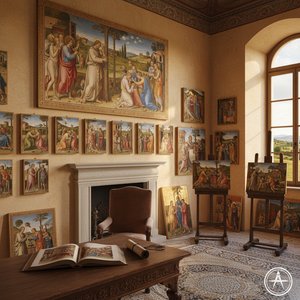
While St. Peter’s Basilica overwhelms with its scale and grandeur, the Fabbrica di San Pietro offers a contrasting experience – one of intimacy and focused contemplation. Housed within buildings historically linked to the Basilica’s administration, the museum spaces are deliberately scaled to encourage close examination of these delicate artifacts. It's a place where you can linger over the details of an embroidered cope, trace the lines of a centuries-old architectural plan, or simply absorb the weight of history contained within a single reliquary. This deliberate setting fosters a deeper understanding not just of the objects themselves, but also of the faith and traditions they represent. The museum isn’t merely displaying art; it's inviting visitors to participate in a continuing dialogue with the past. The collection subtly reveals the evolution of liturgical practices, the changing tastes of papal patronage, and the technical mastery of artisans across generations.
A Unique Window into Papal History
What truly sets the Fabbrica di San Pietro apart is its singular focus. Unlike museums that attempt to encompass broad artistic periods, this institution offers an unparalleled immersion into the specific world of St. Peter’s Basilica and the papacy. It allows visitors to understand the Basilica not simply as an architectural masterpiece, but as a living center of faith, tradition, and political power. It provides a rare behind-the-scenes look at papal history and liturgical practice, revealing the intricate workings of one of Christianity's most important institutions. For pilgrims seeking spiritual enrichment, art enthusiasts craving historical context, or interior designers searching for inspiration in sacred aesthetics, the Fabbrica di San Pietro offers an unforgettable journey into the heart of Rome’s enduring legacy. The subtle elegance and profound symbolism found within its collection offer a unique source of inspiration, bridging the gap between artistic expression and devotional practice.
By the OriginalUniqueArt.com Editorial Team
Art Quiz
There is only one correct answer for each question.
Question 1:
What was the original primary function of the Fabbrica di San Pietro?
Question 2:
What type of objects are primarily featured in the Fabbrica di San Pietro’s collection?
Question 3:
When did Pope Julius II initiate the rebuilding of St. Peter’s Basilica, leading to the establishment of the Fabbrica?
Question 4:
What does the Italian word 'Fabbrica' translate to in English?
Question 5:
How is the experience of visiting the Fabbrica di San Pietro described in contrast to St. Peter's Basilica itself?
Question 6:
What is unique about the Fabbrica di San Pietro's collection?
Question 7:
According to the text, what is one aspect of the Fabbrica's longevity?
Question 8:
What did the Apostolic Constitution *Praedicate Evangelium* state regarding the Fabbrica di San Pietro?
Journey through El Greco's 25 most iconic paintings! Explore the spiritual depth & dramatic beauty of this Spanish Renaissance master. Discover art history, techniques & find museum-quality reproductions for your home at OriginalUniqueArt.com.
Explore 25 breathtaking artworks by Giotto di Bondone, a Renaissance master. Discover the stories behind iconic frescoes & paintings like the Scrovegni Chapel cycle. Find museum-quality Giotto reproductions and elevate your home decor with OriginalUniqueArt.com.
Discover the captivating oil paintings of Peter Graham Li – a contemporary artist celebrated for his masterful use of light, color, and impasto technique. Explore investment potential & curated selections at OriginalUniqueArt.