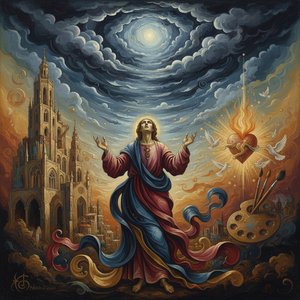
A Sanctuary of Light and Shadow: The Legacy of El Greco
Nestled within the ancient, labyrinthine walls of Toledo, Spain—a city crowned by a magnificent cathedral and steeped in centuries of profound history—lies the Capilla de San José. This intimate sanctuary transcends the definition of a mere architectural space; it is an unparalleled artistic pilgrimage. More than just a building adorned with frescoes, this chapel embodies the singular, visionary spirit of Domenikos Theotokopoulos, known universally as El Greco. To step inside is to leave the modern world behind and enter the heart of a Spanish Renaissance revolution, where every brushstroke serves as a testament to an artist who irrevocably transformed European painting through his dramatic use of color and unsettling psychological depth.
The chapel’s core is undeniably defined by its breathtaking collection of El Greco’s masterpieces, works that pulse with a visceral intensity. One cannot help but be moved by the spiritual weight of Christ in Agony on the Cross , where the tortured figure dominates the composition, bathed in an ethereal luminescence that speaks eloquently of suffering and redemption. This mastery of light is equally evident in The Coronation of the Virgin , a monumental altarpiece that showcases El Greco’s ability to blend Byzantine influences with a burgeoning Renaissance realism. These works are not merely static images; they are emotionally charged narratives designed to inspire deep contemplation and awe in all who behold them.
Architectural Harmony and the Spirit of the Renaissance
Beyond the individual brilliance of El Greco, Capilla de San José serves as an exquisite microcosm of the broader Spanish Renaissance movement. During this era, artists sought a delicate balance between recapturing classical ideals and expressing intense religious fervor—a duality that is beautifully realized in the chapel’s decorative elements. The meticulous attention to detail, from the gilded stucco ornamentation to the carefully rendered drapery, reflects a profound engagement with humanist principles alongside devout piety. The interior is dominated by magnificent frescoes, painstakingly executed in vibrant hues that seem to glow from within, creating an atmosphere where the divine feels tangibly present.
The architecture itself prioritizes the creation of an environment conducive to artistic and spiritual contemplation. While the precise historical architectural plans remain elusive, the chapel's proportions and orientation are clearly a deliberate choice, designed to enhance the viewer’s experience of the artwork. The altarpiece, a complex sculptural ensemble, commands attention with its intricate carvings and symbolic imagery, demonstrating El Greco's exceptional skill as both a painter and a designer. He possessed a rare ability to orchestrate diverse visual elements into a single, harmonious whole, where sculpture, paint, and space converge.
A Timeless Destination for the Discerning Eye
The history of Capilla de San José is inextricably linked to El Greco’s formative years in Toledo. Arriving in Spain around 1577, drawn by the patronage of noble families and the artistic ambitions of the cathedral, El Greco found in this chapel a project that would solidify his reputation as one of the foremost artists of his era. Throughout its history, the chapel has also served as a site for significant scholarly exhibitions, where recent studies have illuminated new perspectives on El Greco's techniques and explored his connections to the broader intellectual currents of the Renaissance.
What distinguishes Capilla de San José from other museums is its unparalleled concentration of El Greco’s masterpieces. It offers a rare privilege: the ability to immerse oneself in the artist's stylistic evolution and grasp the profound impact he exerted on the trajectory of European art history. For the art lover, the collector, or the interior designer seeking inspiration in the sublime, this chapel is not merely a place to see paintings; it is a place to feel enveloped by a visionary spirit that continues to haunt and inspire the modern imagination.