


1


Updated October 2026 · ranked by our popularity score (searches, visits and orders for each work) · 115 works by Will Barnet in our catalogue
In short
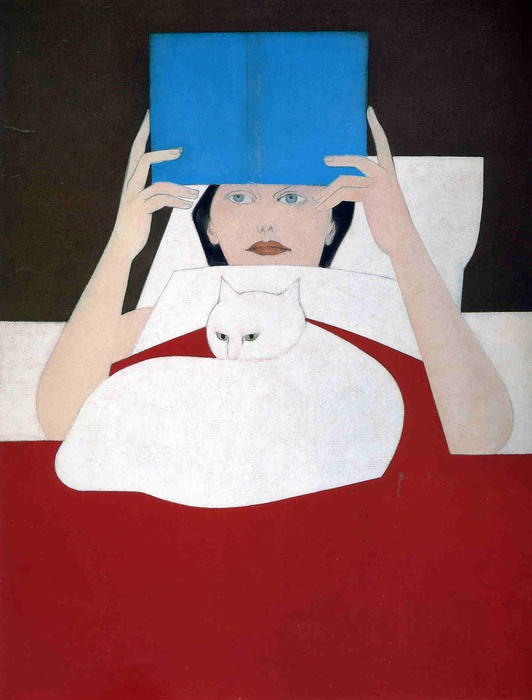
Summer Idyll (1976) is the Will Barnet painting that draws the most eyes. After it, the eye goes to Woman Reading (1970) and Silent Seasons - Winter (1968). Among the 115 works of Will Barnet in our catalog, these 100 are the most famous, each a unique original presented with its year, its museum and the reason it endures.


 City Child (Air in the City No. 2)1938
12
 Waiting1937
13
 Rosie1936
14
 Irish Kids1938
15
 Men in a Ditch1936
16
 Mary1936
17
 Little Joe1935
18
 Sleeping Woman1938
19
 Pregnancy1938
20
 Jewish tailor1938
21
 Labor (Workers)1935
22
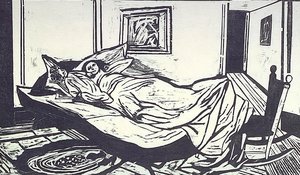 Early Morning1939
23
 Family and Pink Table1948
24
 Soft boiled eggs1946
25
 Summer family1948
26
 Janus and the White Vertebra1955
27
 Dialogue with Space1960
28
 Sleeping Child1961
29
 Kiesler and Wife1965
30
 The Three Brothers1964
31
 The Blue Robe1962
32
 Woman, Cat and String1964
33
 Ruth Bowman1967
34
 Silent Seasons - Autumn1969
35
 Henry Pearson1967
36
 Young woman with white cat1971
37
 Girl at Piano1973
38
 Child reading - Red1970
39
 Silent Seasons - Spring1971
40
 Silent Seasons - Summer1970
41
 Soliloquy1972
42
 Dialogue in Green1970
43
 The caller1977
44
 Aurora1977
45
 Play1975
46
 Waiting1976
47
 Grand Pier1976
48
 Seventh season1975
49
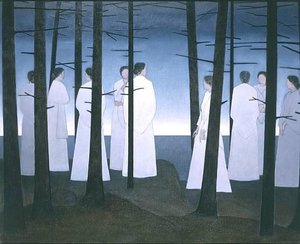 Sanctum1976
50
 Madam Butterfly1980
51
 The nightfall1979
52
 Circe II1980
53
 Blue Bicycle1979
54
 Ariadne1980
55
 Circe1979
56
 Totem1982
57
 Way to the sea1981
58
 The Bannister1981
59
 The Mirror1981
60
 Study for Three Muses1985
61
 Stairway to the Sea1984
62
 The blue thread1984
63
 Skaters1989
64
 The Grandmother1990
65
 Study for Gramercy Park1990
66
 The dream1998
67
 The doorway1998
68
 Between Life and Life1998
69
 Walk2001
70
 The sled2002
71
 Bob2004
72
 Janus and the White Vertebra1955 · Smithsonian American Art Museum
73
 Swing at dusk
74
 Self-portrait
75
 Woman on Tree With Cat
76
 Introspection
77
 Mother and child
78
 Reflection
79
 Cat and Canary
80
 Meditation and Minou
81
 Untitled1953
82
 Enfant1951
83
 Untitled1957
84
 The cat1956
85
 Untitled1957
86
 Untitled1956 · Alexandre Gallery
87
 Untitled1957 · Alexandre Gallery
88
 Call It Winter1957
89
 Untitled1957 · Alexandre Gallery
90
 Untitled1957 · Alexandre Gallery
91
 Positano1960
92
 Whiplash1959
93
 Untitled1958 · Alexandre Gallery
94
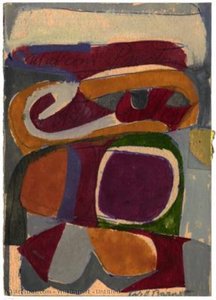 Untitled1959 · Alexandre Gallery
95
 Province by the Sea1959
96
 Wine, Women and Song1958
97
 Untitled1958 · Alexandre Gallery
98
 Multiple Images I1959
99
 Untitled1958 · Alexandre Gallery
100
 Untitled1958 · Alexandre Gallery
The four subjects that come back most often in these originals, each with its finest example.
The 2 museums that hold the most of the paintings on this page.
| Museum | City | Works by Will Barnet | Paintings from this list |
|---|---|---|---|
 Alexandre Gallery |
New York | 9 | Untitled, Untitled, Untitled |
 Smithsonian American Art Museum |
Washington, D.C. | 1 | Janus and the White Vertebra |
Pick a decade to see the original that defines it.


Summer Idyll (1976). Woman Reading (1970) and Silent Seasons - Winter (1968) come next.
65 years old: Summer Idyll dates from 1976, and Will Barnet was born in 1911.
Summer Idyll, Woman Reading, Silent Seasons - Winter, Woman and Cats, Portrait of Djordje Mili.evi., Woman by the Sea, Mother, Central park siesta, Self-portrait and Girl Combing Her Hair. The ranking above gives each one's year and museum.
Our catalog holds 115 works by Will Barnet, dated from 1930 to 2004.
Mostly in Alexandre Gallery (New York) and Smithsonian American Art Museum (Washington, D.C.). The museum table above lists them all.
In 1950s: 21 of the 100 works on this page were made then, Janus and the White Vertebra among them.
On this page, the earliest is Mother (1930) and the latest Bob (2004).
Cats (18), Children (15) and Women (10), across the 100 works on this page.
Naive art, judging by the originals on this page.
Untitled, Untitled and Untitled: the Alexandre Gallery, New York holds 9 of the works on this page.


